Resources for the Future regularly posts public comments in response to major policy proposals within the purview of our research. Some recent highlights, published here as a Q&A with some key researchers, were presented in a recent event.
By now, everyone involved in US environmental policy is familiar with the sweeping regulatory changes the Trump administration has proposed in its first year. Relevant federal agencies from across the executive branch have proposed new rules (and, in some cases, tweaked, revised, and fully repealed existing rules), with executive actions on climate policy receiving special scrutiny. Core agencies such as the US Environmental Protection Agency (EPA) and the US Department of Energy (DOE) have fundamentally changed the interpretation of long-standing rules and precedents that established decarbonization programs and standards. Along with reconsidering legal precedent, the agencies also have put forth new and questionable interpretations of scholarship, including the work of Resources for the Future (RFF) researchers.
Our scholars have been swift to respond when opportunities for formal public comment have arisen—often with a correction to governmental regulatory analysis but always with a focus on the rigorous and comprehensive assessment of costs and benefits and related outcomes that is fundamental to our mission. Analysis-based responses to government proposals, informed by insightful discussions with stakeholders and policymakers, are at the core of how RFF ensures that environmental and climate regulations are grounded in the best available evidence.
This fall, RFF hosted an Insights Hour event—a periodic informal discussion with RFF stakeholders and donors—focused exclusively on the public comments RFF experts submitted in response to three key administration efforts: (1) EPA’s proposed repeal of greenhouse gas emissions standards for fossil fuel–based electric power generation; (2) a report produced last year by DOE’s Climate Working Group that questioned the impacts of greenhouse gas emissions on the US climate (and, in turn, related economic outcomes) that was cited extensively in those emissions standards; and (3) an EPA proposal to eliminate vehicle emissions standards along with, more profoundly, the underlying endangerment finding that serves as the basis for the agency to regulate greenhouse gas emissions.
RFF Senior Fellow and Director of RFF’s Electric Power Program Karen Palmer led an insightful discussion with Senior Fellow Joshua Linn, Fellow Brian C. Prest, and Research Associate Nick Roy about how and why RFF engages in public comments. The following is an annotated transcript of the event.
This Insights Hour event took place on September 30, 2025. The original transcript of the discussion has been edited for length and clarity.

Credit: Estúdio Grota
Karen Palmer: The subject today is how RFF informs the regulatory process through public comments on recent regulations and related actions by the administration—including some proposed regulatory repeals from EPA on fossil fuel power plants, vehicle emissions standards, and the overall endangerment finding, based on a recent report about climate change from a Climate Working Group established by DOE, to which RFF has submitted a comment. All these comments are published on the RFF website and focus entirely on the analyses of economic costs and benefits from these proposed regulatory changes.
Let me start out with Brian and your public comment on the report that was produced by the Climate Working Group established by DOE. I want to discuss your review of the chapter on economics and the social cost of carbon (SCC). Can you tell me about what that chapter said and your reaction?
Brian C. Prest: While much of the report was about the physical science of climate change, one of the 12 chapters focused solely on the economics of climate change and the SCC. This subject is of course squarely in RFF’s wheelhouse. Basically, this chapter had two sections: one on the SCC and another about the impacts of climate change on the economy.
The SCC section was broadly dismissive of the idea of estimating the SCC and made several misleading or simply false claims. What’s particularly interesting is that the chapter didn’t acknowledge much of the core progress made in environmental economics over the past decade or so, and instead mostly focused on old and outdated research.
For instance, the working group didn’t cite the landmark 2017 National Academies report that prompted RFF to establish the SCC Initiative that same year. They also didn’t acknowledge any of the research that the National Academies inspired, such as more than a dozen peer-reviewed studies over the past decade that were part of the efforts of RFF and the Climate Impact Lab. They made one passing reference to the widely lauded efforts by EPA in 2023, but in doing so, made the astonishing and unsubstantiated claim that EPA’s work did not represent any new data or methods relative to old models, even though that effort in fact built a brand new integrated assessment model from the ground up.
In short, the DOE working group didn’t really engage with the major advances of SCC research over the past decade or so. My public comment highlights this major deficiency with the analysis, and corrects erroneous claims in the report, like confusing the concepts of social costs and external costs.
Palmer: I also understand that, while they didn’t cite RFF’s major work on the SCC, they did cite one of your papers, which was coauthored with former RFF President and CEO Richard G. Newell. How well did their summary represent the results of your paper?
Prest: Right! Our 2021 paper was written in part as a critique of a high-profile 2015 paper that, in our view, strongly overstated the expected adverse impacts of climate change on economic growth. Most existing research estimates the effects of climate change on the level of GDP, while our 2015 paper instead estimates the impacts on its growth rate.
We point out in our paper that growth-rate methods are very sensitive to model specifications, which raises concern about the reliability of the models, but we also found that methods focusing on GDP levels yield much smaller but much more robust estimates that are closely in line with other research.
Nonetheless, the report from the DOE Climate Working Group cites only the less robust set of models in our paper, concluding that the effect of climate change on GDP growth is statistically noisy but “likely positive” on net, while ignoring the more reliable set of models that yield the opposite conclusion. But if you consider the set of models that we found to be more robust, you get the reverse conclusion that the impacts are likely negative, with a 92 percent likelihood of climate change hurting the economy—the opposite of what the DOE working group describes in its report.
In short, our study was meant as a warning against overinterpreting noisy growth-rate models, but the DOE report went on to commit the very same error.
Palmer: The DOE Climate Working Group report is heavily cited in EPA’s proposed rescission of the 2009 endangerment finding, which concluded that greenhouse gases negatively affect public health and welfare and that emissions can be regulated through the Clean Air Act. To remind everyone, the endangerment finding came from the landmark 2007 Massachusetts v. EPA Supreme Court case that focused on vehicle emissions standards.
Let’s turn to our transportation expert, Joshua Linn, about the proposed removal of these standards and how the recently proposed reversal has been justified economically. In 2024, EPA set greenhouse gas standards that would have cut emissions rates in half between 2026 and 2032. This year, EPA has proposed eliminating the standards altogether. How did the agency justify this complete reversal?
Joshua Linn: EPA justifies the proposed reversal largely on the grounds of consumer benefits. Specifically, the proposal asserts that, although consumers would have higher fuel costs, vehicles would be much less expensive, leaving consumers better off overall. But the draft of EPA’s regulatory impact analysis associated with the proposal misinterprets findings from past research, causing the proposal to overstate the net benefits of revoking vehicle emissions standards.
Several assumptions about manufacturer behavior and market outcomes, such as the relationship between compliance costs and regulatory stringency, remain unclear or unjustified in EPA’s recent analysis, causing the proposal’s approach to depart from historical methods for estimating vehicle technology costs, without explanation. Further, the proposal’s analysis relies on obsolete data that are inconsistent with recent market information.
Palmer: In the past, EPA has claimed that consumers would benefit from lower gasoline expenditures. Now, EPA claims consumers are better off without the standards. What has changed?
Linn: EPA clearly is taking a different regulatory and policy approach under the current administration. But we can also see a difference in the analytical methods and rigor that EPA is using to justify the changes. This reduced rigor is true for the analysis of consumer behaviors.
For example, the EPA proposal states that manufacturers and industry should report payback periods of 2.5 years. For a consumer choosing between a fuel-efficient, more expensive vehicle and an inefficient, less expensive vehicle, this number means that a consumer would buy the fuel-efficient vehicle if the first 2.5 years of fuel cost savings justify a higher purchase price. This conclusion differs markedly from past arguments and from contemporary analysis.
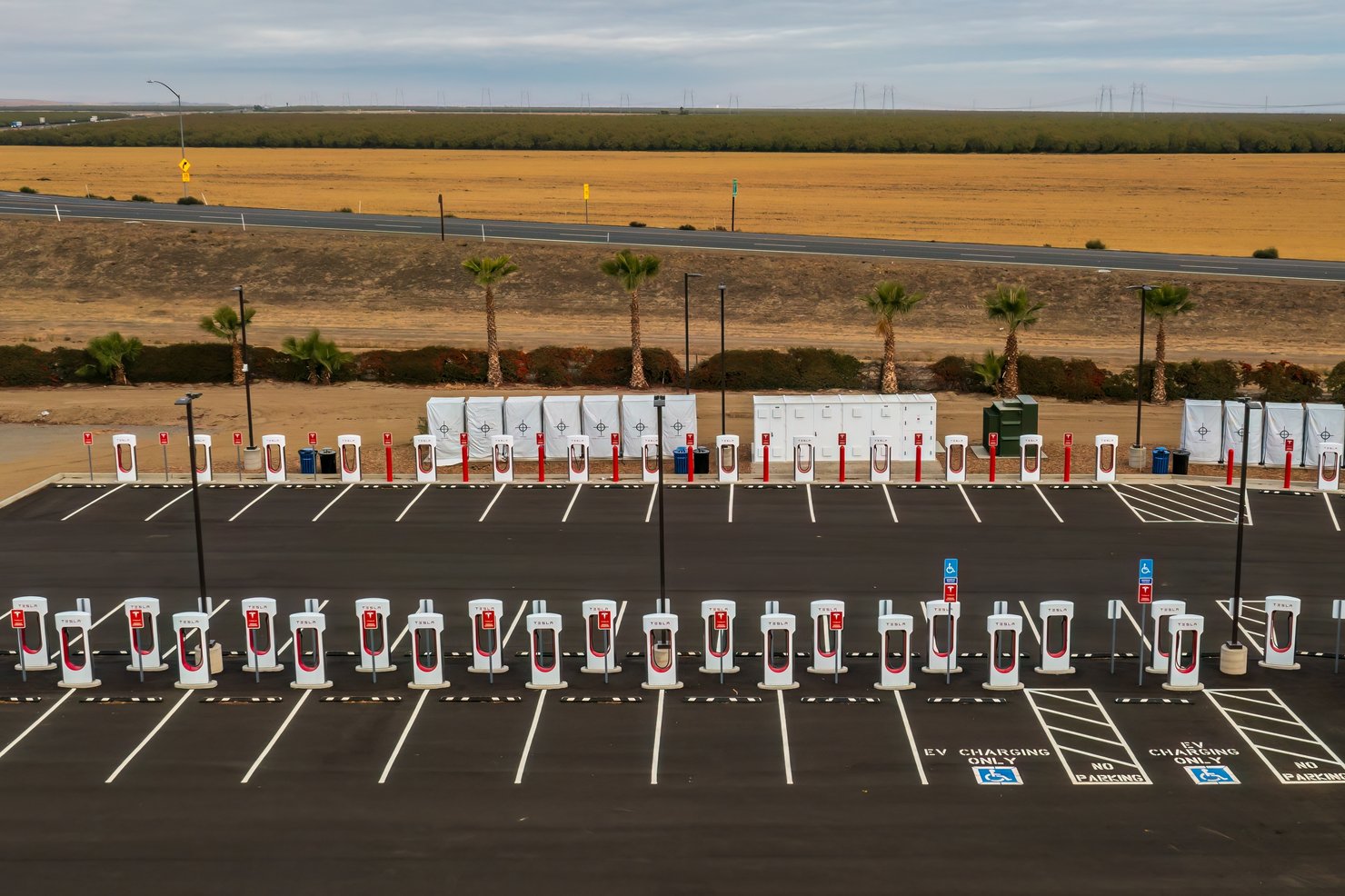
In our response, we offer two arguments as to why the 2.5-year payback period is inappropriate. On the one hand, EPA argues that including the first 2.5 years of fuel cost savings accounts for the missing costs related to consumer adoption of electric vehicles; for example, range anxiety. In arguing that EPA’s 2024 standards amount to an electric vehicle mandate, EPA should use an estimate of missing costs that corresponds specifically to electric vehicles. However, the sources that EPA uses appear to predate the rise of electric vehicles in the US market and hence current evidence about such missing costs. For that reason, using the 2.5-year payback period to approximate missing costs of battery-powered electric vehicles is not supported by evidence.
Credit: Manuela Durson / Shutterstock
More to the point, some of my research has directly estimated consumer valuation of fuel cost savings, specifically when manufacturers add fuel-saving technologies to the vehicles they offer. During the early 2010s, these technologies included things such as cylinder deactivation. If some costs indeed were missing, those costs would be uncovered in our valuation estimate as deviations from the actual market value of the saved fuel. However, our preferred valuation estimate is consistent with a 7-year payback period. No missing costs from that period would cause consumers to insist on a 2.5-year payback period.
EPA’s assumption of an appropriate payback period is one example of how the proposal undervalues the benefits of the emissions standards. The misinterpretation, in turn, has caused the EPA analysis to overstate the net benefits of revoking the greenhouse gas standards.
Palmer: If EPA goes ahead and revokes the standards, how would the industry respond in the next few years?
Linn: Without the incentive of things like tax credits, manufacturer responses to a repeal of emissions standards will vary.
If a manufacturer offers two vehicles that are identical to each other, except one is gasoline and the other is electric, and the two vehicles have the same lifetime ownership cost, most consumers will choose the gasoline vehicle. In this case, the missing cost is the monetary value of the disutility that the consumer gets with the electric vehicle instead of the gasoline vehicle. The missing cost makes it harder for the manufacturer to comply with greenhouse gas standards, because the automaker has to offer a discount on the electric vehicle.
Emissions standards historically have incentivized manufacturers to reduce the average emissions rates of their vehicles, and the manufacturer response to eliminating the standards likely won’t be a reversion to past behaviors.
This note about manufacturer responses brings up another concern with the proposal’s analysis regarding its comparison cases. In the case of the proposal, EPA also should justify its assumptions about manufacturer behavior and market outcomes if the agency revokes the standards. For example, EPA compares the outcomes from the scenario of maintaining the 2024 standards versus reverting to 2021 standards—but the proposal seeks to remove standards altogether. That’s one example of the ways in which EPA’s approach departs from widely accepted methods for estimating vehicle technology costs; omits explanation and justification of key assumptions, such as the relationship between compliance costs and regulatory stringency; and relies on obsolete data that are inconsistent with market estimates.

Credit: Estúdio Grota
It’s good to remind folks that the vehicle emissions standard was the channel for the endangerment finding in 2009, and repeal of the standard is tied to reversing the endangerment finding. But a preponderance of evidence since 2009 confirms that greenhouse gas emissions have significant negative effects on public health and welfare. So, a much broader legal question needs to be addressed, in addition to the technical omissions and errors in economic analysis that RFF has documented.
Palmer: Along with greenhouse gas emissions from vehicles, EPA has proposed reversals of emissions-reduction requirements from the electric power sector, specifically questioning Section 111 of the Clean Air Act. Let’s turn to Nick Roy, who conducted much of RFF’s analysis on the proposal. Nick, can you give us some history that led to this current state of affairs?
Nick Roy: EPA has gone back and forth for decades on how to regulate greenhouse gas emissions from fossil fuel–powered electricity generators. The first proposal actually was legislative and goes back to the failed Waxman-Markey bill in 2009. This failed bill motivated executive action years later with EPA’s Clean Power Plan, which was finalized in 2015 but repealed in 2019 and replaced with a proposed Affordable Clean Energy Rule. At the same time, several judicial decisions, such as the West Virginia v. EPA Supreme Court case in 2022, redefined the legal framework for regulating greenhouse gas emissions from power facilities.
Ultimately, the Affordable Clean Energy Rule was repealed in 2024 and replaced with EPA’s Carbon Pollution Standards, which set emissions benchmarks and a range of compliance technologies such as carbon capture and storage, cofiring, and reduced electricity generation. With the change in administration and Congress in 2025, the Carbon Pollution Standards have been repealed.
So, we’re talking about a lot of swings in legislation, executive orders, program rules, and legal decisions. Ultimately, these swings have led to major uncertainties that make planning among electricity providers more difficult and likely lead to increasing costs for consumers.
Palmer: So now, we effectively have no EPA regulation on greenhouse gas emissions from power plants. How did EPA justify this rulemaking, and what does RFF analysis have to say about the EPA analysis?
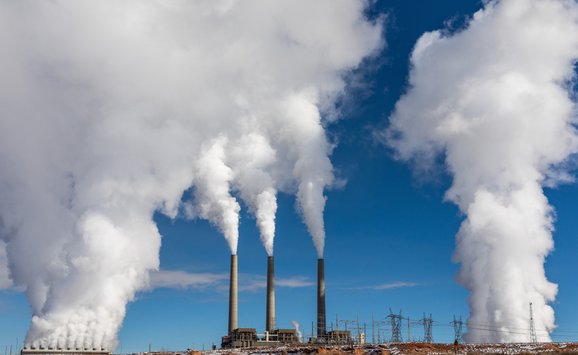
Roy: In its proposal, EPA reused the benefit-cost analysis in the regulatory impact analysis generated for the 2024 Carbon Pollution Standards but assumed no climate damages and excluded any health benefits from reductions in conventional air pollutants. Put another way, EPA does not quantify benefits lost from increased emissions as a result of the proposed repeal, neither from the increase in local air pollutants that cause the premature deaths of Americans nor from the increase in greenhouse gas emissions and the resulting effect on climate change. Instead, EPA’s benefit-cost analysis considers only the estimated $19 billion in avoided compliance costs from lifting the rule. As such, EPA’s analysis is not a benefit-cost analysis, but rather a cost analysis.

Credit: Greens and Blues / Shutterstock
RFF’s analysis fills information gaps in two important ways. We’ve updated assumptions about future electricity demand using forecasts from 2025 instead of 2023, and we’ve itemized the benefits of both reduced climate change effects and avoided health costs. We find that the increased health damages alone from the repeal are two to four times the size of the electricity cost savings. Factoring in the costs of climate change, the costs from the repeal are about four to eight times higher than any avoided compliance costs.
Palmer: Without the Carbon Pollution Standards, how would we expect the power sector to change in the coming years?
Roy: The most immediate effect is that many coal- and gas-powered electricity plants will stay online longer and be retired more slowly, even when, as other research finds, many of those power plants are otherwise costly to maintain and operate.
But the level of uncertainty is increasing across electricity markets in general, with massive demand growth from data centers and electrification, variable tariffs that increase the costs of building new power plants, and the fact that methane prices are still subject to global volatility. A range of other factors, such as the permitting process for new electricity transmission and distribution, will challenge EPA’s assumptions about energy costs, too. In the end, this uncertainty has costs that likely are passed on to ratepayers.
Palmer: Finally, an underlying question of the endangerment finding proposal that bridges analytical and legal arguments: Are emissions from any specific sector “significant” contributors? Brian, you have analyzed the evolution of measuring significance. Can you close us out with your findings?
Prest: Sure. A key justification that EPA gave for repealing the carbon pollution standards on power plants was that the sector’s greenhouse gas emissions did not “significantly contribute” to air pollution, on the grounds that its 1.5 billion or so tons of annual carbon dioxide emissions represent about 3 percent of the global total, which EPA deemed insignificant.
However, neither EPA nor the Clean Air Act statute provide a quantitative rationale for what it means to be “significant,” so EPA’s proposed repeal explicitly emphasizes that its conclusion effectively was a judgment call by this particular EPA administrator.
But from an economic and legal perspective, long-standing quantitative thresholds determine what makes for “economically significant” regulations. Those thresholds (for instance, from Executive Order 12866 in 1993 and the Unfunded Mandates Reform Act of 1995) are commonly pegged at about $100 million–$200 million in annual impacts on the economy, public health, or the environment. Putting environmental impacts into dollar terms is a long-standing practice in economics, and in the case of climate change, this translation of carbon damages into dollar terms is what the SCC does.
SCC estimates vary (our previous work gives a central estimate of $185 per ton of carbon dioxide), but in our comments, we made the straightforward point that, under basically any estimate of the SCC, emissions from the US power sector clearly are economically significant and vastly exceed the well-established $100 million–$200 million threshold.
The math is pretty simple: Even at a minimal $1 per ton of carbon dioxide—the lowest value used by the first Trump administration—the economic impact of the US power sector’s 1.5 billion tons of annual carbon dioxide emissions is measured in the billions of dollars. But using more realistic estimates of the SCC, the impacts of carbon emissions amount to tens or even hundreds of billions of dollars annually.
Palmer: Answers to the analytical questions we have posed clearly are fundamental to how we pursue policy in this country. Thanks to my fellow researchers for bringing their tremendous expertise to bear, not just to RFF and to the broader community of environmental policy stakeholders, but also toward improving policy in the United States.
A version of this article appeared in print in the Winter 2026 issue of Resources magazine.