If sound economic analysis gets considered in decisions, Then sound decisions can be made for environmental and energy policy. The team that’s spearheading the If/Then policy series at Resources for the Future reflects on this idea and related analyses.
This year, Resources for the Future (RFF) has been attentive to environmental policies that are changing at a speed that makes tracking developments, and their policy impacts, difficult. To address that difficulty, RFF scholars have launched the If/Then policy analysis series, which presents timely and accessible insights grounded in RFF’s nonpartisan research expertise. Since the spring, we’ve released more than a dozen analyses in the If/Then series.
The “If/Then” label for this effort is meant to evoke the use of evidence, models, expertise, and causal inference (i.e., data-driven analysis) to link policy actions to their consequences: If such an action is taken, Then these consequences are expected to occur. Analysis comes in various flavors, including blog posts about the prospect of public land sales and the cancellation of federally funded technology projects; reports and issue briefs about vehicle import tariffs and an executive order to increase timber sales while reducing wildfire risk; and events like the “If/Then Progress Report” that’s reproduced here, in edited form.
The event took place as a webinar that was hosted by RFF with moderator Anna Kramer, an energy and environmental policy reporter at NOTUS, leading RFF researchers in a discussion about some of the topics that the If/Then series has covered, particularly in the context of the budget reconciliation bill that was deliberated in the US House of Representatives and the Senate earlier this year, with the House and Senate versions of the bill reconciled at the start of the summer, and the final bill signed into law on the Fourth of July by President Donald Trump. We held the event at around the 100-day mark of the new Trump administration.
Kramer discussed these topics with Alan Krupnick, an RFF senior fellow and director of RFF’s Industry and Fuels Program; Carlos Martin, RFF’s vice president for research and policy engagement; and Kevin Rennert, an RFF fellow and director of RFF’s Federal Climate Policy Initiative and Comprehensive Climate Strategies Program. These RFF researchers helped put together the If/Then series and have been coordinating related RFF analysis to date.
This event took place on June 24, 2025. The original transcript of the discussion at the event has been edited for length and clarity.

Electric Vehicle Policies
Anna Kramer: We’re going to start by talking about what’s top of mind this week here in Washington, DC, which is budget reconciliation. Let’s start with electric vehicles (EVs), because one of the If/Then analyses has dived into this topic in great detail, looking at what happens if we undo a huge range of EV-support policies that came into play under the Biden administration, through tax credits and federal regulatory decisions. Now we’re looking at a situation of removing EV subsidies from the reconciliation bill.
We’ve already seen the repeal of California’s EV mandate, and the US Environmental Protection Agency (EPA) plans to repeal various vehicle emissions rules. RFF’s If/Then analysis on this outlined the positive and negative effects we’d expect to see with these changes to EV policy, for consumers, businesses, and the federal government. Can you talk about that?
Kevin Rennert: The policy support for EVs coming out of the last administration involved not just getting people to buy EVs, but also building out the full domestic supply chain. That was a key part of the rationale: having incentives all along the supply chain, including sourcing critical minerals locally, building manufacturing capacity, building battery capacity, and designing and building the cars within the United States.
The Inflation Reduction Act has similar examples intended to build a whole system of support; for example, through vehicle purchase subsidies for passenger vehicles and commercial vehicles, both used and new, and the Advanced Manufacturing Production Credit for building the batteries.
You also mentioned two different kinds of regulatory standards that had been driving the transition to EVs: the tailpipe standards that came out of EPA, and fuel economy standards that came out of the National Highway Traffic Safety Administration.
And finally, we had state actions. We had the California Clean Cars program, which was allowed because the program had a federal waiver that made it okay to exceed EPA’s stringencies, and then was adopted by 11 other states and the District of Columbia. As you mentioned, the California waiver is now gone. Regulation changes are coming not only from reconciliation, but also from the agencies themselves; and the tax credits may also be repealed through the budget reconciliation process.
So, with all that as the preface, our colleagues Beia Spiller and Joshua Linn used the RFF Vehicle Market Model to understand what the effects would be if you went ahead and took that series of combined actions and repealed the various tax credits and regulations all at once. The top-line results from their model are that, by the year 2030, about 800,000 more cars get purchased—a roughly 5 percent increase. That’s because the prices of new vehicles will go down by about 10 percent in the model as a result of the combined repeals.
They also see a substantial shift from EVs to internal combustion engines (gas-powered vehicles), with EV sales dropping by about 1.7 million units, or about 30 percent, and gas vehicle sales going up by about 2.5 million vehicles, or 25 percent.

Credit: 24K-Production / Shutterstock
An approach like this is going to have costs and benefits, and the question that they dive into in their If/Then piece is, Who is bearing the cost, and who is collecting the benefits?
The big beneficiary of this approach is manufacturers and their shareholders. They find that manufacturer profits go up by about $15 billion in 2030. This is pretty straightforward to explain: because the manufacturers don’t have to invest in additional fuel-saving technologies and EVs, their profits go up.
The cost is borne by consumers, though. Consumers end up paying more over the lifetime of these vehicles, because they end up paying more for fuel, even though the initial purchase price is dropping by about 10 percent.
One of the great things about these models is that you can put together all the costs and benefits and look at the net social cost or benefit. When you do that, Spiller and Linn’s analysis shows a net social cost to repealing all these regulations, even taking into account the reduction in expenditures from the government of about $30 billion.
The follow-on question is, who benefits from the reduction in government expenditures? That, of course, depends on what Congress decides to do with the reduced expenditures through other parts of the legislation.
I’d also point you to another If/Then analysis from Spiller and Linn, which uses a similar modeling approach to explore the effects, and costs and benefits, of tariffs.
They find that the tariffs imposed by the Trump administration would benefit manufacturers, just like the repeals would, by protecting manufacturers from competition overseas. But that will drive up the cost of vehicles, which again puts consumers into vehicles they may not have bought as their first choice. So, a consumer cost comes from it.
Their analysis shows that the net social outcome of the tariffs is negative—a cost, as opposed to a net benefit, overall.
The Inflation Reduction Act Goes Poof
Anna Kramer: I’d like to talk a little bit more about wind and solar, which are the two areas that probably are getting the most extreme gutting, if you will, in the Senate bill. What we’re seeing is a dramatic policy reversal from the state of play even a year ago for those industries, which have seen dramatic spikes in investment over the course of the past several years.
I’d like to dig into what we expect the effects to be. If we again look at the effects on manufacturing, financial choices for the government, and effects on the consumer at the end of the day and in the longer term: What happens if we just pull all the wind and solar subsidies out from under everyone? What happens with the government, industry, and consumers?
Kevin Rennert: Just to take a quick step back on what’s being addressed in the reconciliation bill: The Inflation Reduction Act tried to solve a bunch of different issues with clean electricity tax credits, which have been around in various forms for a long time.
Our model shows that renewables would be replaced largely by an increased use and build-out of gas turbines, with a bit of coal on the periphery.
Kevin Rennert
One issue was that these sort of on-again, off-again incentives for producing renewable electricity, or investing in the materials to build them, would come for a year and a half and go away. And then there would be a scramble, and then they’d come back in place, and so on.
Two, the specific technologies are written into the law. So, if you wanted to make a new clean technology eligible, you actually had to get an act of Congress to add it in.
So, the Inflation Reduction Act looked to solve all these different issues in one fell swoop by making the incentives long-running—automatically sunsetting them over a period of time as the emissions in the power sector dropped—and technology neutral, with eligibility based on just the ability to produce electricity with zero emissions.
The Inflation Reduction Act also made it easier for developers to monetize those credits by making them transferable, and easier for tax-exempt entities to monetize the credits, as well, by allowing for direct pay by those entities.
So, these clean electricity provisions of the Inflation Reduction Act are what’s being proposed to be repealed in both the House and the Senate bills. The Senate bill is less stringent, but it’s still a rapid phasedown.
Credit: pan demin / Shutterstock
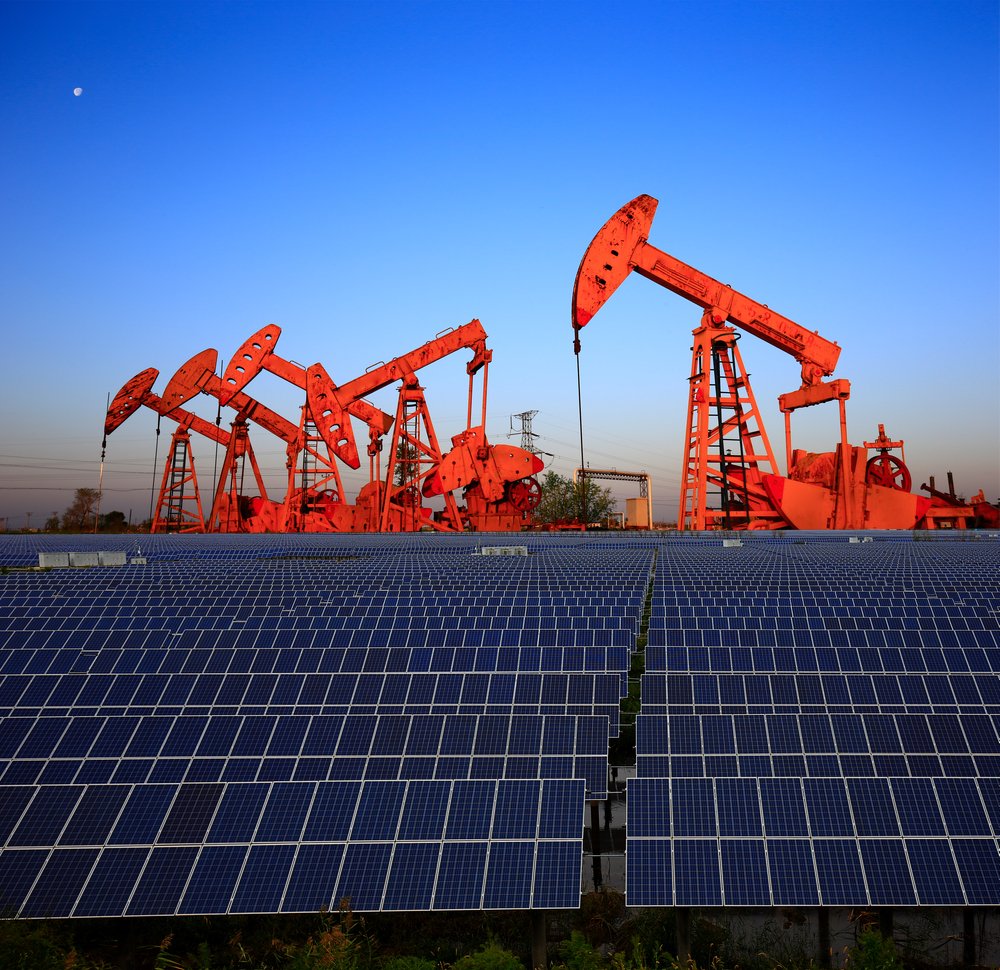
When we use our power-sector model to see what the effects of a repeal would look like, we find that repealing the Inflation Reduction Act would have a significant effect on the deployment of renewables over the course of the 10-year budget window. We find that renewables deployment would go down by almost 300 to 400 gigawatts of capacity. Our model shows that renewables would be replaced largely by an increased use and build-out of gas turbines, with a bit of coal on the periphery.
An effect of repealing the Inflation Reduction Act for consumers is that taking those credits away and changing the kinds of energy sources that are deployed makes average US electricity rates increase substantially. For the year 2030, the model predicts an increase of 5 to 7 percent in the average US electricity bill. For 2035, we see an increase on the order of 6 to 10 percent. These increases translate into something like a $100 increase on electricity bills for the average household five years from now.
At the same time, the federal government would reduce its expenditures. We find that government expenditures go down by about $200 billion over a 10-year window.
Is Hydrogen Fuel Ready for Liftoff?
Anna Kramer: I wanted to give everybody else a chance to talk about some of the other tax credits that are facing interesting changes in the budget reconciliation bill. We’re seeing that the Senate bill is more in support of carbon capture and sequestration, and we’re seeing continued support across the board for the Clean Fuel Production Credit.
What are the effects of the continued support for some of these remaining credits for industry, the government, and consumers?
Alan Krupnick: For carbon capture, the tax credit is called 45Q in the tax code. The big news for me is that enhanced oil recovery was given an added tax credit, going from $60 per ton of carbon dioxide that’s captured and used in enhanced oil recovery to $85 per ton, which is what the capture and permanent storage of carbon dioxide would earn. This is called “parity” in the bill. But there’s nothing “parity” about it.

Credit: r.classen / Shutterstock
Enhanced oil recovery is what oil companies use when they’ve got a well in which the pressure has played out, but oil is still down there. You can put carbon dioxide (or other substances) down the well, which pushes up the oil. You can get more oil out of the well than you otherwise would be able to. So, that carbon dioxide actually is valuable. That’s why, in the Inflation Reduction Act, the enhanced oil recovery tax credits were less than the tax credits for carbon capture and permanent storage. To me, parity is a windfall for the oil industry.
Another part is curious to me, in an administration with many who are in climate denial. Part of 45Q involved a large tax credit for direct air capture, which is when you take carbon dioxide out of the atmosphere and do something with it—store it permanently or use it in some other way. I thought that credit would go away, but it hasn’t. And in fact, if you take the captured carbon dioxide and use it for enhanced oil recovery, you now also have parity—but now, your credit has been raised from $135 per ton, captured with direct air capture techniques, to $180 a ton. So, a much larger tax benefit.
Anna Kramer: I’ll just flag that all this shows that it’s not that Republicans in the Senate want to get rid of all subsidies—it’s that their own political priorities also are playing a role in shaping which tax credits get support and which don’t.
Alan Krupnick: I have to say something about hydrogen, which has been on a rocket launcher over many decades, many times, ready to shoot off into space and be an important (but niche) fuel for the United States and the rest of the world. And particularly, recently, clean hydrogen.
When the Inflation Reduction Act passed what’s called the 45V tax credit, hydrogen that’s produced by electrolysis was going to get a big subsidy. But exactly how you figure out what’s eligible for how much subsidy has been the subject of debate since the act was passed.
Finally, after much back and forth between various agencies, the Biden administration, and stakeholders, the rules were set in late 2024. So, it looked like the steam was coming out of the rocket. You know: it’s hissing, and everything’s go for liftoff. And now, that’s pretty much over. Both the House and the Senate are terminating the hydrogen subsidy—unless construction of a project begins this year.
When the Inflation Reduction Act passed what’s called the 45V tax credit, hydrogen that’s produced by electrolysis was going to get a big subsidy.
Alan Krupnick
Two things are still going on with clean hydrogen, though, that are worth mentioning. One concerns blue hydrogen. If you apply carbon capture and storage to a steam reforming system that creates “gray” hydrogen from natural gas, you can take 45Q tax credits, with the resulting hydrogen termed “blue” hydrogen. So, that smaller rocket is still, I think, ready for liftoff—and a lot of carbon capture and sequestration and blue hydrogen projects are around.
And then there are the hydrogen hubs, which was a major $7-billion initiative of the Biden administration. The hammer hasn’t come down on those yet, as far as I know. The hubs got the first tranche of funding under Biden, but most of that funding is probably going to be gone. That’s particularly unfortunate, because these hydrogen hubs went through an incredibly competitive process to be chosen. They spent millions of dollars in building up their proposals, and they went through a lot of academic and in-house review.
Clean Power Plan Disappears in a Cloud of Pollutants
Anna Kramer: I’d like to move on and talk about deregulatory actions from EPA, particularly the deregulatory actions around the Clean Air Act.
EPA has taken an abundant number of initial deregulatory actions involving different pollutants, including greenhouse gases and environmental pollutants that have health effects, such as mercury, sulfur dioxide, and particulate matter. What do we expect to be the economic and health effects for rollbacks on regulations that cover air pollutants?
Alan Krupnick: I want to focus on a major proposed repeal of Section 111 of the Clean Air Act, which is the Clean Power Plan.
A lot of the If/Then pieces that I’ve written have been about methodology—about cost-benefit analysis and how to assess whether to repeal versus create a new regulation. These types of assessments are called regulatory impact analyses, and they must accompany new major regulations or the repeal of major regulations.
In this case, the regulatory impact analysis that accompanied the proposed repeal of the Clean Power Plan is particularly egregious and needs some discussion. In the executive summary of the regulatory impact analysis, what you see is that the cost savings to the American public from this repeal—in other words, the money that’s not spent in trying to meet tighter carbon dioxide standards—are $19 billion over the program lifetime considered in the analysis.
The executive summary says something like, “We’re not going to count the lost benefits of reducing carbon dioxide, because we have an executive order from the Trump administration that says we can’t value such climate change benefits.” It also implies that we’re not going to count the forgone ambient air-quality impacts that come along with forgone climate impacts—the impacts that result from forgone reductions in fine particles, sulfur dioxide, and nitrogen oxides—because the regulation was meant to control carbon dioxide, so those ancillary benefits don’t count. So, all that’s left for the net benefits of repeal are the cost savings. Of course, this approach is completely illogical and misleading, as the forgone benefits are purposefully left out.
Indeed, if you go back to the original regulatory impact analyses, the carbon dioxide benefits of that original rule were $270 billion—versus $19 billion in cost savings. So, that $270 billion is what we lose if we repeal the Clean Power Plan.
And the air-quality benefits that were estimated for the original bill amounted to $130 billion. These benefits include all kinds of health effects, including reduced mortality risks.

Credit: Bilanol / Shutterstock
To meet the Clean Power Plan rules, coal plants had to retire early. Coal plants are particularly dirty, and they release nitrogen dioxide and sulfur dioxide. Both of these pollutants are controlled, but not 100 percent; some of these pollutants and fine particles escape. And in the atmosphere, the sulfur dioxide and nitrogen oxides convert into fine particles and ozone. The changes in pollutant concentrations across the country are what results in $130 billion of health benefits—that’s what we lose if we repeal the Clean Power Plan.
Thus, even if we don’t count the carbon dioxide emissions benefits, the lost benefits to health far outweigh the cost savings to the electric utility industry and ratepayers. Deliberate omission of either benefit leads to egregiously incorrect conclusions.
My argument to the administration would be to treat the process of regulatory impact analysis with respect and provide the true estimated costs and benefits. After doing so, they’d be free to say they’re going to repeal, anyway—there’s no restriction that says you can’t pass a rule unless the benefits exceed the cost; you only have to justify the decision. That way, they’d be aboveboard and transparent. And then we could debate the administration’s reasons for the repeal.
But the administration isn’t doing that. And that’s unfortunate.
Anna Kramer: I’ll just say that one thing we can expect is quite a bit of litigation over these regulatory rollbacks, and I imagine that what Alan is speaking about will be noted in the litigation and arguments about the deregulatory process.
Canceled Grants and Compromised US Competitiveness
Anna Kramer: I want to move from EPA to the US Department of Energy (DOE), to talk about the cancellation of grants. Earlier this year, I reported on DOE’s decision to cancel funding for about 24 grants, worth billions of dollars, for heavy-industry decarbonization and carbon capture. Many of these grants had been awarded to fairly well-established companies—ExxonMobil, Kraft Heinz—but a few grants also went to smaller start-up companies. Many of these companies were committed to pursuing innovative new technologies to transform their industrial processes.
A lot of these companies have quietly protested DOE’s reasoning for canceling the grants. They’ve been saying things like, “We think our projects were economical and had a high chance of success.” DOE said in its justification for canceling the grant funding that it didn’t believe these projects were viable or economical. Clearly, a dispute is going on about the reasoning behind the justification. And these grant cancellations are just one example of similar things that are happening across the federal government.
What we want to see is a lot more transparency from the administration on how it’s making these decisions—why some projects are going forward and some are not—and following a set of clear criteria.
Alan Krupnick
I’d like to talk about the consequences of canceling grants like this. What does it mean for businesses to face uncertainty, when it’s clear that the government doesn’t always intend to honor commitments that it’s already made?
And if we have time, perhaps we can dig into the pros and cons of programs like these that are intended to drive innovation in industry.
Alan Krupnick: It’d be great to see the analyses that the administration actually did to investigate whether these 24 projects should be canceled.
And what were the analyses on projects that weren’t canceled? How many projects haven’t been canceled? And how many more cancellations will there be? Because once these projects start getting canceled, everybody gets nervous. And when you talk about the effects on innovation, this uncertainty and its implications can affect multiple grant programs throughout DOE.
What we want to see is a lot more transparency from the administration on how it’s making these decisions—why some projects are going forward and some are not—and following a set of clear criteria.
My colleague Katarina Nehrkorn and I published an If/Then blog post of our analysis in which we reviewed the 24 DOE projects that were canceled. Note that to get DOE money in the first place required a cost share of 50-50. So, a company is putting skin in the game to get another 50 percent of the cost of its project from the federal government, because the company believes it can make money in the future.
Most of these projects—10 of the 24 canceled projects—involved carbon capture and sequestration. So, on the one hand, Congress is keeping those tax credits intact; and on the other hand, DOE is trashing these projects. So, it’s hard to figure out what’s going on.
Credit: eleonimages / Shutterstock
To summarize the pros and cons of these projects: For the pros, the government helps companies get over the private-funding hurdles of these first-of-a-kind (or second- or third-of-a-kind) projects. Second, DOE picked the best projects in the competition, so these companies have withstood some internal reviews. Third, these projects help keep the United States as a major player in a future market for clean technologies. And fourth, the success of these projects contributes decarbonization benefits.
And other countries, like the European countries, are putting together policies called carbon border adjustment mechanisms. They’re demanding that imports to the European Union (for instance, exports from the United States) have a low carbon footprint. So, to the extent the United States doesn’t make innovations to reduce its carbon footprint, then the United States may become uncompetitive in world markets.
And then the cons: possible elimination of waste. Again, though, consider that the companies have skin in the game, so they have an incentive to not waste money. There is also a risk of failure. But you can learn, in risky situations, from failures. You don’t want colossal failures; but ordinary, everyday failures in which things don’t come out exactly as intended—you learn a lot from. The administration, I think, is ignoring those benefits.
Carlos Martín: I want to pick up on one note that Alan said—the core issue with competitiveness, not just in terms of potential immediate economic effects for some technologies, and the loss of US competitiveness in the short term, but also what that lack of long-term innovation capacity means for American competitiveness.
When we see industries outside the United States being able to take advantage of research and development, and particularly development, that poses a real challenge to American competitiveness.
Anna Kramer: I keep having conversations with folks who are involved in lobbying on the start-up side who say repeatedly how extraordinarily concerned they are—how existential things have become when it comes to American competitiveness with some of these technologies, and that we appear to be ceding any chance that we had to keep up with China on some of these renewables technologies.
And things like abruptly pulling grant funding for deep industrial decarbonization and carbon capture—those are the kinds of things that cause business uncertainty and in turn have these ripple effects that make it extremely hard for companies to invest in the United States and in this kind of work.
Carlos Martín: We haven’t talked about that in terms of the reconciliation bill and its “foreign entities of concern”—but certainly that poses a lot of challenges for renewable energy and EV innovations that had been occurring in the United States. And China has advanced so much further along.
Responding to Natural Hazards
Anna Kramer: The Trump administration has begun a dramatic transformation about the way that the federal government approaches disaster funding. We’re going to get into the bigger philosophy that the administration is pushing, but I wanted to start with a link to the DOE conversation, which is cuts to grant funding.
One of the things that has happened at the Federal Emergency Management Agency (FEMA) is that the administration has pulled funding for the Building Resilient Infrastructure and Communities (BRIC) program, which gives grant funding to communities for mitigation and pre-disaster preparation. Some examples of BRIC projects are undergrounding power lines, or shoring up the edge of a river that’s flooded in the past, or protecting emergency power sources—all kinds of investments that are expensive, out-of-the-ordinary costs for a community that can prevent much bigger costs during a disaster.
The administration basically has said that this program is no longer necessary. They think it’s a waste of money, and not only are they canceling it, but they’re going to pull funding for some of the approved projects.
Carlos, you’ve been looking at disaster response in great detail. Could you speak to why that funding support is important, what value it provides, and what problems might be posed for states, now that the administration is killing this type of government support?
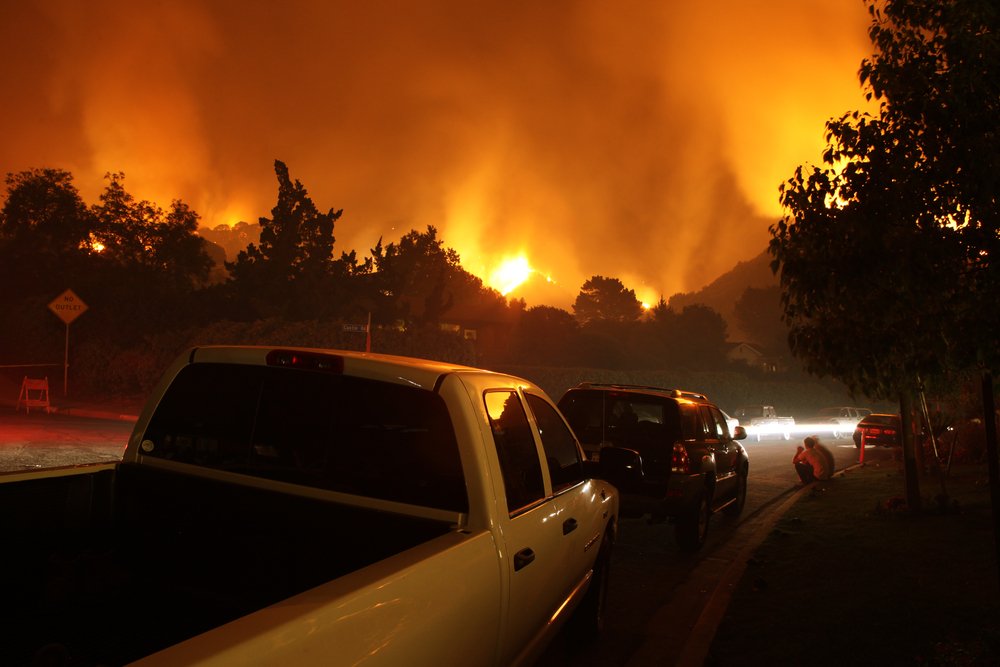
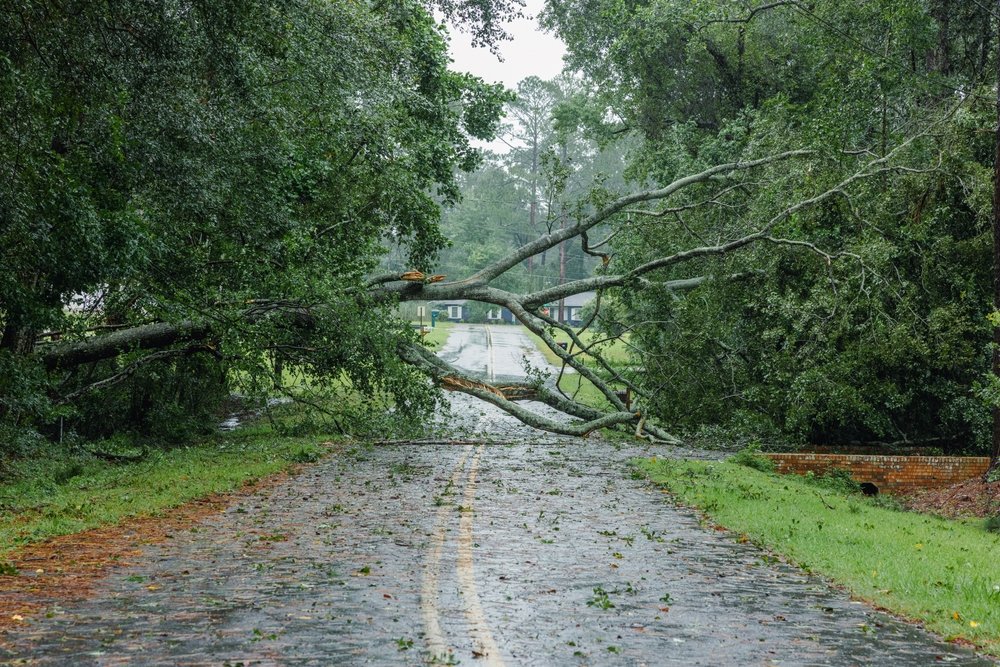
Carlos Martín: The rescission of the BRIC funds was a particularly hard pill to swallow for a lot of states and local governments, because it comes at a time when most states are finally coming to terms with their increased exposure to hazard events. They’re coming to terms with the costs and repercussions of not acting.
Credit: swatchandsoda / Shutterstock
The BRIC program replaced much of the previous pre-disaster mitigation programming funds. A lot of the money from the federal government that’s intended to prepare for the next disaster actually comes out when the disaster already happens. So, the pre-disaster mitigation funds getting replaced by BRIC meant that we were actually investing in the long term and thinking about what the future exposures for a lot of these communities are going to be.
And BRIC was established in 2020—it’s not that old of a program. It was oversubscribed. A massively competitive program. The first round of BRIC funding was allocated in 2020 during the first Trump administration.
So, BRIC provided money and critical resources to kick-start hazard-mitigation projects before disaster strikes. Study after study has shown that mitigation activities more than pay for themselves, and not just in reduced damages, but in terms of reduced draws on public relief, response, and recovery funding—on all the losses of local economic activity. Not to mention that you’re reducing the cost to lives, property, and suffering. So, disaster mitigation is one of the wisest investments that governments, at any level, can make.
The Trump administration has begun a dramatic transformation about the way that the federal government approaches disaster funding.
Anna Kramer
So, BRIC was critical in providing money. It was about a 75 percent federal share, with, in many cases, a local government share up to 25 percent. There were some exceptions for particularly smaller, rural, and impoverished communities, where the federal share could be extended to about 90 percent. But in all cases, that federal funding was absolutely critical.
The money was important, but the BRIC program also was a way to better strategize. The BRIC program had evolved significantly over those four years in which funding was offered. That was the real value add in my mind: it led states to think more comprehensively in their approaches.
You mentioned some examples of BRIC projects, like grid resilience, shoreline erosion, and flood mitigation. I’d add to that list projects that incentivized people to make mitigation changes comprehensively: regional infrastructure, property infrastructure, household education programs, and risk awareness. So, BRIC helped states to be more creative and establish priorities more succinctly.
Anna Kramer: Not only has the administration pulled BRIC, but the Trump administration also has been talking about FEMA’s responsibilities returning to the states. So, while they’re pulling away funding for these creative state-mitigation projects that reduce costs in the long run, they’re saying at the same time that they want states to be more responsible than they already are, and to carry more of the funding burden than they already do.
You went into this in detail with one of your If/Then pieces about shifts in funding for disaster response. Can you talk about the current state of play? Why does the federal government have a critical role? What are the responsibilities of states for disaster response, both in terms of funding and operational capacity?
And then we can dig into what happens when you take that federal support away.
Carlos Martín: Historically, a lot of state and local governments have been paying their share of many of these mitigation activities, typically through bond financing. We saw this happen in Houston and Harris County after Hurricane Harvey. We’ve seen it play out in different parts of the country.
In some cases, like levees and coastal protections, the stated responsibility is by statute, with federal intervention. We’re not just talking about FEMA—we’re talking about the Army Corps of Engineers having specific statutory obligation to develop certain kinds of flood infrastructure projects. In some cases, it’s federal land that we’re mitigating, and in other cases, it’s direct federal financial interests, such as the National Flood Insurance Program. We want to incentivize mitigation that supports existing federal returns down the road on that investment.
Credit: Ursula Page / Shutterstock
I mentioned the money and the quality. Some states simply can’t afford the comprehensive planning and project work on their own. So, a lot of those states are going to have real hardship. Some of them just don’t have the technical know-how.
The use of their own resources is a shift, and in some ways, it’s a positive movement. We’ve been talking for about a decade, at least, about the fact that there’s a great and important need to encourage broader mitigation activities at the state and local levels. Remember: state and local governments are the ones that maintain zoning, allow development to occur in certain exposed lands, have certain building codes—so, there’s a real opportunity to push state and local governments to think more about that.
I always think about two challenges, or two twists, to that question: What could states do if all this gets terminated—not just BRIC, but the whole of FEMA? We need to understand when they are expected to take this role on. So, a lot of capacity building has to occur. One of the other interesting things about BRIC is that a technical assistance program was associated with it, for the lower-capacity, lower-revenue jurisdictions to be able to build up to that.
And then, what’s the timing? When should we expect to be doing these transitions? The FEMA Review Council is still in conversation. There have been legislative proposals; the Fixing Emergency Management for Americans Act is a bill that’s been introduced in the House of Representatives. That does move the bar, but does so with a timeline and certain requirements.
Aside from the timing, which parts are we moving? Is it the mitigation; the relief and response, which is a very important backstop; or the long-term recovery? That conversation, I think, needs to happen.
States are worrying right now, not just about the loss of their current BRIC funding, but also about their long-term social and economic viability. When they restrict development, they lose that state revenue, they lose population, or they have a wide range of other concerns at the property level. So, there’s a bigger conversation that has to account for how that transition’s going to hurt a lot of these states.
Anna Kramer: This administration tends to do things unilaterally, not necessarily in consultation with large numbers of groups. The way you’re talking about all this sounds like an ideal way of transforming FEMA, if you’re going to do it—a way that not only gives states a significant timeline, but ideally has them involved in shaping how you go about doing it.
Carlos Martín: We’ll wait to see what the FEMA Review Council puts out. Local representatives are on the Review Council, so in theory, there will be some local input. There was a public comment period through FEMA. Most of the comments praised FEMA for its assistance in the past.
Disappearing Data
Anna Kramer: A question we got from the audience is about the amount of public data that seems to have disappeared over the course of the last several months, from government-run websites, or the data-collection programs that are no longer being run or may no longer run in the future. For any specific data that you all rely on for your research, have you seen it changing in quality, or has it disappeared? And what happens when you degrade the quality and amount of government-produced data that’s available to the public?
I’ll flag a couple things for everyone, in case this isn’t something that you follow closely. I’ve spent a lot of time writing about the cuts to weather balloon launches that have happened across the country. The National Weather Service no longer has the staffing to do its twice-daily weather balloon launches at all the weather stations across the country. These launches feed weather models with recent data, and now we have a lot less of that data than we had before. Experts tell me that, over time, this loss of data may degrade the quality of our weather forecasting.
EPA also has been talking about no longer collecting information for the Greenhouse Gas Reporting Program, which would mean no longer collecting information about greenhouse gas emissions from power producers and whoever else is required to report emissions.
Alan Krupnick: During the first Trump administration, the National Academies of Sciences, Engineering, and Medicine met to decide how to best estimate the social cost of carbon, which is used to value reductions in carbon dioxide emissions. This work was not going to happen in the Trump administration, so Kevin Rennert led a particularly important effort to estimate the social cost of carbon, so that when a more friendly administration to climate change would come around, that work already would be done. We’re thinking about doing that again this time.
Also, data collection is another story than data analysis. Government has unique abilities and resources to do major data collection through surveys. Many nonprofit groups and academics do surveys, so if some of that effort could be organized, it might be a way of filling in some of the gaps.
Plus, any data that you collect, including data the government collects, has problems. The Greenhouse Gas Reporting Program is no exception. This may be a period, a hiatus, when we can think carefully about how to improve that system, so when we’re ready to go with a new administration, we can do a better job.
A version of this article appeared in print in the Winter 2026 issue of Resources magazine.