In the RFF Supporter Spotlight feature, we hear directly from donors about their commitment to issues in climate, energy, and the environment and how they make a difference by getting involved with Resources for the Future—all in their own words.
Resources magazine recently spoke with Alex DeGolia, who works at Environmental Defense Fund (EDF) as Senior Director of Clean Electricity. EDF has funded numerous projects at RFF over the years, many of them focused on state climate policy and the electricity sector. Below are excerpts from the conversation, which ranged from the affordability of cap-and-invest policies to the value of being unwilling to compromise.
Resources: What sparked your interest in environmental policy? And what brought you to Environmental Defense Fund (EDF)?
Alex DeGolia: I spent a lot of time in the Sierra Nevada mountains in California growing up, mostly with my dad and brother. The mountains were a place of joy and refuge, both because I grew to appreciate the beauty of the outdoors and because that’s where I developed meaningful family relationships. Working at the Office of Management and Budget after college, I got to have a broad perspective on environmental policy across the federal government. I fell in love with the opportunity to connect those experiences in my personal life with my professional life. After grad school, I happened into a job in climate philanthropy and got to know EDF’s state-level work in that role. Ultimately, I wanted to more directly influence policy outcomes and was lucky to land in my current role at EDF.
Why has EDF decided to fund projects at RFF? How would you describe RFF’s “value add,” particularly given that EDF does similar research?
There’s a lot of overlap in terms of perspective and priorities between RFF and EDF. What stands out at RFF is the level of experience and expertise of the staff and the sustained focus on rigorous research. I also think that RFF researchers are unique in their ability to not just do that research in a thoughtful way, but to then also translate rigorous research into concepts that policymakers can relate to. The ability to distill detailed quantitative results down to what the outcome of a particular regulation or law might be—RFF is really good at that.

Credit: Ikona Art / Shutterstock
Tell us about the strategic partnership between RFF and EDF. In what ways does collaboration benefit the two organizations and achieve a greater collective impact?
A good example of this collective impact involves cap and invest, which EDF has long regarded as a critical policy tool for driving emissions reductions. But the question of how cap and invest can also meet this political moment around affordability—that requires rigorous analysis.
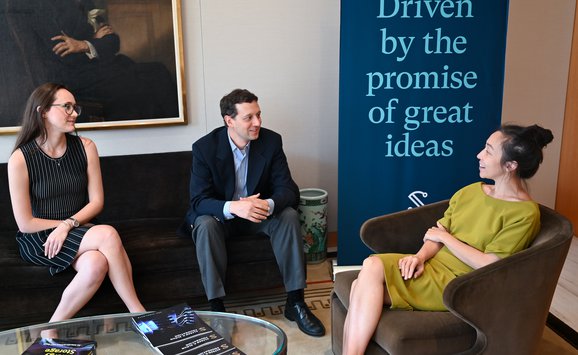
Dallas Burtraw and the RFF team evaluated the expected costs of applying an emissions cap-and-invest program in the power sector across eight states and found that the program could deliver lower-cost electricity via thoughtful reinvestment, while also driving down harmful emissions. EDF then organized a panel at New York Climate Week 2025 that highlighted RFF’s results.
To me, it was an example of EDF bringing its policy-advocacy expertise and its position within the environmental community to bear in the form of elevating this issue, and RFF bringing to the table the research needed to credibly make the case that cap and invest can deliver affordable climate solutions.
What do you think is the key to RFF’s effectiveness?
I think what makes RFF most effective is its unwillingness to compromise the rigor of the analysis, regardless of what types of questions the analysis is evaluating. That rigor creates credibility with policymakers who might struggle with trusting an advocacy organization.
One example is RFF’s project with the advocacy groups NY Renews and the New York City Environmental Justice Alliance to evaluate how a cap-and-invest program can target air-pollution reductions in disadvantaged communities. RFF provided valuable, detailed, unbiased analysis. It felt like RFF’s work and reputation created a platform for conversations about what the right policy outcomes should be in New York, which brought together environmental justice groups and NGOs. RFF’s nonpartisan approach helped broaden the coalition and created opportunities to think through the art of the possible in terms of cap-and-invest policy that could deliver pollution reductions for disadvantaged communities.
Finally, as we approach RFF’s 75th anniversary, what stands out to you about RFF’s legacy?
One legacy of RFF is the ability to continue to attract staff who, from my perspective, are the best type of environmental researcher—they are top-notch scholars who want their research to have more immediate impact than it likely could if they were working through the academic publishing game as tenured professors. That quality uniquely stands out among environmental organizations and is a powerful engine for sustained impact.


Four Ways You Can Support RFF
- Give through our website: Visit www.rff.org/donate to make a one-time donation, or to set up a monthly recurring donation.
- Give through the mail: Send your check to Resources for the Future | 1616 P Street NW, Suite 600 | Washington, DC 2003
- Give through a donor-advised fund: Donate through a DAF account at a community foundation or financial institution to support RFF while receiving favorable tax benefits.
- Give through a will, trust, or gift plan: Include RFF in your estate plans to provide meaningful, long-lasting support.
Discover other ways to give at www.rff.org/donate/ways-giving or contact Ryan Sabot at [email protected].
A version of this article appeared in print in the Fall 2026 issue of Resources magazine.