The third blog post in a series about carbon pricing explores the wide-ranging—and sometimes hidden—influence of carbon prices.
Intro to Carbon Pricing
Carbon pricing aims to put a cost on the negative effects of climate change so that consumers will, even unconsciously, make choices that consider the hidden impacts of carbon emissions. But what exactly is a carbon price? These blog posts, originally posted by the Pricing Carbon Initiative, explore different types of carbon pricing mechanisms.
If someone puts a price on carbon that no one pays, can that price still reduce emissions? Welcome to the strange and wonderful world of conceptual carbon prices. For the purposes of this series, we include in this category the social cost of carbon (SCC), voluntary carbon markets, and damage calculations used by insurance companies. While the policies we considered in the last blog post were focused on direct chemical equivalents of the canonical carbon price, the policies here work at decision points aside from the point of sale for fossil fuels.
I’ll begin with the SCC, which is an estimate of what people would pay today to avoid future climate damages. Pay now to avoid emissions, or pay later to clean up after floods and hurricanes? It’s a dark concept, but perhaps we shouldn’t expect otherwise from “the dismal science.”
Until very recently, the federal government had been using a temporary carbon price of $51 per metric ton. This was the same SCC used by the Obama administration. The Trump administration decreased it to around $1 per metric ton, and the Biden administration reverted to $51 per metric ton, which the Supreme Court upheld in a recent challenge to that figure. At the 28th Conference of the Parties, the Biden administration announced a final rule that sets the SCC at $190 per metric ton.
This is a big deal. The SCC is used in benefit-cost estimates for purchasing decisions and regulatory determinations. A higher SCC justifies more emissions-conscious decisions. So, for example, the fleet of vehicles used by the US military, the number one user of gasoline in the world, will likely include more fuel-efficient or even more alternative-fuel vehicles with a higher SCC. The US military has already successfully flown fighter jets on biodiesel derived from grease and algae oil, and one might reasonably expect more such investments with a higher SCC. Furthermore, the US Environmental Protection Agency can issue more stringent regulations on greenhouse gases because the required benefit-cost analysis it must do for every new regulation will more often tip in the direction of higher benefits with a higher SCC.
The full impact of this update comes into clearer focus when you consider that the US federal government is the largest consumer in the world, spending more than $650 billion on products and services each year. Public-sector employees account for a little over 15 percent of the workforce, with 6 percent working for the federal government. A recent executive order by President Joseph R. Biden requires more agencies to do basic carbon accounting and consider the SCC in procurement—this means that, before the office supplies those workers use are bought, the buildings they work in are lit, even before the uniforms they wear are sewn together, someone will be making decisions based on the emissions all that will produce. Suppliers will notice and are likely to shift production to be more climate conscious, even for what they sell to the general public. So, can a carbon price that no one pays reduce emissions? The answer is yes.
This brings us to recent work from the Commodity Futures Trading Commission (CFTC) on voluntary carbon markets. Voluntary carbon markets have been around for decades. The Kyoto Protocol, adopted in 1997, created a market for carbon credits. The idea behind carbon credits is simple: pay people to take actions that either remove greenhouse gases from the atmosphere (like planting trees), or that prevent them from being emitted in the first place (like preventing people from cutting down trees). However, these programs have long been rife with questions around transparency; duplication; comparability between projects; and, ultimately, trust.
This is one instance where business is asking for regulations. Businesses would like the CFTC to regulate voluntary carbon markets because without trust, even well-intentioned companies are very exposed to criticisms of greenwashing. A widely circulated October article in the New Yorker painted a blistering portrait of fraud in carbon credits. However, it is unclear if the CFTC has jurisdiction to directly regulate voluntary carbon markets. The CFTC definitely can regulate derivative markets, such as futures of carbon credits, but it’s unclear if the CFTC can regulate the credits themselves. An act of Congress could help clarify this.
A closely related project is that of Natural Asset Companies. The New York Stock Exchange has partnered with a company called Intrinsic Exchange Group to file for a proposed rule pioneering a new class of listed company based on nature and the benefits that nature provides. The proposed rule was filed on October 4, 2023. Interest in Natural Asset Companies goes beyond removing carbon from the atmosphere to keeping terrestrial and marine natural carbon sinks intact and functioning. Scientists have highlighted carbon sinks as extremely important for carbon accounting, preserving biodiversity, and sustaining the livelihoods of over three billion people, among other reasons. The effort to create Natural Asset Companies ties into a larger, global effort, colloquially known as “30 by 30,” with both an international agreement and action by the Biden administration responding to the science.
Of course, participation in a voluntary carbon market is voluntary. Similarly, should the New York Stock Exchange and Intrinsic Exchange Group win approval from the US Securities and Exchange Commission, no one need buy stock in Natural Asset Companies. Yet, both create incentives to reduce emissions, particularly for those interested in long-term planning by investing in such markets personally or as a business. In this way, they bring climate futures into present-day decisions by creating a price.
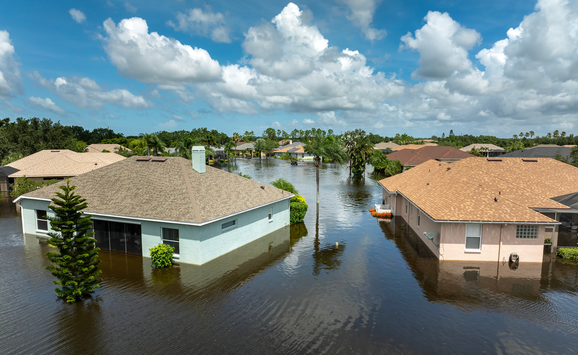
The final conceptual carbon price I’ll consider here is linked to recent jarring announcements by insurance companies that they will no longer provide insurance on new homes in large states, such as California and Florida, among others. Because most mortgage lenders require home insurance both to purchase a home and throughout the term of a mortgage (commonly 30 years), the withdrawal of major insurance companies has profound implications for millions of Americans. In some instances, it means people hoping to buy a house cannot do so. In others, it means the insurance they can buy is lower quality and covers fewer expenses, leaving them more exposed to financial ruin in the case of a climate-fueled disaster. The American Automotive Association has already stated that it is not renewing a “very small percentage of higher exposure homeowner’s policies” in Florida, according to the Palm Beach Post. Where such homeowners are not able to find replacement insurance, they could lose their homes that they’ve been making payments on for decades.
What does this have to do with carbon pricing? Insurance companies are making these determinations based on risk models and the real costs they have incurred due to climate-related disasters. Their example highlights something that had previously been rather theoretical about the SCC: that it gives us a choice. Pay now, or pay later. For the one in six Americans who live in California or Florida, that choice is already gone.
This cuts directly to the American Dream. While there are many versions of the American Dream, most of them include owning your own home. To the extent that this is true, the system that has enabled the American Dream for tens of millions of families is broken, and climate change broke it. To be rather dismal, the bill has come due, and for many families in California, Florida, and in other states, the price is the American Dream.