
Ethanol-to-jet could link the large ethanol industry in the United States to aviation, one of the hardest sectors to decarbonize. However, its viability depends on achieving and credibly demonstrating low life-cycle carbon intensity.
Sustainable aviation fuels (SAFs) are widely viewed as one of the few near-term options for reducing greenhouse gas emissions from aviation, but current production volumes make up a small fraction of total jet fuel use. As the United States explores options to scale SAFs, ethanol-to-jet (ETJ)—a pathway that converts ethanol into synthetic jet fuel—has emerged as an option that can leverage the country’s large capacity for ethanol production.
The United States produces about 15 billion gallons of ethanol per year, mostly from corn and mostly blended into gasoline. Future adoption of electric vehicles could cause the market for ethanol used in gasoline blending to plateau or shrink. At the same time, aviation demand is expected to grow over time, and aircraft will continue to require energy-dense liquid fuels. ETJ therefore could redirect some ethanol production toward a sector with growing fuel demand and limited near-term alternatives to liquid fuels.
ETJ is relatively new at commercial scale: LanzaJet’s Freedom Pines Fuels began commercial SAF production using ETJ in 2024; other firms—including Gevo and Summit Next Gen—also are pursuing ETJ projects. Yet, questions remain about the carbon intensity of SAF produced via ETJ, and the market signals for longer-term expansion of ETJ production capacity remain unclear.
This blog post reviews why ETJ may warrant closer attention, what constrains its development, and what to watch over the next few years.
How Ethanol-to-Jet Works
The ETJ process has two stages. First, ethanol is produced from biomass such as corn, sugarcane, sugar beets, or cellulosic materials. Second, the ethanol is converted into jet fuel. ETJ facilities can either buy ethanol from existing ethanol plants or produce it on-site.
For corn-based ETJ, ethanol production involves converting cornstarch into sugars that are fermented into ethanol. This process also produces distillers’ grains as coproducts; these are commonly used as livestock feed. The ethanol is then distilled and dehydrated. Additional processing steps link carbon molecules into longer chains and use hydrogen to upgrade the chains into molecules that meet aviation fuel standards.
How Ethanol-to-Jet Compares to the Dominant Pathway
Most SAF produced in the United States comes from the hydroprocessed esters and fatty acids (HEFA) pathway. HEFA uses vegetable oils, waste fats, and waste oils as inputs and relies on the same basic equipment used to make renewable diesel—a fuel already produced at commercial scale in the United States. So, plants producing SAF with HEFA face lower capital costs than other technological pathways.
The challenge with HEFA is feedstock cost. Based on wholesale price data for crude soybean oil from the US Department of Agriculture, soybean oil—a major HEFA input in the United States—cost roughly $3–$4 per gallon of oil in 2024. In contrast, petroleum jet fuel cost roughly $2–$3 per gallon. This price differential means that the SAF feedstock alone costs more than the fossil fuel it replaces. Absent policy support or mandates, the SAF that results from this feedstock cannot be cost competitive with petroleum jet fuel, even before accounting for SAF capital or operating expenses.
Beyond cost, the scalability of HEFA-based SAF is also constrained by competition for feedstock with food, animal feed, and other fuel uses, notably biodiesel and renewable diesel.
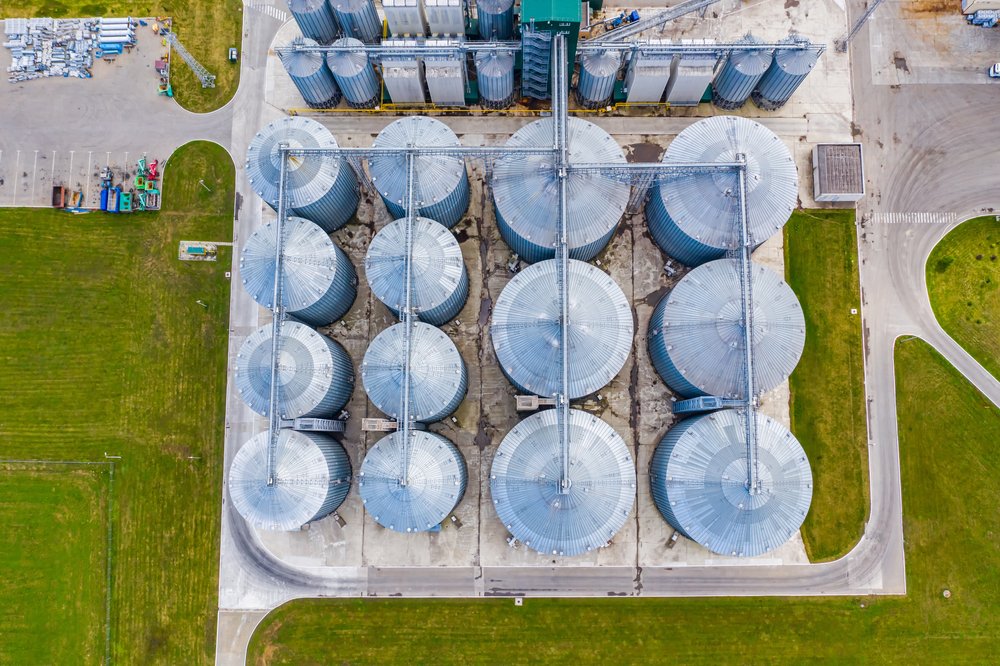
In contrast, ETJ requires notable up-front capital investment, because existing ethanol infrastructure does not include the facilities needed to convert ethanol to jet fuel. However, SAF produced via ETJ can come with lower feedstock costs when corn ethanol is used, as corn ethanol is cheaper than HEFA feedstocks. The larger, lower-cost supply of corn ethanol can make the production of ETJ-based SAF easier to scale than HEFA-based SAF.
Credit: Terelyuk / Shutterstock
ETJ’s cost relative to HEFA captures only part of the picture; assessing ETJ’s prospects also requires examining the climate performance of the resulting SAF and its competitiveness with conventional jet fuel. Climate benefits depend on whether SAF produced via ETJ can achieve lower life-cycle greenhouse gas emissions than conventional jet fuel and other SAF pathways. Competitiveness, in turn, depends on demand and policy support, which typically are tied to a fuel’s measured performance for life-cycle emissions. Understanding these considerations requires examining how life-cycle emissions are measured and how policy and compliance frameworks use those measures.
How Life-Cycle Emissions Are Counted
Greenhouse gas emissions associated with biofuels such as SAFs depend on how the fuel is made. Policy and compliance programs assess these emissions using life-cycle analysis; this analysis considers greenhouse gas emissions across the fuel supply chain, including feedstock production, transportation, processing, and combustion. Some of the emissions released during fuel combustion and processing are offset by carbon uptake during biomass growth.
Many policy-relevant frameworks for life-cycle analysis also account for emissions from indirect land use change—land use changes that occur when higher crop demand shifts global agricultural production, leading to conversion of forests or other land to cropland, thus releasing carbon previously stored in forests, grasslands, and soils.
Life-cycle analysis aggregates these components into a single metric—carbon intensity—defined as total greenhouse gas emissions per unit of energy. Carbon intensity plays a central role in determining whether a fuel qualifies for programs such as the federal Renewable Fuel Standard, California’s Low Carbon Fuel Standard, and the Clean Fuel Production tax credits. The Carbon Offsetting and Reduction Scheme for International Aviation, administered by the International Civil Aviation Organization, also uses carbon intensity scores to determine whether airlines may use a given fuel for compliance and the emissions reductions the airlines may claim under the scheme. These policies vary in the life-cycle analysis models they use and how the resulting carbon intensity scores help determine compliance or incentives.
Life-cycle analysis models vary in their treatment of several factors, reflecting ongoing methodological debates related to life-cycle analysis, which can lead to different carbon intensity scores for the same fuel. Such factors include upstream agricultural practices (e.g., cover cropping, reduced tillage, or nitrogen management), electricity emissions, coproducts, and indirect land use change, among others. For example, how models account for the potential of distillers’ grains to displace other animal feeds can materially affect the carbon intensity score assigned to ethanol.
Policies also can vary in terms of which emissions count toward the carbon intensity score. For example, early implementation of the Clean Fuel Production tax credit based credit eligibility on a score that accounted for indirect land use change, while subsequent updates to the credit under the One Big Beautiful Bill Act excluded indirect land use change from the emissions calculation.
The Carbon-Intensity Challenge
The ETJ process releases greenhouse emissions at several points—during fermentation, during electricity generation and natural gas combustion used for distillation and dehydration, during the production of hydrogen used for hydroprocessing (which can be emissions intensive if the hydrogen is made from fossil natural gas), and during upstream agricultural activities.
In many commonly used life-cycle analysis models, the carbon intensity of SAF produced by corn-based ETJ is, at best, modestly lower than that of petroleum jet fuel, and relatively high compared to other methods of producing SAF. Without process improvements, the ETJ pathway using conventional corn ethanol would yield only small reductions in greenhouse gases (if any) relative to petroleum jet fuel; hence, ETJ via corn ethanol likely would receive limited support under policies that condition incentives on achieving low carbon intensity.
Without process improvements, the ETJ pathway using conventional corn ethanol would yield only small reductions in greenhouse gases (if any) relative to petroleum jet fuel.
At the same time, research suggests that the emissions associated with SAF produced via corn-based ETJ could be reduced substantially if production practices change. Recent analysis by the EFI Foundation uses Argonne National Laboratory’s Greenhouse gases, Regulated Emissions, and Energy use in Technologies (GREET) model —specifically its research-and-development version, commonly used in academic analysis—to show how the carbon intensity score of corn-based ETJ SAF can be reduced through carbon-reduction measures across the supply chain. These measures can include carbon capture and long-term storage at fermentation, lower-carbon energy use across the supply chain, use of renewable hydrogen, and improved feedstock cultivation practices. Under GREET’s accounting assumptions, the report estimates that a set of readily deployable, low-cost measures could reduce the carbon intensity score of corn-based ETJ SAF by up to 89 percent. With costlier but more aggressive emissions-reduction measures, the report finds carbon-intensity reductions of up to 104 percent, implying net-negative life-cycle emissions.
Importantly, these estimated reductions depend on methodological assumptions in GREET, some of which—including how changes in cultivation practices should be credited—remain debated in the context of life-cycle analysis. This continued debate means that the magnitude of estimated emissions reductions could differ depending on the accounting choices.
An alternative in the longer term is to produce SAF via ETJ using cellulosic ethanol, which can reduce upstream emissions and receives a lower carbon intensity score than corn ethanol in life-cycle analysis models. However, cellulosic ethanol currently has lower technological readiness and higher costs. In both cases, the competitiveness of lower-carbon ETJ SAF depends on the costs of achieving and verifying emissions reductions.
The Demand Question
Unlike in the European Union, no regulations require airlines in the United States to buy meaningful volumes of SAF. Current offtake agreements for all types of SAF mostly reflect voluntary commitments from airlines to signal environmental stewardship. Given that the airline industry is highly price sensitive, such environmental commitments are limited in scale and would expand only if SAF costs fall.
The Clean Fuel Production tax credits will help with SAF project financing in the near term but may not be sufficient to close the cost gap with conventional jet fuel. Because the tax credits are slated to end in 2029, they also do not create strong long-term incentives for investment. In principle, SAF producers can generate credits under longer-term programs such as the federal Renewable Fuel Standard or state Low Carbon Fuel Standards if the production pathways are certified under these programs, which can help narrow the cost gap between SAFs and traditional jet fuels. Whether ETJ qualifies for these policies (or generates meaningful compliance value under these policies) will depend on achieving materially lower carbon intensity scores under program-specific life-cycle analysis.

Credit: HIROSHI H / Shutterstock
For corn-based ETJ SAF, international markets do not guarantee buyers, either. The European Union mandates SAF use under ReFuelEU, but food- and feed-based fuels do not qualify, which excludes corn-based ETJ from that market. Even under CORSIA, corn-based ETJ is not a very attractive method of compliance for airlines, as the life-cycle analysis performed by the International Civil Aviation Organization assigns it a relatively high carbon intensity score compared to SAF produced using other methods.
The Outlook for Ethanol-to-Jet
ETJ could provide a new outlet for corn and ethanol production in the United States, supporting a sector—aviation—that has few low-carbon alternatives. However, the climate performance of SAF produced via ETJ depends on achieving and verifying lower carbon intensity across the supply chain. Analysis by the EFI Foundation suggests that substantial reductions in carbon intensity may be achievable through measures that impose relatively low additional cost.
The trajectory of ETJ will depend on whether these reductions can be documented under relevant and trusted frameworks for life-cycle analysis used by SAF policies and voluntary buyers. The future of ETJ also will depend on the capital required to build new facilities, future policy signals for SAF demand, and cost reductions that bring SAF produced via ETJ closer to the price of petroleum jet fuel. The next several years will determine the extent to which ETJ’s potential translates into notable and sustained quantities of SAF production.