
In this episode, host Daniel Raimi speaks to Catherine Wolfram about the recently launched Open Coalition on Compliance Markets and how it can coordinate carbon pricing systems across national borders, inspire more and more countries to join, and ultimately reduce carbon emissions. Wolfram is a professor at the Massachusetts Institute of Technology (MIT) Sloan School of Management, the co–faculty lead of the Global Climate Policy Project at Harvard University and MIT, and a member of the Resources for the Future Board of Directors. She and coauthors recently published work on the Open Coalition, suggesting a viable framework for countries in the coalition to harmonize their domestic carbon pricing programs as they trade across borders, while raising government revenues and reducing carbon emissions. The authors’ spin on economist Bill Nordhaus’s original idea of climate coalitions (or “climate clubs”) involves low-income nations joining the coalition at a lower cost; Wolfram argues that coalition countries experience less friction with international trade and gain the advantage of revenues raised, with the downsides of implementing a carbon price much less than what’s commonly thought.
Listen to the Podcast
Audio edited by Rosario Añon Suarez
Notable Quotes
- Carbon pricing is possible alongside a clean energy transition: “I like to point out that 17 of the G20 jurisdictions have carbon pricing, and the three that don’t are Russia, Saudi Arabia, and the United States—which may say something about the relationship between fossil fuel dependency and carbon pricing.” (3:24)
- Carbon border adjustment measures can help countries tackle climate change: “I think that in 10 years, we may look back and see CBAM [carbon border adjustment measure] as an amazing turning point in the way that the world has been able to address climate change.” (5:35)
- Set it and forget it: “The ultimate and best CBAM is a CBAM you never have to enforce, because so many countries are doing carbon pricing at the right level. That’s the end state that we’re going for.” (16:36)
Top of the Stack
- “Putting Climate Coalitions into Practice: A Common Framework for Balancing Competitiveness and Equity” by the Global Climate Policy Project (GCPP) Working Group on Climate Coalitions
- “Building a Scalable Climate Coalition for Heavy Industry” by Catherine Wolfram, Joseph Aldy, Candido Bracher, Gregory Casey, Vaibhav Chaturvedi, Kimberly Clausing, Carolyn Fischer, Christian Gollier, Allan Hsiao, Frank Jotzo, Marcelo Medeiros, Kyle Meng, Athiphat Muthitacharoen, Axel Ockenfels, Mari Pangestu, Marilyn Pereboom, Arathi Rao, Ivan Rudik, Daouda Sembene, Naomi Shimberg, E. Somanathan, Dustin Tingley, and Jennifer Winter
- “How Carbon Border Adjustments Might Drive Global Climate Policy Momentum” by Kimberly Clausing, Milan Elkerbout, Katarina Nehrkorn, and Catherine Wolfram
- “Putting Climate Coalitions into Practice: A Common Framework for Balancing Competitiveness and Equity” from the Global Climate Policy Project
- “Emissions Trading Worldwide: ICAP Status Report 2026” by the Internation Carbon Action Partnership
- Hooked podcast series from Campside Media
The Full Transcript
Daniel Raimi: Hello, and welcome to Resources Radio, a weekly podcast from Resources for the Future. I’m your host, Daniel Raimi.
Today, we talk with Dr. Catherine Wolfram. Catherine is the William Barton Rogers Professor of Energy Economics at the MIT Sloan School of Management; co-faculty lead of the Global Climate Policy Project at Harvard and MIT; and, maybe most importantly, a board member with us at RFF. Catherine has recently published a series of papers and reports focused on how countries can coordinate their domestic carbon pricing programs when trading across borders. In today’s episode, I’ll ask Catherine to describe why that’s important, and then we’ll look specifically about how this type of coordination can reduce emissions, raise revenue for governments, affect consumer prices, and more. Stay with us.
Catherine Wolfram from MIT, welcome to Resources Radio! Or, I should say, welcome back to Resources Radio.
Catherine Wolfram: Glad to be here.
Daniel Raimi: Yeah, we had you on just about six or seven months ago talking about topics related to what we’ll be discussing today, so I’m not going to ask you to introduce yourself again to our audience. I’ll let people go back and listen to the episode from a little while ago. We’re going to dive right in.
We’re going to talk today about how countries around the world can work together to coordinate their carbon pricing systems. And before we get into the nooks and crannies of that, can you start us off just by giving us an overview of, What are some of the big carbon pricing policies that are out there around the world?
Catherine Wolfram: Yeah. Thanks so much for asking that, because I think there’s been a lot of movement in this domain over the past couple of years, so I think ordinarily people think, “Oh, yeah, carbon pricing, the Europeans are doing it, but it hasn’t really flown elsewhere,” because it hasn’t flown in the US. But over the past couple years, we’ve seen a number of countries introduce and expand their carbon pricing programs.
The EU ETS (the EU Emissions Trading System), was the first big one. Ironically enough, that was based on an emissions trading program in the US, not for carbon, but for sulfur dioxide. But since the EU, China now has the largest emissions trading system in the world in terms of the emissions that are covered. India just launched a program this year. Japan just launched a program this year. South Korea already had one. Canada gets a lot of attention in the carbon pricing conversations, because Carney basically campaigned on getting rid of one part of their carbon price, which was the consumer-facing carbon price, but he did keep the carbon price on the industrial sector. So those are existing systems. There are a number of countries that have systems in the planning stages; importantly, Brazil and Turkey.
One way to summarize all this progress: I like to point out that 17 of the G20 jurisdictions have carbon pricing, and the three that don’t are Russia, Saudi Arabia, and the US—which may say something about the relationship between fossil fuel dependency and carbon pricing.
Daniel Raimi: It may. It may. It puts us in interesting company.
Catherine Wolfram: Right.
Daniel Raimi: Another metric that I often tell people when thinking about carbon pricing is that more than half of the world’s population lives in a place where carbon pricing is in effect.
And there’s lots of great stats on this that you can find, but the one I always go to is the International Carbon Action Partnership. They have this annual report that sort of lays out the state of carbon pricing and how it evolves from year to year. I find it to be a great resource.
Catherine Wolfram: That’s a good one. I had not heard it, but that makes sense. If you’ve got India, China, that makes total sense.
Daniel Raimi: Yeah. So this might be obvious for some of our listeners, but I don’t think it’s obvious to the average person, which is: With all of these different carbon pricing policies in place, there is actually a need for countries to coordinate with each other when they’re trading goods overseas back and forth. Why is that? Why do we need to think about harmonizing these policies in some way?
Catherine Wolfram: Yeah, sure. Let’s start by imagining that there’s a single individual country that enacts a carbon price and assume that no other countries do. Then, the worry for that country that has the carbon price is that, because they’re imposing a cost on their producers that other producers don’t face, that some of the production will move to the cheaper places to do the production. That’s what economists call “leakage.”
That’s roughly the situation that the EU found itself in, in the late, say, twenty-teens—they had a robust carbon price that was on the path to increase, other countries were not keeping up, and they were worried about losing competitiveness, basically about companies moving to other countries. So, they enacted the carbon border adjustment mechanism, or CBAM.
I think CBAM has been very controversial. I think that in 10 years, we may look back and see CBAM as an amazing turning point in the way that the world has been able to address climate change.
What CBAM did is basically say, if you’re exporting from, I don’t know, Malaysia to the EU, and you produce a good that’s covered in the European Union by the carbon pricing scheme … They started with a couple of industries. They said, if you’re exporting to the EU, you have to pay at the border as though you are a European producer, so you have to pay the carbon price. Say you’re a Malaysian steel producer, and it takes you two tons of carbon to make a ton of your steel. Say the EU price was, whatever, 30 euros a ton. When you export to the EU, you have to pay 60 euros a ton. But—and this is a really important but—if you’ve already paid a carbon price in Malaysia, you get credited for whatever carbon price you’ve paid there.
I have some work with Milan Elkerbout and other RFF people that just shows that this has led to a proliferation of first conversations about carbon pricing and, in a number of cases, countries actually adopting carbon prices themselves. And part of this I think is they didn’t want to send money to the EU that they could keep domestically. And some of the countries, like Turkey, have been very explicit that that’s why they’re putting on their carbon price.
Daniel Raimi: That’s really interesting. Is that why you say that the introduction of the CBAM could really be a turning point, because it’s sort of leading to this spiraling and proliferation of carbon prices to sort of satisfy the European market, and countries want to keep some of that revenue closer to home?
Catherine Wolfram: Yeah. And I realize that now that I didn’t directly answer your question.
I think the potential problem, and the reason you want to have coordination, is: Other countries, as they enact their carbon prices, go through similar domestic political pressures as the EU. Say Turkey has its carbon price. Then the Turkish producers start saying, “Well, wait a minute, we’re facing competition from countries outside our borders that don’t themselves have carbon prices. We might want a border carbon adjustment,” and you potentially would get just this proliferation of border carbon adjustments and different reporting standards and different … What actually counts as a carbon price might be different. That, then, becomes a big headache for firms. They have to hire lots of people to understand all these different rules, and potentially it’s a real barrier to trade.
So, I think one of the main benefits of coordinating carbon pricing is you can have some kind of agreement. When we ship Malaysian steel, if Malaysia has a carbon price to the EU, you will recognize exactly X per ton of steel, and we won’t have to go through some big reporting exercise for every single ton of steel that we’re sending.
Daniel Raimi: Yeah. That makes a lot of sense. And maybe just another detail to throw in there is that, a lot of times, the headline price for carbon in a country might not actually match the effective price that a company is paying. So, in some industries, companies or firms get free allowances given by the government, and the company might not actually be paying the full headline price on their carbon. So these are some of the kind of in-the-weeds details that you need to harmonize for there to be a transparent accounting of: How much did you actually pay in the country of origin?
Catherine Wolfram: Exactly. And I’m glad you brought that up, because I purposely used $30 a ton for the European Union, and some of your listeners might’ve been saying, “Well, wait a minute, but the EU price is more like $90 a ton.” Or, I think it was 80 euros last I checked. “Why’d you use 30?”
It is because the European steel producers right now are still getting a fair number of free allowances. We at the Global Climate Policy Project just put out a report, and when you account for those free allowances, which the EU will do while they’re still in effect, the effective carbon price that you have to pay is more like 30.
Daniel Raimi: Yeah, and we’re going to talk more about that report in just a minute. But before we do, I want to ask about an interesting development that’s happening, I believe, under the auspices of the international climate negotiations, the UN Framework Convention on Climate Change. It’s this thing called the Open Coalition on Compliance Markets. What is that, and what is it starting to do?
Catherine Wolfram: It’s basically a group of countries that are interested in doing what we just said and coordinating carbon pricing. Or maybe not exactly what we just said, but at a high level, in coordinating carbon pricing.
So it was introduced at COP30 by Brazil. They introduced a declaration, but it wasn’t part of the formal UNFCCC process, which I think is important.
Brazil ultimately got 17 countries in the EU to endorse its declaration. I’ll say in a second why that’s an amazing number, but it’s nowhere near the 190 or whatever countries that are all part of the UNFCCC. I think it’s important, because it shows that, with a subset of countries, you can actually make progress.
The 17 countries in here … It’s not just country numbers, it’s who were those countries … they included the EU, China, Canada, Mexico, three African countries, Singapore, New Zealand. A very nice geographic distribution of countries.
I think I already said this, but I’ll say it again: It was spearheaded by Brazil, and nice variation across the income spectrum. So, I think it’s an important indication that you can make progress.
It was a declaration. There was a 300-word, not-super-detailed declaration that the leaders of these 17 countries and the EU endorsed, and then the Open Coalition was formally launched at a meeting in Florence in May. And then they had another meeting in September in Wuhan, China. They introduced a work plan that lays out three phases. And the third phase is that they’re envisioning interoperability between compliance carbon markets, or between carbon pricing systems.
I think it’s a super exciting development, and it’s amazing that they’re articulating something so concrete as this idea of interoperable carbon pricing systems.
Daniel Raimi: Yeah. That is really exciting and will be fascinating to watch.
You mentioned just a couple minutes ago a recent report that you published with a big team of coauthors. I believe you’re referring to the report that’s called Putting Climate Coalitions Into Practice. That report provides a really nice, concrete example of how one might envision implementing a program of the kind that we’re describing.
I’d love for you to just tell us about what that model might actually look like in practice—so, what types of industries might be involved, and what sorts of coordination mechanisms you might need to actually do this in the real world.
Catherine Wolfram: Yeah, sure. We are relying very heavily on an idea that Bill Nordhaus, who won the Nobel Prize a couple years ago, articulated. He came up with this idea of a “climate club.” The idea is that, to be in the club, you have to have a carbon price. If you’re out of the club and try to export to countries that are in the club, you face some kind of punitive tariff.
And so we are making a couple tweaks on that and saying, to be in the club, you have to have a carbon price, starting with the CBAM sectors, starting with the heavy industrial sectors, where we’re seeing a lot of carbon pricing. But not only any carbon price—you have to have a carbon price at a certain level, and maybe that level should vary as a function of a country’s GDP per capita.
So a low-income country could get in at a lower carbon price than a middle-income country, and a middle-income country could get in at a lower carbon price than a high-income country. And so I think that’s an important way to acknowledge that there are fairness criteria that we want to recognize in addition to economic efficiency.
Economic efficiency says, every single carbon molecule should be priced at the same level—but let’s start small, with a set of industries where we’re already trading them, where there are already lots of carbon pricing systems developing. And let’s start in a way that recognizes some important fairness considerations.
I guess the last thing I’ll say is, the reason that this addresses what we’ve been talking about so far is … The idea is, if you’re in the club, then de facto, you get free trade. You don’t face one another’s CBAMs. And so then, you don’t have all these reporting requirements and kind of proliferation of different systems. You’ve kind of agreed within the club to recognize one another’s carbon prices when you’re trading goods.
Daniel Raimi: That makes sense. And just to make sure I’m clear on this, if you’re in the carbon club, that doesn’t necessarily resolve any other disputes you might have about trade when it comes to whatever labor standards or anti-competitive practices—this is really just about carbon, right?
Catherine Wolfram: Yeah. Just about carbon.
Carbon’s hard enough, as we already referred to, right? I mean, there are lots of different ways that carbon pricing systems can be implemented. But I think the beauty of something like this club—or we are now calling it a “coalition.” We were speaking with policymakers in a number of middle-income countries, and they said, “Don’t use the term ‘club.’ Club is exclusive.” So, we’ve started talking about it as a “coalition.”
But it becomes—as a Brazilian policymaker described it to me—kind of magnetic. The bigger the coalition gets, the more disadvantageous it is to remain out of the coalition, because in Nordhaus’s formulation, if you’re in the coalition, you get free trade—but if you’re out of the coalition, you’ve got to pay border adjustments. And so if you have a bunch of important countries in the world that are part of the coalition, then it becomes advantageous to be in the coalition and not to be out of it, and the more countries that join the coalition, the more that dynamic plays out.
I like to say that the ultimate CBAM, the best CBAM, is a CBAM you never have to enforce, because so many countries are doing carbon pricing at the right level. That’s the end state that we’re going for.
Daniel Raimi: Yeah, that makes sense. And it makes sense why people would want to call it a coalition. Although, it is a bummer. I sort of like the idea of a club, which makes me think of people hanging out in a tree house, which would be more fun.
But okay, great. Let’s talk now about another paper that you published recently, that you led with coauthors, that is really focused on actually modeling the effects of putting a policy like this into place. The paper is called Building a Scalable Climate Coalition for Heavy Industry. We’ll have a link to it in the show notes, of course.
So, when you model out the economic and emissions effects of implementing something like this in the real world, what do you find in terms of emissions reductions, and how much revenue is it raising for governments?
Catherine Wolfram: Yeah. It’s important to note, as I said at the beginning, there are a lot of carbon pricing systems that are proliferating, but they’re starting small. They’re starting at relatively low prices. What we modeled is a coalition where low-income countries would have to charge $25 a ton, middle-income countries would have to charge $50 a ton, and high-income countries would charge $75 a ton.
We found considerable increase in emission reductions at those carbon prices. That’s exactly what we’re going for—trying to reduce emissions.
But especially in these industries that are hard to decarbonize, even at $75 a ton, there are not a lot of factories where you can get rid of all emissions at that price. So, governments collect a fair amount of revenue, and that’s just pure revenue into the fisk, basically. It’s revenue that the governments can do whatever they want with. Maybe they can spend it on climate mitigation programs; maybe they can spend it on climate adaptation; or, if you’re a low-income country, you can spend it on healthcare, education, or other important things. If you’re a high-income country like the US, maybe you’d want to spend it on deficit reduction. It’s an important feature of carbon pricing that I think the econ profession has underemphasized that—at least in the short run, until you get massive decarbonization—it’s a significant source of government revenue.
Daniel Raimi: Absolutely. There’s been lots of work at RFF and other institutions over the years, trying to think about the different ways that you can use that revenue as you just described. And in some cases, you can make households better off than they were before, especially if you redistribute the revenues in ways that are fairly progressive economically.
Catherine Wolfram: Yeah, definitely.
Daniel Raimi: Related to that, one of the things that people always worry about with carbon prices is the effect on consumer prices—and you model that out in this analysis. What types of effects do you find on how much a carbon price at these levels might actually affect the prices that people pay for goods in the economy?
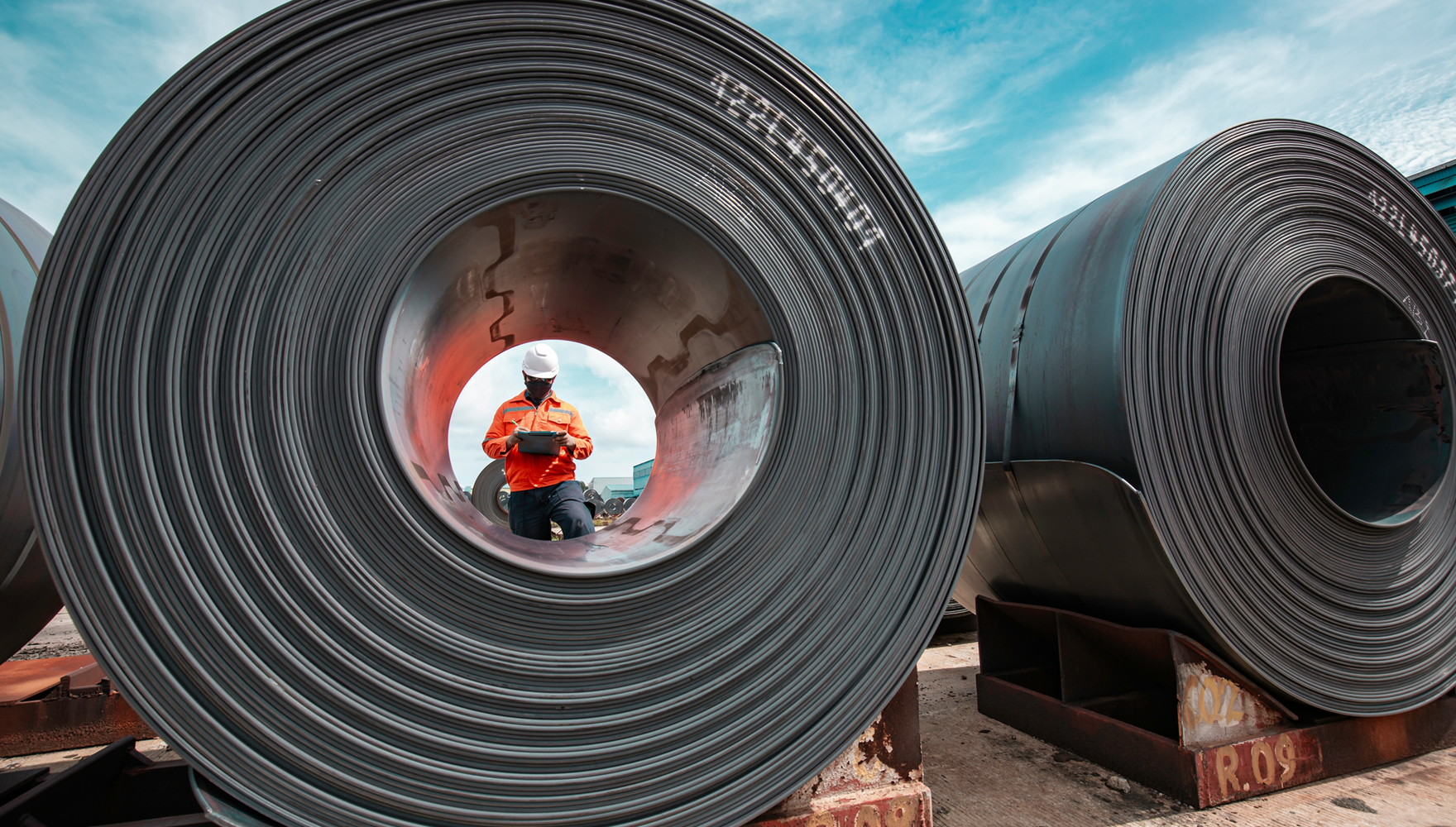
Catherine Wolfram: I think I said this, but just to emphasize: We’re modeling a heavy-industry climate coalition. So, it’s a climate coalition that’s based on agreeing on carbon pricing in the steel, aluminum, cement, and fertilizer sectors. Just a reminder to people that those are goods that are pretty far up the supply chain; people don’t go to the grocery store and buy steel.
But even for those upstream goods, we found what I would characterize as relatively modest impacts on prices, in the neighborhood of 5 percent, maybe 10 percent for cement. We saw bigger impacts there. But again, if you trace this out to consumer goods, it’ll be a fraction of that, because not all the price increase from the carbon price that the cement firm is paying will get passed through to builders, and builders won’t pass it all to the homeowners. So I think for consumers, it’s relatively modest.
Daniel Raimi: Yeah. That makes sense. And if one imagined a CBAM program like this sort of broadening beyond just those heavy industrial sectors, would it be reasonable to expect that the price increases would increase proportionally with those additional sectors being added, or is there some reason to think that it wouldn’t?
Catherine Wolfram: I think it all depends on what people’s alternatives are.
It’s really important, I think, to marry a carbon price with subsidies for clean energy, subsidies for buying an electric vehicle, but also upstream subsidies for innovation and clean energy. The more we do it, then exactly as you’re saying, the lower the price increase will be for consumers.
And so, I think it becomes more palatable to have a carbon price, right? If you face a carbon price on a gallon of gasoline, and you have to buy a gallon of gasoline, you’re annoyed about it. But if you face a carbon price, and you have the relatively attractive option to switch to an electric vehicle, then you’re not as annoyed by it.
Daniel Raimi: Yeah. Totally makes sense. The combination of carrots and sticks to move you where you want to go.
We talked earlier about emissions leakage, this concern that if you put a carbon price on a given sector in a given country or region, that industry that you’re applying the carbon price to—maybe it’s steel, maybe it’s cement—will just up and leave and go to another country. What do you find in terms of the leakage effects of implementing carbon prices at these levels?
Catherine Wolfram: Again, I would say relatively modest. Here, the key is to have a big coalition. The bigger the coalition, the fewer countries that are outside of the coalition to have the leakage go to.
But the coalition we modeled was roughly what we saw come in Brazil. A couple of differences. Like, we have India and Indonesia in the coalition. They have not (at least yet—will, hopefully) joined the Open Coalition. But we found, I think at most, 1 percent increase in production in these goods outside the coalition. So, very modest leakage.
Daniel Raimi: Yeah. That’s great. And to dig into the weeds of the modeling that you and your coauthors are doing in this analysis, I assume we can refer people to the paper and the appendices that probably have lots and lots of details on how this all works under the hood.
Catherine Wolfram: Yeah. I mean, if you’ll allow me just one fun modeling thing: We used two very different models and got pretty similar results, so that was a fun modeling outcome. I think it should give people comfort that it’s not just something weird about one of the models that’s driving these results.
Daniel Raimi: That’s cool. And by model, are you referring to an international trading model?
Catherine Wolfram: Yeah. One of the models is a standard international trade model, and the other is more bespoke for the commodities that we’re actually modeling.
Daniel Raimi: Great. Well, Catherine, we’re just about out of time. Before we go to Top of the Stack, I just want to ask, Is there anything on this topic that we haven’t talked about yet that you want to share with our audience?
Catherine Wolfram: Yeah. I just hope that this coalition gains traction. I hope that the US finds its way to enact a carbon price, even starting pretty limited, with a limited number of industrial sectors. I think there are things that we can do, in the current affordability climate, that might not seem very attractive. But as you referred to, I think there are things that we can do to use the revenues that are collected from steel companies and return them, as RFF researchers have been working on, to residential electricity consumers or something. Even in the affordability context, we in the US should not rule out a carbon price.
Daniel Raimi: Yeah. And thinking about the US, is there any interest that you’re aware of, in places like California, or Washington, or Oregon, or maybe parts of Canada—is there any interest at the state level or provincial level in joining this coalition?
Catherine Wolfram: Canada is a member. Yeah, Canada has a federal industrial carbon price, so they’re a member of the Open Coalition.
It’s interesting. Right now, you have to be a country to join. Maybe California could join as an observer or something like that.
Part of the coalition’s objective is to really just share knowledge about how to implement carbon pricing and what the pitfalls, challenges, and opportunities are. So, I think a state like California could have a lot to offer to a conversation like that. But so far, you have to be a country. And I say “so far” as though I know that something’s changing—I don’t. Right now, you have to be a country.
Daniel Raimi: Okay, great. So, nobody go out and bet on Kalshi about whether or not California is going to join the Open Coalition based on what Catherine is telling us.
Catherine Wolfram: Man, if Kalshi started a bet on the Open Coalition, that would be good visibility for the Open Coalition.
Daniel Raimi: That could be your next thing, Catherine. Get on the betting markets. Put it out there.
Catherine Wolfram: I usually like to bet for an emotional hedge, and I’m so emotionally invested in the Open Coalition succeeding, I’m not sure I want to stake money on it, as well.
Daniel Raimi: Fair enough. Well, let me ask you then, if you’re not going on Kalshi, to recommend something else that people might enjoy if they’re interested in these topics. Is there any content—a movie or a TV show or a podcast or a book—that you think is great? It doesn’t even have to be related to this topic. It could be about whatever you want. But just anything you recommend to our audience.
Catherine Wolfram: Yeah, sure. I’m a big podcast listener, and a podcast—I don’t know how it slipped into my feed, because it came out I think a couple of years ago, but I’ve found it riveting. It’s called Hooked, and it’s about a guy who … The podcast opens by noting that this guy robbed 30 banks, and you end up being surprisingly sympathetic with this major criminal and, basically (a little bit of a spoiler alert here), he got injured at work, got prescribed opioids, and just declined into a heroin addiction.
I found it absolutely riveting. I found the guy super compelling. And I think there’s a little bit of a link back toward things that our audience are involved in. It just, to me, emphasizes the importance of a robust regulatory system that doesn’t approve things like opiates that people can get addicted to, and just the utter destruction to people’s lives that has come about because of it.
Daniel Raimi: Yeah. Well, it’s a sober note to end on, but it does sound like a fascinating podcast.
Catherine Wolfram: Yeah, sorry. It’s more uplifting than I’ve made it sound.
Daniel Raimi: Oh, good. Okay. So, spoiler alert number two, there might be a happy ending.
Catherine Wolfram: Yeah. Okay. Ish.
Daniel Raimi: All right. We’ll have to go listen to it to find out.
All right, well, one more time, Catherine Wolfram from MIT, and also a member of our board at RFF, which we so appreciate, thank you so much for joining us on Resources Radio and sharing this work. It’s really fascinating stuff.
Catherine Wolfram: Great. Thanks so much, Daniel.
Daniel Raimi: You’ve been listening to Resources Radio, a podcast from Resources for the Future, or RFF. If you have a minute, we’d really appreciate you leaving us a rating or a comment on your podcast platform of choice. Also, feel free to send us your suggestions for future episodes.
This podcast is made possible with the generous financial support of our listeners. You can help us continue producing these kinds of discussions on the topics that you care about by making a donation to Resources for the Future online at rff.org/donate.
RFF is an independent, nonprofit research institution in Washington, DC. Our mission is to improve environmental, energy, and natural resource decisions through impartial economic research and policy engagement. The views expressed on this podcast are solely those of the podcast guests and may differ from those of RFF experts, its officers, or its directors. RFF does not take positions on specific legislative proposals.
Resources Radio is produced by Elizabeth Wason, with music by me, Daniel Raimi. Join us next week for another episode.