

For this week’s podcast episode, host Kristin Hayes chats with Resources for the Future (RFF) Fellow Milan Elkerbout alongside Massachusetts Institute of Technology Professor and RFF University Fellow and Board Member Catherine Wolfram to make sense of the significant new global launch of the Open Coalition on Compliance Carbon Markets at last year’s 30th Conference of the Parties. In accordance with a key tenet of the Paris Agreement, the declaration of the Open Coalition establishes formal—and actionable—intent for the participating countries to align on a shared global framework for carbon markets. Elkerbout and Wolfram characterize this initiative as a sign of adapting to new dynamics that have been governing international climate negotiations, with strong possibility of more countries joining. With this momentum, Elkerbout and Wolfram note progress toward emissions reductions and climate cooperation.
Listen to the Podcast
Notable Quotes:
- A small, but mighty, declaration: “These are the leaders of the world articulating what they see as a vision. It’s only 400 words, but the fact that it’s endorsed at this high a level is a very strong political statement about where the leaders want things to go.” —Catherine Wolfram (8:42)
- Same idea, new initiative: “It’s also good to keep in mind that [the Open Coalition] is really at the core of the Paris Agreement—that different countries, or ‘parties’ in the vernacular of the [United Nations Framework Convention on Climate Change], come up with their own policies.” —Milan Elkerbout (11:10)
- Solving problems and bringing countries together: “Everything in climate policy, whether at a national level or especially at the international level, is about overcoming all sorts of coordination problems. This is a good step in actually overcoming that. The fact is that it’s already an impressive group of countries—but if successful, if there is more enthusiasm, then it’s highly likely that even more will join.” —Milan Elkerbout (12:07)
- Consensus isn’t everything: “The fact that the United States was not at the table emphasized the need for alternative structures. It emphasized the risks of relying on the consensus-based approach. I do think the consensus-based approach still has a role to play, but it emphasized the importance of having alternative structures in addition to that.” —Catherine Wolfram (12:37)
Top of the Stack
- “Building a Climate Coalition: Aligning Carbon Pricing, Trade, and Development” by Catherine Wolfram, Joseph Aldy, Candido Bracher, Vaibhav Chaturvedi, Kimberly Clausing, Christian Gollier, Frank Jotzo, Marcelo PL Medeiros, Athiphat Muthitacharoen, Axel Ockenfels, Mari Pangestu, Daouda Sembene, E. Somanathan, Dustin Tingley, Jennifer Winter, Simon Black, and Carolyn Fischer
- Chokepoints: American Power in the Age of Economic Warfare by Edward Fishman
- “The Old World Order Is Dead” by Paul Musgrave
The Full Transcript
Kristin Hayes: Hello and welcome to Resources Radio, a weekly podcast from Resources for the Future (RFF). I’m your host, Kristin Hayes.
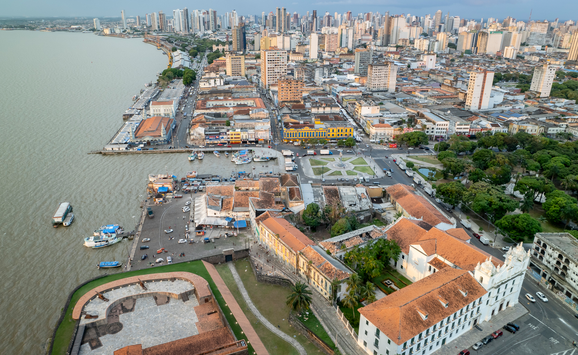
So, each year, most countries of the world gather together under the auspices of the United Nations Framework Convention on Climate Change (UNFCCC) for ongoing negotiations on how best to reduce greenhouse gas emissions and mitigate the worst impacts of climate change. Last year, in 2025, negotiations culminated in the 30th what’s referred to as the Conference of the Parties, or COP30, in November in Brazil.
At COP30, a number of countries launched something called the Open Coalition on Compliance Carbon Markets. The Open Coalition wasn’t part of the formal negotiation process, but it does represent a significant new global commitment toward cooperation on carbon pricing, trade, and economic development.
Joining me today to shed some light on the Open Coalition are two returning Resources Radio guests. The first is Massachusetts Institute of Technology Professor and RFF Board Member Catherine Wolfram, as well as RFF Fellow Milan Elkerbout. Both are joining me today to talk about the importance of this new partnership and to share thoughts on where it goes from here. Stay with us.
Catherine and Milan, hello. It’s so nice to have both of you back on the show and now also together.
Milan Elkerbout: Absolutely.
Catherine Wolfram: Yeah, thanks so much. Great to be here.
Kristin Hayes: Yeah, of course. I know I have the privilege of asking the questions today, but since I do have both of you here, I would definitely encourage you to feel free to ask questions of each other as we go, too. I’m sure you have a lot to talk about among yourselves.
But you know what? I’m also going to forgo asking you more about yourself since you are both repeat guests, and instead use this moment to sort of ask you to reintroduce us to the COP process overall. I know that’s a huge question, but even just some general reminders of what these COPs are meant to achieve would be great.
Milan, let me toss that to you first. What are we talking about when we’re talking about the COP process?
Milan Elkerbout: Sure. So, COP is about all the countries of the world—except the United States since last year—coming together to discuss international climate policy. What it means is, Just how do we reach the goals of the United Nations Framework Convention (the UNFCCC that you already introduced), and especially the goal therein, which is to stabilize greenhouse gas concentrations in the atmosphere?
In recent years, the Paris Agreement is the key thing there. Up to 2015—I mean, like you said, there have been 30 COPs already—these COPs focused on getting it in an agreement in the first place, like, “How do we actually cooperate together?” And that led to the Paris Agreement.
And then we used another eight, nine years to operationalize the Paris Agreement.We needed to come up with all sorts of rules on things called the global stocktake—how different countries of the world make commitments, how transparent these commitments are, but also specific topics such as climate finance and carbon markets. Even that process is now almost fully completed, so it’s now, today, much more about implementation, and that means real climate policy announcements on the ground, especially by groups of countries.
Kristin Hayes: Okay. Catherine, anything you’d want to add, sort of putting these negotiations in context?
Catherine Wolfram: Sure. I’ll say I’ve been to two COPs myself, and they take place in these enormous venues. In the case of Belém, in Brazil, there was just this huge tent. One part of the tent is exactly as Milan described: there is a table that seats 190-plus people, and somebody from each country is there representing their country, and they have formal negotiations about what the text coming out of the COP will look like.
But that’s more and more only a part of the COP, and the rest of the COP is what a colleague of mine likes to describe as basically a huge climate expo. So, just a big climate conference. This year—Milan probably knows the numbers—I think the COP attracted more than 60,000 people, so of course they’re not all the negotiators. But it does just attract people who want to talk about climate.
It’s a great climate conference, in the end, and it does bring leaders from around the world to one place to talk about climate. So, I think it’s important to emphasize that there’s both the formal negotiation piece, but then there’s the other piece, as well.
Kristin Hayes: Yeah. Well, it’s a great lead-in to my next question, but it is an important thing just for our listeners to sort of have a visual. If you’ve never been to one of these COPs, they really are massive in scale and have been growing in scale. I think this was perhaps the second largest. And so, there is a lot that happens of course in the context of the formal negotiations.
But in recent years, a lot of the stuff happening outside these activities and announcements that are happening from nongovernmental organizations, from coalitions of states or subnational entities—they’ve really taken on a lot more, I would say, visibility and importance.
The Open Coalition is one of those. It obviously is national (or even what I might refer to as “supernational”) because the European Union is involved, but it’s got that imprimatur of governments. But it was not happening (at least this is my understanding) officially as part of the negotiations. But it was clearly a very important sort of side announcement that was happening.
So, with that, Catherine, let me turn it over to you, and maybe you can just tell us again, in broad strokes—what is this coalition all about? What are they aiming to achieve?
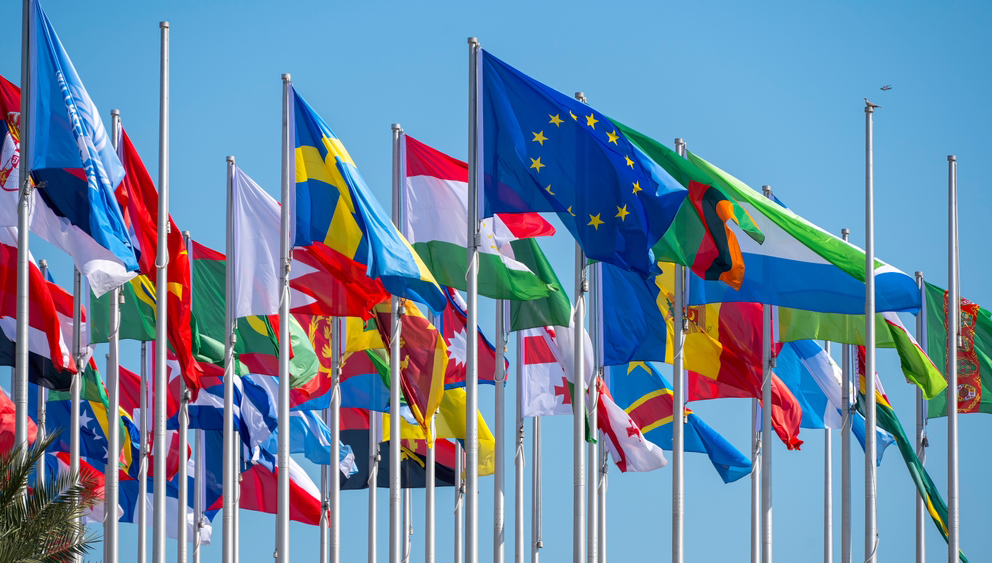
Catherine Wolfram: Sure. First of all, mechanically what happened, on November 7th—-it was a couple of days ahead of the actual launch of COP, but it was during the leaders meeting, the Leader Summit—the Open Coalition on Compliance Carbon Markets was announced. There was a 400- (approximately)— word declaration that was publicized, and the list of countries that had agreed to that declaration was publicized as well. At the end, by the end of COP, there were 18 countries that had signed up for the Open Coalition. That’s much fewer than 190, but I think the number of countries isn’t quite as important as who the countries were.
So, the European Union endorsed the declaration, and China, the world’s largest emitter and very important geopolitically, endorsed the coalition. Brazil, of course, was leading on it. There were countries from North America—so, Mexico, Canada—other countries from Asia, including Singapore, and several countries from Africa. In addition to the European Union, the United Kingdom endorsed the Open Coalition.
There was both the leaders’ statement on November 7, and then about a week later, there was an actual launch event for the Open Coalition where the countries that had endorsed it basically got together and sang the praises for what the coalition was trying to do. The statements by the countries were really pretty inspiring, recognizing the importance of carbon pricing that’s very prominent in the 400-word declaration that I described, and also recognizing the importance of working together and working together to strengthen one another’s ambitions around carbon pricing, and also to potentially think about the role of voluntary carbon markets and offsets in any kind of carbon market.
The last thing I would say is that the Open Coalition declaration articulates a long-term vision of having interoperable carbon markets. So, kind of approaching the economist dream of some kind of global carbon market where we’re all trading allowances.
Kristin Hayes: Would you consider it kind of a baby step in that direction? Is it a toddler-sized step in that direction? Is it just sort of a very initial gleam in the eye, or how far does that actually take us down that path towards that economist dream?
Catherine Wolfram: Yeah, that’s a great question. I think it’s a little bit more than a baby step, to be honest, because these are leaders, right? This is Ursula von der Leyen, Mark Carney—these are the leaders of the world articulating what they see as a vision. It’s only 400 words, but the fact that it’s endorsed at this high a level is a very strong political statement about where the leaders want things to go. Now, of course, it’s up to the technocrats to put some flesh around that, so it’s not a complete step, but I’d say it’s more than a baby step.
Kristin Hayes: Okay. Milan, I want to give you a chance to reflect on that, too, and maybe just ask you to lean into this question of, this is different from the formal negotiations that all of the member countries at the UNFCCC signed onto. So, it’s voluntary in that sense; this is a group of countries that chose to join. But it clearly was high level, and it had some real significance to it.
What’s your view on sort of why these—calling them side commitments actually probably underplays their value—but these side commitments or these side announcements … What’s your view on why they matter? If they matter—I’m sorry, I shouldn’t put words in your mouth.
Milan Elkerbout: No, I fully agree. I really think they matter greatly, and that’s not to dismiss the importance of the official negotiations, but really, in the 10 years since the Paris Agreement, a lot has been completed there. A lot has been gained already there, but it’s really about action on the ground now.
Emissions need to be reduced somehow; carbon pricing is a very good way to do that. That’s also what many of the countries who signed up to this Open Coalition said during the launch event. It’s maybe interesting to contrast it a little bit with some of the other things you’ll read about a lot when COPs are happening. Ever since the COP in Glasgow a few years ago, there’s been talk about heavily negotiated text, but only really a single sentence on fossil fuel phaseout or phasedown. One time in Dubai, such a sentence actually made it in there, but that still doesn’t mean that the world will use any less fossil fuels over the next year.
This is more than a sentence; it’s a text which all of the countries involved will work further on over the next few years. If that leads to new national policies, then that will actually have a real impact on emissions reductions. Finally, it’s also good to keep in mind that it’s really at the core of the Paris Agreement—that different countries, or “parties” in the vernacular of the UNFCCC, come up with their own policies. It’s great if it’s a group of countries involved, but it’s never about all countries doing the same thing at the same time. So, this coalition really fits perfectly in that logic.
Kristin Hayes: Yeah, that’s great. I feel like one of the criticisms of the formal negotiation process has been around … Anytime that you’re having to drive towards consensus language, or full agreement on language, you can end up with the lowest common denominator, which is very watered down. Whereas when you’re getting these subgroups of countries that are signing onto something, it does allow for different configurations, and maybe a little bit more ambition, because it is a self-nominated group of countries that are joining. So, I totally hear you on all those. Anything else you’d want to add?
Milan Elkerbout: No, I fully agree, and I mean everything in climate policy, whether at a national level or especially at the international level, is about overcoming all sorts of coordination problems. This is a good step in actually overcoming that. The fact is that it’s already an impressive group of countries—but if successful, if there is more enthusiasm, then it’s highly likely that even more will join.
Catherine Wolfram: Yeah. Just to chime in on that line of thinking, I think, in a weird way, the fact that the United States was not at the table emphasized the need for alternative structures. It emphasized the risks of relying on the consensus-based approach. I do think the consensus-based approach still has a role to play, but it emphasized the importance of having alternative structures in addition to that.
Kristin Hayes: Interesting, okay. Catherine, I wanted to ask you something about another point that you made earlier, which is that the Open Coalition text that was actually adopted by these member countries—it’s only about 400 words long. So, this isn’t a long statement. This is pretty short and sweet.
Catherine, I’m going to ask you to speculate for a second here, but any sense of how decisions were made on what to include versus what not to include at this juncture? And maybe what’s the importance of this short statement?
Catherine Wolfram: Yeah, so I was not involved in the diplomatic processes at all, but just to step back and explain my involvement a bit, I’ve been working with the Brazilian government in the lead-up to this, and my colleagues and I at Harvard University have put together a group of global thought leaders, and that group put out a report in September articulating why we thought that something like a coalition could have traction at the current moment, and what we thought a coalition could do.
Our report was over 100 pages—much, much more detailed than the coalition declaration—but I think that informed some of the thinking around a coalition. But definitely we do not speak for the members of the coalition, by any stretch. One thing that we articulated in our report was that there’s a lot of thinking about climate and trade issues, especially since the European Union started talking about, and as of 20 days ago, launched the Carbon Border Adjustment Mechanism (CBAM), and there’s been some positive developments out of that.
Milan and I have worked together with two colleagues showing that the EU CBAM has really led to this global conversation around carbon pricing. Countries like Brazil and India have either accelerated their discussions about carbon pricing or actually launched new discussions about carbon pricing. That’s part of what our report emphasizes, that look: There’s been all this momentum towards carbon pricing. It’s a great time to get together and maybe think about how to coordinate that. I do think that the CBAM has played a large role there.
That said, there’s been a lot of pushback on CBAM, and I should just explain—the CBAM is the European Union’s Carbon Border Adjustment Mechanism. What it does is basically assesses a border adjustment, kind of like a tariff when countries are exporting to the European Union. If those countries exporting goods don’t have carbon prices themselves, then their exporters have to pay at the border as though they were facing a carbon price. But if they’ve already paid a carbon price domestically, they get credited with that.
So, I think it’s, as I said, created this global conversation. But there’s a lot of consternation or unease with the fact that it’s the European Union dictating what the right carbon price should be, and how the measurement reporting and verification should go.
What we wanted to emphasize in our report is, “Let’s think about this more holistically.” Let’s not have just one country dictating things. Let’s have a group of countries, especially since there are more and more countries thinking about carbon pricing, and decide things like: maybe lower-income countries should get credit for a lower carbon price in their export, or maybe in addition to recognition of carbon pricing, there should be some coordination on financing new investments in decarbonization.
I think the other important thing that we emphasize in our report is maybe we want to start with a subset of sectors, like right now that the EU CBAM is only applying to aluminum, steel, fertilizer, cement, and then less importantly, given their trade, now hydrogen and electricity.
So, we emphasize, let’s have a conversation, but isolate the conversation at least in the beginning to these sets of sectors where there’s a lot of momentum on carbon pricing and where there’s a lot of trade. That’s all kind of a long-winded way of answering your question about the actual text in the declaration.
I like to think that our report helped people think about what a coalition could look like, but then when it came down to it, Brazil was kind of under the gun from a timing perspective to get something announced in time for COP. I’m sure there were a lot of hours spent in diplomatic conversations with various countries about what you can agree to, but not a process that I was a part of, but an important diplomatic process.
Kristin Hayes: Yeah, fascinating. Thank you for that kind of insider perspective on all the research that was informed, too. I should have thought to ask you a direct question on that, because one of the reasons I wanted to have you join us on the show is that I know about your kind of deep thinking about these underlying issues.
So, folks are welcome to read the 400-word declaration, and then hopefully they’ll have a chance to read the 100-page report that provides some additional thinking alongside it.
Catherine Wolfram: Yeah, there’s an executive summary to the 100-page report, too.
Kristin Hayes: Somewhere in between 400 words and 100 pages…!
Milan, let me ask you about the specific countries involved. Catherine shared at the outset that it’s a very diverse set of countries: Brazil’s leadership, but also China, the United Kingdom, the European Union, Canada, Chile, Armenia, Zambia—this really wide range. There are others as well. (sorry to all those countries that I didn’t name.) And they are different in scale, different in geography, and I imagine quite different in where they are in their carbon pricing journeys as well. Can I ask you to just give us an overarching sense of maybe some buckets that those countries fall into and what that spectrum looks like?
Milan Elkerbout: Yeah, absolutely. Some of the countries involved here, especially the European Union and the United Kingdom, really have multiple decades of experience with carbon pricing. In some cases, even with multiple systems like a nationwide emissions trading system, but also more sector-specific carbon taxes.
In the case of the European Union, which implemented this carbon border adjustment mechanism, that’s also the reason why that policy came into being, because the moment you start applying carbon pricing to industrial and traded sectors, you create a competitiveness problem. So, the EU CBAM is also there to level the playing field.
There’s also emerging economies that have already adopted laws for carbon pricing, but not really implemented it. That also makes sense. I mean, these are very complicated policies, so it’s normal that you take quite a few years to practice with the monitoring rules and just the whole infrastructure for it.
There will also be countries that have only expressed interest in carbon pricing, but haven’t really thought about all the trade-offs involved with policy design. And I think, importantly, not everyone might be interested in a European- or Canadian-style nationwide carbon price, but also more in the project-based carbon markets—so, the offsets that Catherine already referred to.
The attraction of that is that it can lead to financing of mitigation activities in those countries. So, that’s a different but also important motivation. And of course, all of these systems can interact with each other in the future, even if their designs are very different.
Kristin Hayes: Yeah, interesting. Catherine, I’d invite you, too. Any speculation you might want to offer on why this particular set of countries might have joined as the kind of … I’ll refer to them as the “founding members” of this Open Coalition. Maybe that’s not the right term, but yeah, given some of the factors that Milan just articulated or other things you’ve been thinking about, why do you see countries joining at this juncture?
Catherine Wolfram: Yeah, as I said, I think it came together pretty quickly, so I wouldn’t put too much stock on why a country was in or out. That said, I think it’s pretty impressive that even in that time period, Brazil got countries together that represent very high-income countries and countries that are on the low-income end of the threshold. There were three from Africa: Zambia, Uganda, and I’m forgetting the third one from Africa right now. There was also geographic variation, so Singapore and Asia, in addition to China, and some really important emitters. In total, the countries that had endorsed the coalition after COP represented about 40 percent of global emissions.
So yeah, hopefully over the next couple of months and years, we’ll see more countries that are willing to participate in the coalition, and more countries will join. But exactly what “joining” means is still being worked out.
Kristin Hayes: Yeah. Well, that’s a great lead-in to, I think, my last substantive question for you both, and maybe I’m saving the biggest for last here, but: What happens from here? It’s one thing to have a declaration, even one as you’ve both articulated to be as meaningful as this one, but now what happens? What do these countries provide to each other in terms of technical assistance? How do the countries that might just be at the beginning of their implementation learn from this network?
I’m making all this up, but I’d really love to hear some thoughts from both of you guys on what the coalition does next. Whether that’s in the context of another COP, or whether that’s throughout the year and the years to come.
Milan, let me start with you. What do you think is going to happen from here?
Milan Elkerbout: A lot of different things could happen, but maybe to start, I think we should also keep in mind that there are a few other initiatives, both existing and ones that were launched at the same time, that can really play nicely with this Open Coalition.
There was another announcement shortly before the COP, on the Integrated Forum on Climate Change and Trade, so this tension about international competitiveness can also be discussed there. And organizations such as the Organisation for Economic Co-operation and Development and the International Energy Agency have also been helping countries for quite a number of years already to coordinate these types of policies.
There’s another initiative called the Climate Club where that’s also relevant. They will need to prioritize, and I think one of the most important questions is whether they really want to go for the economy-wide type of carbon pricing that the European countries and China already have at the moment, or more the sectoral compliance policies, or the project-based ones.
There’s a choice to make there in how technical the discussions are. Catherine earlier mentioned the word “interoperability.” So, the idea is that all these policies work together. You have difficult design issues related to how you measure the greenhouse gas emissions coming from different industrial facilities and other technical design matters, but at some point, it becomes more political about what incentives you want to create with a policy.
It will be more interesting once the coalition also starts discussing those, but probably it’s a good idea to also discuss the very technical matters first, to not reinvent the wheel and reduce friction in the system when countries are thinking about setting up these systems.
Kristin Hayes: Great. Catherine, what about you? What do you see as important or near-term next steps?
Catherine Wolfram: Yeah, in addition to what Milan has said, I think the coalition will have to decide some governance questions. How will decisions be made? Is it one country, one vote? I kind of doubt it will be one country, one vote, if you have both China and a much smaller country like Armenia in the coalition. I think China might try to argue for greater say in the governance structure. But the governance will have to decide: Can other countries join? Could subnational entities, like states or provinces, join?
And then, as Milan was articulating, lots and lots of technical questions about how to measure carbon emissions. The coalition declaration itself does not say anything about trade or about border adjustments, but as I say, I think a lot of people are thinking right now about the EU CBAM, and that’s kind of about how we recognize carbon prices paid in other jurisdictions when we’re trading goods that are made elsewhere. So, I think that’s a potential question that will come up in these conversations. But lots of food for thought—lots of important, thorny questions to wrestle with.
Kristin Hayes: Yeah, definitely. Well, this is definitely one to watch. I’m glad to have had a chance to talk about it a little bit more here on Resources Radio, and I definitely hope we can continue the conversation, so that maybe in a year from now we’ll understand sort of what coalitions like this are doing and how things are evolving.
But now, and given our time, it is time for our Top of the Stack. And a brand new year, sort of. We’re early in 2026 at least, so would welcome some new recommendations.
Catherine, let me start with you. Any recommendations? It doesn’t have to be on this topic, but any type of medium, whether it’s a book or a podcast or anything that you’d recommend to our listeners to kick off their new year right. So, what’s on the top of your stack?
Catherine Wolfram: Sure. I would recommend the book Chokepoints by someone named Edward (Eddie) Fishman, who has worked in various US administrations and really kind of has an encyclopedic understanding of sanctions and sanctions policy. So, the subtitle of Chokepoints is American Power in the Age of Economic Warfare. And I know, because I talked to Eddie as he was putting the book together, that this came out even before Trump was elected, or was nearly finished (at least before Trump was elected), but this idea of economic warfare has taken on a whole new meaning.
Fishman traces the early use of financial sanctions on Iran around their oil, looks at the chip wars with China, and the sanctions against Russia for their oil exports, and thinks about the control of—as the title suggests—different chokepoints in global commerce. So, the book doesn’t talk about it, but I think something like China’s threats to curtail critical-mineral exports is a prime example of the types of thing he’s talking about. So, a topical book, and very well-written and fun to read.
Kristin Hayes: Fantastic, thanks. What about you, Milan?
Milan Elkerbout: Yeah, like Catherine alluded to, it’s been quite an eventful year already, geopolitically. Paul Musgrave, who’s a professor at Georgetown University in Qatar, wrote a Substack blog post (it’s not very long) about the current moment, the end of the rules-based international system and the end of US unipolarity, and what that means. In a way, that’s also relevant for all sorts of other forms of international cooperation, including how climate will play out in the future. So, it’s a very interesting read.
Kristin Hayes: Fantastic. Two great recommendations, and two great guests. Thank you both so much. Really a pleasure to talk with you. We’ll be in touch.
You’ve been listening to Resources Radio, a podcast from Resources for the Future, or RFF. If you have a minute, we’d really appreciate you leaving us a rating or a comment on your podcast platform of choice. Also, feel free to send us your suggestions for future episodes.
This podcast is made possible with the generous financial support of our listeners. You can help us continue producing these discussions on the topics that you care about, by making a donation to Resources for the Future online at rff.org/donate.
RFF is an independent, nonprofit research institution in Washington, DC. Our mission is to improve environmental, energy, and natural resource decisions through impartial economic research and policy engagement.
The views expressed on this podcast are solely those of the podcast guests, and may differ from those of RFF experts, its officers, or its directors. RFF does not take positions on specific legislative proposals.
Resources Radio is produced by Elizabeth Wason, with music by RFF’s own Daniel Raimi. Join us next week for another episode.