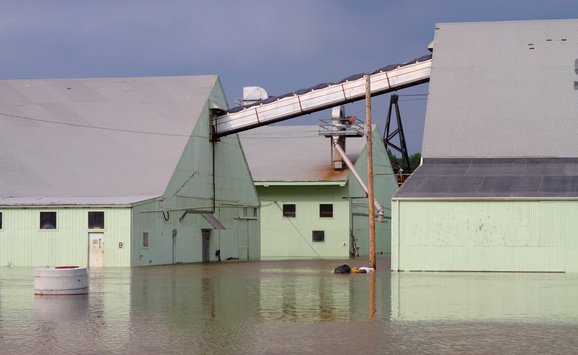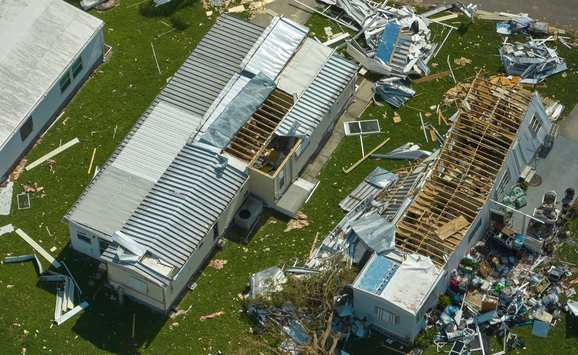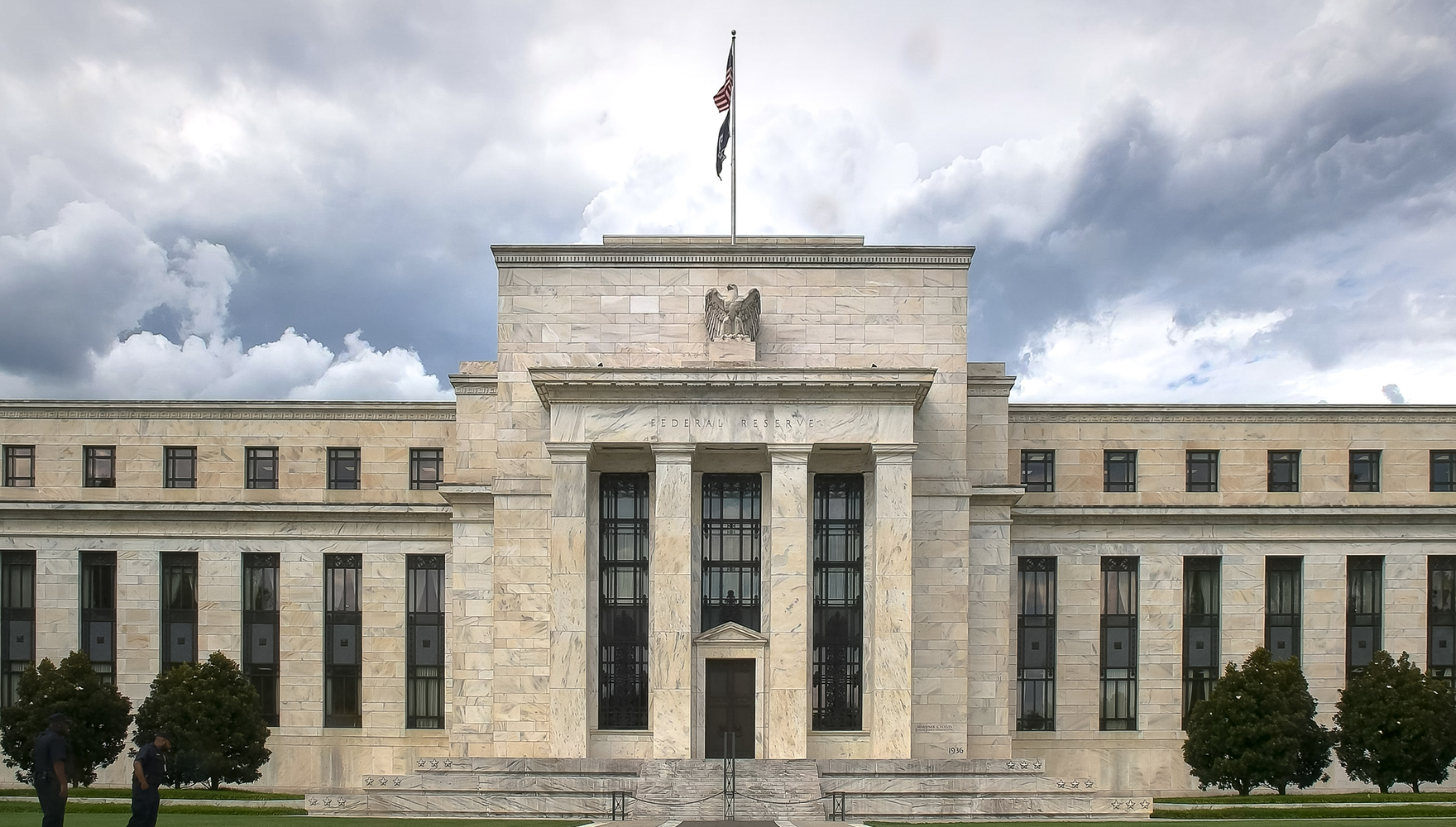

In this episode, host Margaret Walls talks with Kevin Stiroh, a senior fellow at Resources for the Future and a former senior advisor at the Federal Reserve. Pulling from his extensive career in the financial sector, Stiroh expounds on how financial institutions evaluate climate-related risks and the analysis necessary to address risks across loans, insurance, and investment portfolios. Stiroh emphasizes that sound banking practices require active collaboration between research and policy to navigate financial risks. As calculations of the macroeconomic impacts of climate change evolve, past research may be less relevant and accurate than newer studies on climate change as sources of information about climate-related financial risk and shocks. Effective risk management is in a bank’s best interest, Stiroh notes, and requires rigorous, credible economic research that informs durable policy solutions.
Listen to the Podcast
Audio edited by Rosario Añon Suarez
Notable Quotes:
- Climate risk is a real conundrum: “If climate change and climate-related risk drivers can impact the real economy, or the financial sector, then it becomes relevant for a central bank to think about. It’s really an empirical question about how material those risks might be.” (3:14)
- Managing risk has always been part of the business: “Ultimately, I think it will be viewed as good business to manage climate-related risks, the same way it’s good business to manage business-cycle risks, or cyberattack risk, or geopolitical risk. This is just another driver of very traditional risk. That’s the business of banking—to manage risk.” (18:07)
- More perspectives mean a better understanding: “We will do better in our understanding of the impacts if we can bring together perspectives from academia, science, the financial industry, and the nonprofit industry—all who have different experiences, different objectives, and different perspectives on how this might play out.” (20:21)
Top of the Stack
- “The Evolving View of Climate-Related Financial Risks in the US Financial Sector” by Kevin Stiroh
- “The Effects of Climate Change–Related Risks on Banks: A Literature Review” by Olivier de Bandt, Laura-Chloé Kuntz, Nora Pankratz, Fulvio Pegoraro, Haakon Solheim, Gregory Sutton, Azusa Takeyama, and Fan Dora Xia
- Work from the Network of Central Banks and Supervisors for Greening the Financial System
- Books and readings on Antarctic explorers Robert Falcon Scott and Ernest Shackleton
The Full Transcript
Margaret Walls: Hello and welcome to Resources Radio, a weekly podcast from Resources for the Future (RFF). I’m your host, Margaret Walls.
My guest today is Kevin Stiroh. Kevin is a senior fellow at RFF and director of the Climate-Related Financial and Macroeconomic Risk Initiative, or CFMRI, as we’ll refer to it. That’s a research collaboration between RFF and the Salata Institute for Climate and Sustainability at Harvard University.
Before joining RFF in the fall, Kevin had a long career at the Federal Reserve [also known as the Fed]. He was head of the Supervision Group at the Federal Reserve Bank of New York for many years. Just prior to coming to RFF, he was at the Board of Governors, where he designed and led the Fed’s microprudential approach (and by the way, I’m going to make him define microprudential for us) to the financial risks of climate change. Kevin also served as co-chair of the Basel Committee on Banking Supervision’s Task Force on Climate-related Financial Risks.
So, today we’re going to hear a bit more about Kevin’s work at the Fed plans for the CFMRI, our new initiative with Harvard; and just some more general issues about the potential financial risks associated with climate change. Stay with us.
Hello, Kevin. Welcome to Resources Radio. Thanks for coming on the show.
Kevin Stiroh: Thanks for having me. It’s great to be here.
Margaret Walls: All right. Well, we always start, Kevin, with a little bit of a get-to-know-you question.
So, can you tell us a little bit about yourself? I want to hear a little bit more about your move from macroeconomics to climate-change issues.
Kevin Stiroh: Yeah, great. As you mentioned, I spent most of my career at the Federal Reserve System for over 25 years. I’m trained as an economist, and the first half of that career was spent in the Research Group doing academic-style research. Later on, I had roles in the Supervision Group at the New York Fed and the Markets Group, where the Federal Reserve does open-market operations.
A few years ago, we started thinking about the impact of climate change on the economy, and that led to the role at the Board of Governors leading the work on the financial risks of climate change for supervised banks. This really seemed like it was an underappreciated risk in the financial sector and an opportunity to go back to some of my analytical and economist roots.
Margaret Walls: Now that you’ve introduced that—what you were doing at the Fed—I really want to ask a big-picture question first before we get into some of the details, which is why does a central bank need to be worrying about climate change? What’s your view on that?
Kevin Stiroh: Yeah, that’s a great question and a really good starting point because it comes up quite a bit in policy-related discussions.
From my perspective, it’s entirely clear why central banks should care about this. As you know, central banks have many responsibilities related to things like monetary policy, financial stability, or bank supervision. If climate change and climate-related risk drivers can impact the real economy, or the financial sector, then it becomes relevant for a central bank to think about. It’s really an empirical question about how material those risks might be.
I think it’s important, too, to emphasize that most central banks think about climate change as a driver of risk, or a driver of economic impacts. The goal is not to solve the climate problem per se. The goal is to ensure that the financial system is stable with respect to climate shocks, that individual banks manage their risks, and that the real economy continues to function as well as it can.
Margaret Walls: Good point. I’m going to come back and ask about microprudential risks.
Kevin Stiroh: Sounds good.
Margaret Walls: I think that’s going to come up in my next question for you, which is that you ran this Pilot Climate Scenario Analysis with six large US banks, and that was, I think, to assess microprudential risks from climate change.
So, can you tell us, first, just a little bit about that exercise? What did it entail?
Kevin Stiroh: Right. Happy to talk about that.
Before I get in, just to clarify the term, central bankers and financial stability authorities often differentiate between microprudential risks and macroprudential risks.
Microprudential risks are the risks that an individual financial institution might face—think about the higher probability of default for a mortgage that’s in a floodplain, or the increased risk of an operational event if a branch floods.
Contrast that with a macroprudential risk or a financial-stability risk that could impact the entire financial system or the entire economy. Coming out of the great financial crisis in 2008 and 2009, there was a lot more attention on these macroprudential risks that impacted the financial system as a whole.
Margaret Walls: Right. So, with these six banks, what did that exercise entail that they were doing?
Kevin Stiroh: Yeah. That was clearly a microprudential exercise where the Federal Reserve asked the six largest banks in the United States to think about how different physical risks or transition risks could impact very specific loan portfolios. What would be the impact of a hurricane, for example, on your residential real-estate loans [or] your mortgage loans in a given region? What would be the impact of a higher carbon price on the performance of certain corporate loans?
I think it’s important to emphasize what the goal of that exercise was. It was really to learn about how climate change could impact these financial institutions and to build capacity at both the banks and at the [bank] supervisors.
In some ways, that was a different exercise than other stress tests. The goal here wasn’t to come up with a specific number, that the potential losses are X dollars. It was really to think about and better understand how these large banks could manage these risks.
Margaret Walls: So, banks do stress tests regularly?
Tell us, what is a stress test? Outside the climate space, what would a stress test look like? What do they do?
Kevin Stiroh: Banks do all types of stress tests to understand how different types of shocks could impact their performance, whether that’s the performance of individual loans, the impact on a bank’s capital, its solvency, or the impact on a bank’s revenue. The Federal Reserve and other bank supervisors around the world regularly do stress tests to assess the resilience of the banking system and to assess the resilience of individual banks.
In this exercise, in the Fed’s Pilot Climate Scenario Analysis, the Federal Reserve provided the banks with two sets of shocks—a physical risk, and then a transition risk—and asked how that would feed through the performance and the probabilities of default of different loans in their lending portfolio.
Margaret Walls: So, the Federal Reserve set what those two impacts from climate change would be. Can you say a little bit more about that? Because I think there were some limits to this exercise, right?
Kevin Stiroh: Right. So, the Fed provided high-level parameters about the severity of different types of shocks. For example, on the physical risk side, the Federal Reserve asked each of the participating banks to consider the impact of a hurricane in the Northeast United States on the bank’s lending portfolio, and gave some parameters around how severe that hurricane might be.
But there was also a good deal of discretion for the banks to think about how they would model the initial shock and then model the impact on their loan performance.
That was part of the design because it was a learning exercise to build capacity. So, there was a lot of freedom for the banks to work through how they would do this modeling.
Margaret Walls: Gotcha. What were the main findings out of this pilot?
Kevin Stiroh: We learned quite a bit, and the Federal Reserve published a paper in March of 2024 that summarized these results.
One was around the materiality of the impact. For both the physical risk shocks and the transition risk shocks, the impact on loan performance was relatively moderate. I think that reflected, partially, the type of shock that was given and also the ways that banks did the modeling.
Another important result, though, was there was quite a bit of heterogeneity. So, when you look at a portfolio of loans, for example, the ones that were in a direct line of a hurricane might face severe damage and loans that were outside of that direct line were less impacted. That heterogeneity was an important part of the exercise.
Another finding that was relevant was pretty significant data gaps, and these are outlined in the Federal Reserve’s paper. The participants reported that they didn’t always have the necessary data to do the type of analytical work that would be necessary. These were things like details of the physical assets, the age or the specific location, the geolocation of a particular exposure. It would be things around the borrower’s ability to transition through different types of climate shocks.
A third finding was around just the inherent uncertainty, and that won’t be new to climate scientists or people who study the impact of climate change. But from a bank’s risk-management perspective, that’s a very hard thing to incorporate into existing risk-management processes and then the ultimate decisions that banks need to make.
Margaret Walls: Yeah. Kevin, one of the things I found interesting in the study was the importance of insurance. You know we work on some insurance issues here at RFF, and you are starting to work on insurance issues.
What I read, and you can correct me if I’m wrong, is that the banks reported that insurance can limit the credit risks they face from climate-related physical risks in their real-estate portfolios, but they also noted some data gaps with insurance. I think that the exercise itself assumed that the insurance markets were functioning well and all of that, and we know there’s a lot of problems in some homeowners-insurance markets.
So, I don’t know, can you just chat about the whole insurance side of this?
Kevin Stiroh: Right. The way the Federal Reserve’s exercise worked was they asked banks to stress these certain loan portfolios, residential real-estate and commercial real-estate loans, and estimate the impact in a scenario where there’s existing insurance coverage, and then an alternative scenario where there was no insurance coverage. It was really zero-one extremes, and then the banks reported the change in the performance of the loans across these two scenarios.
You’re right that one of the results that was reported were pretty fundamental data gaps in terms of things like the level and type of coverage on individual loans, the size of the deductibles, and the replacement-cost values of different assets.
It wasn’t always the case that this information didn’t exist, but it wasn’t in an easy-to-use, accessible form that was able to be incorporated into the bank’s credit-risk models. That sort of usability of the data was an important aspect of it.
A second interesting finding that was in the summary report was [that] the banks focused on the direct impact of a physical risk shock—a hurricane, for example—and whether insurance served as a mitigant, and compared the results with and without that mitigant. A different perspective could be not this zero-one, with-or-without insurance [scenario], but what happens, say, if insurance prices go up generally and change the affordability of a mortgage, or change the value of the underlying asset.
That is the kind of insurance market disruption that you were getting at and that we’re seeing play out: changes in the availability of insurance, changes in the premiums that are charged, changes in the degree of coverage and the attributes that are associated with a given insurance contract. That was a harder thing to model.
Margaret Walls: Yeah, among all the other things they had to think about in that exercise.
Well, we could talk more about that—that’s super interesting. But let me turn to some things you’re doing here at RFF, Kevin.
In December, you published an RFF blog post, and I’ll just read the title. It was called “The Evolving View of Climate-Related Financial Risks in the US Financial Sector.” I really liked that post. You provided a timeline of US financial institutions’ attention to climate-related financial risk starting in about 2015.
First, can I just ask you to walk through quickly what that timeline looks like?
Kevin Stiroh: Sure. So, the way the post was written was based on my experiences observing the broadly defined financial sector in the United States and how financial institutions and regulatory authorities were thinking about the financial risks of climate change. In some ways, this story, from a supervisory or regulatory perspective, begins with Mark Carney’s famous speech in 2015 on “The Tragedy of the Horizon.”
That brought climate-change risk factors into the discussion among [bank] supervisors. There was quite a bit of activity internationally trying to incorporate these risk drivers into supervisory processes, but very little activity in the United States.
That changed in around 2020, 2021, and we saw supervisory authorities like the Federal Reserve, the Federal Deposit Insurance Corporation (FDIC), and the US Office of the Comptroller of the Currency (OCC), and we saw large commercial banks, investment banks, and insurance companies really putting more attention on this risk over the next couple years.
That’s when the Federal Reserve did their Pilot Climate Scenario Analysis. That’s when their supervisory guidance was issued by the federal banking regulators, and then the US Securities and Exchange Commission (SEC) issued disclosure guidelines for publicly traded institutions. That all was really a period where the official sector and the private sector focused more on the financial risks of climate change.
Then in 2025, there was an abrupt reversal of that. The blog post that you mentioned walks through that timeline and thinks about some of the driving forces behind that.
Margaret Walls: Where do you think we’re going to be headed from here? Because you do offer some observations on that.
Kevin Stiroh: I think that’s really the big question on the table, and in some ways, I view this as a natural experiment.
In the early 2020s, there was a lot of focus on the financial risks of climate change that was likely due to a combination of factors.
One: banks thought this was a real risk that needed to be managed; two: supervisors and regulators were pushing; and three: investors were pushing. There was a lot of demand for more focus on these issues.
Some of those forces have pulled back. What we’re left with is, Do financial institutions like banks, insurers, or asset managers think this is a risk that needs to be managed? Will they continue to invest in the people, in the data, in the models, and in the infrastructure that’s necessary to identify, mitigate, and ultimately manage the risks that they face to their business? That’s an open question.
My hypothesis—what I believe is going to happen—is that banks will view understanding these risk drivers as a comparative advantage. They will continue to invest, and those that do will ultimately have better performance.
I think we’ll also see banks focus much more on the risks and the opportunities that they face when they’re working with their clients—so, helping their clients manage their own risks as a part of their good business strategy.
I think we’ll see banks, and financial institutions more broadly, talking less about things like net-zero commitments or corporate social responsibility, and really focusing on, What are their fiduciary responsibilities to their clients and to their investors?
Margaret Walls: So, you don’t think they’re going to forget about it. They didn’t turn the switch and stop thinking about the climate risks entirely.
Kevin Stiroh: I don’t think they will forget about it. They might talk about it less in the current environment.
But, ultimately, I think it will be viewed as good business to manage climate-related risks, the same way it’s good business to manage business-cycle risks, or cyberattack risk, or geopolitical risk. This is just another driver of very traditional risk. That’s the business of banking—to manage risk.
Margaret Walls: Very good.
Kevin, let me ask you about the new initiative, CFMRI, [or the] Climate-Related Financial and Macroeconomic Risk Initiative, that RFF is engaged with and you’re leading that’s joint with the Salata Institute.
I know that it’s the early days, but I believe you’re starting to get a feel for what your focus is going to be in the coming year or so. Tell us a little bit about what the plans are for the initiative and what are some of the things we can be on the lookout for.
Kevin Stiroh: Right. So, this initiative, a joint collaboration between Resources for the Future and the Salata Institute at Harvard, was really designed to fill a gap that’s existing now between the private sector, the public sector, and the nonprofit sector, to build a network where we can bring these different perspectives together to better understand how climate change can impact the financial sector and the real economy.
That’s the goal of this exercise with three specific points in mind. First: to deepen our understanding of climate-related financial and economic risks; second: to promote more informed policy responses; and third: to grow the research community and build capacity as these risks evolve and as new questions emerge. The goal of the CFMRI is to build that capacity and bring together all of these different perspectives.
That’s really a defining feature because, as you know, the impact of climate change is enormously complex. There’re feedback loops, there’s deep uncertainty, and there’re different types of interactions and multiple connections.
We will do better in our understanding of the impacts if we can bring together perspectives from academia, science, the financial industry, and the nonprofit industry—all who have different experiences, different objectives, and different perspectives on how this might play out.
So, the goal, ultimately, is to better understand these risks and inform policy going forward.
Margaret Walls: Do you think there’s been enough research on the financial side of the climate problem? Because as somebody that works on these issues myself, and especially on the climate-impacts and risk side of things, it does feel like there are papers here and there, but maybe not enough. I don’t know.
What is your feeling about the research side of this?
Kevin Stiroh: There is a rapidly growing literature on the impact of climate change on different aspects of the financial system. For example, last year, the Bank for International Settlements had economists who published a survey paper that had 240-some papers that looked at the impact of climate change on different aspects of the financial system.
There’s a large and growing literature from an asset-pricing perspective. Do the risks of climate change get incorporated into the prices of different assets— equities, bonds, mortgage-backed securities, and real-estate-related assets? That’s another growing question.
One of the challenges is this might need a new toolkit because historical studies are unlikely to be the best estimates of what the financial or economic impact of climate change can be. We know that climate change, as a risk driver, is secular and not cyclical. It’s going to continue to increase, certainly on the physical risk side. It’s very wide-ranging, so that it will have an impact across sectors, across regions, and across jurisdictions.
From a methodological perspective, perhaps most importantly, the past is unlikely to be a good predictor of what happens going forward as these shocks continue to grow and compound and accumulate in ways that didn’t happen in the past. That’s where the real cutting-edge, analytical work and economic research is.
Margaret Walls: Yeah, interesting. I’ll have to look for that paper.
Let me change directions a little bit, Kevin, because I want to go back to more of a personal question.
Now you’ve been out of government for a while. You were in government—a select part of the government, if you will, but still, central banking. But you’ve been out for a little while now, and now into this kind of nonprofit research and policy world.
What are you seeing as the big differences? And maybe what has been an adjustment for you, or how is that going?
Kevin Stiroh: I can talk a little bit about differences, but also similarities.
On the differences side, the difference is really the focus and the questions that are being asked. From a central-bank perspective, the focus was always on understanding how external climate shocks, these external risk factors, can impact things that are in a central bank’s mandate—whether it’s its monetary policy, or financial stability, or safety and soundness mandates. For example, will the physical risks of climate change impact the performance of individual banks? Will it change productivity dynamics in the macroeconomy? Will it impact inflation dynamics or relative price changes?
All of the questions that were asked were coming from the perspective of the impact of climate change.
I can contrast that, say with an organization like Resources for the Future, where not only is that type of work happening, but there’s also much more work being done around climate-change mitigation and trying to solve and help find solutions to that fundamental externality associated with greenhouse gas emissions.
RFF, as you know, has deep expertise on topics related to that: questions around the social cost of carbon, the evolution of the energy sector, and cap-and-trade policies. All of these types of things are critically important to understand how climate change can impact the real economy, but not areas where I have individually worked in the past. That’s fascinating for me, to be able to see that up close.
I think the biggest similarity, though, has been just the quality and the integrity of the research. Ultimately, that’s what makes policymaking effective—to be built on high-quality, rigorous, underlying analytical work. Otherwise, the conclusions are questioned, they’re not viewed as credible, and any policy implications are unlikely to be durable. Both at a central bank and at an institution like RFF, the commitment to getting the research right is just foundational.
Margaret Walls: Yeah, that’s a good point to bring up the similarities. I mean, the Fed has so many good researchers.
Well, we’re getting close to time here, Kevin, so we have to close the podcast, and we always do that with a regular feature we call Top of the Stack. I’m going to ask you to recommend to our listeners a book, or an article, or a podcast, or anything really that’s caught your attention.
What’s on the top of your stack?
Kevin Stiroh: So. I’ll give you two completely unrelated answers.
From a climate-financial-risk perspective, I’m a big consumer of work from the Network for Greening the Financial System, who thinks about climate change from a central bank and supervisory perspective, with the added twist that there are quite a few members of that group that come from emerging market economies who face a different set of climate-related risks. It’s been really interesting to hear that broad range of perspectives.
Then, a completely unrelated non-climate issue is that I’m also a big consumer of work on, or writing on, explorers around the turn of the last century in Antarctica—Robert Falcon Scott and Ernest Shackleton—and just the lengths that these men went through for the goal of exploration and better understanding what our planet is like.
Margaret Walls: Very good. Very interesting. Those are two different things. Awesome.
Well, Kevin Stiroh, it’s been a pleasure having you on Resources Radio, and a pleasure having you as my new colleague. It’s been great hearing you talk about climate-related financial risks, and thanks so much for coming on the show.
Kevin Stiroh: Thanks for having me. It’s been a pleasure.
Margaret Walls: You’ve been listening to Resources Radio, a podcast from Resources for the Future.
If you have a minute, we’d really appreciate you leaving us a rating or comment on your podcast platform of choice. Also, feel free to send us your suggestions for future episodes.
This podcast is made possible with the generous financial support of our listeners. You can help us continue producing these kinds of discussions on the topics that you care about by making a donation to Resources for the Future online at rff.org/donate.
RFF is an independent nonprofit research institution in Washington, DC. Our mission is to improve environmental, energy, and natural resource decisions through impartial economic research and policy engagement.
The views expressed on this podcast are solely those of the podcast guests and may differ from those of RFF experts, its officers, or its directors. RFF does not take positions on specific legislative proposals.
Resources Radio is produced by Elizabeth Wason with music by Daniel Raimi. Join us next week for another episode.