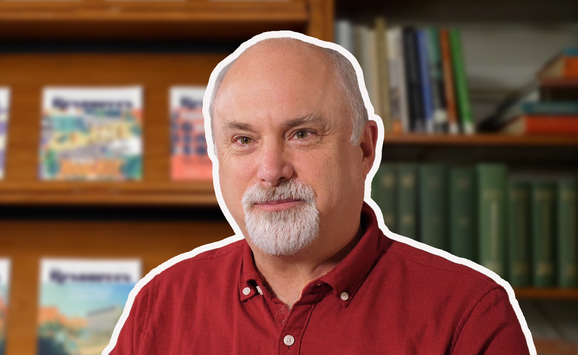

In this episode, host Kristin Hayes sits down with Resources for the Future (RFF) Senior Fellow Bryan Hubbell to look back at Hubbell’s public-service career at the US Environmental Protection Agency (EPA). As an environmental economist, Hubbell led efforts to integrate the social sciences into EPA’s environmental policy research and establish methods to calculate the benefits of clean air. Under his leadership, EPA developed the Environmental Benefits Mapping and Analysis Program, which has provided an accessible and rigorous way to evaluate the impacts of air-pollution regulations. The quantification and monetization of air-quality benefits are foundational to benefit-cost analyses, which Hubbell stresses are crucial to well-informed policy decisionmaking. Hubbell maintains that recent efforts to remove benefit calculations from federal benefit-cost analysis practices do not stack up against the years of stringent testing and research invested into creating these measures.
Listen to the Podcast
Audio edited by Rosario Añon Suarez
Notable Quotes:
- The benefits of knowing benefits: “We’ve been really pleased with how [the Environmental Benefits Mapping and Analysis Program has] been used, how it’s been picked up by other countries, and how it’s been picked up by states and local places within the United States, and we think it’s a pretty accessible tool. I also think that this has led to a greater understanding and appreciation of benefits associated with air-pollution regulations.” (13:02)
- Benefit-cost analysis pays off in policymaking: “But in the end, [these models enable] us to give the best information to decisionmakers to allow them to weigh the benefits and the costs, and hopefully allow them to select regulatory alternatives that can be overall beneficial to society. If they don’t have that information, they’re kind of flying blind.” (18:29)
- Clearing the confusion on co-benefits: “Co-benefits are really just a misnomer. There are benefits. That’s it. There are benefits of a regulation. Some of them are the direct benefits, some of them are indirect benefits, but they’re not co-benefits in the sense that they’re some different things that you can take away. They’re just benefits.” (28:03)
Top of the Stack
- “If/Then: Ignoring the Benefits of Air Pollution Regulations Will Lead to Worse Policy Decisions” by Bryan Hubbell and Alan Krupnick
- “How the US Environmental Protection Agency Got It Wrong About Monetizing Benefits of Air Pollution Regulations” by Bryan Hubbell and Alan Krupnick
- “Benefits and Costs of the Clean Air Act 1990–2020” from the US Environmental Protection Agency
- “Estimating the Public Health Benefits of Proposed Air Pollution Regulations” from the National Academies of Sciences, Engineering, and Medicine
- Particles of Truth: A Story of Discovery, Controversy, and the Fight for Healthy Air by C. Arden Pope III and Douglas W. Dockery
- The Heat Will Kill You First: Life and Death on a Scorched Planet by Jeff Goodell
The Full Transcript
Kristin Hayes: Hello and welcome to Resources Radio, a weekly podcast from Resources for the Future (RFF). I’m your host, Kristin Hayes.
So, we like to introduce new RFF researchers here on Resources Radio. And today, I have the honor of speaking with Dr. Bryan Hubbell, who joined RFF as a senior fellow in January of 2026. Bryan comes to RFF after decades of service at the US Environmental Protection Agency, or the EPA, most recently as the National Program Director for the Air, Climate, and Energy Research Program in the EPA’s Office of Research and Development. Among his many achievements at EPA, Bryan led the team that developed the Environmental Benefits Mapping and Analysis Program, or BenMAP, a tool that’s now used worldwide to evaluate the benefits of clean air.
Today, I’ll be taking the opportunity to ask Bryan about his pre-RFF professional life, but we’re going to spend most of our conversation talking about changes underway to the federal government’s benefit-cost analysis procedures. I can’t think of anyone better to talk through these changes and why they matter so much. So, stay with us.
Hi, Bryan. Thank you for bearing with this sort of small rite of passage and joining me for the first time here on Resources Radio.
Bryan Hubbell: Well, I’m really excited to be able to do this. It’s really just been wonderful to get started with RFF and with the amazing staff here, so I’m looking forward to this.
Kristin Hayes: Well, thank you, and we’re so happy to have you. I’m going to start as we do with all of our guests, and I want to give you a chance to introduce yourself to our listeners. Let me start by asking about your professional training, and maybe before we get to the RFF part, how you originally made your way to the EPA.
Bryan Hubbell: Sure. Well, I am an environmental economist, and I got my master’s and PhD from North Carolina State University—Go Wolfpack! Right after that, I took the normal path and went to get an assistant professorship down at the University of Georgia, and I was there for about three years. And then, for a number of different reasons, I needed to relocate back to North Carolina and there was an opportunity with the US Environmental Protection Agency to join their Air Economics Program.
I ended up with the Innovative Strategies and Economics Group in Research Triangle Park (RTP), North Carolina. That’s Research Triangle Park. There, I focused on benefit-cost analysis, specifically trying to figure out better ways to be able to quantify and monetize the health and environmental impacts of air-pollution regulations.
And so, I kind of wound my way through that and did that for a number of years—over a decade. After leading and managing the group that does the economic analyses, the benefit-cost analyses, I had some opportunities to move over to the research office within EPA, where the first thing I did was be able to act as a Social Science Advisor for the Office of Research Development.
After that, I then moved on to become the National Program Director for the Air, Climate, and Energy Research Program, which was the first time they brought in an economist into that role. So, it was a very exciting opportunity to, again, continue to integrate social sciences.
Kristin Hayes: Yeah, very cool. So, you have been in North Carolina for a long time. I think something that I always forget is what a big presence EPA has or had in the Research Triangle Park area. Is that right?
Bryan Hubbell: Yeah. Actually, Senator Terry Sanford, way back when EPA was formed, that was one of the things that they asked for—labs and headquarters throughout the country. One of the ones that he wanted was to be in North Carolina. It was in Research Triangle Park because it had the opportunity to then leverage the amazing scientific research that was being done at Duke University, the University of North Carolina (UNC), and North Carolina State University (NC State). And so, it became sort of a hub for doing environmental research.
Kristin Hayes: Yeah, I’m surprised you didn’t put NC State at the top of that list, but—Go Wolfpack! We’ll say that again.
Well, I mentioned BenMAP in my introduction, but I want to give you the chance to say a little bit more about that. I understand from talking with you previously that you really do think of that as a really important career highlight. So, maybe I can just ask you what are, say, three of your favorite efforts that you had the chance to work on at EPA?
Bryan Hubbell: Sure. So, BenMAP is definitely one, and I’ll talk a little bit more about how we got to BenMAP and why we developed it in a little bit. But the most important thing with BenMAP was its use, which was being able to estimate and monetize those health benefits for major regulations.
This included some of the most impactful regulations that EPA put out—air regulations that EPA put out over the last couple of decades, including: the Ozone Transport Rule, which was trying to look at cap-and-trade programs to try to reduce the emissions of nitrogen oxides; and then also what became known as the Cross-State Air Pollution Rule, which was the rule that was working to try to reduce interstate transport of sulfur dioxides and nitrogen oxides.
That was really impactful. At the same time, I was also involved with doing the analyses for major mobile-source regulations that included light-duty vehicle standards, heavy-duty vehicle standards, and off-road standards.
So, there was a lot of activity going on that we were able to then analyze with our BenMAP software, as well as being able to analyze the potential benefits of tightening the National Ambient Air Quality Standards for both particulate matter (PM) and for ozone. So, a lot of really great things.
One of the last regulations that I worked on with BenMAP before I moved over to the research office was analyzing the costs and benefits of the Clean Power Rule, which was the agency’s significant effort to try to reduce greenhouse gas emissions from power plants. Now, that rule went through many different iterations through the last couple of administrations, but it was a really great opportunity to apply BenMAP to look at climate benefits.
Kristin Hayes: Interesting. Okay.
Bryan Hubbell: And I guess a couple of other things just to quickly mention is I mentioned that when I went over to the Office of Research Development, I was a Social Science Advisor, and one of the exciting things about that, and I really was really proud of this, was convincing that office—the Office of Research Development—that they really needed to expand their use of social science research and integrate it more completely into their research program.
Under my leadership in that role, we were able to increase our social science scientist population by 50 percent, which was a significant increase and really addressed some significant gaps in being able to take an integrated approach to addressing some of the critical environmental problems that we were facing at the time—some of the more wicked problems that really needed to address the human dimension as well as addressing the physical dimensions. That was important.
I continued when I led the Air, Climate, and Energy Research Program focusing on these broader systems approaches and really thinking about how we bring together different disciplines to address these complex problems. I was really proud to have been part of the team that developed the agency’s first integrated climate-sciences division. That, really from the ground up, took an integrated, interdisciplinary approach to addressing the needs of communities and the needs of states as they were trying to address the environmental challenges posed by climate change.
Kristin Hayes: Well, this is great. It’s so great to have you at RFF. You obviously are now back primarily within a community of economists, but you and I talked a little bit early on about how much you value that interdisciplinary work, and I hope you sort of bring that in reverse back to RFF.
So, as I mentioned, we’re really thrilled to have you here, and you’re already picking up on themes here at RFF that you worked on within the government, including, as you mentioned, how to measure the costs and benefits of various environmental regulations. That’s the focus of our conversation today.
So, this is a big question, but I’ll ask it all the same: If you can start by sharing just a little bit about the history of benefit-cost analysis within EPA. Just give us a flavor of how long benefit-cost analysis has been around and how have you seen it evolve in your time there?
Bryan Hubbell: Sure. Benefit-cost analysis has been around almost since the beginning of EPA. It started in the 1970s, and from the 1980s, it’s been required as compliance with executive orders for major rulemaking. So, rulemaking that has a cost that’s over $100 million or benefits over $100 million to the economy.
Around the time I joined EPA in 1998, there was actually the publication of the first report on the costs and benefits of the Clean Air Act. This was required by Congress. There were subsequently two additional reports looking at the Clean Air Act amendments and looking at both retrospective and prospective analyses of those. One of the things that was clear when I first started was that a lot of the conversation that was happening was about what was being done to estimate benefits. There was very little conversation about, “Okay, we know what you’re doing, and now let’s talk about why.”
A lot of the conversation was, “What are you doing?” Because it wasn’t as well-documented, it wasn’t as transparent, and it took a lot of complex expert analysis to be able to do any kind of benefit-cost assessment. And again, there’s nothing wrong with that. That’s because it was a complicated process.
But when I started, there were a lot of questions about, How can we make this a little more transparent? How can we make it easier for people to comprehend and to see with transparency the assumptions that were being used? When we finalized the first particulate-matter standards, the benefits were very large.
It became clear that there were a lot of questions that people had about, How can these benefits be so large and are there really these types of impacts on mortality coming from particulate matter exposure? And so, Congress asked the National Academy of Sciences to conduct a study that was focused on potential uncertainties in the benefit-cost analyses for particulate-matter standards.
In 2002, they published a report titled Estimating the Public Health Benefits of Proposed Air Pollution Regulations, and they laid out a series of things that they wanted EPA to do, including trying to better characterize uncertainties associated with particulate-matter benefits. So, we took that information from that report, and we designed a program to try to improve the way that we treated uncertainty in our estimates. We also did some of the things they asked us to do, like to explore additional endpoints and health endpoints that we might want to consider including in the studies.
We did a lot of those activities that included working with the Office of Management and Budget to conduct probably the most comprehensive expert elicitation, which is basically going out and asking experts to provide their judgments about the strength of evidence around particular effects and giving us probability distributions associated with those effects.
So, we did that and we did it with the Office of Management and Budget and published that and then incorporated the results of that into our benefits assessments. We also advanced different ways of doing meta-analyses, which is the study of studies. And so, we did some meta-analyses that were focused on ozone and mortality and did some really unique things like having multiple groups do meta-analyses and doing a meta-analysis of the meta-analyses, which was—
Kristin Hayes: That’s very meta.
Bryan Hubbell: It was very meta.
But it also, again, moved us into a situation where we felt like we really understood what the literature was telling us and felt more confident that we could quantify those effects. That, again, was then reviewed in another National Academy of Sciences study, and they basically said, “Yeah, that was a great thing to do, and here’s what we feel like you can do in terms of quantifying ozone effects.”
So, all this to say that we spent a lot of time and resources to both reduce uncertainties by doing additional studies on effects, but also spent a lot of time thinking about how to characterize those and report those and benefit-cost analyses. We feel like that was a really big step forward in terms of increasing public trust in our numbers.
The other thing that we did was recognize that we needed to create some type of a software package that would allow us to do this in a more routine way and make it more available to the public. So, I led the team that developed, as you noted earlier, developed the Environmental Benefits Mapping Analysis Program, or BenMAP, which is really intended to do a couple of things.
It was, number one, intended to make this a publicly transparent process and to make it reproducible. One of the things that we did to make it as reproducible as possible is we included something called an audit trail. This allows you to basically see—at any point in the process of running a BenMAP analysis and afterwards—every parameter choice that’s made in a very easy-to-see report. That can then be used by anybody else to reproduce what you’ve done or to change parameters and say, “What would happen if I didn’t like this thing they chose and if I chose something different?”
It got to the point of, again, “Why did you choose this rather than what did you do?” That was really important. The other thing was to try to reduce costs. It was very costly to do benefit-cost analysis, and so we would do only a limited number of analyses.
Once we had BenMAP, we were able to do many, many analyses to look at different approaches, different regulatory alternatives, different ways of meeting the National Ambient Air Quality Standards, and understand the benefits and cost of those without having to spend hundreds and hundreds of thousands of dollars each time. That was a big savings for the American people. My rough guess is that we’ve probably, from applying BenMAP over the years, have probably saved at least $10 million, which is not insignificant. It’s certainly—
Kristin Hayes: Those are real savings.
Bryan Hubbell: Yeah, real savings.
We’ve been really pleased with how BenMAP’s been used, how it’s been picked up by other countries, and how it’s been picked up by states and local places within the United States, and we think it’s a pretty accessible tool. I also think that this has led to a greater understanding and appreciation of benefits associated with air-pollution regulations. I think that having that consistent, trustworthy approach has made it so that people can go forward and say, “Yes, this is what we think the benefits of our particular actions are going to be.” It can justify moving forward with those actions when they’re making decisions at the local or state level.
Kristin Hayes: It sounds, if I can summarize, that there has been real growth in transparency—growth in rigor—in response to these National Academy of Sciences recommendations. Did any of that body of work that you just articulated for us, did it in fact change any of the magnitudes that you mentioned right at the beginning? This all started because people were like, “Really, those are the benefits we’re getting from some of these improvements in air-quality standards and things like that?” What did you find at the end of that process in terms of overall magnitude?
Bryan Hubbell: The interesting thing is that the magnitude of PM-mortality benefits—the relative risk, the risk-per-unit of particulate matter—has been remarkably constant over the last three decades. There’ve been many, many, many studies done, and over and over we find almost the same exact concentration-response function. It is one of the most stable responses that we’ve seen across the epidemiology literature for environmental effects.
So, as much as some actors within the economy would like us to be able to find more uncertainty, if anything, it’s just reduced the uncertainty and made us more confident including—and we’ll talk about this a little bit later—lower levels of concentration. So, we continue to see that it’s a linear and a no-threshold relationship, and it’s roughly the same magnitude as it was 30 years ago.
The other thing that I think is pretty interesting about the magnitude is when we did the expert-judgment assessment, which was intended to bring in other sources of uncertainty that you can’t actually pick up from an epidemiology study, which is just picking up statistical error. We asked them to consider all kinds of uncertainty, including the mechanism and other things. We had 12 experts ranging across different fields, and pretty much all of them came up with estimates that were higher than the ones we were using.
They felt like we were underestimating mortality impacts, if anything. It wasn’t the case that, “Oh, this uncertainty was biasing in some way or the numbers were too high.” In fact, some experts felt we were biasing a little bit low because of the way that the studies were conducted. Uncertainty is an interesting concept in that it’s really important to make sure you’re not providing too much confidence or too much precision. But it’s not always the case that it should be something that would drive you toward zero.
Kristin Hayes: Yeah. Well, and as you mentioned, we are going to talk in more detail about very recent changes to benefit-cost analysis practices within the federal government, but uncertainty is really at the heart of those. I’m glad to have this grounding in how you guys have been thinking about how in your EPA days … You’re one of us now, I should say …
Back in the EPA days, you really did focus on this as an area that was in need of refinement. No one thinks that they’re without their uncertainties or their imperfections. But my sense is that there’s really … They’ve been considered the best tool we’ve had for a while. So, it’s not a perfect tool, but it’s still the best tool we have.
I’m wondering if you can just riff a little bit on that, and please feel free to be as candid as you’d like about where you see the real promise and maybe some of the ongoing challenges when it comes to these efforts.
Bryan Hubbell: You’re right, it is an imperfect tool, but it is a tool and it’s a model. It’s a way to be able to understand where we are when we’re trying to think about what the impacts of regulations are going to be. There are always going to be limitations. There’re always going to be assumptions you have to make, and we always try to tell people that we’re not predicting anything. We’re projecting. We’re taking the information that we have available, and we’re creating a scenario and projecting what we think the impacts are going to be.
They’re always going to have uncertainties. They’re always going to have a reality that is different from what we’ve projected. But what we try to do is the best we can, and we try to enable people to say, What if? What if I change this parameter? What would that mean in terms of the impact on public health or the dollar value of that impact?
We always include a lot of sensitivity analyses. We always try to include possible probabilistic estimates of outcomes. Economic theory doesn’t require us to have perfect information. It asks us to create an expected value of benefits that we can compare against the expected value of costs, which is what we do. But an expected value reflects the underlying uncertainty that you have in your estimates.
Kristin Hayes: Right. It’s expected.
Bryan Hubbell: It’s expected.
Kristin Hayes: It’s not perfect or defined.
Bryan Hubbell: Exactly. As long as the outcome that you get falls within the range of your probability distribution, you can feel pretty good that you’ve at least tried to capture the full set of outcomes that might occur. Now, sometimes they go way out into the tails, but often they’re pretty good at falling within the range of impacts that we actually projected through our regulatory-impact analysis.
For me, using the best available information that we have, and again, a benefits analysis is a chain of inputs, right? It requires emissions data. It requires information on regulatory effectiveness. It requires information on air-quality responses to those emissions. It requires estimates of exposure to air pollution once that occurs. It requires us to understand health-response relationships and requires us to understand value. So, it’s a whole range of things that have to be linked together, and they’ve all got uncertainties.
But in the end, it allows us to give the best information to decisionmakers to allow them to weigh the benefits and the costs, and hopefully allow them to select regulatory alternatives that can be overall beneficial to society. If they don’t have that information, they’re kind of flying blind. If they don’t have benefits information, then they just have cost information. All they can do is say, “Well, I know what the costs are. Is that too much?” Well, we don’t know, because we don’t have benefits estimates.
Again, there’re always going to be gaps. One of the things that we didn’t develop as much over the last decades is the ability to value non-health effects. So, looking at, for example, effects on forests or effects on water quality—those have been less developed and they still need a lot of work. There’re pollutants which we haven’t been able to develop great estimates for—a lot of the air toxins like benzene and formaldehyde.
We have less ability to put a dollar value and quantify those effects on human health. There’s still a lot of work to be done, and the science continues to develop on the effects of ozone in particulate matter, for example, developing new functions that look at reproductive health, developmental outcomes, and neurological responses. Even if we can quantify those, there’re challenges with putting a dollar value on those. So, there’s a lot of work still to be done. We haven’t stopped our progress, but it is something that is still very useful based on the information that we do have.
Kristin Hayes: Well, you gave me a perfect lead in to talk about the recent changes where you mentioned that if you zero out the benefits, if the uncertainty leads you to considering those benefits to be zero, then you have lost one half of the equation. That’s actually one of the challenges that you and our colleague, Alan Krupnick, have been talking through recently. I would refer our listeners to both the blog post and a longer report that talks through some of those changes, many of which have uncertainty at the center.
So, maybe I can just ask you to talk in broad terms about what some of the recent changes to practice look like, and then how and why is uncertainty really the focus of those changes? And tell me a little bit about why you think that maybe those changes don’t actually reflect best practice when it comes to thinking about uncertainty.
Bryan Hubbell: Sure. So, let me note that this is not the first time the Trump administration has tried to change the basic processes for conducting benefit-cost analysis. They did this during the first Trump administration as well in different ways, but this time they’ve been a lot more blunt.
When the Trump administration put out its recent rulemaking for gas turbines, they included some statements about benefits. What they said was, “We don’t want to quantify or monetize health benefits associated with particulate matter in ozone, because we feel like that in the past, EPA has been presenting information that’s too precise or gives a false sense of confidence in the precision of the estimates, including estimates that were at lower concentrations of PM and ozone.”
They felt that it was no longer appropriate to quantify or monetize those for the purposes of regulatory-impact analysis. So, they’re essentially taking away that other half of the benefit-cost analysis. Now they’re just going to provide a cost analysis.
This underlying sense that they provided was, “Oh, things are just way too uncertain. EPA has been waving its hands for so long and doing too many things to make the numbers look more confident than they should be.” But in actuality, that’s not the case.
EPA, as I noted, has spent millions of dollars and decades improving its ability to characterize uncertainty, improving our overall confidence in those estimates, and providing many, many sensitivity analyses to show how things might change if you’ve made different assumptions about the way the benefits are calculated. It’s basically a way to say, “Look, we don’t really want to regulate, so we need to not show the impacts of deregulation or the foregone benefits of not regulating.” The best way to do that is to create doubt about the benefits estimates, and it is literally creating doubt because the doubt wasn’t there.
So, they’re creating this to try to be able to ignore those benefits and treat them as zero. Well, number one, we know they’re not zero, and there may be uncertainty about the magnitude, but we know the expected value, which we talked about earlier, and it is not going to be zero. Creating a situation where you’re comparing a set of costs—which by the way are presented without any uncertainty—and then comparing that against basically the unquantified benefits will not get the weight that it has had in the past.
And so, it gives an excuse, and it also takes away that information that the public needs to know what the benefits that the federal government is providing through its regulations. Taking that away removes that important ability for the public to be engaged around the impacts of regulations as well. So, to me, this is something that they’ve been pushing for years, and now they saw their opening and they’re trying to do this.
I don’t think this is going to be the last we see of this. I think you’re going to see this as the standard going forward from the Trump administration in terms of not estimating benefits. They made a statement that said, “Oh, well, we’re just going to try to wait until we can make them the gold standard or that we can improve them, and then we’ll start doing that again.” But they give no timeline. They give no criteria of what it means to have them to be suitably competent.
So, they basically laid out a straw man that they’ll never be able to actually meet. That concerns me because there’s then no objective criteria by which we can judge when it’s time for the administration to start quantifying benefits again.
Kristin Hayes: Right, when we’ve actually met that gold standard.
Bryan Hubbell: That’s right.
Kristin Hayes: You gave a few examples around other criteria, air pollutants, air pollutants that have been harder to quantify, and impacts that don’t involve human health. You yourself acknowledged that there are improvements that continue to be made.
So, getting to the gold standard, what does that actually look like for you? Or were we in fact there before with maybe some refinements needed? Is there anything that you, as someone who was very steeped in this process for a long time, that you would say, “Okay, if we took this leap forward, there would be this extra level of confidence that we could get from this process?”
Bryan Hubbell: Yes. For the two pollutants that are mostly addressed by this latest work from the Trump administration for particulate matter and for ozone, we have a really good science and very complete science, especially for particulate matter—literally thousands and thousands of studies. Again, all of those studies have confirmed that there’s a causal relationship between particulate matter and premature mortality, cardiovascular effects, and cardiopulmonary effects in general.
For ozone, again, the same thing. There’s strong evidence of respiratory impacts, so there’s very little uncertainty that these effects are occurring. The magnitude and the concentration-response function that links pollutant exposures and health effects—those have some uncertainty with them. But again, the uncertainty is well characterized in our regulatory-impact analyses, and we have strong confidence in those relationships.
Again, the Integrated Science Assessment—which is the EPA’s gold standard for evaluating and reviewing the science that goes into setting these standards—even acknowledges that while there are uncertainties, and they felt like they would set the standards where they were most confident in the epidemiological data. They say very clearly that it’s still the best information is that it’s a non-threshold linear relationship down well below where the standards are set.
So, it’s not saying that they are risk-free standards, and it’s not saying you shouldn’t calculate the benefits. It’s simply saying that there may be additional uncertainties, which we characterize. That’s the key part for me; a gold standard is not, “We’ve reduced uncertainty to zero.” The gold standard is that we have presented the information in as accurate a way as possible, given the data and information that we have, which we do.
So, I would say—and again, based on the many peer reviews that have taken place of EPA’s benefit-cost methodologies over the years—that we have a gold standard for benefit-cost analysis, and we follow that. But again, that doesn’t mean that there’s zero uncertainty.
Kristin Hayes: Yeah, I take your point. Well, the other kind of bucket of things that you and Alan call out that was raised in this latest, I’ll call it an argument from the Trump administration for changes, was around co-benefits. That’s a term that we hear a lot in the context of air-quality regulations.
So, talk to me about the changes that they recommended in terms of thinking about co-benefits, and kind of what response you might have to those changes.
Bryan Hubbell: So, they didn’t really get into co-benefits that much, but what they did say was, “Well, EPA has been calculating these benefits and costs, even for regulations where particular matter and ozone weren’t the primary target for the regulation.”
Kristin Hayes: So, we’re trying to regulate something else. You get these—
Bryan Hubbell: Yeah, you get these extra benefits.
Kristin Hayes: … Side benefits, if you will, and you’re over-calculating.
Bryan Hubbell: The reason why we got a little bit riled up about that is because in the first Trump administration, they directly attacked co-benefits specifically for the mercury and air-toxin standards. They said, “Oh, well, we are only going to capture the benefits associated with mercury reductions,” even though the regulations require them to also put in controls that will get PM reductions.
So, it was a direct impact of the rule and should be counted. But the Trump administration said, “No, we’re not going to include those, because they weren’t the target of the regulation.” They did the same thing with certain rules that were getting greenhouse gas benefits when they said, “Oh, well, we don’t want to capture any of the global benefits. We just want you to include only the domestic benefits,” even though there were major impacts outside of the United States as well that were valuable to people in the United States.
There was this attempt to try to say, “We’re only going to include things that we think of as important for this regulation,” and that’s just wrong. Co-benefits are really just a misnomer. There are benefits. That’s it. There are benefits of a regulation. Some of them are the direct benefits, some of them are indirect benefits, but they’re not co-benefits in the sense that they’re some different things that you can take away. They’re just benefits.
We’ve always thought about benefits—the full range of benefits—across federal regulations. The example that’s been used in RFF analyses before is about seat belts and about speed limits. So, speed limits were interesting, right? Because they set the 55 mile-an-hour speed limit to try to deal with fuel conservation, but it had a very big impact on safety, and it reduced traffic fatalities. Well, that’s a great thing.
Why would you not want to calculate that and count that when you’re thinking about what those regulations accomplished? People needed to know that. This is a great thing. We should do this because it has both safety implications as well as fuel-economy implications.
Similarly, why would you not want to account for the fact that some regulations get you more than you asked for, right? That’s a great thing. We should always want that, right? We should calculate that so we know when we’ve hit on something that gets big benefits, because what we’re trying to do is maximize net benefits.
Kristin Hayes: Yeah. My understanding is that some of the criticisms around co-benefits have been about concerns about double counting, right? Is that you have a regulation that’s designed to do something. You have a different regulation that’s designed to control a different pollutant. If you’re suddenly counting pollutant reductions under both of those rules, are you double counting them essentially?
Bryan Hubbell: That is, again, a red herring. Because in every analysis, we are very careful to incorporate the impacts of other regulations in the baseline. We always say, “Okay, what have other regulations accounted for?” And then we only estimate the incremental benefits going forward. Even if it’s for a pollutant that’s covered by some other program, we’ve already accounted for the impacts on that pollutant from the other regulations.
Kristin Hayes: Okay.
Bryan Hubbell: So, there’s no double counting.
Kristin Hayes: Okay. All right. Well, I’m glad I asked.
Bryan Hubbell: And some people will say, “Oh, well, what about the PM standards?” Well, the PM standards, the thing to recognize when you’re calculating the impacts of the National Ambient Air Quality Standards is they do not actually achieve the reductions themselves. What we end up doing in those regulatory analyses is saying, “Look, if you’re able to meet those, however you’re going to meet the standards, if you’re able to meet those standards, these are the potential benefits you could get.” But then when you actually put in place an implementation regulation, one that actually requires reductions, then you actually realize those benefits.
When you see the benefits analysis that comes along with National Ambient Air Quality Standards, you should see them as sort of the aspirational benefits. But the actual benefits that are achieved by each individual regulation … That’s how you, if you think about, did you actually fill the [thermometer], right? Did you fill that up? And yes, we got it now. Now we’ve got an actual commitment of this amount of benefits. It’s sort of like when you’re doing those fundraising drives, right?
Kristin Hayes: Yeah. You get the thermometer, and you’re marking its way up.
Bryan Hubbell: Yeah, you got the thermometer, and you’re marking your way up. That’s when you’re doing the implementation rules. You’re marking your way up, trying to hit that goal that you established with the National Ambient Air Quality Standards.
Kristin Hayes: Okay. Well, thank you. I wish we had more time to keep going on this because there’s so much here and these changes are happening in real time. But this has been great. Again, I could not think of a better person to take a deep dive with me on this topic.
I really encourage our listeners to check out some of the pieces that Bryan, and again, our colleague, Alan, have already written on these topics. Hopefully, this is the first of many conversations that we can have here on Resources Radio. So, let me close with Top of the Stack, and Bryan, I’ll offer the opportunity for you to recommend some good content to our listeners.
Bryan Hubbell: Well, sure. I’ll give you two things. Following up on our particulate matter discussion, there’s a great book called Particles of Truth. It’s by Douglas Dockery and C. Arden Pope III, who are two of the leading lights in terms of the research on particulate matter. They did some of the first epidemiology studies that looked at cohorts of people and how they respond to particulate matter.
So, it’s a really great book. It’s a fascinating walk through the history of the science around [particulate matter 2.5 micrometers or smaller in diameter (PM2.5)], and how industry and politics have shaped the scientific discourse, and how ultimately, even in the face of opposition, we were able to make enormous progress in reducing PM2.5 exposures in the United States, which has led to documented increases in life expectancy as well as thousands of premature deaths avoided each year.
And then on another topic, maybe for a future discussion, I think it’s critical that we move faster in providing the tools for benefit-cost analysis for climate adaptation and resilience policies. These are the things that people want to do to try to reduce their risks from climate change.
I’ve been reading The Heat Will Kill You First by an author named Jeff Goodell. It’s kind of a dramatic title, but it’s really a fascinating exploration of the many ways in which climate change is affecting exposure to extreme heat for people, plants, and animals, and how that will fundamentally change our world and our health. For me, helping communities understand the costs and benefits of adapting to this new world is going to be critical.
Kristin Hayes: Great. All right. Two great recommendations. Thank you again for your time. I’ll talk to you soon.
You’ve been listening to Resources Radio, a podcast from Resources for the Future, or RFF. If you have a minute, we’d really appreciate you leaving us a rating or a comment on your podcast platform of choice. Also, feel free to send us your suggestions for future episodes.
This podcast is made possible with the generous financial support of our listeners. You can help us continue producing these kinds of discussions on the topics that you care about by making a donation to Resources for the Future online at rff.org/donate.
RFF is an independent nonprofit research institution in Washington, DC. Our mission is to improve environmental, energy, and natural resource decisions through impartial economic research and policy engagement.
The views expressed on this podcast are solely those of the podcast guests and may differ from those of RFF experts, its officers, or its directors. RFF does not take positions on specific legislative proposals.
Resources Radio is produced by Elizabeth Wason with music by RFF’s own Daniel Raimi. Join us next week for another episode.