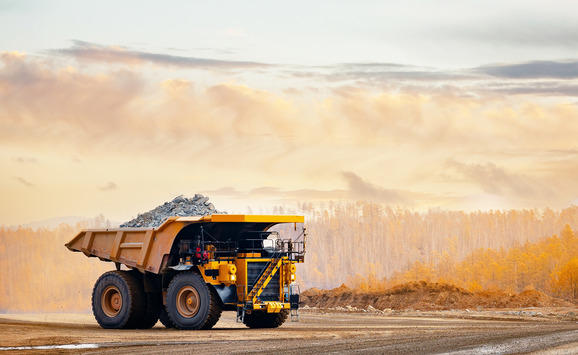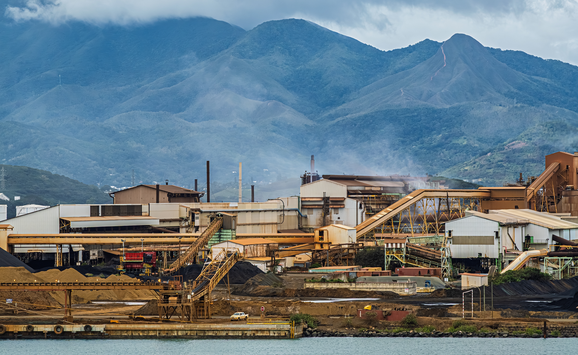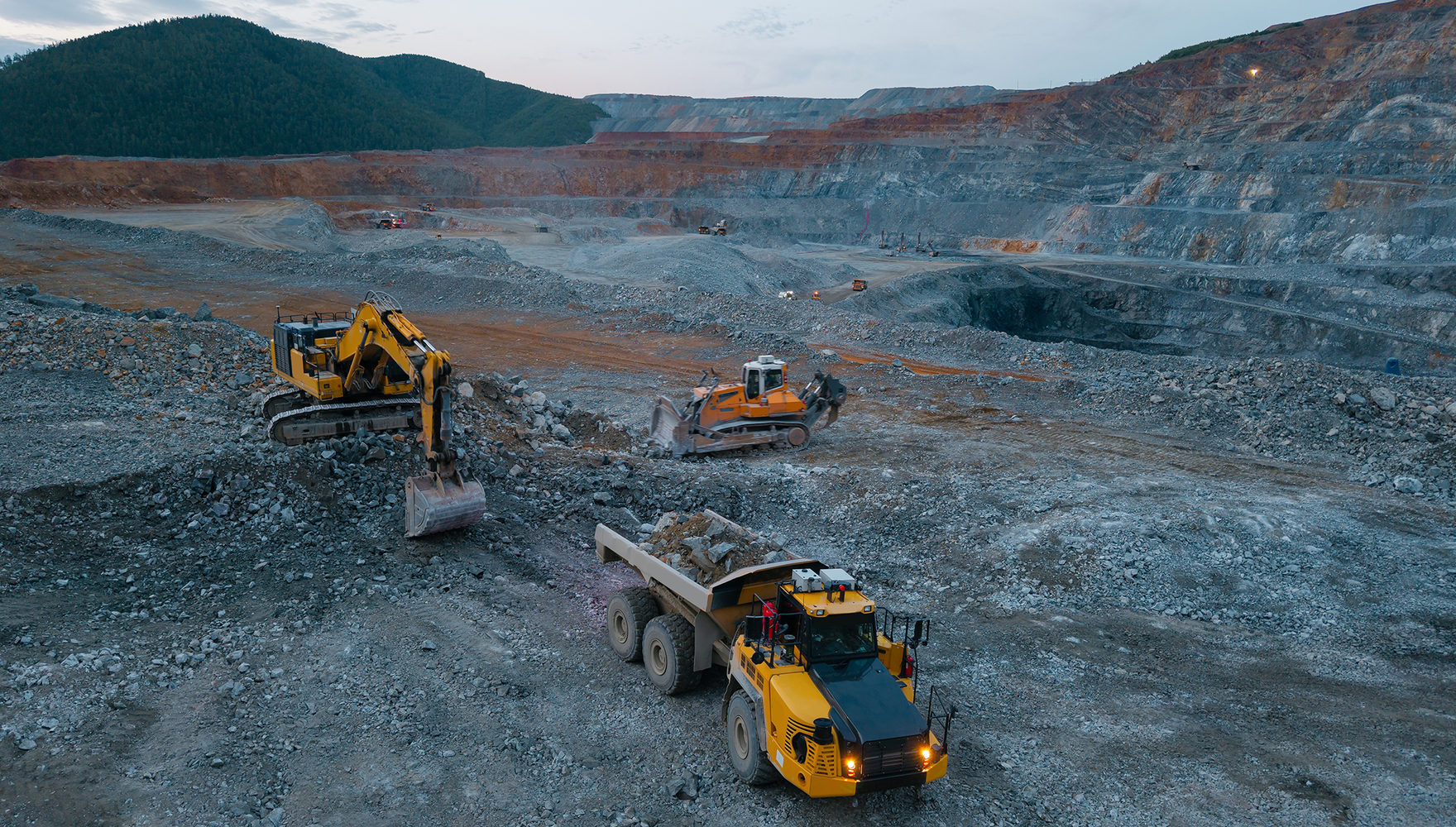

In this episode, host Kristin Hayes is joined by Beia Spiller, a fellow and director of the transportation program at Resources for the Future (RFF), to explore new RFF research findings on critical minerals. (Note that this podcast episode is a sneak preview of a forthcoming report! We will add a link to the report in the show notes once the research has been released on the RFF website. Stay tuned.) To understand contemporary market dynamics for critical minerals, Spiller says that one must understand the history of mineral extraction in the United States. With high operational costs, explained in part by environmental regulations and workforce limitations, and with overseas firms bypassing many of these expenses, the US supply of critical minerals lies at the intersection of national security and global market tensions. While critical mineral policies in recent history have taken varied approaches—bilateral, multilateral, plurilateral, and more—evaluating the efficacy and implications of these policies is key to understanding which mechanisms actually advance US goals. Spiller argues that effectively addressing this “critical” issue requires a clear prioritization of policy objectives and concerns.
Listen to the Podcast
Audio edited by Rosario Añon Suarez
Notable Quotes:
- A troubled industry begins to improve: “We have this legacy of pollution from the mining industry, and this legacy has endured so much that individuals today, when they think about entering into the mining space, think about it as a very dirty industry, and they do not want to enter into the workforce. It has been a huge challenge for the mining industry today to pull people into the workforce because they have this bad view of what the mining industry is, even though the mining industry is so much cleaner and so much better for the workers today than it was back then.” (6:45)
- Critical mineral policy needs to be strategic: “We’ve seen bilateral agreements with other countries to make investments. Now we’re seeing multilateral agreements with countries. We’ve seen questions about price floors … So, we start to ask the question, What’s the cost of all of these policies together, and which of these policies will actually achieve the objective that the government is trying to push forward?” (13:52)
- Making multilateral initiatives work: “It would be really great to know in a little bit more detail which is the prioritization of the [multilateral] objectives, because if we knew what the prioritization of those objectives were, then we could better structure those multilateral allyships and figure out how to do it in a way that really helps the federal government achieve those objectives in the most cost-effective way possible.” (19:06)
Top of the Stack
- ”Onshoring the Mineral Supply Chain: Structural Constraints, Policy Tools, and Research Gaps” by Beia Spiller, Zach Whitlock, Ambarish Kota(Opens in New Tab), Emma DeAngeli, and Nafisa Lohawala
- The Critical Minerals Research Lab is now open for applications through May 31
- Critical Minerals Research Lab
- Burn Book: A Tech Love Story, by Kara Swisher
- “Future of Travel: Is It Boom or Bust Time for EVs?” featuring Beia Spiller as a guest on the Pivot podcast hosted by Kara Switcher and Scott Galloway
The Full Transcript
Kristin Hayes: Hello and welcome to Resources Radio, a weekly podcast from Resources for the Future (RFF). I’m your host, Kristin Hayes. Today, I’m going to be talking with my RFF colleague, Beia Spiller, about a new report that she and several coauthors have put together on the challenges of onshoring the critical mineral supply chain, something that the Trump administration has made a focus in its second term.
Beia is an RFF fellow and director of RFF’s transportation program. In this report, she and the team discuss a number of different efforts to secure access to mineral supply, whether by crafting new agreements with other countries or by ramping up domestic production. The team emphasizes that the challenges vary widely by mineral.
I personally found this report very illuminating. I would encourage all of our listeners to take a look, especially because there are quite a few nuggets of information that I guarantee you we’re not going to be able to get to in today’s short conversation. It’s a very rich report, but we certainly will be able to give you a flavor of their timely and very interesting investigation. So, stay with us.
Hi, Beia. Welcome back to the show. It’s great to talk with you.
Beia Spiller: Hi. Excited to be back.
Kristin Hayes: Great. As I mentioned, you’re the director of our Transportation Program. I know you’ve done a lot of work on various aspects of transportation, but there’s a critical minerals connection that I think has evolved for you over the past couple years. Can you say just a little bit to our listeners about your evolution of the work you’ve done in this space?
Beia Spiller: Yeah. We got into this space because we were interested in vehicle decarbonization. Obviously, critical minerals are a big input into electric vehicle batteries. We just dove into the deep end when we got into this space by talking to federal-agency staffers. We were talking to folks in the US Department of Energy, the US Geological Service, the US Department of the Interior, and even Hill staffers. It was really interesting and fascinating. But what we found out was that some of the biggest areas of focus, particularly when it came to discussing politics, were really around geopolitics and technology. What was really missing from the conversations were economics. And so, we saw a big gap that we could fill.
There were two big areas of research that we sort of stepped in to fill, and the first one was environmental and social sustainability. What we did was we brought our economics chops to some interdisciplinary work in that space. We were working with other social scientists and really learning a lot. That was a lot of fun. And then we started working on supply-chain economics, thinking about the entire chain from extraction all the way down to electric vehicle batteries.
That was great. As we were working on the supply-chain economics and thinking about things like incentives, investments, and prices, policy got to be a really hot topic, particularly in the second Trump administration when all of this rapid-fire policymaking started to emerge. During this flurry of policymaking, we started to ask ourselves whether or not these policies were being made with consistent priorities and how we could approach these questions, right? And whether or not these policies would last in the long run, what they meant for the United States to be able to be competitive globally, and whether or not these policies would be cost-effective.
We’re really excited about this report because it speaks to a lot of these questions.
Kristin Hayes: Awesome. Well, before we dive into the substance of the report in more detail, I would like to just ask for a definitional refresher, if you will. And that’s a little bit of help on two particular definitions. So, one is what makes a mineral critical, and what’s the difference between a critical mineral and a rare earth element? That’s another term that I know gets thrown around a lot in these conversations. Can you just lay that out for us before we talk substance?
Beia Spiller: Yeah. So, whether or not a mineral is critical is completely subjective. Every government has their own definition. The United States government has a definition that’s based on three specific questions: whether or not a mineral is essential to the economic and national security of the country; whether or not it serves an essential function in the manufacturing of a product, the absence of which would have a significant consequence for the economic or national security of the United States; and finally, whether the mineral has a supply chain that is vulnerable to disruption.
So, there’s this question about the vulnerability and the essentiality of the mineral that is quite subjective. Because of that subjectivity, right at this point, there’re 60 minerals on the list, which is half of the periodic table. In December, copper was added to the list, which is kind of a big to-do.
There’s a lot of conversation around whether or not copper should be added, because it’s one of the biggest metals that we trade globally. So, is it really critical? What does that mean for it to be critical? So, it’s sort of interesting.
Rare earth [elements are] a subset of critical minerals. They are 17 elements. Now, interestingly, they’re not geologically rare. They’re just dispersed across the rocks. And so, they’re a little harder to extract because they’re not concentrated at any one place. They’re also … They’re different because they’re used in different end uses. So, they’re primarily used, for example, for magnets rather than for batteries.
Another big difference is that they tend to have smaller market sizes. This is really important when we think about price volatility because, for example, if we open up a couple new firms that are creating rare earth elements and they start to produce a lot that can actually flood the market and that can cause price crashes.
This is something that we have to think about when we think about rare earth markets.
Kristin Hayes: Interesting. All right, thanks. That’s really helpful.
Let’s turn to the main topic here, which is about onshoring and taking a little bit more charge, if you will, of our critical mineral supply in the United States. The first section of the report highlights several instances in which critical mineral mining and extraction are more expensive here in the United States than in other places. What are some of the reasons for that? Why is it more expensive to do things here?
Beia Spiller: Well, in order for us to understand why it’s more expensive for us to extract minerals in the United States, we have to look at it historically. Back in, say, like the 1800s, the United States was a pretty large mining country. We had a really robust industry of extraction, but at the same time, we didn’t do it in a very environmentally or socially beneficial way.
So, we have this legacy of pollution from the mining industry, and this legacy has endured so much that individuals today, when they think about entering into the mining space, think about it as a very dirty industry, and they do not want to enter into the workforce. It has been a huge challenge for the mining industry today to pull people into the workforce because they have this bad view of what the mining industry is, even though the mining industry is so much cleaner and so much better for the workers today than it was back then.
It’s a challenge that the companies have had to overcome. But what has happened over the past hundred or so years is that we started to implement a lot of environmental and labor laws—the Clean Air Act, the Clean Water Act, the Occupational Safety and Health Administration (OSHA), all of these laws—that just made it much more difficult and costly for us to be able to just extract without internalizing the externalities of mining.
What that ended up doing was offshoring mining to countries that have fewer regulations. What we see is that there’s a lot of mining happening in countries overseas, where there’re not a lot of regulations. For example, we have some pretty bad examples, right? In the Democratic Republic of Congo, the DRC, we see enslaved populations taking out cobalt, right? Child labor—it’s pretty awful what’s happening in the DRC. And there’s been a lot of uproar about cobalt. In fact, a lot of companies have said, “Hey, let’s change how we actually make our batteries, because we don’t want to be sourcing cobalt.” There’s also some supply shortages, but there were concerns about sustainability of the cobalt extraction.
Another great example of this is nickel in Indonesia, which has caused huge environmental challenges from extraction there, because there is just very little environmental regulation, so huge environmental pollution from that.
So, we have this sort of offshoring to places that are not internalizing the externality, which means that they just have this artificially lower price in other countries. There’re other reasons why it might be more expensive in this country—for example, geological disadvantages. We have some lower ore concentrations of some minerals, for example, with nickel and cobalt. For those two examples, we have lower ore concentrations in this country than, for example, in Indonesia, which means that it’s more expensive to extract those minerals here.
Obviously, we have higher wages, we have higher land costs, and a higher cost of living. That is going to inflate all costs in this country. And then, because of the fact that we had this reduction in the mining industry, we also have a limited trained workforce. So, to be able to ramp up the industry in this country, we have to train a lot of people, and that’s going to cause a lot of startup costs. That’s also going to put costs on the industry.
Finally, I also want to mention that another real problem is, in the meantime, while all of this is happening, China, which is a country that tends to overinvest in every single industry, overinvested in processing capacity. They put a huge amount of subsidies into the processing capacity. They expanded their capacity to process minerals, and particularly rare earth elements, to the extent that at this point they really control the market for so many minerals, and they’re able to do it very cheaply.
So, we just have this huge disadvantage that, even if we wanted to do it in this country, it would be so hard to get it to the point where we could be able to compete on price, because we would have to expand so much to be able to bring those prices down to be able to compete on that price level.
Kristin Hayes: Tthat cost competition of onshoring is definitely a theme that comes up throughout the reports.
Beia Spiller: Absolutely.
Kristin Hayes: One of the other things I think that does come up throughout the report is China. Let me ask you one more thing about that.
You just mentioned that China dominates the processing portion. They, I think, dominate a number of aspects of critical mineral supply chains, but certainly on the processing side. Can you say just a little bit more about where the real concern lies in that and how the US government is thinking about that as a risk?
Beia Spiller: Yeah. This is the major bottleneck in the supply chains. The majority of minerals flow through China. So, let’s say we are extracting a rare earth element in Australia. It will go into China, it will be processed there, it will be turned into a magnet, and then it will be sold to the United States to be put into, say, a defense missile.
So, if we think about it from a US Department of Defense [perspective], if they’re not able to get that magnet for their defense missile, this is a huge supply-chain vulnerability, right? This is a huge problem for national security, and this is how it is being framed by the national government. The national government at this point is framing this bottleneck as a major national security threat. Now, I think the question we need to dig into is how strong is this threat, and whether or not this threat is something that would be long term.
For example, China may put in an export ban, so they could say, “We’re not going to export minerals.” In fact, they’ve done this before. They’ve said, “We’re not going to export minerals.” The last time they did it, they put in a system where you have to now ask for permission to purchase the minerals and you have to get these permits. And now, China’s actually asking the people who are purchasing the permits, “Where are you going to use the mineral for? Where’s your end purpose for the mineral?” They’re trying to control where those minerals are going.
So, there is this question of, Where could the minerals go? Will China actually have a stronghold over the flow of the minerals worldwide? But I do wonder whether this threat is more overblown than is really necessary for the national-security questions and whether the response, which has been massive, [is, too], because the response that we’ve seen has been a huge amount of policies coming out, and there’ve been a lot of different types of policies.
What have we seen? We’ve seen—and we talk about this in the report—equity deals happening, for example, in the United States and abroad, where you’ve seen investments in different types of companies.
Kristin Hayes: And this is actually the government itself taking these equities.
Beia Spiller: Absolutely. The government taking the equity stakes, which is unheard of.
Kristin Hayes: Yeah, it’s unusual.
Beia Spiller: And in burgeoning industries, this is not something that we’ve done before. We’ve seen bilateral agreements with other countries to make investments. Now we’re seeing multilateral agreements with countries. We’ve seen questions about price floors being put out. Price floors could be massively expensive. We have another report out where we’re looking at a report of direct lithium extraction in Arkansas, and we estimate the cost of a price floor for just three companies, and it’s billions of dollars.
So, we start to ask the question of, What’s the cost of all of these policies together, and which of these policies will actually achieve the objectives that the government is trying to push forward? One of the challenges that we’ve had as policy analysts is, What is the main objective of the government right now?
Is it just dealing with this national security threat, or are there other objectives? One of the interesting things is, if we look back to the Biden era—because there’s been critical mineral policies that have been ongoing since Obama, since Trump won—what were the objectives all through these different administrations? We talk a little bit about this in the report, as well. But in the Biden administration—what I think was interesting, and the objectives were much clearer—the objectives in the Biden administration around critical minerals were twofold.
The first one was decarbonization. They really cared about building up electric vehicle batteries, solar, wind, and renewables, right? Those required a lot of minerals. The second objective, which was kind of questionable, was, “Hey, let’s attach to the critical mineral industry our goal of industrial policy, which is ramping up manufacturing and bringing jobs back to the United States.” Which, if you look at our report and you think about how challenging it is to actually do that, I was like, “Why? Is this the right industry to attach our industrial policy goals to?”
Because it’s so hard to do. It’s so, so challenging and so costly to actually try to attach our industrial policy goals to this specific sector. It’s actually really interesting that we saw that happening in the Biden administration. Now with Trump, I actually think this specific goal—this industrial policy goal—seems to have been maintained, but it’s not … Well, we’re asking the question, is it being maintained? It seems to be maintained. So, we’re trying to understand what the objectives are, but they haven’t come out and stated that specifically.
There seems to be some objectives where the industrial policy goal does seem to be one objective. Another objective does seem to be national security, and that seems to be the prevailing objective, because that is when we hear what’s the discussions that are happening in the public space, that tends to be the dominating discussion.
Another big discussion that happens a lot is US global competitiveness, right? How do we compete with China? That’s another conversation that comes up a lot. We have to ask the question of, will these policies achieve these three goals of US global competitiveness, industrial policy, and national security? How possible is it to achieve all three goals in the time frames that we need? We talk about this in the report.
It’s so important to understand that it’s possible that we can’t achieve all three goals simultaneously in the timeframe that we need. It’s possible that national-security goals are a very urgent threat, and that might be the top priority of the federal government right now. This is something that’s very urgent maybe for the US Department of Defense. If they don’t have those defense missiles, that’s like problem number one.
Maybe we need to deal with that right away rather than worry about ramping up manufacturing today. That can be a longer-term goal. That’s something that we can deal with in the long run as we ramp up our workforce because we don’t have the workforce. That takes longer to train people. In the meantime, we can use allies and we can use investments in other countries where we know it’s going to be cheaper, where capacity has already started to grow.
Kristin Hayes: This is friendshoring, right?
Beia Spiller: That’s friendshoring. Exactly.
Kristin Hayes: Exactly. So, not having to actually bring all of the extraction and processing into this country, but actually maybe stepping away from China and actually building some of those bilateral, multilateral relationships.
Beia Spiller: Exactly.
Kristin Hayes: Okay.
Beia Spiller: It’s actually been interesting to see how these multilateral strategies have begun to grow. There’s been more and more discussion within the Trump administration of working with allies to be able to do this type of action.
The question really is, Will these multilateral strategies achieve the goals that they want? It would be really great to know in a little bit more detail which is the prioritization of the objectives, because if we knew what the prioritization of those objectives were, then we could better structure those multilateral allyships and figure out how to do it in a way that really helps the federal government achieve those objectives in the most cost-effective way possible.
Kristin Hayes: Fascinating. I want to turn to another subject matter that’s related to this question of what we can do here in the United States. And then we’ll definitely talk a little bit more about some of the points we’ve raised so far.
So, let me ask for a minute about what you and your colleagues call alternative sourcing. I say that you call it that. I think that’s just the term. I don’t mean to make it sound like you made that term up, but alternative sourcing for critical minerals—that’s opportunities to obtain minerals outside of the kind of traditional mining for virgin materials. There are all these other ways that we might be able to get access to these minerals from our own supplies here in the United States, but what are some of those alternative sourcing options available in this country? And maybe, if you can say a little bit about in what ways they’re promising and in what ways they also present challenges.
Beia Spiller: So, this is fascinating. When a company is mining, they are at the same time producing waste, right? In that waste, there are minerals, and there are minerals that the company just doesn’t bother capturing.
For example, if you’re a copper mine, you are producing, for example, bismuth, let’s say. But you’re not a company that’s selling bismuth, so you just leave it there. One option would be for you to install a processing plant on site to capture that bismuth. That’s one option. Another option is once you’re done mining that copper, you leave, and another company comes and grabs your waste and processes that bismuth. Now, a third option is for a company to come into a place where you’ve polluted and go into that water site and capture the rare earths that are in that water. And that’s, for example, acid mine drainage—that’s a third type of one that comes out of coal ash. It’s just polluted water. So, there’re three types of ways in which we can gather the minerals.
Now, there’s a research project that came out of the Colorado School of Mines, by Elizabeth Holley and coauthors, that estimates that if we did those three approaches, we could get all of the minerals that we need. We wouldn’t have to import any minerals. Look, first of all, I’m not a scientist. I’m not going to speak to whether or not this paper was right. But needless to say, we don’t do this because it is not economically viable to do it.
Kristin Hayes: It’s too costly.
Beia Spiller: It is just way too costly to do it. And there’re so many reasons why. I just think it’s so interesting. We spoke to a copper company, and so I said, “Well, why don’t you do that?”
And so, this bismuth example is so funny. What this representative was telling us is, she’s like, “Well, for me to put in a processing plant on site, why would I do that when the concentration of bismuth is so low? The amount of bismuth I could get out of it is so little that I could go and put in a whole new mine for the cost that it would cost for me to actually get that bismuth out, and I could get so much more minerals in a green site than trying to actually get it out of this secondary source. So, that’s one thing. Second of all, there’re like three people in this entire country who process bismuth. I wouldn’t even be able to process it to the point where I could sell it to the next step of processing.” So, the second issue is like, we don’t even have the technical know-how to do this.
And then there’re other issues that if for people who want to come and use the waste, these are like tens of thousands of tons of waste. What do you do with all those tons of waste? You have to transport it. Those are massive transport costs. It’s like there’re a lot and there’re also legal challenges. If you want to come in to deal with that waste pile, now you’re liable for any toxins that come out of that waste pile. So, there’re these legal challenges, there’re these technical challenges, and these cost challenges.
Kristin Hayes: And workforce challenges. Yeah.
Beia Spiller: I mean, quite frankly, if it were economically viable to do so, we would’ve seen it come out. I think that’s the main challenge.
Kristin Hayes: Interesting. Well, you’re really solidifying my takeaway here that—I think this really shows up in the report—there are a lot of challenges when it comes to really, truly onshoring production here in the United States.
Maybe we can just talk a little bit more about some of the policy choices that have happened over the past decade, since you mentioned this has happened across administrations. This doesn’t solely belong to any particular party, but there have been different choices that have been made across the years. What are some of the policy choices that have been made, again, in the past decade that are really thinking about how to shift both the supply and also the demand for critical minerals? Can you just talk us through that a little bit?
Beia Spiller: Yeah. I think this is interesting. If we think about the supply chain, there’re different ways in which we can boost the mineral supply chain by thinking about one side of the supply chain to the other. You can think about it in terms of like a push and pull if you start from one side to the other side. When I was talking about Biden focusing on decarbonization, they were really focused on the demand side. So, what did they do? They said, let’s start with the demand for electric vehicle batteries and kind of hope that this will give us the pull that we need to actually ramp up the rest of the supply chain.
So, what did they do? They put in, through the Inflation Reduction Act (IRA), these tax credits for electric vehicle batteries. To be able to get a tax credit for your electric vehicle, the battery needed to be manufactured in the United States, and the minerals that went into the battery either had to be sourced domestically or from an allied country.
There were also advanced manufacturing tax credits. So, they were getting … If you had a battery manufacturing plant in the United States, you would get a tax credit for doing that, for making your batteries here. There was actually a pretty big ramp-up in not just demand for electric vehicles, but also an increase in manufacturing of battery capacity in the United States after the IRA went into place.
Now the challenge was … and I think we did argue about this. I think we put in some comments at the time, which were, “Hey, this is going to be actually pretty hard to source.” Especially in the short time frame and which the government is asking for the sourcing requirements. It takes time to build up these mines, and it can take 20 years. I can’t just snap my fingers and expect the mine to start producing tomorrow.
It’s pretty challenging to have that ramp up pretty quickly. But the idea was to ramp up the supply chain through the demand pull. When Trump came in, really, the focus there was on extraction. Trump is big into extracting. You remember, “Drill, baby, drill,” right? That was a big motto of the election. And so, the policies that they were putting in place were much more around, How do we get more mines? They were investing in mines and trying to get more processing plants up and running. Those were the investments that were happening.
At the same time, obviously, they removed the Inflation Reduction Act tax credits and they removed other incentives for electric vehicle manufacturing, and we did see a lot of cleantech manufacturing cancellations. In fact, a lot of the battery supply chain went away, which is interesting because when we have the lithium … And this is another interesting thing going back to what I said earlier about the prioritization of these objectives, because if we see the federal government investing in a lithium mine, which we did, they put in equity into a lithium mine. What for?
The lithium is used for batteries, for electric vehicle batteries. That specific Lithium Americas mine had an offtake agreement with a General Motors battery plant. So, what was the point of that one if that was going into an electric vehicle battery if you’re changing the demand and you change the demand for electric vehicle batteries? That doesn’t feed into your objective about national security. Is this actually maybe feeding into the objective about industrial policy? It’s interesting to try to understand how these different decisions feed into the different objectives. But needless to say, Trump much more focused on extraction, and Biden much more focused on the demand pull.
Kristin Hayes: That was a great summary. One last thing I want to talk to you about: My last question for you about the substance of the report—and again, let me just give a shout-out. I hope all of our listeners go and take a look, because there’s a lot of juicy stuff in here. But I wanted to ask just a little bit more about these multilateral and bilateral agreements that are springing up in the context of what we’ve been talking about.
So, maybe can I just ask you to reflect on what those are looking like? What are some of the … Again, I keep asking about opportunities and challenges, but let me ask it again. What are the opportunities and challenges from those approaches when it comes to actually securing our critical mineral supply chain?
Beia Spiller: Yeah. The latest multilateral strategy is one that’s being developed, which is called the Forum on Resource Geostrategic Engagement (FORGE) coalition, which is basically a trading bloc. It’s this plurilateral coalition. So far, there’s been 11 bilateral agreements with countries, which are likely to increase to more.
So, what does this do? It creates a trading bloc with these countries that is supported by price floors. These price floors are envisioned as unilateral tariffs against China’s minerals, which would mean that each country within the trading bloc would put an import tariff on Chinese minerals. But within the trading bloc, they would not have any import tariffs across each other. Basically, they would be trading across each other as they build up their capacity internally, and they have this import tariff that basically makes the price higher and allows capacity within these allied countries to grow, given the fact that now the price is more competitive and higher.
From an optimistic point of view, it’s great, because we’re talking about friendshoring across the allies. This means that we can leverage other countries that might have already growing capacity and might have lower costs. Some of the difficulties here are, on the one hand, it can be very difficult to sustain alliances. What we’re talking about is creating an alliance with many countries. That means that each of those have to go up against China and have to put an import tariff against China.
Some of these countries might have a lot of trade with China. And so, that could be very difficult for these countries to do. In a world of really volatile geopolitical tensions, thinking that those alliances are going to be able to be sustained over the time—as it would be needed for capacity to grow long term—is questionable, I think. Not just that; there is always an incentive for these countries to cheat and for them to drop their tariff on China, particularly if they have a lot of trade with China and are being pressured by China.
At one point, there might be an incentive for each individual country to cheat. How do you enforce that? What is the monitoring mechanism? It’s hard to know. One of the biggest challenges is we don’t know what the price level needs to be. We don’t know what the import tariff level really has to be in order to get the outcome you need. In part, because we don’t know what the objective needs to be. Going back to the issue of we don’t know what the objective is, because what is the objective?
If the objective is that we want China’s market share to go from 90 percent to 70 percent, 60 percent, or 20 percent, right? These are very large differences in objectives, and the greater decrease in market share, the higher that import tariff needs to be. But still, we don’t know if we raise that import tariff by a certain amount, at what point will that actually trigger more and more capacity?
We might need to be playing around with that price level and see at what point capacity starts to turn on. Quite frankly, the higher the import tariff, the higher the impact is going to be on consumer-product prices. So, you have this balancing act between incentivizing capacity in a country and having consumer-product prices go skyrocketing. These are some of the challenges that we think might make it really difficult for this to actually have the outcome.
And just a final note: when we think about prioritization of objectives, if one of the big objectives is industrial policy and we want that capacity to be built in the United States, this does not necessarily get us there, because as we’ve mentioned in this report and show how challenging it is to do it in the United States, doing this with allies is probably going to result in the capacity being built up in other countries rather than the United States.
So, this is probably great for ensuring supply security, but it’s probably not going to increase capacity in the United States unless there’re other actions that are taken. For example, maybe the United States can take complementary measures such as investing in innovation in this country and helping the United States leapfrog the technologies overseas and really bring down costs in the United States.
Kristin Hayes: That’s so interesting. Such an interesting area to watch, as well. I know you guys have had a lot of research already on this topic, and you’ve really built an amazing network of researchers on this topic, too. I want to give a shout-out to the Critical Minerals Research Lab.
There’s so much more to come and I hope we can have future conversations about critical minerals, because it certainly is very timely, but I really appreciate you taking the time today. So, let me close with Top of the Stack, and I’ll turn it over to you to recommend some content for our listeners.
Beia Spiller: I’ve been reading Burn Book: A Tech Love Story by Kara Swisher. The book follows Kara, who’s a journalist, and she had this backstage presence to the internet revolution. She followed all the major tech bros through the introduction of the internet, the introduction of Facebook, the iPhone, and all of this. It was so interesting, because their motto—these guys’ motto—was, “Move fast and break everything.”
She really shows us both sides to this revolution, which is like the positive things (connectivity, everything’s at our fingertips) and all the negative things that come with it (all the hate that’s spewed, the trolls and all the privacy concerns) and all these really huge, major challenges that we’ve seen because of the internet that has caused challenges worldwide. I do really see significant parallels to the mining sector, which is this speed moving fast over long-term thinking and really not taking a cautious approach to policy and leaving this sector not regulated.
One of the things that she points out is like, we’re not regulating the tech sector at all. And so, how do we think about the mining sector and how can we really move forward in a cautious way to ensure that what we do there really benefits society? I really think that this is a book that everyone should read. It’s really cool. I also was on Kara’s podcast. It was really fun to read. Kristin Hayes: Nice. That’s awesome. All right. Well, thank you for that recommendation and thank you again for the conversation.
Beia Spiller: Yeah. Thanks so much for having me back.
Kristin Hayes: You’ve been listening to Resources Radio, a podcast from Resources for the Future, or RFF. If you have a minute, we’d really appreciate you leaving us a rating or a comment on your podcast platform of choice. Also, feel free to send us your suggestions for future episodes.
This podcast is made possible with the generous financial support of our listeners. You can help us continue producing these kinds of discussions on the topics that you care about by making a donation to resources for the future online at rff.org/donate.
RFF is an independent nonprofit research institution in Washington, DC. Our mission is to improve environmental, energy, and natural resource decisions through impartial economic research and policy engagement.
The views expressed on this podcast are solely those of the podcast guests and may differ from those of RFF experts, its officers, or its directors. RFF does not take positions on specific legislative proposals.
Resources Radio is produced by Elizabeth Wason, with music by RFF’s own, Daniel Raimi. Join us next week for another episode.