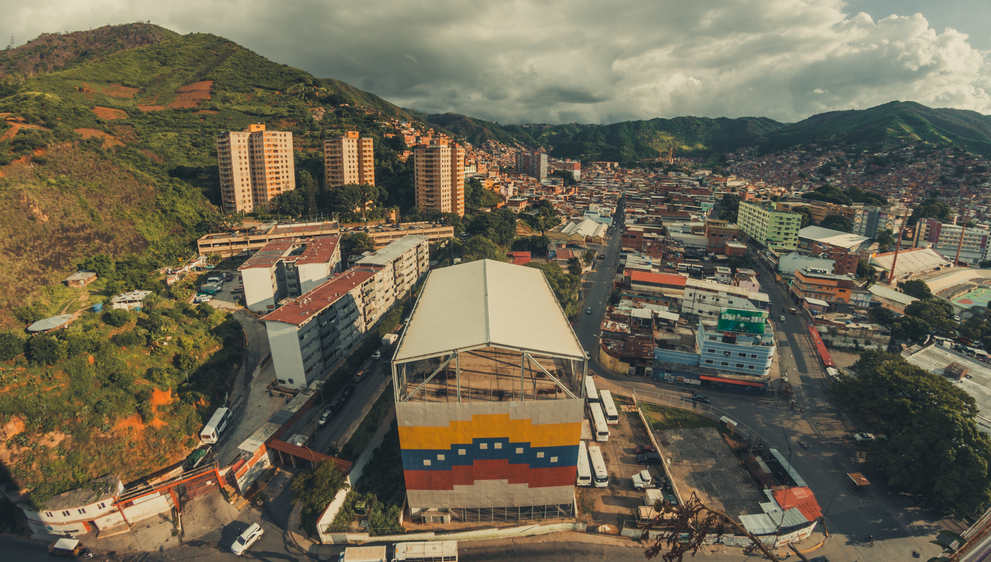

In this episode, host Daniel Raimi is joined by Luisa Palacios, an adjunct senior research scholar at Columbia University’s Center on Global Energy Policy, who breaks down the major and most recent energy developments in Venezuela. Palacios recounts the role of oil in Venezuela’s history and the implications of oil dependency as the country navigates another period of political uncertainty. Venezuela’s oil industry, Palacios underscores, is a major player in the international energy market and faces obstacles to acquiring substantial investment. Palacios draws from her expertise in emerging markets and international affairs to note the critical moves to look for as the world awaits how Venezuela could balance efforts to reduce carbon intensity with economic growth.
Listen to the Podcast
Notable Quotes:
- Putting petroleum production in perspective: “Venezuela was one of the largest oil producers and exporters, and I don’t think that people understand the magnitude of that. Venezuela was more important for oil markets than the United Arab Emirates, Kuwait, and Libya. The level of production of Venezuela was almost similar to Iran.” (8:06)
- Energy is not just about oil: “Right now, Venezuela is an oil-rich country, but the irony is that it’s an energy-deficient country because of the policy choices that Venezuela made and the fact that it has not taken into account its natural gas sectors and electricity sector in the same way that one would think will lead to lasting and more durable and sustainable economic growth.” (19:40)
- Sustainable energy may mean sustainable investment: “I do think that [reducing carbon intensity] is something that Venezuela can improve upon, particularly as it recovers oil production, because it might also be the only way that the country’s going to attract significant amounts of investments—by actually tackling these kinds of issues in a much more intentional way.” (24:59)
Top of the Stack
- “Reinventing Venezuela’s Struggling Electricity Sector” by Francisco Morandi and Luisa Palacios
- “Michael Webber on What’s Behind Rising Energy Costs” episode of the Columbia Energy Exchange podcast from the Center on Global Energy Policy at Columbia University’s School of International and Public Affairs
- World Energy Investment reports from the International Energy Agency
The Full Transcript
Daniel Raimi: Hello, and welcome to Resources Radio, a weekly podcast from Resources for the Future. I’m your host, Daniel Raimi. Today, we talk with Dr. Luisa Palacios, an adjunct senior research scholar at the Columbia University Center on Global Energy Policy. As you’ll hear today, Luisa has had a fascinating career spanning the worlds of research, finance, and energy, including serving as the chairwoman at Citgo, the US refining company that is owned by Petróleos de Venezuela, or PDVSA.
In today’s episode, Luisa will help us understand the long history of oil in Venezuela, the importance of the industry to the national economy, and where things stand today. We’ll talk about whether major energy sector investments are likely in the years ahead, what barriers to investment companies are facing, and the implications for Venezuela’s people, its government, and the environment. Stay with us.
Luisa Palacios, it is a pleasure to have you on Resources Radio. Thank you for joining us.
Luisa Palacios: Thank you, Daniel, for the invitation. I’m delighted to be here with you.
Daniel Raimi: So, we’re going to talk all about Venezuela and energy and politics and economics today, but first, we’d love to hear a little bit about you.
How did you end up working on energy issues in your career? I’m particularly interested and you can tell us a little bit about your time leading Citgo.
Luisa Palacios: Growing up in Venezuela, interest in energy actually comes with the territory, right? You cannot ignore it. It’s everywhere around you. It is an interest that I then pursued academically. I came to do a master’s degree at Columbia University and a PhD at Johns Hopkins School of Advanced International Studies (SAIS), and I did my dissertation on the oil industry in Latin America.
So, that already tells you a lot of how I got into this world. But prior to Citgo, which I know that you want me to talk about, most of my career was in the financial sector. I worked for different types of financial institutions with different kinds of risk profiles, but all investing in emerging markets, investing in oil producing and oil exporting countries, and commodity countries in general.
I started in the World Bank in Washington, DC, and then I worked for a French bank in Paris, Société Générale, and my portfolio of countries were oil-exporting countries. I was doing risk assessment of oil-exporting countries, both from the Middle East and from Latin America. I then worked for the Japan Bank for International Cooperation. This is like the Export-Import (EXIM) bank of Japan, and the EXIM banks normally also have, in various countries, a large portfolio of their balance sheet on loans to oil and natural gas and energy in general. So again, the intersection of energy and finance.
I then worked for Barclays Capital, which is an investment bank, and then for Medley Global Advisors, and then I went full-on into macro policy, but also energy. So, that was really combining both roles, and that expertise in the intersection of energy, finance, and geopolitics—because energy is all about geopolitics, as well—was really particularly useful as it relates to Venezuela and its national company, PDVSA, and it is one of the main reasons I was elected to be chairwoman of Citgo in February 2019.
Remember, this was after the unprecedented steps taken by the US government when it recognized the then-head of the Venezuelan legislature, Juan Guaidó, as the legitimate president of Venezuela after a failed reelection of Maduro in 2018. Those were the events that got me into Citgo to begin with. It was the expertise at the intersection of finance and energy.
So, I served as chairwoman of Citgo Petroleum Corporation from about 2019 to 2021, and it was really an extraordinary period of geopolitical, financial, and operational challenges of all types. The company was experiencing severe supply-chain disruptions before anyone was thinking about supply chain as an issue.
Remember, Citgo is the refining arm of PDVSA in the United States. It’s a US-based company, but it’s 100 percent owned by the national company, PDVSA, and so it pretty much is crude intake—a significant part of it was PDVSA’s oil, right? And so, PDVSA was sanctioned, and that meant that as I became a chairwoman of Citgo, the first thing that we had to do was deal with that supply-chain disruption.
We also faced really complex corporate-governance issues. This company—because it was an asset owned by the national company, PDVSA, that had defaulted—was exposed to myriad litigations by creditors. Those two years that I spent there were just dealing with all the legacy issues with a North Star that guided all of our decisions—that everything that we were going to do was to enhance the operational-financial stability of the country, the corporate governance, and the protection of its assets.
That meant also things like not only diversifying our crude intake, but also including licenses from the United States Treasury. Again, this was an asset owned by the national company that was a sanctioned entity, and so Citgo needed licenses to be able to operate. That in and of itself, a corporate base in the US that has to operate under licenses—I have to tell this—was unprecedented.
What I can tell you is that building Citgo’s operational-financial resilience in the face of such uncertainty was the number-one objective that we had, but it became our number-one strength, because it also allowed us to weather the other external risks that started to occur in 2020 that had to do with damaging hurricanes, a global pandemic, and a devastating Texas winter storm in 2021.
So, there were things related to the shareholders, but there were things just related to the fact of how external risk on fiscal assets were starting to emerge in a significant way in the energy industry.
Daniel Raimi: Yeah. I mean, I’m sure we could fill an entire podcast episode with stories about your time at Citgo, but we are going to actually turn back the clock a little bit, and I’m going to ask you to provide us with a little bit of a thumbnail sketch of Venezuela’s oil history. Can you take us back and help us understand how oil developed in Venezuela going back to the early twentieth century?
Luisa Palacios: This is the kind of thing that you study in your history books, right? Venezuela’s modern economic and political history, as you just mentioned, is intertwined with oil. Oil pretty much defined and was present in the modern era of Venezuelan politics.
Just so that you have an idea, oil began in Venezuela in the 1910s, and it surged in the following decades to such an extent that we will see then the country producing nothing to now, 10 years later, producing one million barrels per day, then in the decades of the 1950s and the 1960s, increasing oil production by one million barrels per day. So, when we reached 1970, Venezuela was producing its peak of production of 3.7 million barrels per day. At that point, Venezuela was one of the largest oil producers and exporters, and I don’t think that people understand the magnitude of that.
Venezuela was more important for oil markets than the United Arab Emirates, Kuwait, and Libya. The level of production of Venezuela was almost similar to Iran. I mean, this is really a big, big oil producer. Oil accounted for, and continues to account for, 90 percent of exports and about 50 to 60 percent of its core revenues, and it is this dependence and its standing on world markets that actually led Venezuela to be one of the founding members of OPEC in the 1960s. That’s the first element of this story.
The second element of the story is that oil brought significant wealth to Venezuela. I just told you that in the 1970s, Venezuela reached oil production. But in the 1970s, remember, there were three things that happened that brought this amazing wealth to Venezuela.
With the 1973 oil embargo, we saw a tripling, quadrupling, of oil prices. In 1976, Venezuela then nationalized its oil industry. This is really important to understand. Venezuela’s oil industry was developed by international oil companies from the get-go. From the 1910s to 1976, the oil industry was dominated by the major international oil companies.
But the 1976 nationalization meant that now Venezuela had very high levels of oil prices at that time—we’re talking that it went from $3 to $12. So, we will laugh at those prices now, but significantly increased its fiscal take at the moment. And then 1979 happened, right? That was the doubling of oil prices just because of the revolution in Iran.
So that you have an idea, the oil windfall was so spectacular that it was about 30 to 35 percent of the economy. That’s how much money Venezuela got during that time. This is the kind of Venezuela … It is “the Saudi Venezuela.”
That said, I would tell you that a decade later, the oil prices will collapse, Venezuela will face a debt crisis, and the downward pressure on oil prices also led to oil production declines. So, I think the 1970s and the experience of the debt crisis in the 1980s underscored the perils of this oil-driven model, the challenges of renter states, and set the stage to the third period that I think is important to speak about, which is the Apertura—it’s the oil liberalization that took place in the 1990s, right?
You’ve probably heard, in a lot of different press, about the oil liberalization that a lot of the US oil companies were present in during the 1990s. Indeed, that was the time where, not less than 15 years later after its nationalization, PDVSA invited back all the oil companies to the country to help it develop refining fields and the vast extra-heavy oil resources that Venezuela is known for, and it was a very successful oil-liberalization process.
Oil production significantly increased again, to almost one million barrels per day in the space of less than a decade. You did have significant investments and you had, really, an array of different types of oil companies coming back to the country. So, those three issues, I think, defined the early period of Venezuela’s oil history.
Daniel Raimi: That is great. That takes us up closer to the present day. Can you tell us a little bit about the major developments under President Hugo Chávez and then Nicolas Maduro?
Luisa Palacios: The oil boom that Venezuela experienced under Hugo Chávez was even more amazing, and that was a lottery ticket that Venezuela had, which was for a longer period of time. Also again, Venezuela failed to capitalize and translate this into prosperity. So, the other thing that happened during that time is that Venezuela saw, under Chávez, a massive nationalization of its economy, and most of the headlines are in the expropriation of the oil sector, which, yes, affected a lot of the US companies that I just talked about that had come during the previous decade.
The expropriations and nationalizations included also the electricity sector, telecoms, mining, petrochemicals, chemical companies—everything. No sector was spared, and the reason why this is important is because, once again, oil prices collapsed and the party ended. That meant—and that was already under Maduro, but this time, because you also had led through a period of destructive economic nationalization and expropriation—the country had much less margin to maneuver.
It really meant that many oil exporting countries faced similar oil price shocks, but only Venezuela saw the small results that we saw under Maduro where Venezuela experienced an almost 80 percent decline and economic collapse, similar to only countries that have gone through a civil war. It had to do with not only the lack of a proper economic policy, but also doubling down on a model that really didn’t work in an economy that now was completely dominated by the state and by even more dependent on oil production and oil prices.
Daniel Raimi: Mm-hmm. Yeah, and to the point now where production is below one million barrels per day, correct? It’s somewhere around 800,000?
Luisa Palacios: I think yes, we’re now … When Chávez took office, it was three million barrels per day, and now we’re at one million barrels per day.
Daniel Raimi: Okay. So, as listeners will know, the US administration has claimed that international oil companies, like the big ones here in the United States and in Europe and elsewhere, are going to invest billions and billions of dollars to boost oil production in Venezuela. Have you seen any indications that that is happening or that it’s likely to happen?
Luisa Palacios: I think it’s very difficult to believe that we are going to get back to the three million barrels per day that Venezuela was producing before Chávez took office, and the reason is because the different estimates that are out there have put forward numbers like $100 billion to $150 billion of investments in a period of 5 to 10 years. That’s about 10 billion per year, which is a lot for a country like Venezuela. That level of investment … This is not just investing in a car, right?
That level of investment requires four things. It requires the overhaul of the country’s legal framework, and yes—we have seen an improvement in that front with changes to the current law, but that is by no means enough. We do require significant improvements in governance and the rule of law. We require improvements in the institutions of the country, and that includes the national company, PDVSA, because you’re taking a lot of counterparty risk when you’re investing in Venezuela in the oil industry.
It requires political stability. You need to understand, again, that oil investments are highly capital intensive. You are not making investments for one to two years. You’re making investments for 10, to 20, to 30 years. So, you need to have visibility not only about what is happening in two weeks, but also you need to have visibility about the whole life of the project. You need to have the idea that you’re going to return to a legitimate government and to have some kind of stability, that the rules in which you are investing today are going to be maintained in time, and that is not clear at all at the moment.
You also need dramatic improvements in safety, not only private safety, personal safety, but asset safety, right? This is a country with a lot of different issues, different problems, safety standards, environmental problems, and not all the oil companies that have significant balance sheets want to invest in countries where those kinds of standards and that kind of regulatory and institutional rules are not there. Again, there are some improvements, but there’s a lot that needs to happen before we can see this level of investment.
Daniel Raimi: That’s great. So, just a really quick bottom line, are you seeing any investment at this point or signs that investment is ready to happen, or no?
Luisa Palacios: I’m seeing a lot of interest, not yet a lot of investments.
Daniel Raimi: Interesting. Is there any distinction between the oil majors, like the ExxonMobils or Chevrons of the world, and the oilfield service companies, like the Halliburtons or Schlumbergers or Baker Hughes of the world, or are they all kind of in this interest moment without substantial investment yet?
Luisa Palacios: No, Daniel, that actually is a fantastic question because the oil industry is not monolithic. There are different types of investors with different types of investor risk profiles. What I would tell you is that I do think that you might get interest from oil service providers. You might get interest from private equity firms. You might get interest from wildcatters. You might get interest from those kinds of firms before you get interest from the larger international companies and US oil companies that are the ones that have the really big balance sheets to make those investments possible.
Daniel Raimi: Yeah, really interesting. So, let’s imagine for a second that a surge of investment does occur over, let’s say, three to five years in Venezuela. As oil production ramps up under that hypothetical scenario, how much benefit could ramped-up oil production provide to Venezuela’s economy? Could it be enough to return it to where it was in the 1990s or before?
Luisa Palacios: Okay. I really like this question, and the reason is: Let’s say that we go from one million barrels per day to two million barrels per day—which is, by any standard, really a success, right? At two million barrels per day, Venezuela was still suffering a huge economic contraction. You still had a humanitarian crisis and a migration of the country. That is when Venezuela had already declined to two million barrels per day.
So, what I mean to say is that recovering oil production from one million to two million barrels per day will not necessarily … Yes, it is important. You need to start somewhere, but oil will not be enough. The whole country cannot just live off of rents. While I am of the view of the importance of energy for economic development, energy is not only about oil, and Venezuela has the resources not just to continue to be an oil producer, to become an energy powerhouse. But that requires understanding of energy policy that goes way beyond just oil policy and energy, not as a source of rents, but as a source of development and growth to lift the productive capabilities of the country.
Right now, Venezuela is an oil-rich country, but the irony is that it’s an energy-deficient country because of the policy choices that Venezuela made and the fact that it has not taken into account its natural gas sectors and electricity sector in the same way that one would think will lead to lasting and more durable and sustainable economic growth.
Daniel Raimi: Yeah. Can you tell us a little bit more about those resources? You mentioned natural gas, and you mentioned electricity. I understand there’s also quite a bit of mining in Venezuela.
Luisa Palacios: Yeah.
Daniel Raimi: What are some of the other resources that could round out the portfolio of energy sources?
Luisa Palacios: So, let’s just talk about natural gas which is the easiest, just because everyone talks about how Venezuela has 70 percent of the world’s reserves. Venezuela has 70 percent of the natural gas reserves of South America—of Latin America—and it is wasting about 40 percent of it; every year, it wastes about 40 percent of its natural gas production. It’s either because it’s vented or because it’s flared. I actually made calculations, and if Venezuela were to use … Let’s say if it were just to export the amount of natural gas that it vents or that it flares, it would represent $1 billion in export revenues just using Henry Hub prices.
My point being is that it is wasting a significant source of exports, but more importantly, one of those fuels that we know has more longevity in an energy transition environment, and one that also has the capacity to link Venezuela with the power sector. In the age of electricity, an energy powerhouse is going to be less defined by its ability to have oil, but more defined by its ability to garner power and electricity. In that, Venezuela has phenomenal potential renewable resources that it also is not taking advantage of.
And lastly, yes, mining. Venezuela used to be a really important regional producer of different mining activities such as iron, steel, and bauxite. It has reserves of coltan, it has reserves of copper, and it seems to me that this is one area of opportunity, but these kinds of mining activities tend to be very energy-intensive as well. What that means is that you need to have a functioning electricity sector to be able to harness those kinds of resources.
Daniel Raimi: Right. Yeah, one thing that I think folks don’t always realize is the importance of electricity for mining. Many of the really huge earth movers and earth diggers—they actually don’t run on diesel but they run on huge amounts of electricity to get sent over to the mines.
So, we’ve been talking about economics, geopolitics, and energy. Our listeners are also always interested in environmental topics, and as you mentioned earlier, Venezuela’s oil is quite heavy. That means it requires a lot of energy to extract. You mentioned the high rates of methane emissions and flaring that happens in the country. If there were substantial investments to increase production of oil in Venezuela and maybe to take care of some of those problems with natural gas, what do you think some of the significant environmental consequences might be, both in terms of kind of local environments, but also for greenhouse gas emissions around the world?
Luisa Palacios: So, Venezuela is one of these places where there is so much to do and so much potential for climate rehabilitation and so many low-hanging fruits that I just would like any kind of government going forward to really take the climate policy and energy policy in a holistic way.
Clearly, the first thing to tackle is the methane-emission intensity because Venezuela’s oil production … The methane intensity of Venezuela’s oil production is one of the highest in the planet, if not the highest, and that is an operational issue much more than anything else.
By the way, it is something that is a low-hanging fruit also, not only from the point of view of climate, but also from the point of view of economics, because you also have an electricity issue in the country. There’s not enough generation capacity, although it’s very much fueled by hydro power. When you have droughts, you need to have other sources of electricity. So, just using methane, recovering that methane and powering through the existing thermal power plants that are really not in operation right now will be one of the best solutions that I can think of in which you can tackle two problems at the same time.
The carbon intensity of oil is an issue, but I do think that there are other countries that have been able to reduce the carbon intensity of their oil production by investing in operational efficiency and investing in other types of technologies. So, I do think that this is something that Venezuela can improve upon, particularly as it recovers oil production, because it might also be the only way that the country’s going to attract significant amounts of investments—by actually tackling these kinds of issues in a much more intentional way.
There are other issues related to remediation, not only in the oil sector, but in the mining sector which I really, really think can be as urgent just because it has to do with a level of deforestation that is one of the highest in the Amazon basin—in the Amazon part of Venezuela.
But I just want to say something that I know it’s kind of not obvious: While Venezuela does have to tackle its emission in the energy sector, the collapse of Venezuela’s economy has meant that Venezuela has seen a 30 to 40 percent reduction in emissions since 2015. This is not the way—by the way—that you want to reduce emissions, but just from the point of view of transitioning, Venezuela can do both things at the same time. Because the collapse of the economy has allowed it some space, it can actually grow back but in a much more responsible way.
Daniel Raimi: Yeah. I know when I have seen commentary from folks with sort of deep climate concerns about the ramp-up of oil in Venezuela, it seems to me they’re not taking into account the full implications. It’s not just the increase in production of heavy oil, but it’s also a reduction in methane emissions, improving efficiencies, and you can actually imagine a world where increased investment in Venezuelan oil infrastructure actually reduces greenhouse gases on net if it’s done sort of the right way.
Luisa Palacios: Which means this is why it is really important who does it.
Daniel Raimi: Yeah, absolutely. Well, Luisa, this has been a fascinating conversation. I’ve learned a ton and I’m sure our listeners have too.
I’d love to ask you, now, the same question that we ask all of our guests at the end of each episode, which is to recommend something that you’ve read or watched or heard related to the topics we’ve been talking about today, or something else—it’s totally up to you, whatever you think is great.
So, what’s at the top of your literal or your metaphorical reading stack?
Luisa Palacios: I love this question. Let me just provide two answers. For the first one, I would suggest that your listeners hear the Center on Global Energy Policy’s podcast (Columbia Energy Exchange) episode with Michael Webber. As you know, our good friend, Jason Bordoff hosts this podcast, but in that episode, which is about what’s behind rising energy cost, I love how topical that discussion was because it’s a discussion that elevated the need to have a multidisciplinary approach to the way we solve energy and climate issues. It comes from somebody that is based in Texas, is an academic in Texas, and it comes with a pragmatism involved when you’re thinking from the point of view of a fossil-fuel-producer region and the centrality of electricity in today’s energy sector. So, that’s one.
The second one is that I teach a class called the Financing of the Energy Transition in Emerging Markets. Emerging markets is my area of expertise, and I love the World Energy Investments that the International Energy Agency publishes every year, and there’s three reasons for this.
First of all, because it provides a clear understanding of the facts about what kinds of investments are happening, not only in the United States, but also globally—how these investments take place and how they take place not only in clean energy, but also in fossil fuels and how they relate to one another. I’m really, acutely sensitive to blind spots, particularly if you’re only looking at the world through the lens of either oil and gas or clean energy or climate, and it is always really wise to look at things from the interplay of all of these factors in an evidence-based approach.
Daniel Raimi: Those are two fantastic recommendations. Yeah, folks who aren’t already subscribed to the Columbia Energy Exchange podcast really should, and Michael Webber, of course, is fantastic, and the IEA’s reports are always great. Folks can wonk out all they want and we’ll have links in the show notes to both those resources.
So, one more time, Luisa Palacios from the Columbia Center on Global Energy Policy, thank you so much for joining us today. We really appreciate it.
Luisa Palacios: Thank you, Daniel, for the invitation. It was great to be with you.
Daniel Raimi: You’ve been listening to Resources Radio, a podcast from Resources for the Future, or RFF. If you have a minute, we’d really appreciate you leaving us a rating or a comment on your podcast platform of choice. Also, feel free to send us your suggestions for future episodes.
This podcast is made possible with the generous financial support of our listeners. You can help us continue producing these kinds of discussions on the topics that you care about by making a donation to Resources for the Future online at rff.org/donate.
RFF is an independent nonprofit research institution in Washington, DC. Our mission is to improve environmental, energy, and natural resource decisions through impartial economic research and policy engagement.
The views expressed on this podcast are solely those of the podcast guests and may differ from those of RFF experts, its officers, or its directors. RFF does not take positions on specific legislative proposals.
Resources Radio is produced by Elizabeth Wason, with music by me, Daniel Raimi. Join us next week for another episode.