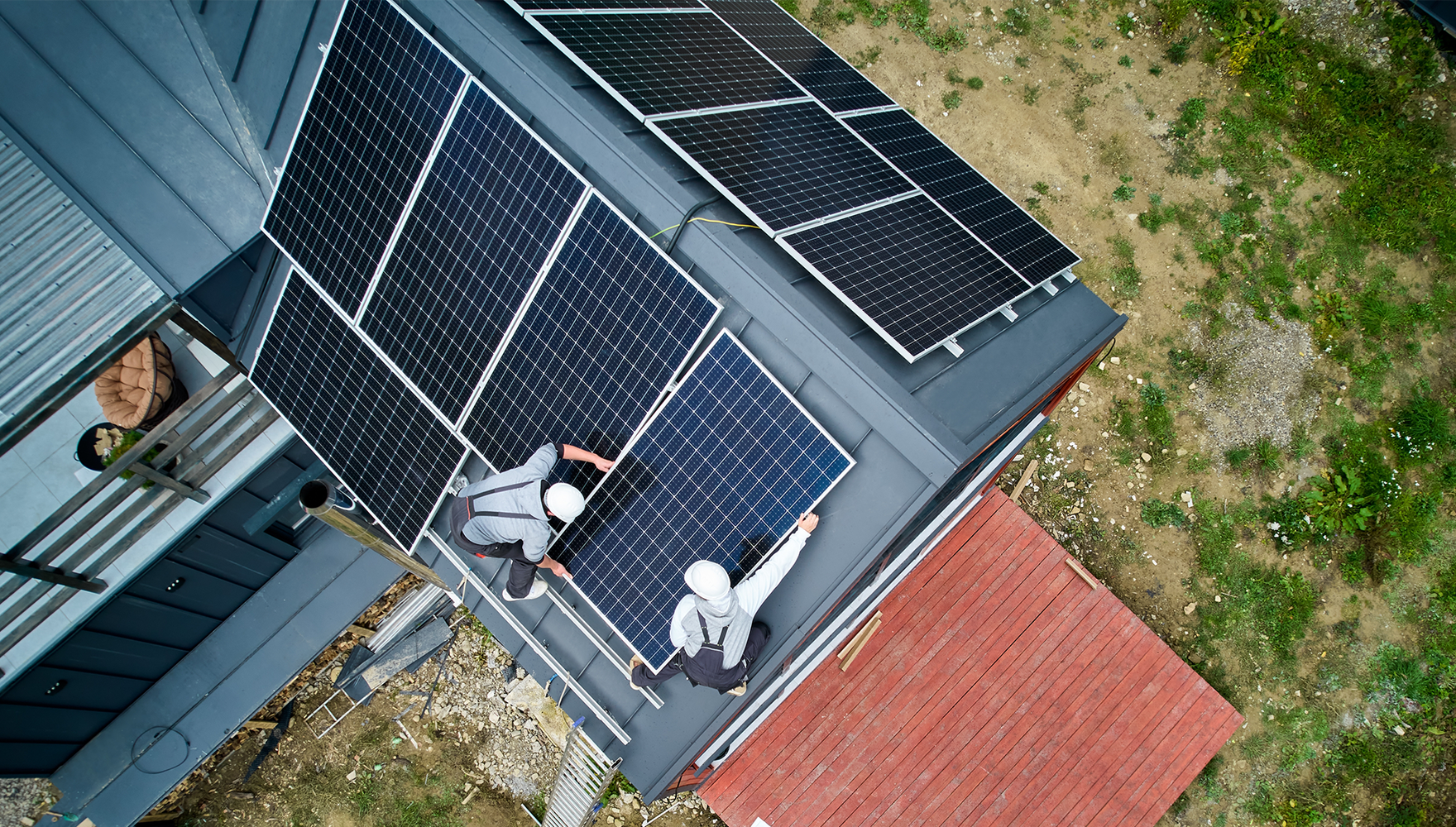

This week, host Daniel Raimi welcomes Shoshannah Lenski, executive director of the Ann Arbor Sustainable Energy Utility (SEU), a municipal energy utility that is fully powered by renewable sources, optional for residents, and supplemental to the existing electricity grid. Over the past few months, the SEU has been installing solar energy systems in households to scale back dependence on carbon-intensive infrastructure, focusing on underserved communities that historically have lacked reliable, affordable electricity. Providing renewable energy as a public utility—with no up-front costs to residents—offers creative solutions for problems such as stress on the electric grid due to data center build-out, low access to renewable energy for property renters, and repealed federal assistance for solar installations. Lenski walks through the SEU’s ambitious next steps, including constructing neighborhood-scale geothermal systems that provide heating and cooling, and building “microgrids” of interconnected sites that share the energy generated by their solar systems.
Listen to the Podcast
Audio edited by Rosario Añon Suarez
Notable Quotes
- Focusing the energy transition where it matters most: “Fundamentally, we want to make clean energy accessible for everyone, and we want it to serve those who’ve historically been left out of the energy transition. We need our rates to be competitive with what folks are currently paying, or lower, so ultimately we can help our residents who are struggling with high energy burdens.” (12:49)
- Local support for solar energy: “Many of us working in this space right now feel like the headwinds at the federal level just make it all the more important that we figure this out at the local level. The work can’t stop. I’m hoping that the SEU can really help this industry keep going through this bumpy patch and emerge stronger on the other end, when, hopefully, we’ll have a more supportive environment to work in.” (18:53)
- Why moving households off the grid won’t disrupt demand: “The challenge that utilities are facing today, including in our region and in [Ann Arbor] explicitly, is how utilities will grow fast enough to serve all of the load growth from data centers. A single deal last fall is going to increase our incumbent utilities load by 25 percent.” (23:51)
Top of the Stack
The Full Transcript
Daniel Raimi: Hello, and welcome to Resources Radio, a weekly podcast from Resources for the Future (RFF). I’m your host, Daniel Raimi.
Today, we talked with Shoshannah Lenski, the first executive director of Ann Arbor, Michigan’s Sustainable Energy Utility. This new utility offers a unique model for providing energy to households and businesses in this small, Midwestern college town. As Shoshannah will describe, the city is installing a network set of solar panels and batteries to supplement the existing grid using a mix of grants, taxpayer dollars, and customer payments. The goal is to create a new model for how to provide reliable, affordable, and clean energy to cities across the United States.
I’ll ask Shoshannah about some of the technical and financial details and whether the benefits provided to Ann Arbor residents might increase costs for others outside of the city. Stay with us.
All right. Shoshannah Lenski from wonderful Ann Arbor, Michigan, welcome to Resources Radio.
Shoshannah Lenski: Thank you so much for having me, Daniel. It’s an honor to be here with you today.
Daniel Raimi: Yeah, I’m really excited to talk about my hometown and your hometown—or I guess it’s not my hometown, I didn’t grow up here—but the place where we live and this really exciting Sustainable Energy Utility that you are leading.
But before we get into that, can you just tell us how you got interested in working on energy and environmental issues in the first place?
Shoshannah Lenski: Sure. I’ve been interested in environmental issues since I was a kid, though of course what that means has evolved a lot over time. In elementary school, I liked being in nature and playing in mud. In high school, I was part of the environmental club, where we did litter pickups and organized school recycling efforts.
But I was in college in the early 2000s, at what felt like a really important turning point in the environmental movement. I think climate was certainly coming into focus as a central environmental issue. And critically, I think businesses were getting into the game. This was the moment when BP rebranded as Beyond Petroleum and this term ESG—the trifecta of environmental, social and governance issues—was coined, although certainly that didn’t hit the vernacular for many years thereafter.
I was fascinated by this idea of the private sector and the capital markets actually helping to solve environmental problems, rather than just create them. And it seemed like it would unlock so much more power to involve those who, at the time, certainly seemed like they were running the world. And so, I wanted to try my hand at driving sustainability through the private sector and through the business world.
I’ll say, I love the energy sector for this work for a couple of reasons. First, of course, no matter how you cut the data, it’s one of the largest contributors to climate emissions and other pollutants. And second—and I know I’m preaching to the choir talking to you and your listeners here—but of course it’s essential to modern life and health, and getting more so, unfortunately, in our new climate reality.
Daniel Raimi: Yeah, for sure. And when you were growing up and playing in the mud, did you grow up here in Michigan, or did you grow up outside?
Shoshannah Lenski: My early years were in Southern California, and then I moved here to Michigan in the middle of elementary school.
Daniel Raimi: Really cool. Well, let’s talk now about Ann Arbor’s Sustainable Energy Utility. We’ll probably be referring to it as the SEU, so people can get used to that acronym. Tell us a little bit of history, first. Why did the city want to create this new entity?
Shoshannah Lenski: Yeah. Well, maybe I’ll start with a very brief introduction to Ann Arbor, for listeners who aren’t familiar with it. We’re a Midwest college town, home to the University of Michigan. We have about 120,000 residents, so we consider ourselves a small city. Half of our households are renter occupied. And the city repeatedly gets rated on lists of the best places to live for its vibrant cultural, sports, educational, and tech activity.
So, why did the city want to create the Sustainable Energy Utility? Well, there’s a couple of pieces to this puzzle, and the first one is climate. The city has a deep commitment to climate action. In 2020, we declared a climate emergency and adopted an ambitious goal of a just transition to carbon neutrality community-wide by 2030. So, community-wide, meaning not just in our municipal facilities, but for everyone and all the activity happening in the city. And then in 2022, our residents overwhelmingly voted to tax themselves for a community climate action millage to fund the city’s clean energy, transportation, and equity initiatives.
When you look at our community’s climate emissions, nearly two-thirds of them come from energy use in our buildings. So, that obviously is a key focus of the carbon-neutrality plan. There’s seven strategies in it. Three of them are squarely focused on the energy sector, and those are: First, we have to power the grid with 100 percent renewables. Second, we have to transition our fossil-fueled energy use to electric so that it can be powered by those renewables. And then third, we have to do deep energy efficiency work.
So, as we looked at those paths or looked at how we were going to achieve those strategies, it was clear that what was already in play with private solar installations or the plans of our investor-owned utility that serves our area— those were not going to get us to our goal. We needed something new. So, that’s one of the driving factors, but it’s only a piece of the puzzle.
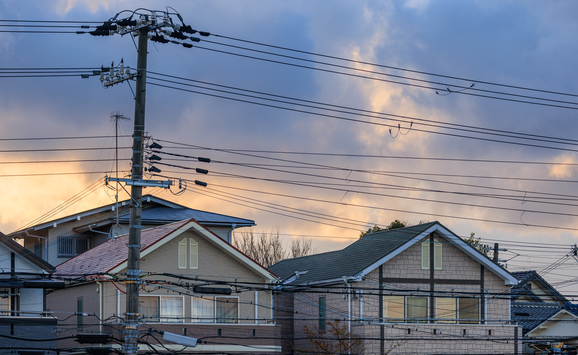
The second one is challenges with our existing energy service. You know this as a resident here, but I will speak nicely when I say that residents in Ann Arbor are frustrated with the service that we get from our investor-owned utility. We have mostly overhead lines and a beloved mature tree canopy (we are Ann Arbor, after all) but a long history of neglected tree trimming. We have aging electric infrastructure, like so much of the nation does. We have intensifying storms. So, we’ve had really terrible reliability performance for a number of years, and residents were fed up with that.
And, at the same time, like many around the nation, we’re facing electric rates that continue to increase year after year. So, for many residents, they become increasingly unaffordable.
So, people were looking for an alternative. The city engaged experts from a wide variety of disciplines, folks from our community, and explored alternatives. And the one that emerged as the most promising and likely to be really effective in helping us reach our goals was the concept of this completely new form of municipal utility: the Sustainable Energy Utility. The key defining features are that it’s supplemental to the existing grid, it’s optional, and it’s 100 percent renewable.
Daniel Raimi: Great. Well, tell us a little bit more. Tell us how this thing would actually work, physically. How does it operate alongside the existing grid?
Shoshannah Lenski: Sure. The idea of a supplemental or parallel utility at first blush probably sounds kind of crazy. We all learn in Econ 101 that utilities are natural monopolies, and it wouldn’t make sense to have two grids and duplicate infrastructure. That’s certainly true for much of the infrastructure—the poles, the wires, the substations and so forth—but it’s not true for distributed energy generation, which is not a natural monopoly. It’s grown dramatically in capacity and capability over the last decade.
And so, the SEU is authorized to provide renewable energy and energy services, including solar generation, battery storage, geothermal, energy efficiency, on-bill financing, EV [electric vehicle] charging, similar things to that. And some of these, of course, already go hand in hand with existing grid services, and there’s plenty of other communities, including the two other SEUs that exist in the nation, that are very different from our model. In Delaware and [Washington,] DC, there’s SEUs that are providing energy efficiency services and other things alongside the grid, in some fashion or another.
What’s really unique here is that we’re talking about building energy generation or energy supply that will replace some of what our residents are currently buying from the grid—or from the gas company, in the case of our geothermal heating plans—and we’re going to build that right here inside our city limits, not outside them and bringing them in via transmission, but right here, inside our city.
So, for starters, we’re looking to build solar generation exclusively behind the meter, on customers’ properties and facilities and serving their load directly. So, we’ll operate as a third-party municipal utility owner of this behind-the-meter generation, and the resident or the business that takes service will have the interconnection agreement with the incumbent utility.
A second line of business, if you will, that we’re looking to build is a geothermal utility that will serve residents’ heating and cooling load. There’s a few ways that we can do this, but one way is through district-, network-, or neighborhood-scale geothermal systems that serve people through a central wellfield and distribution piping that brings this thermal energy around a neighborhood. And right now there are no geothermal utilities in Michigan. So, it’s a wide open space regulatory-wise. There’s not really a conflict for how that works alongside the existing grid, although it will certainly change grid operations.
And then the third piece. This is a couple years down the line, but one thing that’s really exciting is that as a utility, we do have the authorization to build distribution. As I said earlier, we’re not planning to duplicate the grid, that would certainly be inefficient, but we can build it at a small scale in these really strategic, niche applications where it can add a lot of value. And this would be a role for small microgridding, where we would have a grid of some interconnected sites—maybe a handful of homes on a block or a handful of businesses in a shopping plaza, where you could imagine that there’s value to sharing generation and storage that really optimizes their use of it rather than trying to do it piecemeal at every facility.
Daniel Raimi: Yeah, really interesting. And is the idea that you would place some of these microgrids in places that have consistent challenges with service getting interrupted? How would you choose one place over another for one of these microgrids?
Shoshannah Lenski: Yeah, I think there’s a few things that could drive that value. It might have to do with reliability. As you say, parts of town or residents have experienced repeated outages, and we could build that grid for resiliency and have, say, shared battery backup among them. Or it might be areas where interconnection to the grid is challenged due to hosting capacity, and we would actually want to have that clean energy generation operating completely disconnected from, and not interconnected with, the grid.
Or where there’s a mismatch between generating capacity of a facility or a geographic area and generating usage. For example, we’ve been in conversations with our public schools, which have been putting a lot of solar generation on their facilities, which is fantastic. We love what they’re doing. And, of course, those facilities are producing a ton of energy during the summer, when there’s very low building load because the students aren’t there. And so, you can imagine there might be some optimization where, during the summer months, you’re actually sending that energy to nearby users, whether it’s the homes that surround the back of the school, or it’s EV chargers in the school lot—somewhere you can make better use of that energy.
Daniel Raimi: Super interesting. So, tell us a little bit about the economics of the SEU. Who’s going to pay for it, who’s paying for the initial start-up costs, and how much do you think it might end up costing the average customer?
Shoshannah Lenski: Well, as a utility, the idea of the SEU is to be self-funding through collection of rates from the participants who take service, just like the city’s water utilities or an investor-owned energy utility.
So, just to clarify the business model here, just like other utilities own their power plants, we will own the generating assets. So, the customers who sign up with us, they don’t have to pay anything up front. They are not purchasing a solar system from us or a battery from us. They’re purchasing the energy from us. There’s no money down, and they just pay a monthly rate. Now, to make this work at scale and to be appealing to folks, we need that monthly rate to be affordable and at least cost-competitive with what folks are paying for energy today.
It’s really important to me, and to the ethos of the SEU, that this is not intended to be a “green premium” product. Fundamentally, we want to make clean energy accessible for everyone, and we want it to scale and serve those who’ve historically been left out of the energy transition. So, we really need our rates to be competitive with what folks are currently paying, or lower so that they can save money, and ultimately we can help our residents who are struggling with high energy burdens.
So, we’ve been able to do this in initial pilot operations with support from grant funding. And just last month, our community and our city leadership chose to invest in the Sustainable Energy Utility with an infusion of some start-up funding from existing city tax revenue. That will give us some runway, and some reserves against which we can borrow and take on some debt to grow further. So, we’re hoping to secure a couple more grants and, as some call it, concessionary capital in our early years to help us get to the scale where we’re clearly competitive. But all of the modeling suggests that within—I don’t want to put a firm number on it—but within a handful of years and some megawatts of scale, this model clearly works to be cost-competitive with rates that folks are paying right now.
One thing I want to emphasize … This idea keeps growing in my mind as we’re getting further along here. One thing that’s so exciting about this economic model is that it can serve a class of residents that have consistently been left out of clean energy, and that is renters. I mentioned that half of our population in Ann Arbor is rental households. So, today, there’s this split incentive that happens in most cases, where renters are responsible for their utility bills, so their landlord or the property owner really has no incentive to invest in the significant up-front capital for solar panels or a battery when the tenant is the one who sees the cost savings or the reliability benefits. But, in this model of no up-front cost and paying through a utility bill, there’s really no downside for a landlord to sign up to put this on their property, and then the tenant benefits.
Over the last couple of months, I’ve been having so many conversations with landlords who are really, really excited about this and tenants who are like, “Oh my gosh, I’m going to ask my landlord to sign up. I really want to have clean energy at my home.” And so, we’re actually just starting to serve some of them. To me, this is a breakthrough in the economic model that could open a huge new market for clean energy here in Ann Arbor, and I hope elsewhere.
Daniel Raimi: Yeah, really interesting. That split-incentive issue has been talked about for a long time, so it’s cool to hear about this model potentially upending it.
I want to ask you about the economics a little more, but first, can you give us a status update? Where is the SEU right now in terms of its deployment? I know things are still in the early stages, but where are you now, and where do you think you’ll be over the next couple of years in terms of the scale of installations?
Shoshannah Lenski: Sure. The SEU is, as I’ve been calling it, a “toddler” utility. I was calling it a “baby” utility until April, and then the organization turned one, and we actually began enrolling our first customers. So, I say we’re toddling along.
We currently have our first 25 or so customers that are officially enrolled and have signed on the dotted line to request service, and a first half dozen to 10 or so solar and storage systems that are actually installed. On July 1, in just a couple of weeks, we begin our fiscal year, and we will start collecting our first earned revenue via rates for the systems that we’ve installed. So, this moment is incredibly exciting, because we’ve just transitioned from this cool concept and idea to being an actual, operating utility.
So, our plans for this year: We’re targeting installing 100 residential systems as part of this pilot that I mentioned is funded by grant dollars. In this case, the rates we’re offering will deliver significant energy-bill savings to the participants. It’s being delivered in one of the city’s lower-income, working-class neighborhoods, where most folks would not be able to install their own private solar, and where the rate savings and the resiliency—protection from power outages and so forth—can be particularly meaningful to these customers.
So, while we’re working aggressively on getting this year’s pilot up and running and learning from it, we’re also preparing to scale rapidly. Next year, we’re hoping to grow tenfold and install approximately 1,000 systems citywide. That is really ambitious. To put that in context, the city has seen about 200 private solar systems installed each year for the last five or so years. Just having the capacity to do these, from a physical installation perspective and all the permitting and the interconnections and everything, it will be amazing if we can pull it off. We’re working really hard to do so.
Daniel Raimi: Yeah, that is super interesting and sounds like a real challenge. I’ll be really interested to be watching around town and see all the crews out installing solar on people’s roofs.
One thing that listeners will probably be thinking about is how much the economic and regulatory environment for deploying solar in particular has changed in the last couple of years. Obviously, the 30 percent federal tax credit for solar deployment that was in place until recently is phasing out—or it might be totally phased out now, I’m not totally sure of the status—but it’s going away if it hasn’t already gone away. And then, at the same time, interest rates are quite a bit higher than they were a couple of years ago, and that obviously poses a challenge to high up-front capital cost projects like energy projects.
So, how have those factors affected the economics of the SEU?
Shoshannah Lenski: Yeah. The headwinds are real, I’m not going to lie, and they are certainly challenging. When I accepted the job to come be the executive director here, it was the day before or the day after the tax credits were repealed, and I remember sitting and thinking to myself, “What did I just get myself into, and is this model still viable?” But, in many ways, I think many of us in this movement and working in this space right now feel like the headwinds at the federal level and regulatory techs make it all the more important that we figure this out at the local level. The work can’t stop. We know that our community solar installers are hurting. I’m hoping that the SEU can really help this industry keep going through this bumpy patch and emerge stronger on the other end, when, hopefully, we’ll have another, more supportive environment to work in.
I’ll say, we’re having to be creative to find the strategies that make the math work, even when some of the benefits we were hoping for are no longer available. So, the business model is new. We’re testing strategies to make this more of a mass-produced solar-installations model. I’m telling people we’re trying to call it the “Model T of solar installations.”
One example is we’re standardizing our system configurations. So, in a typical private installation process, a resident would call a contractor, or they’d call several, and will get a system custom designed to them, and it’s configured, usually, to maximize how much energy they can generate given their physical space and limits from their electric utility. Every contractor is going to have different panel offerings, and different efficiencies and production. They’re going to design something custom that matches the rooftop and say, “We can squeeze an extra panel in here and turn this one sideways.”
We’re not doing any of that. Our goal is speed and affordability. So, we’re not custom designing. We have one model of panel and one battery. For our pilot this year, we’re offering a single configuration. It’s 10 panels. So, it makes a 4.5-kilowatt system and a single 15 kilowatt-hour battery. That size was designed to be viable and beneficial for the vast majority of households in the neighborhood we’re serving, but it won’t be perfect because it’s one size fits all. And then next year, as we scale citywide, we’re planning to have a catalog of options—I think it’s going to be small-, medium-, and large-sized systems—and people can choose what works for them, but they’re not custom.
I think that’s going to help keep costs down on many dimensions. We’re procuring the equipment in bulk. We have just a few electrical diagrams, these one-line diagrams that get submitted over and over for permitting and interconnection paperwork. So, that reduces the time, not only for preparing that paperwork, but for the folks reviewing it. There’s city permitters and utility interconnection folks that are seeing the same thing over and over. “Yeah, here’s another Ann Arbor SEU system. I’ve seen a dozen (or eventually a thousand) of these, and I know the equipment, and I’ve inspected that before. Check, check, check.” We can just move through that process so much faster and more easily.
You’ve probably heard the stats that these kinds of “soft costs” make up something like 30 percent of the costs of what we pay for solar in the United States, well above what other countries see for solar costs. And so, we’re trying to replicate what we’re seeing other nations doing differently, and better, and build our own creative strategies for cost cutting.
Sorry, that might’ve been a bit of a tangent, but it’s an example of how we’re trying to keep costs down and make solar work, even in this trickier economic environment.
Daniel Raimi: Yeah, that’s great. I think getting some meat on those bones really makes a lot of sense, and the standardization process you described makes a lot of sense. I mean, listeners may or may not know that if you look at residential solar costs, they are substantially higher than what you typically see for utility-scale costs. And a lot of that is because of the customization that you’re describing when it comes to building custom solar systems for homes, each of which are different. So, it’s really cool to see the approach you’re taking here.
One of the concerns that I often have when I think about Ann Arbor investing in an SEU or other efforts is how it might actually affect other people outside of Ann Arbor. Specifically, I wonder about the grid. If Ann Arborites benefit from the services provided by the SEU, and people are paying less to our local, regional utility, doesn’t that run the risk of shifting the costs for maintaining the grid and maintaining the broader, bulk services that people rely on? Doesn’t that run the risk of shifting costs to other customers who don’t get to benefit from Ann Arbor’s SEU?
Shoshannah Lenski: This is the classic question of the so-called utility death spiral: This idea that the fixed costs of running utilities—which are largely fixed costs in many ways—just get spread over lower load, and therefore burden those who are left behind, if some people leave for solar or other so-called greener pastures.
So, there are circumstances where that is a reasonable concern. I think today, the point is moot, because the challenge that utilities are facing today, including in our region and in our city explicitly, is how utilities will grow fast enough to serve all of the load growth from data centers. A single deal last fall is going to increase our incumbent utilities load by 25 percent, and there’s a much larger pipeline of load growth coming, largely from data centers, but also just generally from electrification of our economy and of our energy use. And so, actually, I think this concern of load loss is really negated by the tremendous amount of load growth that is here today and is forthcoming.
So, in that kind of environment, rather than stressing the grid, I actually see the SEU as benefiting the grid as a whole—not just the direct participants and the benefits that they get from it, but spillover benefits to the entire grid. There is plenty of research out there, and real-life examples in other communities and on other grids, where distributed generation and storage actually slows the need for grid upgrades, whether that’s investment in new power plants or in upgraded wires.
Some of your listeners may have heard this term of a “virtual power plant,” or a VPP. We’re actually in conversations with counterparties in Michigan about offering VPP services with the SEU’s batteries. The idea here, simply, is that the capacity in these batteries, the energy in the batteries, and their ability to deploy as needed (to turn on or off) is kind of like a power plant. Even though each of the batteries on its own is small, if you deploy those in coordination—if you install them where the grid needs it and then deploy them when the grid needs it—that actually provides real, measurable value. It is the cheapest and fastest way to deploy new capacity. And so, in fact, ratepayers of traditional incumbent utilities shouldn’t be paying more to build a power plant or to upgrade transmission lines if they could just pay less to get the same capacity value from distributed batteries that then also have these additional benefits of building resilience in the community.
Daniel Raimi: Yeah. Those are both really interesting points. To your point, we’re definitely not in a utility death spiral world right now. So, it’s good to keep that in mind.
One more question, Shoshannah (before we go to our Top of the Stack segment), which is about the geothermal energy network that’s being developed here in Ann Arbor. You mentioned it briefly earlier, but can you tell us a little bit more about that project and, again, where it’s being deployed, what the status is, and what the goals are of that project?
Shoshannah Lenski: Yeah. As we think about climate action here, decarbonizing heating is one of the hardest steps to do in Michigan’s cold climate. Most of our residents use methane gas to heat their homes. But five feet underground, we’ve got the most efficient form of heating and cooling. It’s that constant temperature underground, and we just need to capture that.
So, the city is deep in the design phase for preparing to deploy a district-, network-, or neighborhood-scale geothermal system in the Bryant neighborhood, the same place where we’re doing our pilot solar operations. We are hoping to be able to build a central wellfield area in a park in that neighborhood and then build these distribution loops that bring thermal energy to each of the homes. There’s 260 homes there. We’re designing a system that can serve that entire load, although we may end up deploying that in some phases and not do it all at once. But we are looking to go out for RFPs [requests for proposals] for construction by the fall and to bring the system online in 2028.
Daniel Raimi: That is super exciting. I know my colleague Jesse Buchsbaum has been working on thermal energy networks and geothermal district systems. It’s something that’s really exciting and that we’re keeping a close eye on here at RFF.
Well, Shoshannah, this has been a fascinating conversation. It’s a really exciting model, and I’m lucky to be living in the middle of it and be able to watch it, keep in touch with you, and keep learning about it as it gets rolled out.
But I’d love to ask you now the same question we ask all of our guests at the end of each episode, which is to recommend something that you think is great and you think our audience might enjoy. It could be a book, or a movie, or a paper, or whatever. So, I’m curious, what’s at the top of your literal or your metaphorical reading stack?
Shoshannah Lenski: Okay. I’m going to recommend … This spring I read Jon Gertner’s book, The Ice at the End of the World. It’s a nonfiction book that tells the story of the early adventurers who explored Greenland’s ice sheets, and then it transitions into talking about the modern science that tells us how absolutely essential the ice sheet is to our earthly climate.
And this was this strange mix of thrilling edge-of-your-seat reading about the adventures and then really deep and thorough reporting on how we know what we know about climate science. It was the right mix of depressing and worrying, which anyone who’s in the climate world knows is necessary, but also a reminder of the power of human spirit and adventure and passion to do big, hard, scary things and go after it. So, I loved it.
Daniel Raimi: That sounds awesome. Thank you so much for that recommendation and for coming on the show and helping us understand Ann Arbor’s Sustainable Energy Utility. One more time, Shoshannah Lenski from the city of Ann Arbor. We really appreciate it.
Shoshannah Lenski: Thank you so much, Daniel. Pleasure to be here.
Daniel Raimi: You’ve been listening to Resources Radio, a podcast from Resources for the Future, or RFF. If you have a minute, we’d really appreciate you leaving us a rating or a comment on your podcast platform of choice. Also, feel free to send us your suggestions for future episodes.
This podcast is made possible with the generous financial support of our listeners. You can help us continue producing these kinds of discussions on the topics that you care about by making a donation to Resources for the Future online at rff.org/donate.
RFF is an independent, nonprofit research institution in Washington, DC. Our mission is to improve environmental, energy, and natural resource decisions through impartial economic research and policy engagement.
The views expressed on this podcast are solely those of the podcast guests and may differ from those of RFF experts, its officers, or its directors. RFF does not take positions on specific legislative proposals.
Resources Radio is produced by Elizabeth Wason with music by me, Daniel Raimi. Join us next week for another episode.