
For this week’s episode, host Daniel Raimi sits down with David Konisky, a professor at Indiana University Bloomington, to reflect on the release of Konisky’s new book, Power Lines: The Human Costs of American Energy in Transition, which Konisky wrote with Sanya Carley. Unlike previous calls for innovation-forward research on the energy transition, Konisky proposes a people-centered approach that includes examining the uneven benefits and costs that get distributed among communities that host or otherwise are affected by clean energy development. Konisky underscores that a close-up look into communities at the front lines of the energy transition can provide a heightened awareness of the local impacts of energy infrastructure and potentially facilitate sound and equitable decisions in federal energy policymaking.
Listen to the Podcast
Audio edited by Rosario Añon Suarez
Notable Quotes:
- It pays to be inclusive in the energy transition: “While there are certainly normative reasons why we as a society might want to help lower-income or historically disadvantaged communities access these technologies, it’s also imperative from a climate-mitigation standpoint … If we’re serious about addressing climate change, we need to decarbonize people’s homes, and we need to do it broadly across the country. In this way, helping people overcome these barriers to accessing new technologies has enormous positive spillovers.” (9:22)
- Communities should not shoulder economic burdens alone: “While much of the country has enjoyed the benefits of the cheap energy that these communities have provided, the burdens fall disproportionately on these communities and these workers. As we move away from these particular energy sources, they’re going to feel those burdens in really significant ways.” (11:40)
- Better awareness makes for better policy decisions: “Most public policy comes with trade-offs, and those trade-offs raise really important questions around fairness and equity. The main purpose of the book is not to tell people what to think or how to resolve those trade-offs, but to be more aware of them. Hopefully that pushes policymakers and advocates to be more mindful of those trade-offs and to perhaps craft policies that address them.” (28:22)
Top of the Stack:
- Power Lines: The Human Costs of American Energy in Transition by Sanya Carley and David Konisky
- Frederick Douglass: Prophet of Freedom by David W. Blight
- James by Percival Everett
The Full Transcript
Daniel Raimi: Hello, and welcome to Resources Radio, a weekly podcast from Resources for the Future (RFF). I’m your host, Daniel Raimi. This week, we talk with David Konisky, associate dean for research and Lynton K. Caldwell Professor at Indiana University Bloomington and the founding co-director of the Energy Justice Lab. David recently published a new book with coauthor Sanya Carley called Power Lines: The Human Costs of American Energy in Transition. The book pulls together a variety of research topics that David and Sanya have explored over more than a decade and centers on the lived experiences of the people who are on the front lines of energy development in the United States. In today’s conversation, we’ll focus on the pros and cons that communities face when they host fossil energy development, vehicle manufacturing, and wind development. We’ll also talk about policy ideas that can help make the US energy system more fair while also reducing emissions. Stay with us.
All right, David Konisky from Indiana University Bloomington. Welcome to Resources Radio, and congratulations on your new book.
David Konisky: Thanks, Daniel. It is great to be with you. I’m a longtime listener of the pod and a former RFF employee of many years ago, so it’s a real delight to be with you.
Daniel Raimi: Oh, I had forgotten about your RFF connection. What did you do at RFF, and when were you here?
David Konisky: I was at RFF back in the late 1990s and early 2000s for a few years working as a research assistant, mostly with Terry Davies and Kate Probst on a number of issues, and it was a really rewarding experience.
Daniel Raimi: Oh, awesome. Yeah, we have such great alumni of the organization. We actually started, recently, an alumni group to try and get former staffers together occasionally. Hopefully you’re looped into that network.
David, we’re going to talk today about your new book with Sanya Carley—of course, a friend of the show. Sanya is at the University of Pennsylvania now and used to work with you at Indiana University. The name of the book is Power Lines: The Human Costs of American Energy in Transition. Before we get into the details of the book, I’m curious about your path to just working on energy and environmental issues in general. How did you get inspired to work on these topics?
David Konisky: Yeah. My interest in environmental policy came a bit by chance. I discovered the field of environmental policy as an undergraduate student at Washington University in St. Louis. I was a history major studying modern American history and, specifically, the social movements of the 1960s, which I found fascinating. But I also sort of completed all my major requirements early, and I was looking for other interesting courses to take.
I found myself in an environmental politics course taught by Professor Bill Lowry. Bill is a pioneering scholar of US environmental politics, and being in his class for a semester got me hooked on this subject. His course often presented environmental issues, not so much as technical problems and needed solutions, but really instead being about conflict over choices and priorities and values. In other words, environmental problems were about politics. That idea really resonated with me, and I ended up doing a second major in environmental studies, which launched me on this career path.
Daniel Raimi: That is great. You ended up getting a PhD in political science, right?
David Konisky: I did. Yeah. Many years later, after my time in RFF, I went back and got a PhD in political science from MIT.
Daniel Raimi: Awesome. Well, one thing I was curious about to get our conversation started is just kind of a big-picture question. You and Sanya have written tons of great articles with a wide variety of colleagues over the years, and then you decided to write a book. So, I’m curious: Why a book?
David Konisky: Yeah, good question. I think there are a couple of main reasons. First, we wanted to bring together different strands of our research into a single story where we could focus a bit more on arguments and themes, rather than just data and statistics.
For about a decade now, my research with Sanya has focused on vulnerabilities to the clean energy transition, both conceptually and empirically. Obviously, there are many reasons why this transition is necessary and urgent. In addition to climate mitigation, we can think about the transition as producing innovations and improving health outcomes, jobs, and economic development opportunities, to mention just a few.
But as we thought about the transition, we really wanted to emphasize the importance of better understanding individuals and communities who might be left behind. At the time, we thought the scholarly community and policymakers were not really thinking too much about this dimension of the clean energy transition.
The focus of our work took us to a lot of places: coal mining communities in West Virginia, auto communities in Detroit and Toledo, Ohio, to have conversations with individuals across the country who were being shut off from their electricity because they couldn’t afford to pay their utility bills, to communities in the Midwest with landscapes that were being transformed by wind and solar farms.
All these issues facing these people and communities are different, but they have in common something, as well. We kind of referred to it as them being on the front lines of the energy transition. For some, this means lost jobs and tax revenue. For others, higher costs for energy use in their homes. For others, disruption to their sense of place and the feelings they have about where they live. We really wanted to explore the commonality in these vulnerabilities. That’s something that is much easier to do and develop in a book compared to a standard research article. That’s sort of the first reason.
I think a second reason for writing Power Lines is that we really wanted to reach new audiences. We wrote this book less for our academic and professional colleagues (though of course we want them to read it, too) and much more for people who might be interested in climate change and the energy transition or perhaps social disparities like income inequality or racial injustice but perhaps have not connected them all together. We wanted to push readers to think about energy as being not just about technology and markets and policy, but also being about people and communities. For these reasons, the book is very different from the research articles we typically write.
There are no regressions, but there are not that many tables and figures. Instead, there’s lots of stories and case studies. Our arguments are still very much evidence based, but we present them in a way that we hope is accessible and compelling to a broad, nonacademic audience.
Daniel Raimi: That’s great. You mentioned that the book really focuses on people and places, which is great. I mean, that totally resonates with me. It’s different from a lot of other books about energy and energy transitions, which are more technical, right? They’re more about technologies and solar panels and electric vehicles (EVs) and lithium mines and things like that. Can you talk a little bit more about why you really wanted to put the focus on people and places?
David Konisky: Yeah. I know. I think when we started our work on energy transition, the academic literature really centered on technologies, as you said. The adoption of new technologies and infrastructure is obviously central to the clean energy transition. Given the urgency of climate change, it is not wrong to focus on technological solutions.
But it’s also fair to say that many people often assume that clean energy technologies mostly generate win-win solutions, which we argue in the book fails to recognize the social context for the adoption and use of technologies. For example, when I think back to the run-up to the Inflation Reduction Act, many of its strongest proponents would make these types of arguments—which while that may have been good politics, it also created an impression and perhaps an expectation that everyone would benefit in similar, if not equal, ways to the policy changes.
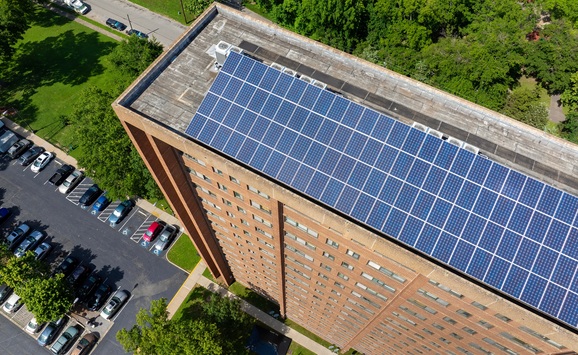
So, maybe if we take, for example, technologies that people might adopt at their home, right? So, rooftops, solar panels, heat pumps, electric vehicles—technologies like this. These technologies are often promoted by advocates and policymakers. It’s addressing carbon emissions and helping people reduce their energy bills, both of which are certainly true.
However, these technologies in most parts of the country are largely still inaccessible to many Americans because of their cost. Even if they produce savings over the long term, people don’t have the money to pay for them for the up-front costs.
Moreover, I think research has demonstrated time and time again that our historical approach of using policy instruments like tax credits to offset the costs of new technologies are often mostly utilized by people who already have the means to purchase them. In other words, people who don’t need those tax credits. In other words, they’re not really being targeted to the people who would benefit the most.
I think that’s part of the story, but it’s also not just a story about affordability. Inaccessibility materializes in other ways. When you think about renters, for example—renters don’t have control over the energy systems in their homes. Even if they had the money for rooftop solar panels or to put in place a more energy efficient HVAC system, it isn’t really an option for them. These are decisions made by landlords, and they don’t have much incentive to make these investments because they are not the ones paying the energy bills. That’s kind of the well-known split-incentive problem. So, no, this is not a small problem. About a third of Americans rent their place of residence, and this number is even higher for people of color. For Black Americans, it’s closer to 55 or 60 percent.What these examples show is that we should not think about energy technologies in isolation.
We must also think hard about the human dimension of their adoption and use. That’s a big part of the reason and kind of motivation for how we approached the book.
I might just add one more thing, if I could. The issues here are not just about fairness or equity. While there are certainly normative reasons why we as a society might want to help lower-income or historically disadvantaged communities access these technologies, it’s also imperative from a climate-mitigation standpoint. If we stick with this example of residential energy use, if we’re serious about addressing climate change, we need to decarbonize people’s homes, mostly through electrification, and we need to do it broadly across the country. In this way, helping people overcome these barriers to accessing new technologies has enormous positive spillovers.
Daniel Raimi: That’s great. Let’s talk now about some of those really specific impacts on people and communities.
Instead of talking about clean energy technologies, we’re going to talk first about fossil energy. Near the beginning of the book, you and Sanya spent a lot of time talking about how fossil energy development of different types has really uneven benefits and costs that are distributed in communities where extraction takes place and where refining takes place and stuff like that. Can you tell us more about what you described in the book about that uneven distribution of benefits and costs?
David Konisky: Sure. In response to the earlier question, I referenced the idea that some communities are on the front lines of the clean energy transition, and that of course is especially true for fossil fuel communities. Your work, Daniel, as much as anyone’s, has chronicled the challenges that these communities face as we begin to shift away from these fossil fuels.
Obviously, many communities have benefited from our historical reliance on coal, gas, oil, and many still are in terms of jobs, wealth, tax revenue—things like this. In some places, energy extraction or power generation has produced a steady stream of economic benefits that have persisted for many, many decades.
But as we move away from these sources (although I guess with gas and oil, that’s a pretty slow process), the economic harms will be concentrated in these same places. For many of these energy-extraction communities, there’s not much else there economically.
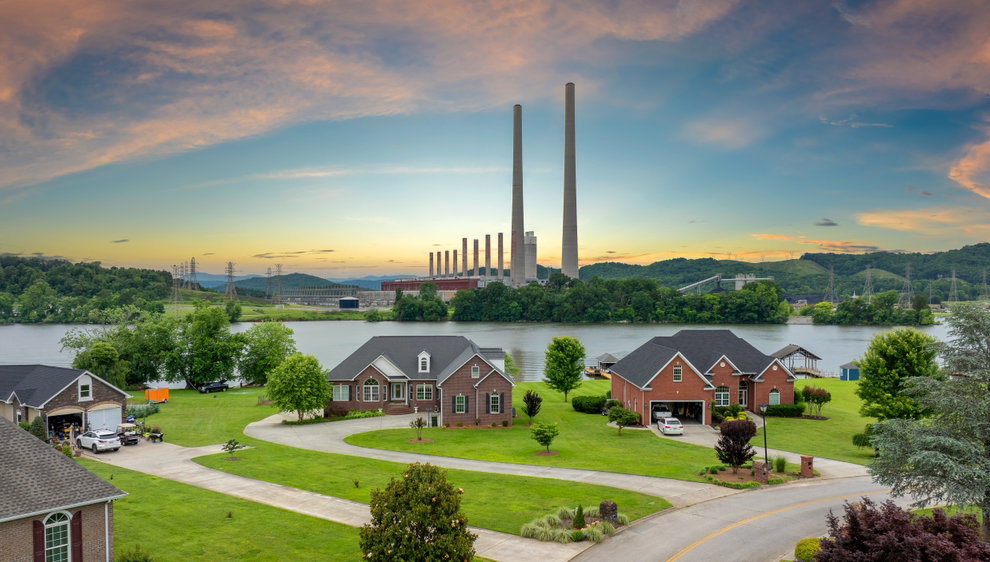
So, the closing of mines or power plants can have really deep impacts. But the impacts are not just … They’re broader than economics or public finance. Many of these communities also experience the environmental burden of extraction. Pulling fossil fuels out of the ground is inherently a dirty exercise, and in some cases does irreparable harm to the landscape. It may contaminate nearby water resources, and workers in these industries, especially in coal mining, often suffer debilitating health burdens. While much of the country has enjoyed the benefits of the cheap energy that these communities have provided, the burdens fall disproportionately on these communities and these workers. As we move away from these particular energy sources, they’re going to feel those burdens in really significant ways.
Daniel Raimi: Yeah. That’s really great. I totally agree with you on everything you just said. As you know, I spend a lot of time in places where coal gets produced and oil and gas gets produced and refined. When I spend time with leaders in those communities, I absolutely hear about the environmental burdens that you’re describing, at least in many cases.
But I think I probably hear more of the positive side of the story than the negative side of the story. People are well aware of the pollution that sometimes comes from these industries. There’s a saying out in some oil fields where if you smell something weird in the air, it smells like money, rather than smells like sulfur dioxide or VOCs or something like that. When I was reading your book with Sanya, I definitely felt more of the negative side of things than the positive side of things.
So, I’m just kind of curious if we are maybe just talking to different people in these communities, or if we’re just kind of interpreting what we’re hearing in different ways.
David Konisky: Yeah, that’s a great question. In general, I bet we’re probably hearing similar things. Maybe it’s a matter of emphasis. When we spoke with coal miners, nearly to a person, they expressed affection for their work and the importance of coal to their communities. They often talked about the burdens, as well, but often in a prideful way, sort of celebrating them as a sacrifice that they have made so that the country could have cheap and plentiful energy. Coal is really an important part of the identity in these places, which is something I don’t think enough people realize or fully appreciate. We did a bunch of focus groups with coal miners many years ago, and most of them expressed feelings of resentment and loss as the country moved away from coal and a frustration that they and their communities were not being included in the future.
So, they recognize the burdens, but also have a sense of loss that they really wanted to communicate as the country kind of moved away from these energy sources; they thought we were kind of turning our backs on them, as well. It’s maybe a matter of how these workers and these communities assess the trade-offs between the burdens and the benefits.
I’ll also note—and maybe this is a source of difference, Daniel—is that we also spoke to people in these communities who work outside the coal industry, often for organizations that advocate for the energy transition, and these folks view the situation a bit differently and tended to emphasize the adverse environmental and health impacts of coal mining.
We haven’t done nearly as much work in oil and gas communities, and they obviously are experiencing better economic fortunes right now, since the clean energy transition hasn’t really slowed down their development to this point. So, it’s possible that sentiments are a bit different there.
But maybe one last thing I’ll note, which I think is quite interesting, is we heard really similar sentiments from auto workers who, at least at the time we were speaking with them, were starting to experience the effects of a transition from gas power to electric vehicles. We spoke to auto workers who worked in assembly plants and in other adjacent industries, and the feelings and stories that they shared with us sounded really similar to those from coal miners. We heard strong feelings of sacrifice, abandonment, and resentment, but also a real yearning to be included in the future energy system. These sentiments are probably pretty common among those who are feeling the effects of the transition most acutely. And to your point, people probably do weigh those trade-offs a little bit differently than we might do from the outside.
Daniel Raimi: Yeah, that all makes total sense. It’s interesting, as you said, that oil and gas production is booming in the United States as a whole, but most of that production is really only coming from like five or six places in the United States. There are probably 10 or 12 or maybe even 15 regions of the United States where the oil and gas industry has actually been in decline for a couple of decades. In those places, I’ve definitely heard many of the same sentiments that you are talking about, that concern about being left behind and abandonment and resentment. I’s very consistent with what I’ve heard, certainly in some places at least.
Let’s talk now about low-emissions energy technologies. You spend quite a bit of time in the book talking about the build-out of things like wind farms or solar farms or battery storage facilities. What are some of the issues that you see when communities are faced with these newer energy technologies coming into their communities?
David Konisky: Yeah, we devote a chapter in a book to this subject, and it’s been something that Sanya and I have spent a good deal of time trying to understand, because it’s such an important part of the energy-transition story.
The clean energy transition obviously requires an enormous investment in new infrastructure. For all the gains that the United States has already made toward decarbonization, I think something like 80 percent of our energy use still comes from fossil fuels (probably something closer to 50 percent when it comes to electricity generation), but still we have a long way to go, right? Some states have moved more quickly to renewable energy, but other states such as Indiana, where I live, lag pretty far behind. So we still have a really long road ahead, which means building new wind and solar farms and battery installations, as well as all the transmission and distribution networks to support them.
I’ll talk about wind farms, because I think that’s where we have the most data and there’s been the most experience to this point.
When it comes to siting new wind farms, there’s often significant pushback from local communities—not everywhere, but in many places. This often surprises people, because Americans generally support the use of wind power, right? Pretty strong public survey research going back many, many decades shows strong support for wind. We’ve done a lot of fieldwork and survey work on energy siting. What we hear from people … There’s sort of a couple, I guess, themes that emerge to explain this emerging opposition.
First, when there is opposition—and I want to emphasize, it’s not everywhere, right? There’s certainly communities that favor and support wind, but people often emphasize how wind farms change the look and feel of their communities and transform them from rural, agricultural spaces to industrial ones (or at least ones that they feel are industrial). Many people living in rural areas have strong place attachments to these landscapes, and the wind farm disrupts this attachment. It creates a different kind of space and one that they are not terribly comfortable with.
There are a couple of other dimensions to mention, as well. First, deciding on new energy infrastructure can create geographically uneven costs and benefits. While communities are being asked to host the facilities, some of the benefits of the new technologies will be enjoyed by people far away. While it’s certainly true that individuals might financially benefit from leasing their land, and local towns might receive tax revenues or sign community benefit agreements with developers—things like this—the energy that’s often being generated is shipped far away to population centers. For some people who do not care about climate change, a new wind farm represents an unwelcome and, perhaps in their view, unnecessary imposition that they’re not going to immediately benefit from in terms of a different energy source. So, that’s one dimension.
A second dimension is that there’s a lot of distrust of companies and government. This is borne out in decades of survey research from Gallup and others that show that Americans distrust energy companies and utilities, in particular, when you compare them to other business sectors.
For most of the past 20 to 30 years, energy companies and utilities have had net-negative approval ratings, which is generally uncommon for most sectors of the economy. In addition, people often distrust and lack confidence in the government agencies that are doing the permitting of the new infrastructure, which makes them quite skeptical of the formal institutions that are supposed to be acting in the public interest. The upshot is that people often don’t believe that these projects will deliver the benefits that companies and governments sort of promote and promise.
So, you kind of put all that together with more standard stories around the partisan politics around energy and climate change—it’s produced a fairly strong backlash against wind and other forms of renewable energy that really complicates the siting process for many developers.
Daniel Raimi: That’s great. Super interesting stuff. We’ve talked about that on the show before, particularly with Sarah Mills, who’s done a lot of really great work around community perceptions of wind development.
I do want to note, just for listeners, that the book spends a lot of time focusing on energy affordability. We’re not going to talk about that in detail today, because we’ve talked about that issue a lot in the show. We had Diana Hernandez on the show fairly recently talking about her recent book, Powerless, but I do want listeners to know that there’s a lot of great detail and information on that issue in the book, as well.
One thing I wanted to ask about, David, is policy lessons. So, at the current moment at the federal level, we’re seeing, of course, a lot of pullback from climate policy, a lot of pullback from anything related to justice or equity. But in the previous administration, there was a big focus on both of those things. I’m curious: When you look back to those four years, are there lessons from the different policies and programs that were rolled out and lessons that we can take to think about the future, about what worked and what didn’t work and what might need to be rethought, if we want the energy transition to sort of be more just and more equitable and actually happen in the United States?
David Konisky: Yeah, that’s a great question. A lot of us are trying to think through what we’ve witnessed in this kind of whiplash of policy, going from the Inflation Reduction Act to pullback of most of those programs and still trying to understand what was accomplished, what were missed opportunities, and what the future should hold when it comes to policy. It’s a hard question to answer, because so many of the policies and programs of the Biden administration did not have enough time to be fully implemented. If you had a chance to fully materialize … Evaluating them is difficult and feels a bit kind of like maybe the grade is incomplete more than anything else.
That said, maybe the first thing I would want to note is that I think the Biden administration did a lot right. For the first time, the federal government, as you noticed, took a comprehensive approach to addressing both climate change and environmental justice, and they worked really, really hard to do it in a way that was inclusive, community engaged, and focused on historically underinvested areas.
These are all good things. The Biden administration brought in extremely talented and thoughtful people to implement this agenda. They deserve a lot of credit for trying and for doing things in a very comprehensive and thoughtful way.
Maybe I’ll provide a couple of concrete examples. I think many of the tax credits showed some early signs of effectiveness, not only both for companies manufacturing and deploying clean energy technologies, but also for nudging individuals to adopt new technologies such as buying an EV or maybe switching from a natural gas furnace in their house to an electric heat pump. Those were beginning to pay dividends.
Another quite interesting example is the National Electric Vehicle Infrastructure Program that was part of the infrastructure bill. This is a program that was designed by the federal government to share the costs of deploying charging infrastructure to make it easier for people to drive long distances and their electric vehicles.
This is a program that got off to a really, really slow start because of implementation challenges, but it’s actually proven durable and is one of the few Biden-era programs that the current administration has decided to continue. That’s a positive development that came out of the federal government and the past administration.
Maybe more broadly in retrospect, it’s probably fair to say that implementation of the Inflation Reduction Act and other programs like the Justice40 Initiative were a little slow to roll out, and that perhaps limited their immediate effectiveness and impact. But it’s also true that the changes being sought were consequential—like, really consequential—and changes at that scale are not easy. As we look toward future administrations who might have similar scale goals, it’s going to be necessary to sort of figure out how to do things faster, and that might raise really interesting philosophical questions about the appropriate use of executive powers.
There’s a lot of consternation about how President Trump is using emergency power authorities right now, for example, but I could very well imagine a future administration trying to utilize similar types of emergency powers, but in that case to pursue climate goals or social justice goals. I think that will be an interesting thing to follow.
Daniel Raimi: Absolutely. Yeah, that’s going to be such a huge issue. I know there’s lots of companies that are really worried about that trend in our implementation of law.
One last question, David, before we go to the Top of the Stack, which is just kind of hearing about how the book’s been received. When you write a book, you get to go out and talk about the book and get people’s reactions and take their questions. I’m curious: What are some of the reactions or questions you’ve heard that have been particularly interesting or surprising?
David Konisky: Yeah, I think the book has been received well. It’s been interesting, because we wrote the book, for the most part, during a very different policy context than when the book actually was published. So, that’s been something that’s been interesting for us to think through.
When we talk about the book to readers and audiences, we need to think through how much has stayed the same and how much has changed. I don’t know that there’s anything we’ve heard that has been particularly surprising, but I’ll provide a couple of common reactions that we’ve heard to Power Lines.
One, to be perfectly candid, has been a little bit of frustration that the book focuses so much on problems and much less on solutions. This is a choice we made early on in the project, but it is something we also struggled with quite a bit ourselves when we were writing the book.
We certainly tried to incorporate discussion of potential policies and programs throughout each of the individual chapters. We spent some time in the conclusion identifying some general principles that we believe might be useful for guiding future policymaking on all those, not surprisingly focused on people and communities—but it’s also true that we don’t conclude the book with a long list of policy prescriptions. While that was by design, some people, I think rightfully, wanted to hear more from us on those policy solutions. That’s one sort of common reaction we’ve heard.
Another one, which I think is interesting—and this has come up in almost every conversation we’ve had in public forums when talking about the book—is that people want to know more about nuclear power. “What about nuclear power?” Nuclear power, of course, has a long and complicated history in the United States, but among people today, I think there’s a growing interest in exploring nuclear power as a non-carbon energy source, and it’s just not something that we spend a lot of time talking about in the book.
Daniel Raimi: Yeah, for sure. As someone who has also done a decent amount of public talks, someone always asks about nuclear—it kind of doesn’t matter what the topic of your talk is. If you’re talking about energy, someone in the audience will ask you about nuclear energy. So, you need to be prepared with an answer.
David Konisky: I think that’s right.
Daniel Raimi: Also, going back to your first comment, focusing on problems rather than solutions: I actually really appreciated that you focused on the problems.
One of the things that I’ve been thinking about lately is the fact that many advocates for climate policy have really portrayed the energy transition as one that kind of will happen by itself, that it’ll be easy in some way. Your book, as well as some other books that have come out recently and thought pieces that people have written, really just kind of makes the point like: No, this stuff is hard, and there are a lot of challenges that need to be overcome. That doesn’t mean we shouldn’t try to overcome them, but we need to recognize that there’s lots of big hurdles here, and we need to think really hard about how to address them to really make progress.
David Konisky: I think that’s exactly right. There are big hurdles and there also are just trade-offs, right? Most public policy comes with trade-offs, and those trade-offs raise really important questions around fairness and equity. The main purpose of the book is not to tell people what to think or how to resolve those trade-offs, but to be more aware of them. Hopefully that then kind of pushes policymakers and others and advocates to be more mindful of those trade-offs and to perhaps craft policies that address them in some way. Not everyone’s going to be happy, and this isn’t to suggest that there are always going to be win-win solutions—I think very much the opposite. But if we can be more aware and cognizant of these trade-offs, then we can also design policies to help communities that are more vulnerable to the transition cope and make their way through it in better circumstances than they would otherwise be.
Daniel Raimi: Yeah, I think that’s a great place to end it.
David, let me ask you the same question we ask all of our guests at the end of each episode, which is to recommend something that you think is great. It could be an article, or a book, or a TV show, or whatever. What’s at the top of your literal or your metaphorical reading stack?
David Konisky: Yeah, most of the reading I do outside of work is unrelated to the environment. I think part of the reason is because, in addition to trying to keep up with all the academic literature for my own work, I am the editor-in-chief of a journal called Environmental Politics. In that position, I’m reading something like 20 manuscripts each week. So, in my free time, I like to change things up a bit.
I’ll offer a couple things. Recently, I’ve been making my way through David Blight’s epic biography of Frederick Douglass, which is incredible, but also extremely dense. It’s a great read, but one that is taking me a long time to get through.
I also kind of like to mix fiction into my reading stack, so I’ve also been reading Percival Everett novels, which I only recently discovered. His most recent book, James, is this reimagination of Mark Twain’s Adventures of Huckleberry Finn, but it tells the story from the perspective of the slave character, Jim, instead of Huck. It’s a brilliant book, and it sort of inspired me to read his corpus of novels. I find his writing to be super creative and funny, and it provides a nice mental escape from my daily work to focus on things that are sometimes a little more depressing.
Daniel Raimi: Yeah, I hear you 100 percent. Well, David, one more time, thank you so much for coming on the show and sharing all this great information with us, and congratulations again on your book, Power Lines, with Sanya Carley. I would really encourage people to check it out.
David Konisky: Thanks, Daniel. I enjoyed the conversation.
Daniel Raimi: You’ve been listening to Resources Radio, a podcast from Resources for the Future, or RFF. If you have a minute, we’d really appreciate you leaving us a rating or a comment on your podcast platform of choice. Also, feel free to send us your suggestions for future episodes.
This podcast is made possible with the generous financial support of our listeners. You can help us continue producing these kinds of discussions on the topics that you care about by making a donation to Resources for the Future online at rff.org/donate.
RFF is an independent, nonprofit research institution in Washington, DC Our mission is to improve environmental, energy, and natural resource decisions through impartial economic research and policy engagement. The views expressed on this podcast are solely those of the podcast guests and may differ from those of RFF experts, its officers, or its directors. RFF does not take positions on specific legislative proposals.
Resources Radio is produced by Elizabeth Wason, with music by me, Daniel Raimi. Join us next week for another episode.