
For this week’s episode, Dan Egan, the Brico Fund Journalist in Residence at the Center for Water Policy at the University of Wisconsin–Milwaukee and Pulitzer Prize finalist, joins host Margaret Walls to discuss his book, The Devil’s Element: Phosphorus and a World Out of Balance. Through stories about the history of phosphorus—including why it earned the “devil’s element” title—Egan describes the large-scale ecological experiment in a Canadian lake that opened people’s eyes to the connections between phosphorus, agriculture, and algal blooms, also noting the challenges of reconciling business interests with environmental concerns. Despite ongoing water pollution in the Midwest, Egan’s experience as a Great Lakes journalist has shown that clearing toxins from waters is a goal within reach that has wide-reaching benefits.
Listen to the Podcast
Notable Quotes:
- When a photo persuades more effectively than data points: “When it was phosphorus’s time to be put on trial, it was found guilty, and that verdict was rendered in the form of a deep-blue Canadian lake turned golf-course green … All the spreadsheets and data that they were trying to convince lawmakers to act on didn’t come close to prompting a turnaround in our approach to phosphorus as the pictures.” (17:33)
- A solution within reach: “Too often, farmers just throw [phosphorous] out a field, whether that field needs it or not. Then, those fields feed streams that feed rivers, that feed lakes—Great Lakes included—and we get these algae blooms. So, it’s a fixable problem. It was in the 1960s, and it is today.” (22:02)
- Costs don’t always show up on the price tag: “How do you fix it? Well, you start better regulating what’s coming off farm fields, and that’s going to cost money, but there’s a cost to that gallon of milk that you buy in the store that isn’t reflected in what gets scanned at the cash register. The cost comes in beaches that kids don’t grow up swimming on.” (25:46)
Top of the Stack
- The Devil’s Element: Phosphorus and a World Out of Balance by Dan Egan
- The Dark Frontier: Unlocking the Secrets of the Deep Sea by Jeffrey Marlow
- A Terrible Country by Keith Gessen
The Full Transcript
Margaret Walls: Hello and welcome to Resources Radio, a weekly podcast from Resources for the Future. I’m your host, Margaret Walls.
My guest today is Dan Egan. Dan is the Brico Fund Journalist in Residence at the Center for Water Policy at the University of Wisconsin–Milwaukee. For 20 years, Dan was a reporter for the Milwaukee Journal Sentinel, and he’s the author of two books.
The first one is The Death and Life of the Great Lakes, which won many awards (and which I read, and it was great). It was a finalist for the Pulitzer Prize. His most recent book, which is what we’re going to talk about today. It’s entitled The Devil’s Element: Phosphorus and a World Out of Balance. In the book, Dan describes the environmental problems that phosphorus has created, and along the way he tells many fascinating stories about the discovery of phosphorus and its many uses.
So, I’m going to ask Dan about all of this and ask him to share some of the really interesting tales that he tells in the book. Stay with us.
Hello, Dan. Welcome to Resources Radio. Thanks for coming on the show.
Dan Egan: Hi. Thanks. I’m glad to be here.
Margaret Walls: Okay, Dan, we always start the show with a kind of get-to-know-you question to learn a little more about our guests and how you came to do what you do. So, tell us a little bit about yourself, Dan, especially how you moved from being a newspaper reporter to a book author, and especially how you came to focus your attention on these environmental problems.
Dan Egan: Sure. Yeah. I came to newspaper work, and just kind of backing into it … I graduated from college back in 1989 with a degree in history. I grew up in Wisconsin. I went to school at the University of Michigan, and then as soon as I could, I moved out West and I was skiing in Ketchum, Idaho, and got a job at the local newspaper there. I suddenly found myself covering not just town-planning and zoning meetings, but also a lot of really interesting environmental issues.
I was just trying to make some money to eat and to ski. I kept eating, but the skiing kind of dropped off because I really got into the paper and I was in the middle of Idaho, and at that time in the early 1990s, there were some real hot-button issues like grizzly-bear restoration and endangered-salmon recovery and wolf reintroduction.
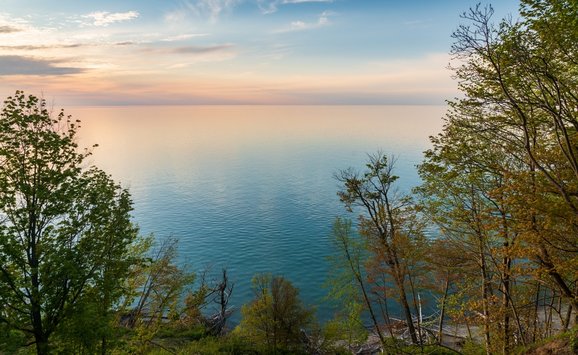
So, that just launched me onto … I guess it was like a 25-year career. I ended up coming back to Wisconsin, my home state, and took a job at the Milwaukee Journal Sentinel as a feature writer. I was in the desert for 10 years, and I came back to the Midwest, and I started looking at the Great Lakes, and more specifically Lake Michigan, which I’m looking at right now in a whole new light. So, I started writing about the Great Lakes, and that became a beat, and that became my life for quite a while.
Margaret Walls: Yeah. Super interesting. So, let me begin, Dan. I already mentioned the title of your book, The Devil’s Element. So, tell us about that. Why is phosphorus called the devil’s element? Where’d that come from, and why’d you choose that for a title, too?
Dan Egan: I can’t remember if I chose that for a title or not. Many hands are involved in these things. But first of all, I mean, the reason I wrote a book about phosphorus is because I wrote this Great Lakes book, and when about a year after it came out and it was selling pretty well, the publisher (more specifically, the editor) asked if I had any other ideas, and I said, “Well, we should do a book on phosphorus.” He asked why, and I said, “Go back and read chapter six in this Great Lakes book,” which was a lot about dead zones in Lake Erie and the role that phosphorus played in it.
His interest was piqued a bit, but I had to sell it to him, and it took a little effort on my part, but it didn’t take long for him to come around. He said, “Let’s do it.” I’ll start with when I was trying to convince him—that’s probably where this title started getting bantered around. But, I was saying, “Boy, there’s just a crazy history with this stuff—how it was discovered, how it was first used, how it really sustains modern life as we know it, and how it’s going to be a real issue in the coming decades. It already is.”
Margaret Walls: Yeah. So, that gets to my next question, which was really to ask you to give up our listeners some of the basics. You already talked about dead zones—so everybody knows where this conversation is going—but tell us what phosphorus is used for, some of its basics, what’s its source, where does it come from—that kind of thing. And you just said it sustains life, so talk about that a little bit if you could.
Dan Egan: Yeah. Well, so I guess in a backwards way, I got into—I’ll get into the title—the “devil’s element.” That was a term coined early on after phosphorus was first discovered back in the … Oh boy, it’s been a while since I’ve looked at all this stuff, but it was discovered in Hamburg, Germany, back, I believe, in the 1700s. They quickly called it the “devil’s element” because it was highly combustible and highly dangerous, and it was also the 13th element to be discovered or identified.
The thing about phosphorus is that it doesn’t exist on its own in nature. It’s always bound with oxygen atoms to create phosphates, which is really how humans typically interact with it. But back in Hamburg, Germany, hundreds of years ago, the first alchemist came across it. He was trying to find the mythical Philosopher’s Stone—that elusive substance that they thought could turn any base metal into gold—and they thought it could be derived from many different sources.
This guy who discovered it was a urine man, and he thought that the path to the Philosopher’s Stone was in the human waste stream. He did a lot of hocus-pocus, and a lot of real chemistry, too. But he eventually cleaved those phosphorus atoms from their oxygen mates, and he got this glowing, waxy substance that left a glow—a phosphorescent glow, to be precise.
The thing about this stuff is if it warmed just above a tick above room temperature, it exploded. It combusted. So, at first, for the first couple hundred years, there were no real, practical applications. It was just kind of a novelty at first, but humans, as they’re warped to do, quickly figured out how to weaponize it. It became a critical component of the Allied efforts to subdue Germany during World War II because it made a hell of a firebomb.
And so, that’s phosphorus’s early history. It was just that people didn’t know what to do with it other than try to kill other people with it. But it didn’t take long for them to figure out that there was more going on here than a party trick or a dastardly weapon. There was something about phosphorus that was essential to life on the planet.
I can go into that a little bit if you’d like, right now.
Margaret Walls: Yeah, how it came to be used as a fertilizer, and then I want to ask you about all the searches around the world.
Dan Egan: So, phosphorus—it’s in every living cell. There would be no life on Earth without it. For that reason, it’s important, but it’s also the limiting factor in a lot of ways for growing, in some cases, toxic algae, but it could also be food. And so, the English were pioneers in fertilizer. I mean, people have been fertilizing for as long as we’ve been growing things, even before then as things were growing on their own.
But the English were always experimenting with substances that would make their soil more fertile, and they would try anything they could think of, from cloth, to blood, to manure—animal and human. For some reason, they found that bones worked particularly well with the soil in the United Kingdom, and it made turnips and wheat grow. They didn’t know what it was about bones, but they knew they wanted them.
So, they started hunting for bones anywhere they could find them. In the early experiments with this stuff (the phosphorus), the bones came from knife-handle shavings. Pretty soon, it came from human skeletons. By the early 1800s, it was coming into England on an industrial scale. They were literally plundering the battlefields of Europe for the bones of fallen soldiers, and they built special mills back in England to grind those bones up and sprinkle them on crops.
So, the Battle of Waterloo is kind of an important chapter in phosphorus’s story because the battle was early 1800s, and within five years, around 1825 or something, you couldn’t find any bones on that battlefield because they had gone in and harvested them and turned them into crops and, quite literally, into bread. So, in a very real way, people were eating not just their enemy combatants, but also their kids. But there’s only so many bones out there, and there’s only so many places where people are going to tolerate that.
So, the hunt went on for other fertilizing substances, and it turned out that this region off of Peru in the Pacific Ocean, known as the Guano Islands, was a phosphorus-rich corner of the earth. That’s because it’s very, very dry. It’s out in the ocean, and it almost never rains, but it’s also a critical habitat for lots of birds who nest and poop. And because it never rains, this poop accretes over years, decades, centuries, and millennia.
So, in the 1830s or so, after the bones largely played out, the English stumbled upon these Guano Islands, and there was so much bird poop. They thought that they would never run out. And it wasn’t just the British at this point—it was all of Europe, and it was the United States, as well. They’re all sinking their teeth into these mountains of bird poop, bringing them back, and growing whatever they need to grow with it.
They thought they would never run out, and that’s the story of phosphorus. They always think that there’s going to be an inexhaustible source for future generations. Those bird deposits, the Guano deposits, played out in a matter of decades. By the 1880s or so, they had to go looking elsewhere, and now chemistry is involved.
Now they know that it is actually phosphorus (more specifically, phosphate) that is making crops grow. So, they could use chemistry for the hunt. They found certain rock deposits, specifically sedimentary rock, was rich with the stuff, because that sedimentary rock is the result of millions of years of sea life raining down on the ocean floor and compacting and turning into rocks, and then through ocean-level or sea level changes or seismic activity, it gets heaved to the shore, or close to it, and is harvestable. So, we’ve been relying on rock deposits now for the last 125 years or so.
In the United States, most of the deposits we have are in central Florida in an area known as Bone Valley, and it’s kept food on our table for a hundred-plus years. But those reserves—that rich, essential phosphate rock—are disappearing and they believe they have two or three more decades before it becomes critically low.
Margaret Walls: I was going to ask you, when you said two or three decades, is that the Florida deposit specifically, that you’re talking about Dan, where—
Dan Egan: Yes, that’s the Florida deposit specifically. We have some in Idaho, and we have some in North Carolina, I believe, but it’s not the same grade, and it’s not the same amount.
So, I was saying it’s essential to everything growing on agricultural fields, and when we run out of it, we’re going to have to go find new sources, and it’s not going to be as easy as it was in the past. In the past, it hasn’t been very easy, but 70 to 80 percent of the proven reserves of phosphate, or phosphorus rock, left now on Earth are in Morocco and the disputed territory of the Western Sahara. So, in the not-too-distant future, we’re going to be dependent on other countries for food supply via phosphate rock.
When you think about energy security, that’s arguably an easier problem to solve than phosphorus and food security, because there’s workarounds to oil, but there’s no workarounds to phosphorus. If we run out of it, we run out of crops.
Margaret Walls: Yeah. Super interesting. I found all of that part of the book interesting, too. And yet, your main point is to talk about the problems that phosphorus has created for our water bodies. Can we turn to that now? I want to turn to the Tide story (Tide, the laundry detergent), because it’s super interesting.
So, they started using phosphates in Tide, and that caused some problems, especially with some algal blooms in Lake Erie. As I understand it from your book, Procter and Gamble were like, “No, that’s not our problem,” which … they make Tide. They were like, “No, no, no, that’s not our problem.” Tell us a little bit about that story and then the very interesting story about the scientist who created a kind of natural experiment to prove this.
Dan Egan: Yeah. So, there’s a paradox here. I’ve spent the last 10, 15 minutes or so talking about the discovery of phosphorus and the relative scarcity and the increasing scarcity of it. But there’s a paradox here because, while we’ve been blowing through it at an unsustainable rate, we’re running out.
It’s both an essential nutrient and a dastardly pollutant in the form of phosphate getting loose from crops or from other industrial applications and getting into water bodies and growing toxic algae. This became an acute problem in the 1950s and 1960s because at that point, we weren’t just using phosphorus to grow crops. Chemists had learned that it was also a critical component of modern detergent, and it was largely unregulated.
In the 1960s, when you bought a box full of Tide, you were also buying a box full of phosphorus. It not only helped whites get whiter and brights get brighter, but also, the stuff that got loose and into the waste stream and ultimately into our water bodies, where it did what it does on agriculture fields: it started growing things.
Unfortunately, it was things that we didn’t want. That’s how we got to the point in the mid- to late-1960s when the national media was declaring Lake Erie “America’s Dead Sea.” It wasn’t really dying. It was quite the opposite. It was just suffering from an explosion of life; that life, in the form of algae nobody wanted, would die and burn up all the oxygen in the water and squeeze out habitat for fish and other species.
We didn’t know what was causing the problem. Back in the 1950s and 1960s, people had ideas. It could be carbon, it could be nitrogen, it could be phosphorus, or it could be just some kind of random concoction of all the modern pollutants making their way into the waters. The Canadian governments working with the United States decided to get to the bottom of the problem by turning these lakes in far remote, northwestern Ontario into what’s best described as giant aquariums or even test tubes.
In one of the most dramatic experiments done, I think in the history of ecology, happened in the late 1960s and early 1970s, when they decided to “put phosphorus on trial.” What they did, essentially—this simplifies it a bit—but they took a lake up in Ontario, and it wasn’t a large lake. It was small enough for them. It was peanut shaped. They basically cut the lake in half with the giant plastic curtain, and one side got an overdose of phosphorus and one side didn’t.
This sounds so simple, but you have to really appreciate what they were doing. Nobody was … you can do experiments in labs, but that doesn’t replicate what goes on in nature. They thought they really had to scale it up.
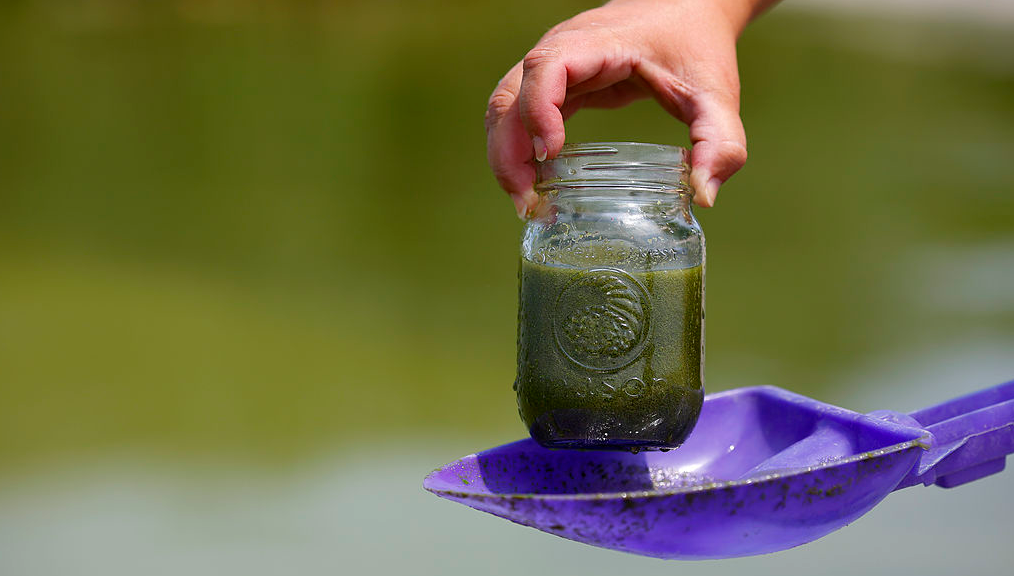
So, they started dosing lakes, and when it was phosphorus’s time to be put on trial, it was found guilty, and that verdict was rendered in the form of, in a matter of weeks, two or three weeks, a deep-blue Canadian lake turned golf-course green, and that image taken by the researchers … They just went up in a helicopter and took a picture. All the spreadsheets and data that they were trying to convince lawmakers to act on didn’t come close to prompting a turnaround in our approach to phosphorus as the pictures.
From those pictures was evidence that phosphorus was causing Lake Erie to go green, but it wasn’t just Lake Erie—it was water bodies, lakes, rivers, and streams across the country and across the world. That was the culprit. So, not long after we started restricting the amount of phosphorus allowed in detergent, we basically banned it.
Lake Erie was ground zero for this, and they decided to basically put Lake Erie on a phosphorus diet, and they were very methodical and very data-driven with this. They decided to lower the phosphorus inputs into the lake, but I don’t remember, it was like 50 percent or something. They had a target, and they hit that target. Within 10 years, the lake was largely required to the point that, so they started restricting phosphorus in the early 1970s, and part of that effort came through the Clean Water Act, the 1972 Clean Water Act.
When they got the phosphorus levels down, Lake Erie, which is a pretty shallow lake for being a Great Lake, it got flushed through the water, which is completely replaced every two to three years because the Great Lakes flow like a river out to the ocean. So, you basically stop polluting, and you get a new water body in a couple or two or three years. That’s what they got in this new water body that was largely void of these problematic algae outbreaks.
It was such a recovery that Dr. Seuss had written about what a mess Lake Erie had become in The Lorax. I don’t remember the rhyme, but it was something about the fish and water, so shmeary, dreadfully dreary—it all rhymed with Lake Erie.
Margaret Walls: He went back and changed the book. Right?
Dan Egan: Exactly.
Margaret Walls: Didn’t he go back and do a new edition of the book?
Dan Egan: Yeah, a couple of researchers at The Ohio State University wrote them in 1985 or 1986 and said, “Look, your assessment from 1972 or whatever was dead on, but you got to come see Lake Erie now, because it’s recovered.” And he wrote them back. I found this out while I was doing research for the Great Lakes book. He wrote the scientists back and said, “I’m pulling it from the book because you’re right.” But were he alive today, Theodor Geisel, Dr. Seuss—
Margaret Walls: He’d have to put it back.
Dan Egan: He’d have to put it back. And I guess the question is, why? The answer is because we continue … Even though we’ve restricted the flow of phosphorus into the lake through chemical detergents, there’s still a lot of phosphorus going into the lake, and it’s been growing, and it’s not detergent this time—it’s largely agriculture.
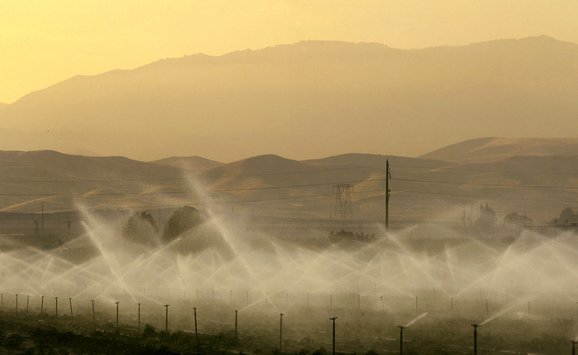
It’s excess fertilizer and commercial fertilizer washing off the landscape. It’s also, critically, livestock and manure. I mean, we’re raising livestock. We don’t farm the way we did in the early 1970s. When we got the Clean Water Act, they largely left agriculture alone 50 years ago. Because the thought at the time was, “This is a relatively small amount, and it’s diffuse, it’s scattered on the landscape, and there’s lower-hanging fruit that we can go after, and that’s companies with pipes and smokestacks that we can plug.” You can’t really squeegee a farm field, so they left it alone.
But today, we have agriculture operations that have 10,000 cows. That’s a lot of manure to deal with. One of the arguments in the book is that this isn’t waste. This is our future. This is going to sustain us in the decades to come, but that’s not how we’re treating it. Too often, farmers just throw it out on a field, whether that field needs it or not. Then, those fields feed streams that feed rivers, that feed lakes—Great Lakes included—and we get these algae blooms. So, it’s a fixable problem. It was in the 1960s, and it is today.
The difference is, in the 1960s, we had the political will to do something about it. Today, there’s a new budget for phosphorus for Lake Erie, and there’s every reason to believe it’ll recover the lake just as it did in the 1970s and 1980s. But so far, we’ve lacked the political will to do it.
Margaret Walls: Yeah. Let’s probe on that a little bit. And also … So, obviously there’s a problem we call nonpoint source pollution, because as you’ve just pointed out, it’s not a single pipe leading into a stream. You have a lot of challenges and coordination problems, and it’s hard to enforce and monitor and all of that. But there’s also a little bit of the agriculture industry that is kind of really important, especially in states.
There was a really interesting little quote in your book at one point. I just happened to stumble on this today when I had your book open again, and it said … And this was the mayor of Toledo that said, “We live in a state where our legislature is a wholly owned subsidiary of the Farm Bureau …” you said, “… he grumbled in the story in The [Toledo] Blade in 2018.”
So, can you talk a little bit more about the challenges? I know you talked to farmers, too, while you’re writing the book, so maybe give us their perspective.
Dan Egan: Yeah. I really don’t want to demonize farmers. They’re just operating with the system that they’ve inherited, although they have helped shape this system, but it’s not working for them now. Here in Wisconsin, we’ve still got a lot of cows, but we don’t have a lot of farmers. They’re going out of business, and things are consolidating.
But if you talk to farmers, they care. They care about their crops, and by caring about their crops, they need to care about the environment. And they also … They’ve got the same sensibilities as everybody else. They want to be able to go fishing on the weekend. You can’t fish when your lake is a green, soupy, toxic stew.
So, you don’t really want to point your finger at the farmer. You want to point your finger at the nonpoint source pollution exemption that was given to agriculture with the 1972 Clean Water Act. These operations now are point sources. You go to one of them, and you go to one of the manure lagoons, and it’s just a pond full of poop. We started talking this morning about the lengths the English were going to find suitable fertilizers.
If they were to see one of these manure lagoons, they would not see a bunch of yuck. It would be more yum than yuck to them, because it is an essential nutrient, but we’re not treating it that way. We’re treating it as something to get rid of, basically. And the thing is, when you talk to farmers, they acknowledge this problem, but there’s been studies where 80 percent of the farmers will acknowledge the problem, but the same 80 percent say they’re not the cause, and that somebody else is causing it.
And it’s all of us. It’s everybody who eats string cheese or pizza or ice cream. I mean, dairy is driving this issue, and we should not be in a situation where growing food is at cross purposes with clean water. It doesn’t have to be that way, but right now it is. How do you fix it? Well, you start better regulating what’s coming off farm fields, and that’s going to cost money, but there’s a cost to that gallon of milk that you buy in the store that isn’t reflected in what gets scanned at the cash register. The cost comes in beaches that kids don’t grow up swimming on.
We need to get back to this can-do kind of ethic from the 1960s that fixed the problem the first time around. I’ll just take a quick aside here. The problem now is arguably worse, because in the 1960s, the type of algae growing wasn’t necessarily toxic, but for a number of reasons, when we get blooms today, we’re getting Microcystis, which is a blue-green algae, which is a liver toxin and a neurotoxin, and it’s poison, like the poison coming out of the factories in the 1960s.
And so, we’ve got good reasons to do this. I try, in the book, not to be … It’s not a prescription, I think, I wrote at the beginning. It’s an introduction to the problem. But it’s not a call to action—it’s a call to education. And that can lead to action, but we’re not there right now. People aren’t making the connection between what’s going on in the landscape and what’s happening with the water. Something’s got to change, because the path we’re on is unsustainable.
It’s not a call to action—it’s a call to education. And that can lead to action, but we’re not there right now. People aren’t making the connection between what’s going on in the landscape and what’s happening with the water. Something’s got to change, because the path we’re on is unsustainable.
Margaret Walls: Yeah. A quick little anecdote from me: I was at a state park in Virginia, and we had our dog. It was kind of the off season, and it was a lake, and the dog’s wandering around off leash and headed toward the water, and a ranger came running out, fast as she could, and said, “Don’t let your dog get in the water!” You mentioned the toxins, and I think that, particularly for pets, is a problem, right?
Dan Egan: Yeah. I was at a conference in Toledo a couple of years ago, and they were talking about all the efforts that they’re taking to fix this problem. Here’s the thing: there are efforts going, but there’s also lack of effort as well. They keep adding livestock, concentrated animal feeding operations—CAFOS, factory farms, whatever you want to call them—in the watershed that feeds Western Lake Erie. That is ground zero for these algae blooms.
So, while they’re talking about how we’re fixing the problem, they’re exacerbating it at the same time, and there needs to be a reckoning there and honest discussion about what we’re willing to do and what we’re not. Maybe society’s willing to just chuck the water quality in favor of cheap milk, but once you connect those dots, I don’t think people are willing to do that. There’s good economic reasons not to, because tourism is a huge industry right along with agriculture.
Margaret Walls: Okay, Dan, we could keep talking, but our time is getting to a close here. I have to ask you to tell us what’s on the top of your stack, which is what we always close the podcast with. Do you have a recommendation for listeners of an interesting book or article or podcast, or anything that’s caught your attention lately?
Dan Egan: I just finished a book (that isn’t coming out until March, I think) called The Dark Frontier, and it’s about life in the ocean depths, and it’s a heavy trip. It’s like climbing in a spaceship, but it’s going to the bottom of the ocean instead of to the stars. I’ve really been enjoying that.
And my daughter got me a crazy funny book … What’s it called? Such a Horrible Country or something (A Terrible Country), by Keith Gesson. It’s a novel. He’s a Russian guy who was born in Moscow and lived in New York and moved back to Russia, and it’s hilarious, but that’s not really related to phosphorus.
Margaret Walls: That’s okay! No, that’s all right. We like things off to the side, too, so that’s great.
Dan, thank you so much for coming on the show today. It was really great to hear you talk about the book, and I’m going to encourage listeners to pick up a copy. It’s really a good read.
Dan Egan: Yeah, thanks. I just want to say real quickly: The thing is, when you say a book’s about phosphorus (I know your audience is a little more educated than somebody, or a group of people, randomly picked off the street) but it really is a story. It’s an old story of excess and the consequences of it, but it’s way more interesting than it sounds. That’s a heck of a way to try to sell a book.
Margaret Walls: I know. Yeah, exactly. I would say that. That’s why I said there are a lot of stories in it, which make it really interesting.
Well, thank you, Dan. I appreciate it. Thanks for coming on the show.
Dan Egan: Yeah, thank you. It was a pleasure.
Margaret Walls: You’ve been listening to Resources Radio, a podcast from Resources for the Future. If you have a minute, we’d really appreciate you leaving us a rating or a comment on your podcast platform of choice. Also, feel free to send us your suggestions for future episodes.
This podcast is made possible with the generous financial support of our listeners. You can help us continue producing these kinds of discussions on the topics that you care about by making a donation to resources for the Future online at rff.org/donate.
RFF is an independent nonprofit research institution in Washington, DC. Our mission is to improve environmental, energy, and natural resource decisions through impartial economic research and policy engagement.
The views expressed on this podcast are solely those of the podcast guests and may differ from those of RFF experts, its officers, or its directors. RFF does not take positions on specific legislative proposals.
Resources Radio is produced by Elizabeth Wason, with music by Daniel Raimi. Join us next week for another episode.