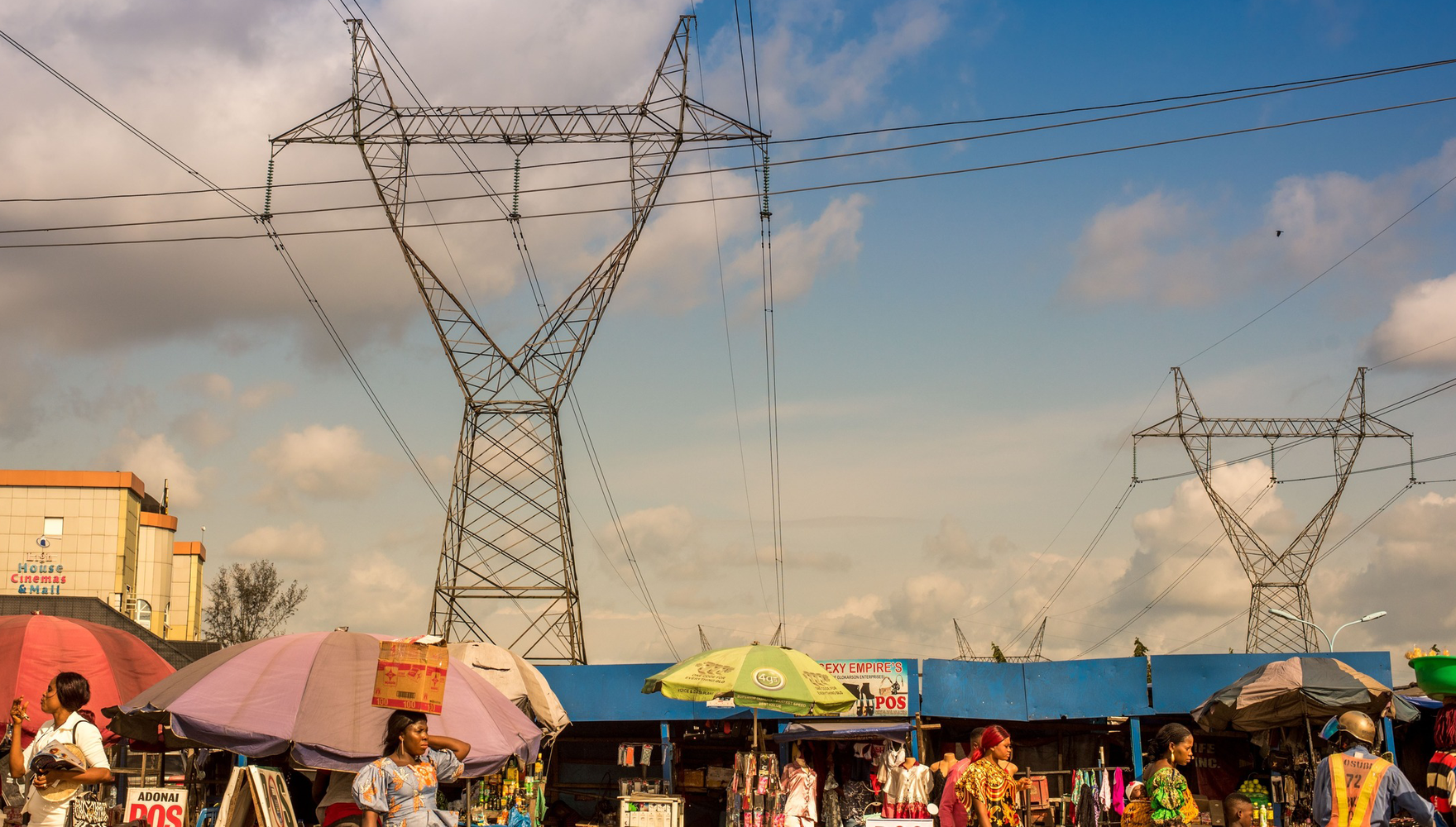

For this week’s episode, host Daniel Raimi is joined by Deputy Executive Director of the Energy for Growth Hub Katie Auth to examine the significance of shutting down the Power Africa program, which had been sponsored by the US Agency for International Development (USAID), along with related implications for international energy development and energy access. Auth notes how the sudden shuttering of Power Africa (and USAID) has weakened US credibility and raised confusion for countries that had been promised energy assistance via Power Africa. Auth identifies a chance for the international-development community to not simply rebuild this and other programs in coming years, but to move forward by emulating the positive, collaborative elements of Power Africa in future energy development.
Listen to the Podcast
Audio edited by Rosario Añon Suarez
Notable Quotes:
- Em(power)ing results from collective efforts: “The [Power Africa] program had helped 14,000 megawatts of new generation capacity reach financial close. They’d connected 41 million homes and businesses to power. That’s the result of a collective set of efforts by various US government partners. It also reflects the collective efforts by other donors.” (7:38)
- Reframing a crisis as an opportunity: “I try to focus now on the fact that you can’t go back [in time], you can’t recreate what existed, and nor should we try. This has been a crisis in so many ways, but it’s also an opportunity to create something better and more effective, and I think that’s a better place for at least my energy to be going.” (14:30)
- International development means international partnerships: “You’re seeing the United Arab Emirates do a ton of new investments, and you’re seeing Gulf States sort of refocus on Africa and on foreign assistance more generally, in really interesting ways. I would watch that really, really closely. As a development professional, I’m in favor of a world where there are more actors engaging in energy investment.” (19:38)
Top of the Stack
- “High Energy Planet” podcast from the Energy for Growth Hub
- Demon Copperhead by Barbara Kingsolver
The Full Transcript
Daniel Raimi: Hello, and welcome to Resources Radio, a weekly podcast from Resources for the Future. I’m your host, Daniel Raimi. Today, we talk with Katie Auth, deputy [executive] director at the Energy for Growth Hub. Katie worked for years on the Power Africa program under the US Agency for International Development (USAID), which aimed to reduce energy poverty and expand electricity access across the continent. In early 2025, Power Africa, along with the rest of USAID, came to an abrupt end.
In today’s episode, I’ll ask Katie what that has meant for energy assets in Africa, along with the role that other countries are playing in supporting energy development across the continent. We’ll also talk about how the Trump administration is working on other topics with African nations, particularly around access and development of critical minerals. Stay with us.
Katie Auth, from The Energy for Growth Hub, welcome to Resources Radio.
Katie Auth: Hey, thank you so much for having me.
Daniel Raimi: It’s our pleasure. I’m really excited to talk to you today. We’re going to talk today about Africa, energy in Africa, and the United States’ policies and programs when it comes to energy and development in Africa. But first, can you tell us a little bit about yourself? How did you get interested in energy topics? And tell us a little bit about the time you’ve spent working on some of these programs in Africa.
Katie Auth: Sure. So, it’s interesting because, all during undergrad, I really wasn’t thinking about energy at all. I took it for granted, much like most people in the United States do, I think. There were really two issues that I cared about and that I thought I was going to try to build a career around.
One was global development. I was really fascinated by economic development and particularly by the history of the US-Africa relationship. I thought development assistance policy was just fascinating because it was so important and so crucial, but simultaneously hugely problematic in many ways. The United States had played such a complicated role in Africa over the years, and I was just sort of fascinated by trying to modernize that.
The second issue was climate change. So, I actually ended up after undergrad … I went to graduate school in Iceland to study marine conservation and climate in the Arctic, which would have taken me on a completely different path. And then I came back to DC and I really started working on energy by accident, which is … I came back and I was sort of willing to do any sort of interesting policy work related to the environment or to development. I started working at a think tank that was doing energy policy analysis in the Caribbean and in West Africa.
I fell in love with energy because it is foundational to economic development, it’s foundational to climate, and it was also just such an interesting way that the United States could engage in global diplomacy and commerce. I loved that I could build a career that was about being pro–building things and pro-development and pro-innovation instead of some avenues of conservation that are more about standing in opposition to innovation. This was a much more sort of proactive, positive-facing way to engage in the issues.
Daniel Raimi: Yeah, that’s fascinating. I didn’t realize you had that Caribbean experience. If I had known that, this show might have taken a slightly different turn.
Katie Auth: I haven’t really engaged on the Caribbean for years and years, but it is where I started. Yeah, in Haiti specifically.
Daniel Raimi: Oh, wow. Really interesting. Well, as I mentioned, we’re going to talk about Africa today, and specifically we’re going to talk about what’s happened when it comes to US policies around energy and development in Africa over the last year or so.
As people know, at the beginning of the Trump administration, there was a big effort that was called the Department of Government Efficiency (DOGE). People might remember DOGE, but let’s talk about what existed in this realm before DOGE. So, if we went back to January 2025 or December 2024, can you help us understand what were some of the really big programs that the United States was implementing when it comes to energy and development in Africa?
Katie Auth: Yeah. When you said, “Let’s go back to a time before DOGE,” I was like, “Oh man, can we?”
First, I thought it’d be helpful to maybe just very quickly spell out the context for folks who don’t think and work on energy poverty issues. There are about 600 million people in Africa who have no access to electricity at all. Even beyond them, there’s many millions more who may have access to electricity, but the grid is chronically out, and power is deeply unreliable or prohibitively expensive. This, obviously, takes a personal toll on people. It’s really difficult to power functional hospitals. It’s difficult to get kids into school. There’s many things that depend on a functional electricity system, but it also takes a really profound economic toll. It is very difficult to start a business or to compete economically in a country where power is super expensive and incredibly unreliable. So, that’s the problem statement.
Before the election of the second Trump administration, there was really one big sort of flashy initiative, and that was Power Africa. Power Africa was originally launched by the Obama administration in 2014, and it really reflected a bipartisan consensus that energy poverty around the world was a core constraint to economic development and that it was in the United States’ interest to try to address it. USAID, where I worked for many years, coordinated Power Africa. USAID spent about 75 to 100 million dollars each year across more than 40 African countries, but it wasn’t just USAID.
Power Africa was really also an umbrella for all of these other efforts being undertaken by other US agencies. We worked closely with the US State Department, with the US Development Finance Corporation, and with the Millennium Challenge Corporation. There are all of these different agencies that people may or may not be aware of that were deeply invested in solving the African energy problem.
Daniel Raimi: That is really great background information. One thing that folks like me and other researchers always are interested in is like, What do we know about the effectiveness of those programs, whether it’s Power Africa or some of the other major efforts that have happened over time? What evidence are you aware of about sort of how things were going?
Katie Auth: Yeah. If I can back up just a second, what Power Africa was trying to do … The goal that it was trying to achieve is we were trying to connect 60 million homes and businesses to electricity by 2030, and we were trying to add 30,000 megawatts of new generating capacity across Africa by 2030. There’s sort of a generation goal and an access goal. The evidence of success … I went back and actually looked in preparation for this at the most recent Power Africa annual report I could find, which is from 2023.
The program has helped 14,000 megawatts of new generation capacity reach financial close. They’d connected 41 million homes and businesses to power. Again, that’s the result of a really collective set of efforts by various US government partners. It also reflects the collective efforts by other donors.
I want to stress that the energy space is a sector where donors try to work together and where there’s often many different funders collaborating on a specific project, and so it’s very much a collective effort. But in general, Power Africa was successful in its ability to accelerate energy projects and get them moving a bit faster and using financial tools to bring them to financial close and get them operational.
But it was also successful in proving that the United States can do really big stuff when it gets its interagency to function together and think collaboratively. That sounds so incredibly simple, but really isn’t when you’re inside these often dysfunctional, complicated bureaucracies. That element of Power Africa is something that I also hope we can recreate.
Daniel Raimi: Yeah, it’s really interesting you say that. I’ve actually thought a lot about that question, but more around domestic policy. There was this interagency working group during the Biden administration called the Energy Communities Working Group [Interagency Working Group on Coal and Power Plant Communities and Economic Revitalization] that I got to know a little bit and learned a lot about how difficult it was to coordinate across agencies, even though from the outside, you might think it would be simple. It’s certainly not.
Katie Auth: Yeah.
Daniel Raimi: Let’s go now to January 2025, and I’m sorry to put you back in this mindset—
Katie Auth: Bring us back, yeah.
Daniel Raimi: ... but it happened. DOGE came through the US government with its metaphorical and sometimes literal chainsaw and lopped off a bunch of people and programs. One of the most high-profile ones was shuttering USAID. What did that mean for Power Africa or other programs that you were aware of that were running up until that time? Like, what happened to the people, what happened to the programs—that kind of thing?
Katie Auth: Mm-hmm. There’s a period of time you probably remember before USAID actually got shuttered where it was really just complete chaos. It wasn’t clear what would happen, and there were really strict rules put in place around what USAID could and couldn’t do. There was confusion around: Could USAID pay contractors for work that the contractors had already done? Could they pay out grants that they’d already promised to deliver? They weren’t allowed to talk to their contractors or their partners on the ground. They weren’t allowed to even email folks in the US State Department.
There was this really sort of chaos-inducing blackout on the ability of USAID staff to communicate externally. You can imagine that’s also really confusing and destabilizing for all of the people in African countries who were working with USAID and were suddenly sort of left with no clarity around what was going to happen or whether they were ever going to get the assistance or the financing that they had been promised—so, very, very confusing. Then, for a while, there was a lot of thinking among people that Power Africa would maybe survive because it was all about economic development and private investment, and it presented opportunities to support US companies and US technology.
You actually had the Secretary of Energy, Chris Wright, out in public talking about the importance of ending global energy poverty. He even actually keynoted an event called the Powering Africa Summit in DC, which happens every year, and talked about the importance of investing in African energy solutions. So, there was a little bit of optimism that maybe Power Africa and programs like it might make it through. And then, obviously, it all shut down immediately. There was no orderly closeout; there was no collaboration with partners.
It’s also interesting to remember—I mean, understandably a lot of everybody’s focus was on USAID—but during that whole time period, the other development agencies—the US Development Finance Corporation, the Millennium Challenge Corporation—also went into a sort of total freeze. They weren’t making any new investments. There was no clarity on what they should or shouldn’t be doing. And so, really you had the entire foreign assistance ecosystem effectively shut down for many, many months.
Daniel Raimi: Yeah. I’m really curious to follow up on that Secretary Wright comment because I have also heard him speak extensively about the importance of energy poverty and trying to reduce energy poverty. And I’ve heard similar statements from Secretary Burgum and others in the administration.
So, I’m curious how you understand the shuttering of Power Africa in that context. Do you think it was just the case that different people in the administration had different priorities and Secretary Wright’s priorities didn’t win the day? Or that they had some other strategy that they thought would be more effective in reducing energy poverty? How do you think about that?
Katie Auth: I basically think that especially in those early days of DOGE, there was no coherence within the administration around what they should do. I think you get sort of lost in trying to look retroactively for some strategic vision that just wasn’t there. Even though actors like Secretary Wright may have genuinely seen the value of big US investment in energy solutions and probably maybe wouldn’t have gone about dismantling USAID in the way that DOGE did, I think it’s clear that Elon Musk and DOGE … It ended up being a sort of very personal takedown at USAID that probably had very little to do with any sort of rational thinking around effectiveness or political strategy.
It was really just about destroying an institution that for whatever reason they saw as symbolic of the kind of stuff they wanted to destroy. And I think it’s interesting, now that we’re many, many months out, that I’ve heard several even Trump administration officials say basically like, “Well, we shouldn’t have done it that way.” But it’s done now, right?
Daniel Raimi: Yeah.
Katie Auth: I try to focus now on the fact that you can’t go back, you can’t recreate what existed, and nor should we try, I think. This has been a crisis in so many ways, but it’s also an opportunity to create something better and more effective, and I think that’s a better place for at least my energy to be going.
Daniel Raimi: Yeah, that makes sense. Right. You can’t put that Humpty Dumpty back together again, but maybe—
Katie Auth: No.
Daniel Raimi: … you can work on something new.
Katie Auth: Mm-hmm.
Daniel Raimi: When these programs were shut down so unceremoniously, what were some of the tangible effects for people who may have been receiving the benefits of the programs, organizations that might have been delivering those programs? I’m wondering if there are anecdotes that come to mind or just like any big picture takeaways that like, How should we understand what this actually means for people on the ground?
Katie Auth: Yeah, that’s a great question. I think the challenge in talking about that sort of impact is energy is very different, obviously, than health, where it was easier to talk about the impacts in the health sector where you had a sudden shutoff of money for vaccinations that has a clear and immediate impact on individual human lives and the outcomes are sort of very dire in a way that the general public can understand.
A lot of the assistance that got canceled in the energy sector was much more long term. It was either finance that was going toward actual infrastructure or it was technical assistance that was working with countries to develop regulations or to strengthen procurement processes. So, I don’t know that we’ll ever really be able to put a sort of quantitative tally around what was the impact in the same way that we can for health.
But the biggest casualty was probably US credibility, because programs like Power Africa were predicated on a commitment to energy markets. It was very much about saying, “We’re going to help governments and the private sector build energy systems that can function, that are competitive, that are transparent, that lower the cost of new energy supply.” That requires a long-term credible commitment on the part of the US government to follow through on what it promises, and that got thrown out the window.
I think rebuilding any sort of energy-assistance effort by the United States is going to require us to be really honest and up-front about the fact that we’re not credible partners. We have to re-earn that. Even the private sector was left high and dry in many cases—even US companies that Power Africa had been working with—and it’s going to take a lot of time and a lot of effort to rebuild that trust and those relationships.
Daniel Raimi: Yeah. I was going to ask you this question a little bit later, but I think I’ll just ask it now, which is, when the United States pulls out and loses credibility in this way, I’m curious about what opportunities that creates for other countries that might be interested in deepening their ties with different nations in Africa. I’m thinking particularly about China with its Belt and Road Initiative that’s been much written about over the last, gosh, 10–20 years.
Do you expect, or have you seen China kind of move in and seek to fill this gap in some way, or are they continuing their strategy? How, if at all, are they kind of adapting to changes in the United States aid landscape in Africa?
Katie Auth: Yeah, it’s a really good and important question. I think the narrative that sort of got articulated most clearly after USAID got dismantled by people saying, “China’s going to step in and just replace the United States.” I don’t think that’s happening primarily because China was already operating at scales so far beyond what the United States was or will do. They were already sort of readjusting their own strategy in the energy sector to be smaller, to be more focused on distributed solutions. So, they’re also undergoing an interesting period of flux and change.
I think the more interesting point about countries stepping in is you are seeing a bunch of the Arab States come in and engage in African energy in ways that they historically haven’t been. I don’t think that’s all a reflection of the United States, but I think it’s partially a response to the landscape being shaken up.
So, you’re seeing the United Arab Emirates do a ton of new investments, and you’re seeing Gulf States sort of refocus on Africa and on foreign assistance more generally, in really interesting ways. I would watch that really, really closely. I will say, as a development professional, I’m in favor of a world where there are more actors engaging in energy investment. I think that’s good for the countries that are seeking to partner and get support for their energy systems. They want options and competition is good, and the United States really shouldn’t necessarily be in a place where they are the only major powerhouse providing assistance.
So again, I think not to minimize the damage that was done, which was immense, but I do think that there are some upsides to a shake-up in the development landscape and industry, and a little bit of diversification is one of those benefits.
Daniel Raimi: That makes sense. One question that I imagine listeners might be thinking about right now is we’ve been talking about Africa as a whole so far in this conversation, but it’s a big continent—
Katie Auth: Yeah.
Daniel Raimi: … and I don’t know if it’s possible to answer this question succinctly, but I’m wondering if like when we think about the types of programs that USAID was involved in, or we think about the investments that China’s made over the years, or where the Arab States are moving in, are there like nodes of activity centered around certain countries or certain regions? Or like how should we think about the geography of where activity is happening?
Katie Auth: Hmm. Great question. So, obviously, because so much of the energy assistance depends on having markets that can attract private investment and energy technologies, there is predictably more going on in more prosperous, more advanced markets—Kenya, for example; Ghana; South Africa, obviously, which is sort of in a league of its own, are different from the rest of much of Africa. You have a lot of exciting stuff happening there. I think the bigger challenge for the United States at least is, How do we engage constructively with countries where there isn’t necessarily a ready-made market for private investment and energy technology?
We’re really good at helping companies invest in markets like Kenya. We have the tools to do that. We know how to do that. We can give loans, we can do guarantees, we have a whole toolbox built to do exactly that. We’re not as good at—and this is where the loss of USAID is really, really crucial—being effective in countries that are just starting out or building a modern energy system for the first time who have much less interest from private companies.
That’s where you need to really focus on building out the foundational legal and regulatory framework and getting policy stability in place. That was what USAID focused its time and attention on, and that’s the space where you’re going to see the United States sort of have many fewer tools without USAID. That’s going to be a big question certainly for a future administration who decides they want to re-engage on development, which is how do they rebuild that capacity?
Daniel Raimi: Yeah, really interesting. Let’s move away now from the sort of more development-focused part of the conversation. I want to ask you now a little bit more about the sort of shift in mindset I think we’ve seen over the last couple months in the United States when it comes to natural resources and sort of resource nationalism and maybe some kind of neocolonialism. I’m not quite sure what to call it. But as we’ve seen in Venezuela, and we’ve seen with interest in other places, this administration clearly sees energy and natural resources as a big motivating factor in where and when it chooses to intervene militarily or diplomatically.
I’m curious: Are you seeing any of that attention directed toward Africa? And if so, where are you seeing it? How are you seeing it? Is there any consistency here in what’s going on with the way that the administration is interacting with its African counterparts?
Katie Auth: You’re definitely seeing it primarily in the minerals space. Countries like Zambia and the Democratic Republic of the Congo are rich in minerals, and there’s been a really concerted push by the Trump administration to engage with those countries, not necessarily to directly control those mineral resources, but they are very focused on trying to get minerals to US companies. So, it is a very … I also don’t know what the right words are, but a very muscular sort of commercial diplomacy happening.
The problem that might be interesting in this conversation is that a huge problem that African economies face is that even when they have significant mineral deposits, power and electricity is a huge constraint on their ability to, in some cases, mine for those minerals and certainly to process them. So, over the past year, I mean, Zambia is very rich in copper.
They’ve been suffering from chronic electricity outages as a result of drought. And you saw mining companies have to aggressively scale back their operations and scramble for how to secure reliable energy and power from other sources. I think one of the interesting spaces that I hope policymakers take up is figuring out, “Okay, yes, the United States believes that critical minerals are important and wants to help diversify supply chains so that not everything is dependent on China.” That’s going to require a very explicit and very focused approach to energy as well, and that those things have to exist together.
One of the challenges, obviously politically, is that post-Venezuela, there’s a lot of nervousness in African countries, understandably, about how we may go about resource extraction and what we are willing to do. I have no crystal ball there, but I think that’s a really interesting and potentially volatile space.
Daniel Raimi: Yeah. I should note just for listeners’ awareness, we’re recording this on January 9, 2026. So, whenever you’re listening to this, it’s entirely possible that events have occurred in between when we’ve recorded this.
Katie Auth: I’d also just want to add quickly, that it was really interesting in the immediate aftermath of USAID being dismantled. As the Trump administration sort of took on this much more commercial approach to diplomacy, there were a lot of African development experts and policymakers who came out publicly and basically said, “Actually, this is good, because development assistance was always political. It was always about helping US companies, or at least it had a portion of it that was about that. At least the Trump administration is open about that, and now we can sort of engage on a playing field that’s more transparent.”
So, it’s kind of interesting to think through, again, “What are the aspects of this that even some leaders in Africa sort of welcome and what are going to be the pros and cons of a new approach?” It’s not necessarily black and white.
Daniel Raimi: Yeah. That is a really interesting point and obviously something to watch. I know you’ll be watching it closely in the years ahead, so really looking forward to continuing to follow your work.
I want to ask you now, Katie, the last question that we ask all of our guests on this podcast, which is to recommend something that you think is great. It could be a podcast—maybe it’s your podcast! You should tell people about the podcast you co-host or something else that you are enjoying reading or watching or listening to or whatever.
So, what’s at the top of your literal or your metaphorical reading stack?
Katie Auth: Well, I can’t pass it up, because you gave me the opportunity for a plug.
Daniel Raimi: Yes.
Katie Auth: So, if anyone’s interested, we do run a podcast out of The Energy for Growth Hub called High Energy Planet, which is all about pushing for global energy investment that’s about powering productivity and job creation and economic development. We’d love to have more listeners, so check us out.
Daniel Raimi: Yeah, and I’ll just jump in and say that I’m a regular listener and can vouch that it’s an excellent podcast. I learn a ton when I listen to it, so I’m seconding your recommendation.
Katie Auth: Thank you. But more non-selfishly, I tend to avoid, in my free time … I try not to read things about energy or the environment or watch … I don’t do apocalyptic climate literature or anything because it’s just too much.
Daniel Raimi: Yeah.
Katie Auth: So, I was struggling with this, and then I thought I had recently read Demon Copperhead, which obviously is not explicitly about the environment. It’s about the opioid crisis in the United States, but I thought it was such a beautiful sort of examination of the divide between rural and urban United States and how they think and view the natural environment differently and how that is part of the political polarization that we’re currently experiencing in this country. I think with everything going on, I want us all to be thinking more seriously and more thoughtfully about what’s driving that divide and how we repair it, and so that would be my recommendation.
Daniel Raimi: Yeah. I’m happy to second that one, as well. I read that book last year and was struck by its description of different places and the different sort of economic landscapes in those places and the variation in economic opportunity and sort of all that that entails for people who live in different communities around the United States. Obviously that’s true around the world, too, and it’s kind of what we’ve been talking about in this whole podcast. So, a little bit of full circle.
Katie Auth: Yeah, and the links between resource extraction and extraction of human communities and sort of what happens to those communities that have depended economically on natural resource extraction definitely has implications for other countries, as well.
Daniel Raimi: Yeah, for sure. Well, one more time—Katie Auth from the Energy for Growth Hub, thank you so much for coming out to the show and sharing your expertise about Power Africa, USAID, and so many other topics. We really appreciate it.
Katie Auth: Yeah, thank you guys so much.
Daniel Raimi: You’ve been listening to Resources Radio, a podcast from Resources for the Future, or RFF. If you have a minute, we’d really appreciate you leaving us a rating or a comment on your podcast platform of choice. Also, feel free to send us your suggestions for future episodes.
This podcast is made possible with the generous financial support of our listeners. You can help us continue producing these kinds of discussions on the topics that you care about by making a donation to Resources for the Future online at rff.org/donate.
RFF is an independent, nonprofit research institution in Washington, DC. Our mission is to improve environmental, energy, and natural resource decisions through impartial economic research and policy engagement.
The views expressed on this podcast are solely those of the podcast guests and may differ from those of RFF experts, its officers, or its directors. RFF does not take positions on specific legislative proposals.
Resources Radio is produced by Elizabeth Wason, with music by me, Daniel Raimi. Join us next week for another episode.