What value Argentina captures from its lithium reserves—and who benefits from that wealth—will ultimately be determined by the clarity and coherence of the country’s strategic vision.
As the global energy transition intensifies competition for strategic mineral resources, Latin America has emerged as a key hub for investment, given the region’s vast mineral reserves. The current geopolitical moment and the urgent pace of the energy transition have created a pivotal juncture for Latin America’s mineral supply chains—mineral-rich countries are making decisions about the terms of their participation in global supply chains that will shape not just their industrial futures, but also how much value they can capture from the energy transition. This conversation is especially potent for lithium supply chains, as the arid regions of the Andes are rich in the lithium needed to manufacture batteries for electric vehicles and energy-storage systems. Though governments often evaluate projects through metrics such as export revenues, foreign direct investment, GDP growth, and fiscal returns, these indicators capture only part of the value generated—or lost—through resource extraction and industrial development.
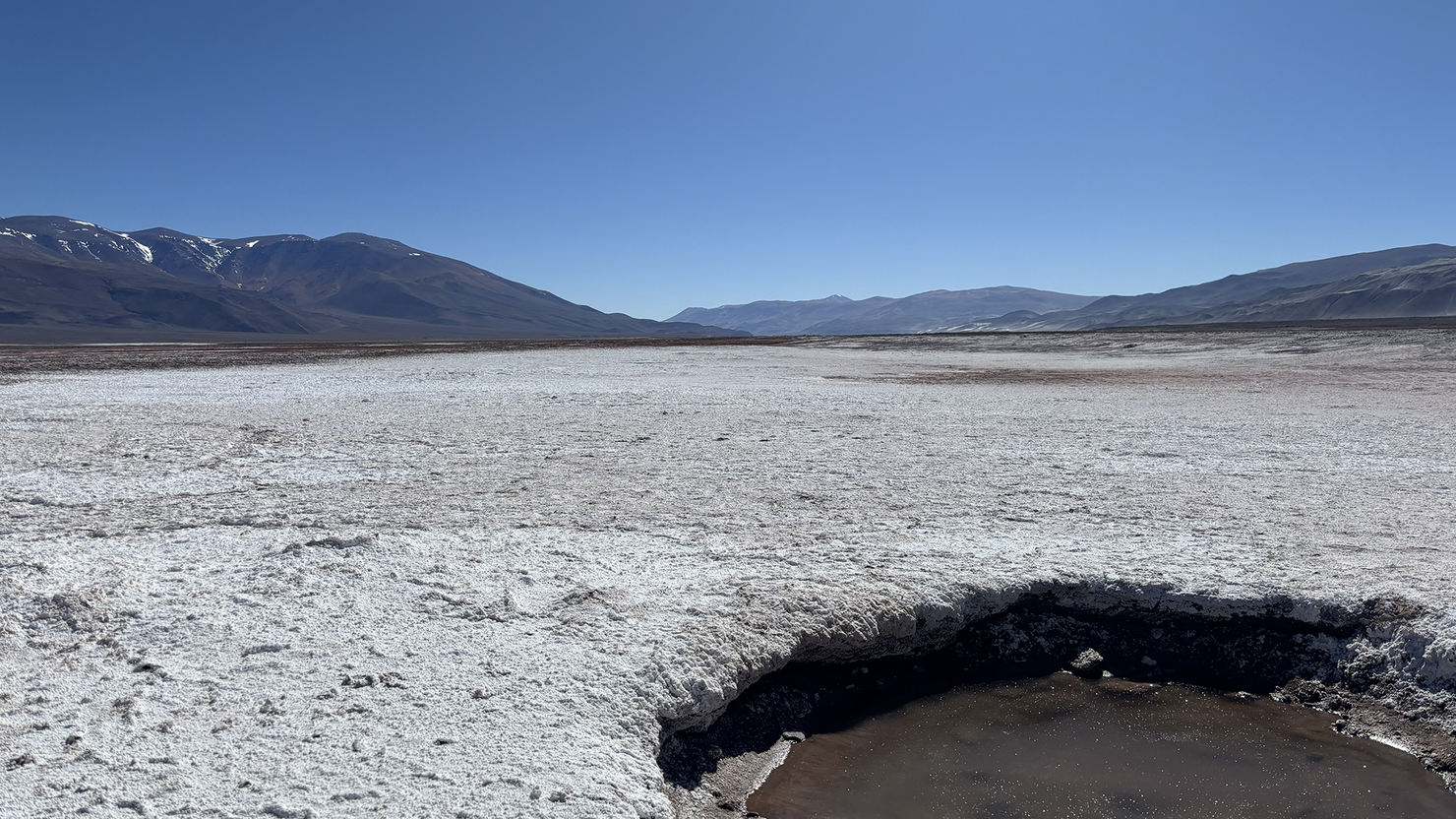
The Salar de Antofalla, a salt flat in the Catamarca Province of Argentina. The area has large lithium deposits, which are increasingly important to global mineral supply chains.
In this context, we spent the past several months interviewing experts in Latin America to help us explore the idea of value. Between their input and our own expertise as part of Resources for the Future’s Critical Minerals Research Lab, we worked to answer three interrelated questions: What is value? Who benefits from created value? How can resource-rich countries retain more of that value? While this blog post provides cursory answers to these questions, we plan to publish a report exploring these issues in more depth later this year.
Before digging deeper, it is important to clarify the distinction between value creation and value capture. Value creation refers to the benefits generated through the development of the mineral supply chain, from extracting resources to manufacturing lithium-ion batteries. Value capture, by contrast, refers to how the benefits of mineral development are distributed among actors, and who ultimately retains those benefits. Significant value may be created within a sector without that value necessarily being retained or distributed domestically in ways that share benefits across regions and demographics.
Although our forthcoming report will examine several Latin American countries (Argentina, Bolivia, Brazil, and Chile), this blog post focuses specifically on Argentina, where these considerations are especially salient. Argentina’s wealth of lithium and critical minerals sits at the intersection of global demand; domestic-policy experimentation; and unresolved tensions over sovereignty, development, and governance. Argentina is a lens through which to examine value capture as a multidimensional challenge—not just an economic one.
Based on our analysis, we develop an analytical framework that reconceptualizes value as a multidimensional concept organized around the three questions we’re exploring.
What Constitutes Value?
In Argentina, the value related to mineral extraction is most commonly measured in economic terms, such as export revenues, foreign direct investment, tax receipts, and jobs created. These indicators matter, but they capture only a fraction of what is actually at stake. Reducing value to its economic dimension risks obscuring the broader set of gains and losses that lithium development could generate for different actors across the country.
Because higher-value activities such as processing battery-grade materials and manufacturing battery cells promise greater profits than extraction alone, expanding the domestic supply chain often is viewed as the ultimate way to capture maximum value from domestic resources. But expanding into higher-value stages of the battery supply chain is not the only path to capturing more value, and for many communities and institutions, it may not even be the most relevant strategy.
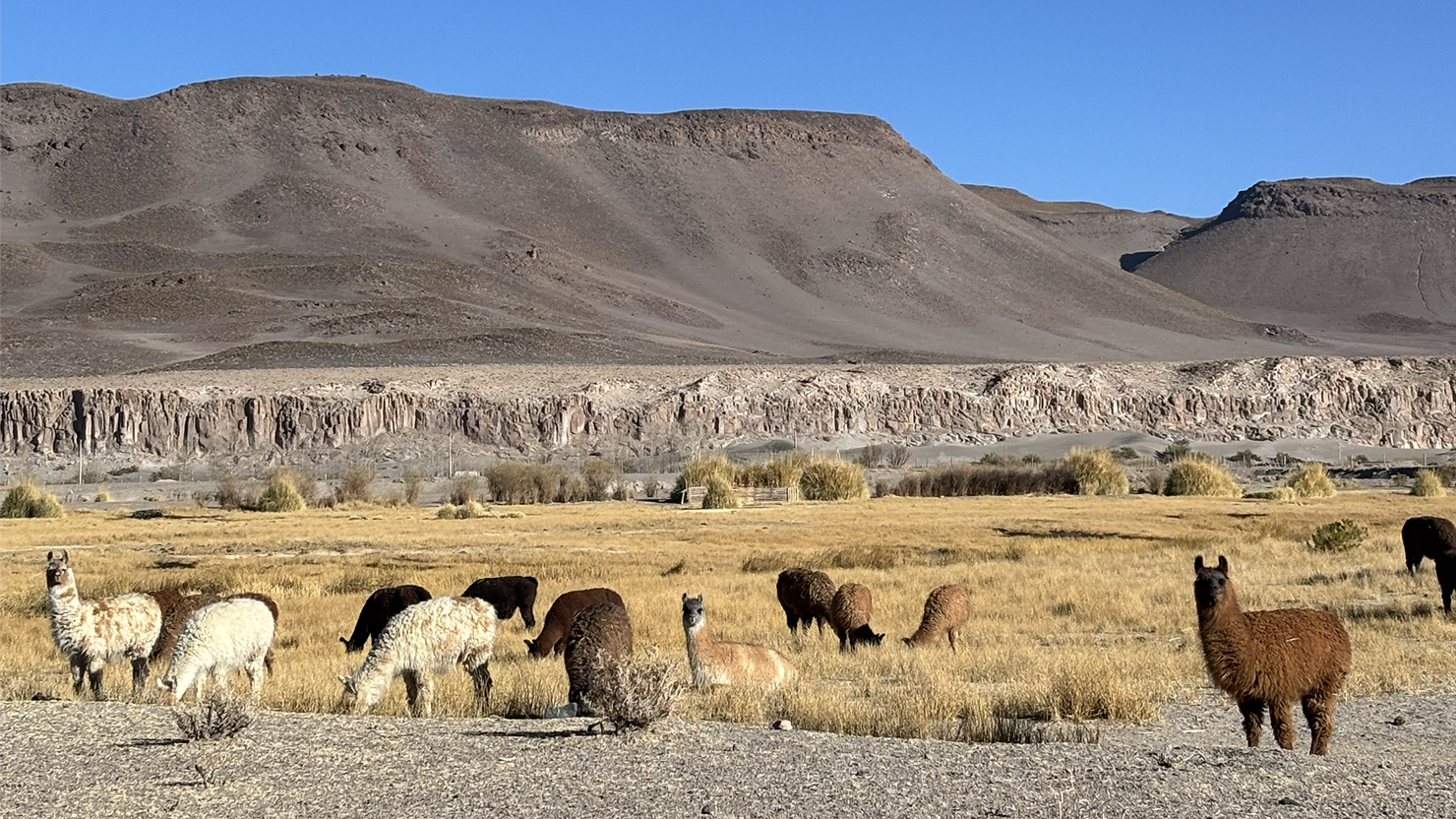
The Puna region’s landscapes support local livelihoods, such as livestock rearing, while hosting some of the world’s largest lithium resources. Local reliance on livestock, which in turn rely on plentiful fresh water and grazing lands, highlights the multiple dimensions of value at stake with lithium development
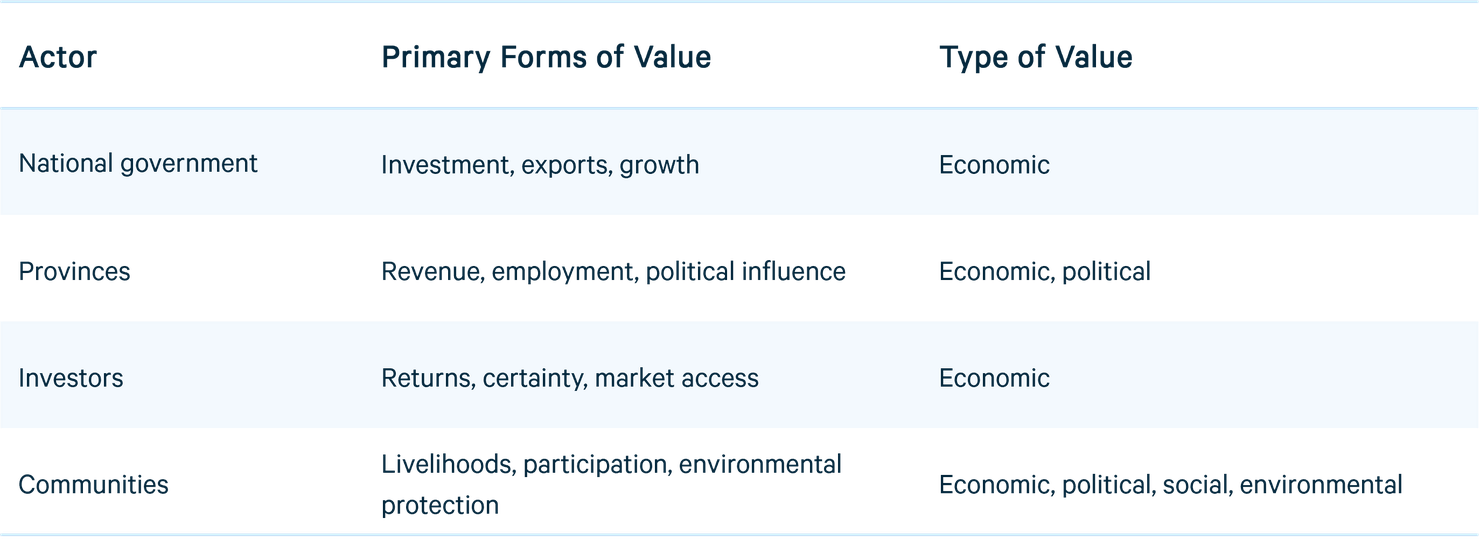
We propose, instead, to treat value as a multidimensional concept encompassing four interrelated dimensions: economic value (revenues, employment, investment, and fiscal returns), social value (community well-being, local knowledge, inclusion, and development), political value (institutional capacity, governance, and resource sovereignty), and environmental value (ecosystem protection, water security, and long-term resource sustainability). In the Puna region, where Argentina’s lithium deposits sit, these dimensions of value are deeply intertwined (Table 1). Large-scale brine extraction in high-altitude salt flats raises immediate questions about water access for Indigenous and pastoral communities—a social and environmental concern—while touching on questions of provincial authority and national sovereignty over a resource now deemed strategically critical by governments worldwide.
Table 1. Dimensions of Value for Argentina’s Lithium Wealth
Who Captures Value?
In considering Argentina’s ability to capture value from its resources, it is important to understand that this capture is distributed unevenly across actors with different interests, bargaining power, and institutional authority. Specifically, Argentina’s national government, provincial governments, foreign investors, and local communities each have distinct and often competing claims on what lithium development should deliver. Understanding whose interests actually shape the terms of extraction—and whose interests are subordinate—is essential to any honest assessment of Argentina’s lithium sector.
The federal structure of Argentina’s mining-governance system adds a layer of complexity that often goes underappreciated in policy debates. Argentina’s constitution recognizes provinces as the owners of the natural resources within their territories, giving Jujuy, Salta, and Catamarca (the three provinces that contain the country’s lithium reserves) significant formal authority over resource governance. Yet in practice, the federal government sets the broader regulatory and constitutional framework while capturing a significant portion of royalty revenues. This division of authority creates structural tensions that shape who ultimately benefits from lithium development, and on what terms.
Interprovincial competition compounds these tensions. Rather than coordinating a collective strategy to manage foreign investors and multinational companies, provinces with significant lithium reserves frequently compete against one another to attract investment by offering fiscal incentives, regulatory conditions, and guarantees. The result is a fragmented governance landscape in which each province negotiates with mineral companies largely on its own, weakening the collective bargaining position that a coordinated approach might otherwise provide. Different regulatory and fiscal frameworks across jurisdictions also create inconsistencies that multinational companies and foreign investors can take advantage of, further tilting the balance of power away from the government and toward private actors.
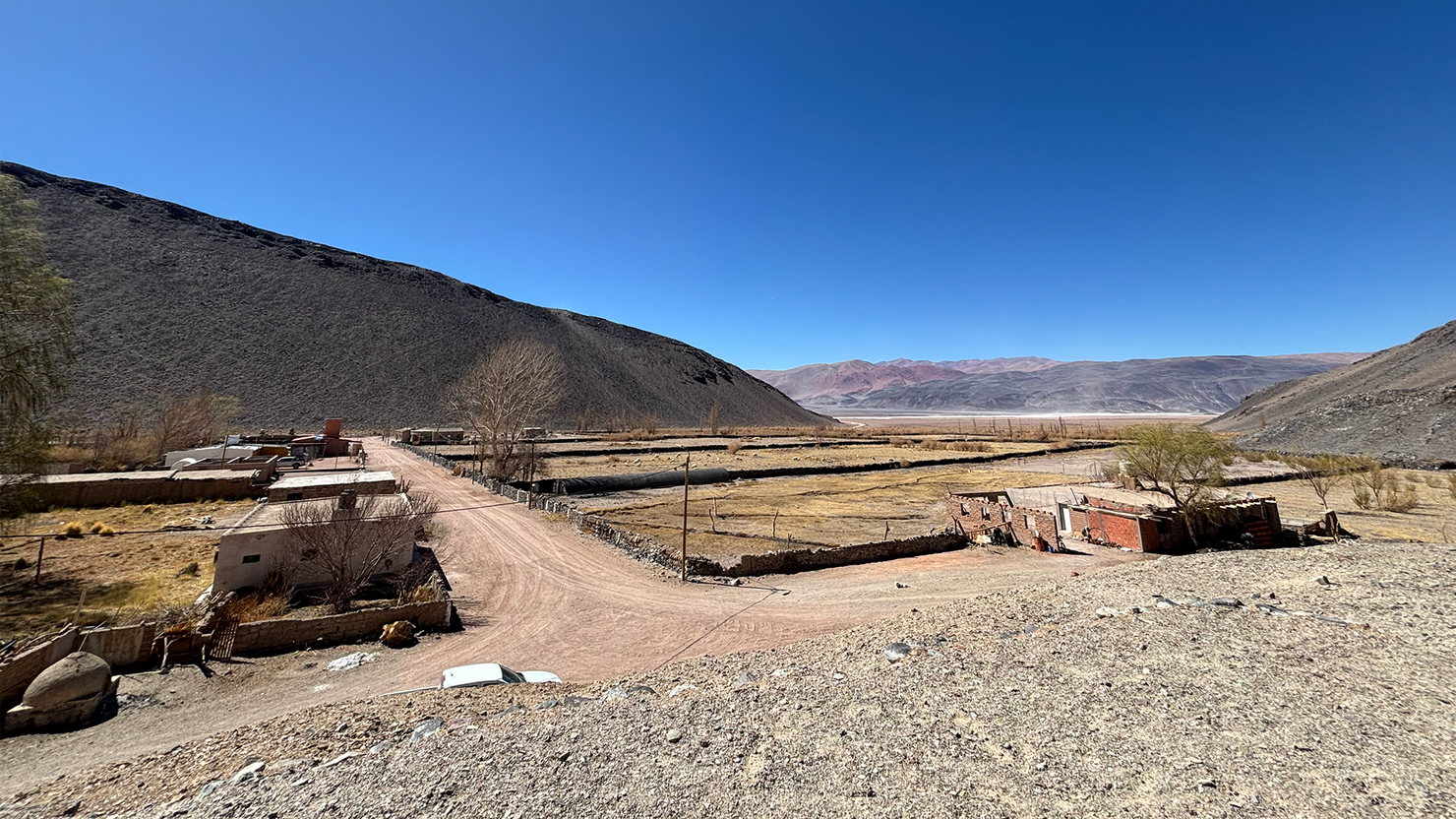
The town of Antofalla, which lies on the edge of the Antofalla Salt Flat in the Puna region of Argentina. This small community is home to part of the Kolla-Atacameño population, who have lived in the area for centuries.
At the most local level, fragmentation is even more pronounced. Negotiations over lithium projects are typically conducted separately for individual communities and projects, often with limited transparency and little coordination across Indigenous territories or municipal jurisdictions. The Atacameño and other Indigenous communities often engage with companies and provincial governments in isolation from one another, without shared legal strategies, technical capacity, or institutional support. As a result, stark power asymmetries are notable among communities, local governments, and companies during negotiations. These issues of fragmentation raise a fundamental challenge to which Argentine policy so far has failed to find a fair solution: those who benefit most from the fragmented governance structure are not the lithium-owning provinces, and certainly not the communities living closest to the resource.
How Can Argentina Create and Retain Value from Lithium Extraction?
Policy choices reflect implicit decisions about which dimensions of value matter most and whose interests the government is ultimately representing. A strategy oriented toward maximizing export revenues will look very different from one designed to strengthen provincial institutions, protect Indigenous water rights, or build domestic processing capacity.
Argentina has not yet found a balance for these competing objectives, and that unresolved tension is visible in the lack of a coherent, strategic minerals policy framework. As a result, the country is dealing with fragmented minerals governance between provinces and the federal government, weak and unenforced community-consultation mechanisms, and heterogenous provincial regulations.
Public policy is a key instrument through which value can be created and captured, if developed carefully. Regulatory frameworks do not simply govern investment flows—these frameworks determine how risks and benefits are distributed across investors, communities, and different levels of government. Regulations set the terms under which multinational companies access lithium in Argentina, the conditions under which provinces can negotiate, and the degree to which local actors participate meaningfully in decisions that affect their territories. In this sense, policy decisions define public choices around development priorities, sovereignty, and the long-term relationship between the Argentine state and global capital.
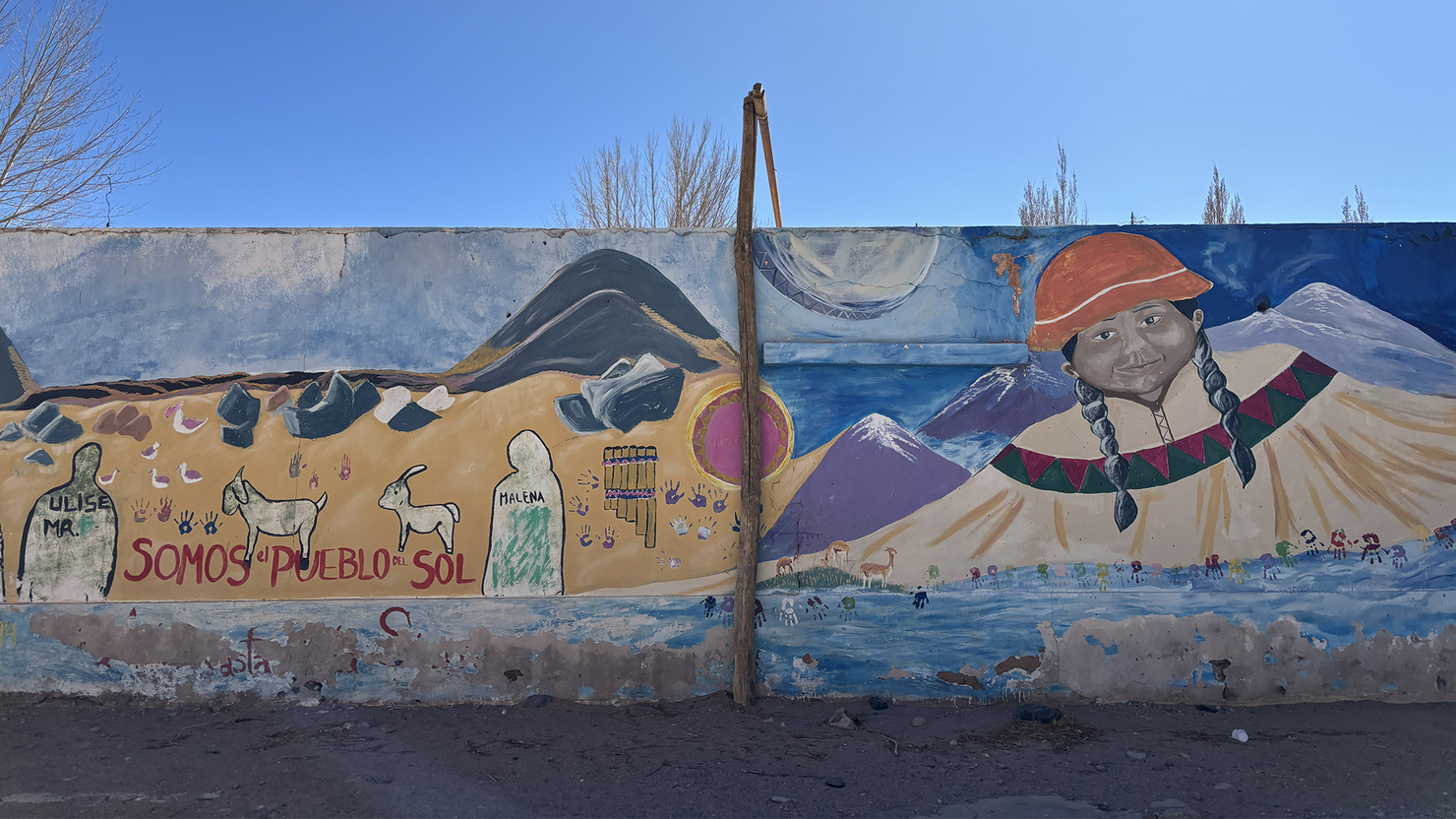
This mural in Antofagasta de la Sierra, an Indigenous community in Argentina’s Catamarca Province, is one of the few Indigenous-centric signs in the town. It reads, “We are the sun community.”
Recent policy debates illustrate how competing visions of value capture and value creation translate into concrete institutional arrangements. The most important example is Argentina’s Incentive Regime for Large Investments (RIGI). Approved by the federal government in 2024, RIGI offers 30 years of fiscal stability; customs benefits; regulatory certainty; and foreign-exchange guarantees to large-scale investors in strategic sectors, including mining. RIGI reflects a strategic bet: that investment certainty and capital attraction are the preconditions for value generation, and that Argentina must absorb significant regulatory and fiscal concessions to compete for that investment in a crowded global market.
RIGI embodies a particular vision of value, centered primarily on the economic dimension. The regime places short-term gains, speedy development, and national-level benefits above provincial or community-level outcomes. Yet, critics argue that by locking in long-term fiscal and regulatory concessions, RIGI risks constraining future policy flexibility available to Argentina, precisely when global demand for lithium is expected to grow and Argentina’s negotiating leverage could increase. If the terms of investment are fixed now, the capacity of Argentina to capture a greater share of value later may be structurally constrained.
The regime also raises questions about the relationship between national and provincial authority: To what extent do RIGI’s guarantees override or limit the regulatory prerogatives that provinces are constitutionally entitled to exercise? We need further research and policy analysis to find out.
Conclusions
What Argentina captures from its lithium wealth will ultimately be determined not by the resource itself, but by the clarity and coherence of the country’s strategic vision. A fragmented policy environment in which provinces compete rather than coordinate, communities negotiate in isolation, and national frameworks prioritize investment attraction over distributional outcomes will produce fragmented value capture and reduce value generation.
Greater creation and retention of value, across all of the four dimensions outlined above, would require sustained coordination across all levels of government; stronger institutional capacity at the provincial and community levels; and a long-term industrial strategy that links lithium extraction to broader goals of economic diversification, local development, and sovereign resource governance.
Argentina has the resources. The question is whether it has, or can build, the institutional and political conditions to capture the full worth of its endowment.
A version of this article appeared in print in the Fall 2026 issue of Resources magazine.