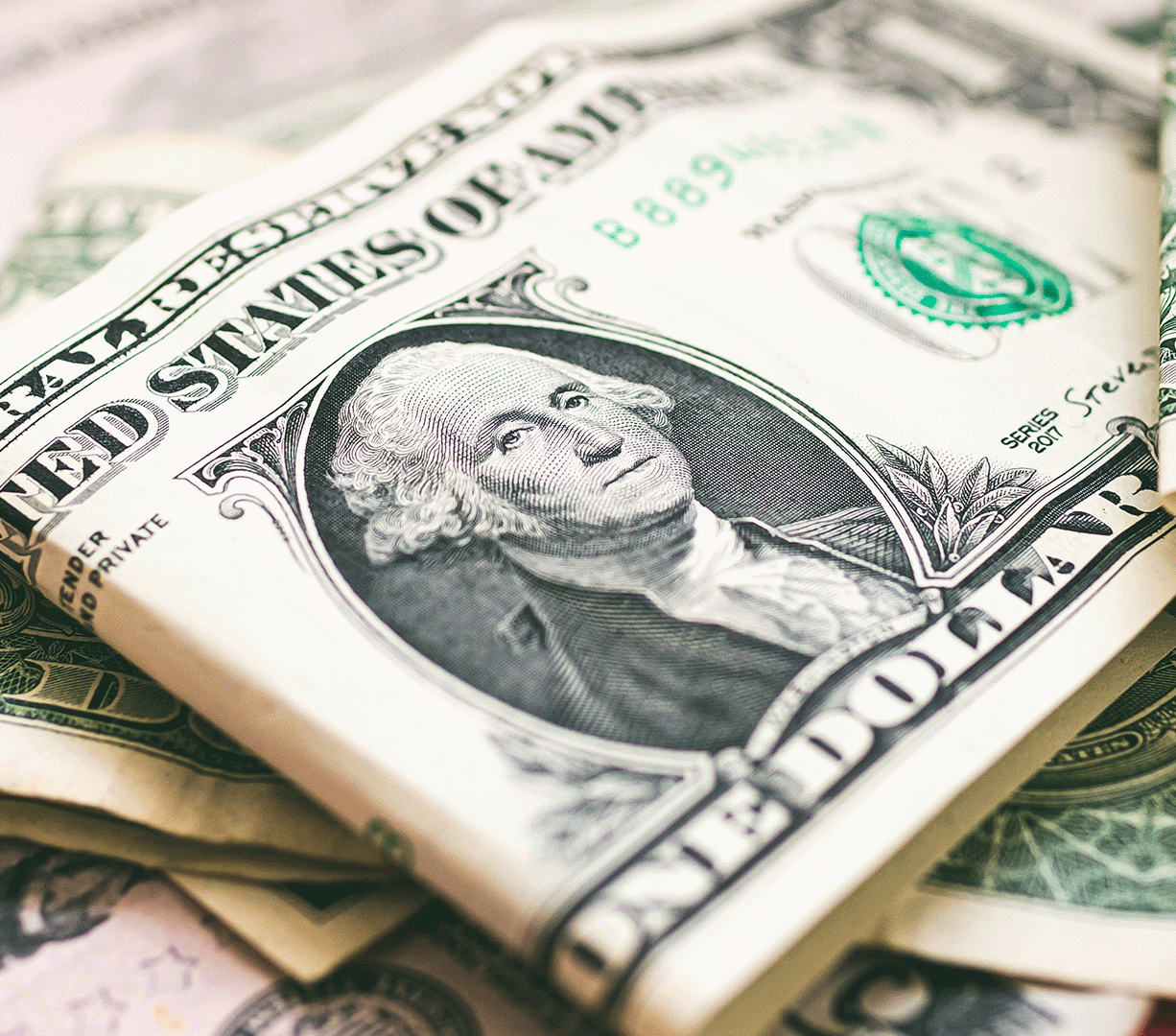
The US dollar’s role as the world’s reserve currency—a status that gives US policymakers unique budgeting privileges—may be a major reason that the United States is the only developed nation without a carbon price.
In a recent blog post, I wrote that the United States is the only developed economy in the world to lack a federal carbon price. This observation prompts the question: Why? What is so different about the United States that it hasn’t taken this policy step that economics robustly support?
What if the answer has something to do with the dollar’s role as the world’s reserve currency? Though little understood by policymakers and the public alike, the privileged status of the dollar nonetheless affords the United States significant advantages the country wouldn’t want to lose. For example, the United States can borrow at interest rates significantly lower than other developed economies that do not hold the world’s reserve currency.
Low interest rates allow US policymakers wiggle room in budgeting. In particular, low interest rates minimize the consequences of spending more than would be raised in taxes. It is the politics enabled by this feature that has precluded a carbon price for the past few decades.
After President George H. W. Bush broke his promise not to raise taxes and suffered electoral consequences in 1992, the lesson the Republican Party learned was “never raise taxes.” For 34 years, Republicans have heeded this lesson. A key measure of the One Big Beautiful Bill Act in 2025 was to permanently extend the 2017 tax cuts and reduce other forms of taxation, such as taxes on tips and overtime. While the law’s provisions are projected to increase the US deficit by about $3.4 trillion over the next 10 years, the bill passed the US House of Representatives and Senate in July 2025 and is now a cornerstone of the Trump administration’s domestic agenda.
What happens when other governments try such American-style budgeting? A case study occurred in 2022, during the short-lived Truss ministry in the United Kingdom. Prime Minister Liz Truss proposed a budget that cut taxes and increased spending. Not having the advantage of the world’s reserve currency, financial markets expressed a dim view of this plan, causing yields on government debt to spike. These spikes prompted a political revolt that ultimately pushed Truss to resign after serving only six weeks as prime minister.
So, American-style budgeting doesn’t work everywhere. What does this have to do with carbon prices?
Financial markets give US policymakers a pass for increasing spending while cutting taxes ... Countries without this wiggle room have successfully deployed their political capital to sell, and then enjoy, the benefits that come with pricing carbon.
Pricing carbon accomplishes many political aims with one policy. A carbon price raises money, reduces climate and local pollution, improves the health of constituents, incentivizes innovation, and gives significant credibility to a country’s geopolitical maneuvering around climate. A policy that solves so many problems is an efficient use of limited political capital, making it difficult for policymakers to resist when financial markets weigh in meaningfully to impose fiscal discipline. Across decades, this dynamic may make it difficult to avoid a carbon price.
President Ronald Reagan helped develop cap and trade for both leaded gasoline, via a lead-trading program, and ozone-depleting substances, via the Montreal Protocol in the 1980s. His vice president and successor, George H. W. Bush, helped implement cap and trade for sulfur dioxide emissions as part of the Clean Air Act of 1990. Finland and Poland became the first countries to place a nationwide carbon price (a carbon tax in both cases) on their fossil fuel production in 1990. Since then, every developed economy in the world except the United States, plus a healthy number of developing economies, have harnessed the logic of a carbon price to accomplish budget, health, climate, investment, technology, energy, and geopolitical aims.
The trend is accelerating, especially since the European Union paired its carbon border adjustment mechanism with its emissions trading scheme, which it first enacted in 2005. A study from Resources for the Future found that the European Union’s combination of the carbon border adjustment mechanism and a domestic carbon price created a strong incentive for other countries to consider domestic carbon prices and carbon border adjustment mechanisms of their own. For both the climate and for budgets, this is virtuous feedback.
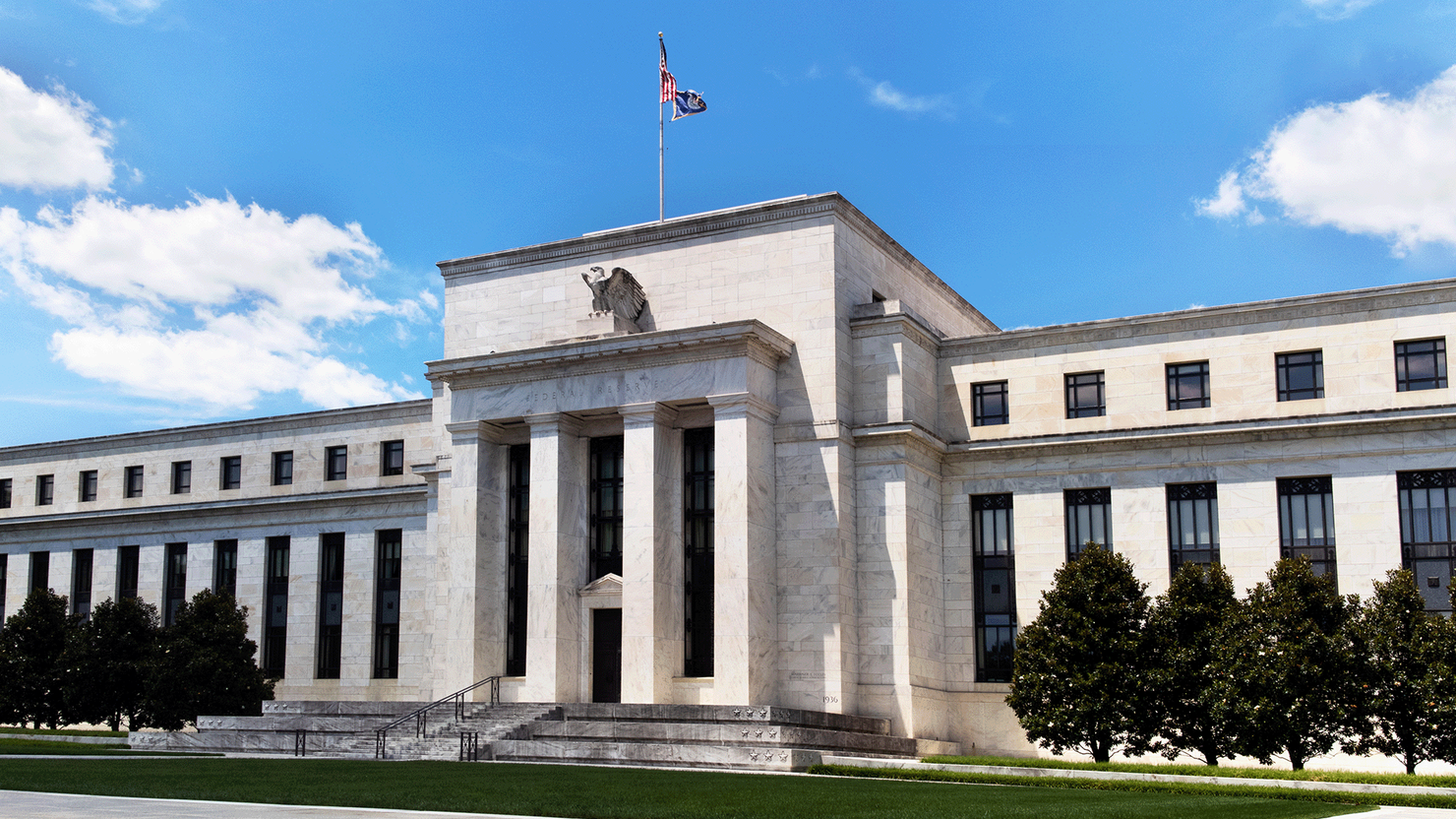
The Federal Reserve Board Building in Washington, DC.
This brings us back to the United States. The case linking a carbon price to the dollar’s status as the world’s reserve currency rests on the observation that American-style budgeting only works in the United States. Financial markets give US policymakers a pass for increasing spending while cutting taxes in a way that the markets don’t for other economies, and policymakers have used this wiggle room to avoid a carbon price. Countries without this wiggle room have successfully deployed their political capital to sell, and then enjoy, the benefits that come with pricing carbon.
Yet, for the first time in 80 years, the dollar’s place as the world’s reserve currency looks vulnerable. Articles touching on the possibility of the United States losing this privileged status are published regularly, and many point to the US need to embrace greater fiscal prudence or its unstable foreign policies (tariffs, the Iran War, Venezuela, etc.) as precipitating the crisis of faith. Fiscal fears are not limited to increased spending while cutting taxes, but to other destabilizing actions such as suggestions that the United States will default on some of its debt, or attacks on the independence of the Federal Reserve.
It is by no means clear that this privilege of the US dollar explains US resistance to the overwhelming logic of a carbon price. Many other possibilities could be invoked: the two-party system, money in politics, and a shift from policy issues to cultural issues dominating political discourse, for example. As there is no obvious successor to the US dollar in global financial markets, “de-dollarization” would result in a more chaotic financial system that is ultimately less efficient and thus creates more friction in the global financial system. Even carbon pricing advocates should fear the United States losing its status as the home of the world’s reserve currency. The best-case scenario would be that US policymakers wake up to the advantages this status has afforded Americans over the past 80 years and ditch American-style budgeting to preserve the dollar’s special status. With any luck, those efforts will include a domestic carbon price.

This blog post is based on commentary originally published by the Pricing Carbon Initiative. Resources for the Future acquired the Pricing Carbon Initiative in October 2025.