
Long-term contracts benefit the development of clean energy. Proposed changes to the Greenhouse Gas Protocol could disrupt this status quo.
Updates to the Greenhouse Gas Protocol’s Accounting Standards
The Greenhouse Gas Protocol, an organization that determines the methodology by which companies voluntarily report their greenhouse gas emissions, has proposed changes to its greenhouse gas accounting standards. These blog posts reflect on the revisions and what they could mean for companies, greenhouse gas emissions, and clean energy investments.
- Is Accuracy the Right Criterion for Updating Greenhouse Gas Accounting Standards?
- How Could Changes to Corporate Greenhouse Gas Reporting Affect Emissions?
- How Will Changes to the Greenhouse Gas Protocol Affect Long-Term Contracts?
- How Will Changes to the Greenhouse Gas Protocol Affect Short-Term Markets?
The Greenhouse Gas Protocol (GHGP) is an organization that determines the methodology by which most companies voluntarily report their greenhouse gas emissions. One of the most impactful methods corporations use to reduce the emissions they report is entering into long-term contracts for clean electricity. These long-term contracts reduce the risk of clean energy investment, enabling greater debt financing and reducing the financing cost for new clean energy. New renewable electricity projects rarely are built without such a long-term contract.
As I’ve discussed in earlier blog posts, the GHGP has proposed revised greenhouse gas accounting standards and is accepting public comments on the potential changes. Under the current standards, a company can say that it is consuming zero-carbon electricity by aggregating its energy consumption across regions and time and then using a long-term contract to obtain energy attribute credits (EACs) that represent its claim that it is consuming clean electricity.
The proposed changes, which restrict a company’s use of EACs to the same hour (“hourly matching”) and region (“deliverability”) in which a generator produces the renewable energy, significantly complicate the ability of companies to use long-term contracts to report zero emissions. If implemented, the GHGP revisions will change how corporations enter into long-term contracts and the value they receive from those contracts. If the GHGP’s changes lead to a reduction in the use of long-term contracts, we could see less clean energy being built and higher greenhouse gas emissions.
The Importance of Long-Term Contracts
Broadly, a long-term contract is a contract in which a company purchases EACs from a clean electricity generator over an extended period, generally at a fixed price. Long-term contracts can include EACs bundled with the purchase of power, such as through a power purchase agreement, but there are other types of long-term contracts, as well. The important part of these contracts is that they exchange a highly uncertain revenue stream—usually the combination of the sale of electricity and EACs to short-term “spot” markets—with a certain revenue stream for clean energy projects. As I discuss in a blog post published in September, this reduction in uncertainty lowers the cost of the capital for a clean energy project, making it easier to finance and cheaper to build. The long-term contracts that also guarantee a fixed price for the electricity (or reduce the price-related risk) provide even more substantial derisking for the clean energy project.
Without such long-term contracts, EACs would have to be bought and sold on a short-term spot market, for what is currently a relatively low price. That the price is both low and uncertain means that the revenues earned by clean energy projects from spot-market EACs would be minimally beneficial for project finances.
The Price of a Long-Term Contract
In my previous blog posts for this series, I argue that the main advantage of hourly matching is in the high EAC prices during hours when EAC demand exceeds supply. The money transfers resulting from those high-priced EAC transactions fund new clean energy. The question is whether the prices embedded in long-term contracts will reflect these high prices under the revised guidance. Will we see companies willing to pay more or less for those contracts? Or will we only see the price signal in the spot market? The short answer is that I don’t know.
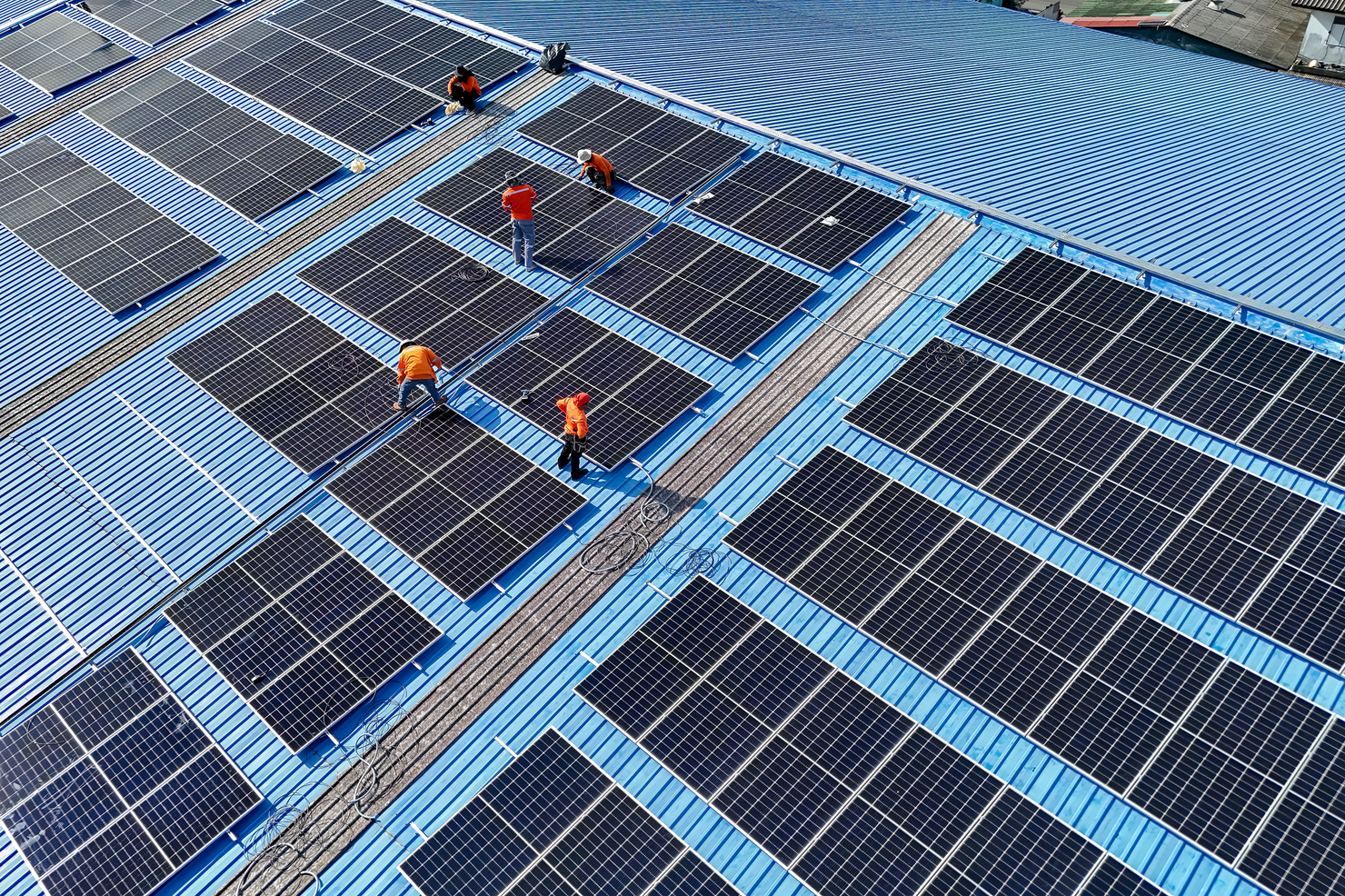
One consideration is that a company may be willing to pay more for a contract if the EACs it receives as part of the contract are worth more (based on their prices on the spot market). However, the EAC price is likely to be highest when supply is low, which usually happens during an overall shortage of wind and solar generation. Thus, a long-term contract for wind and solar is not likely to represent a large number of high-priced EACs, so one might expect that any additional incentive provided by the presence of high-priced EACs to purchase a long-term contract for wind and solar is diminished because those high-priced EACs likely occur when there isn’t a lot of power coming from the generator.
Credit: Rawpixels stock / Shutterstock
On the other hand, “clean firm” technologies that provide electricity all the time, such as nuclear, geothermal, and electricity storage, are better able to provide EACs during times of wind and solar shortage, which would provide an additional incentive to enter into long-term contracts with clean firm technologies. However, those technologies are more expensive than wind and solar, and the additional incentive may not be enough for companies to want to enter into contracts with clean firm projects.
Companies also derive value from the EACs they receive through a long-term contract because the EACs allow companies to claim carbon-free status. With hourly matching, a contract is potentially less valuable since the company can claim to be only partially carbon free. In that scenario, a company may not be willing to pay as much for a long-term contract.
These arguments suggest that, as compared to the current system, a company likely would not want to pay more for wind and solar contracts but may be willing to pay more for contracts involving storage or clean firm technologies. Furthermore, these arguments suggest that most of the price signal to increase the deployment of wind and solar power would arise from the spot market. But this is suggestive at best.
Over- and Under-Procurement
It is also important to ask how companies can use long-term contracts to match their demand for electricity. Adding hourly matching and deliverability constraints will make this aspect of long-term contracting more complicated.
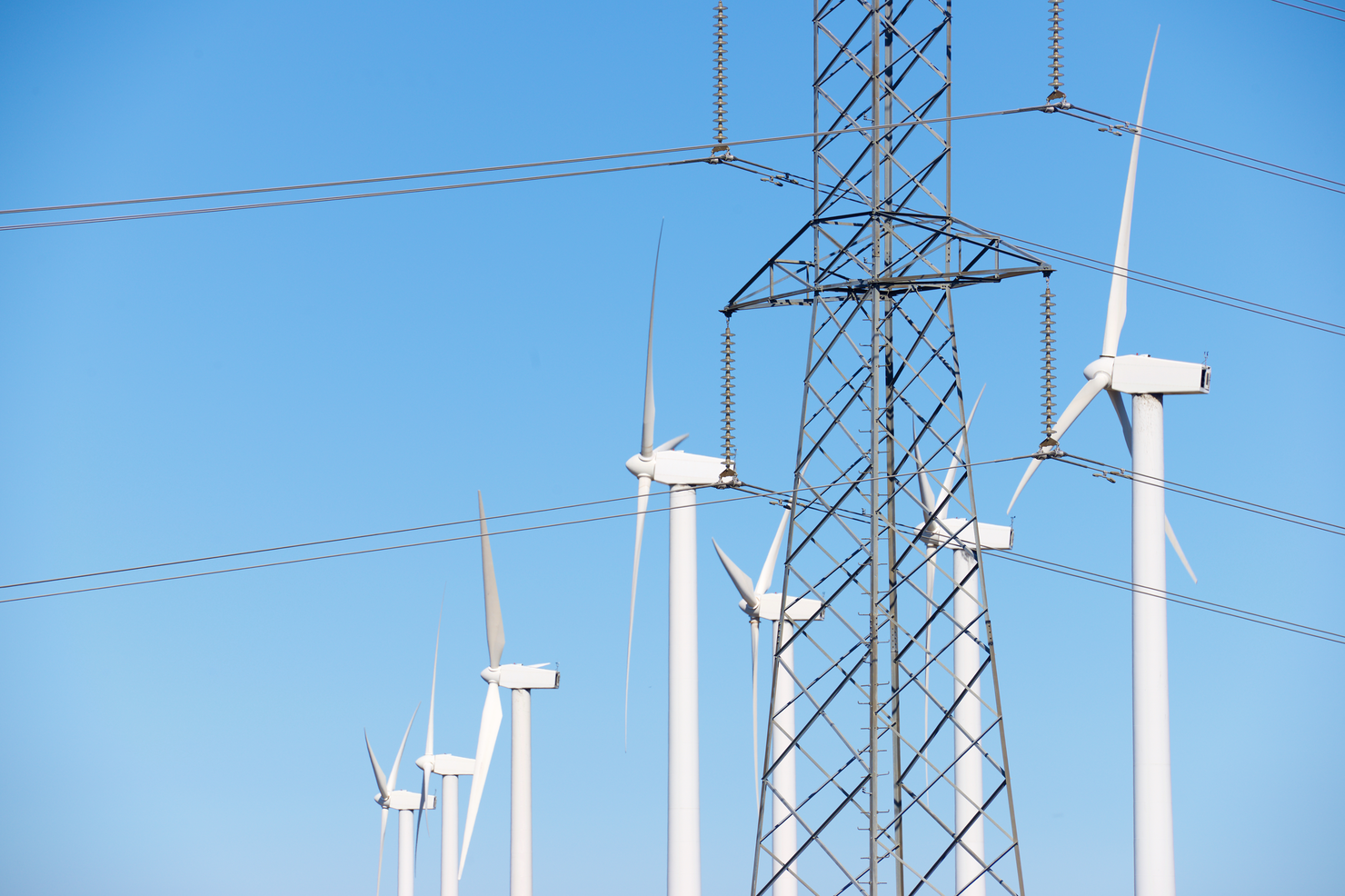
For example, companies have different patterns of consumption throughout the day and over the year. A data center may have relatively constant electricity consumption, while a shipping company may see peaks around the holidays. To achieve high percentages of clean energy under a system with hourly matching, a company must procure clean energy that matches its load profile. Solar and wind are the most prominent sources for EACs at the moment, and their production is both irregular and unpredictable. Even combining wind and solar with some degree of storage, it is impossible to know ahead of time how many EACs will be available in a given hour.
Credit: Greens and Blues / Shutterstock
To achieve a specified level of clean energy demand under hourly matching, companies have two primary options in the face of this uncertainty. The first is to “under-procure.” Here, the company enters into relatively few long-term contracts and accepts that these contracts will not provide sufficient EACs to cover its electricity consumption. The company then either accepts that it is not “100 percent clean” by GHGP standards, or it has to make up the difference through the purchase of EACs in the spot market.
The second option is to “over-procure.” Here, companies procure multiple contracts to increase the probability that they can achieve a high level of clean energy. The flip side of over-procurement is that the company will have an oversupply of EACs, covering its electricity consumption and then some. The company may then sell these extra EACs on the spot market to attempt to cover some of the costs of over-procurement.
Companies also may choose to enter into long-term contracts with clean firm technologies as described above. But even with such a contract, the company’s electricity consumption may not be constant; it still will have to accept less than 100 percent clean electricity at some points of the day or year, or enter into spot-market transactions to cover the times when its demand is higher or lower than the output of the clean firm generation.
Aggregation
A last consideration is how companies can aggregate their demand. For a long-term contract to be effective, it needs to derisk a substantial fraction of the revenue for a clean energy project. Given the transaction costs of entering into a long-term contract, a clean electricity developer will prefer a single long-term contract rather than multiple contracts. Right now, since a company can use EACs in any region at any time during the year, one with many smaller facilities can aggregate all that electricity consumption and enter into a long-term contract to procure EACs to cover that entire demand. It doesn’t have to worry about the fact that its facilities are scattered throughout the country or that its facilities may have consumption patterns that don’t match the production of clean electricity.
Under the GHGP’s proposed changes, this type of aggregation is not possible. With hourly matching, a company cannot aggregate its load across the year and match that with the aggregate output of a clean electricity generator. However, the proposal does allow small and medium-sized companies to forgo the hourly-matching constraint. The GHGP has yet to determine its exact definition of small and medium-sized companies.
Credit: Sergei Mishchenko / Shutterstock
Further, there is no exception to the proposed “deliverability” constraint, which states that companies have to use EACs in the same region in which they are produced. If a company has multiple smaller facilities scattered throughout the country, it cannot use the EACs from a single long-term contract for all its electricity consumption. If the consumption is small in any given region, it might not be large enough to make a long-term contract worthwhile, and the company would have to entirely rely on the spot market for its EACs to cover the regional consumption.
One potential solution to these challenges (as well as the need for over- or under-procurement) is to have third-party aggregators of clean energy. Such an aggregator would purchase EACs from a variety of sources and then bundle them to match companies’ load shapes. This bundling would make things substantially simpler for corporate electricity purchasers but does not make the risks go away. Instead, the aggregator assumes many of the risks. It is not clear whether any entities are willing to take on this risk. Google further describes this concept, the relevant risks, and some of their ideas in a 2022 report.
The Future
Long-term contracts, motivated by companies’ desires to say that they are carbon free, lead to significant reductions in the cost of clean electricity. Under the GHGP’s proposed changes, many of the existing means by which companies use long-term contracts to claim reduced emissions will no longer work, meaning that significant changes are likely for how companies approach the procurement of EACs and long-term contracts for power.
In its proposal, the GHGP includes provisions to ease this transition, such as phasing in the new requirements and allowing standard consumption profiles for hourly matching. Even with these provisions, however, the future of long-term contracts under these revisions is unclear. There are potential benefits, such as additional incentives for clean firm technologies, but the cost may be fewer long-term contracts across the board. These are just my initial thoughts, as it is hard to predict how companies may react without more data. Whatever the end point might be, it could have enormous consequences for clean energy.