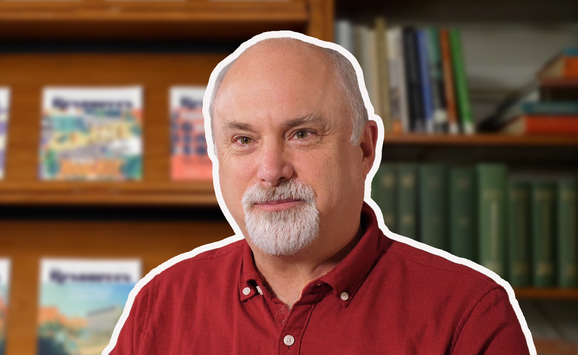

This week, host Margaret Walls talks with Benji Backer about attracting nonpartisan support for environmental conservation. Backer is the founder and CEO of Nature Is Nonpartisan—a nonprofit organization focused on redefining environmental issues as nonpartisan—and serves on the board of the American Conservation Coalition. In this episode, Backer discusses his approach to environmental issues by describing his conservation work, which includes helping to stop a recent policy proposal that aimed to sell public lands, aiding in the creation of a domestic conservation caucus in the Senate, and assisting in forming the Make America Beautiful Again Commission. He also speaks to the importance of accurately communicating the risks of climate change; people connecting with their land; and promoting conservation at all levels, including local, state, federal, and corporate.
Listen to the Podcast
Audio edited by Rosario Añon Suarez
Notable quotes
- In facilitating momentum across the partisan divide, a social media post by Benji Backer helped drive policy decisions: “You had the furthest Left and the furthest Right, and the center-Left and the center-Right, all uniting around opposition for this, in the midst of the most divisive time in my lifetime. Seeing that happen, during this divisive moment, was really powerful.” (7:09)
- Bipartisan opportunities for environmental conservation are most available through the Senate, especially after Backer helped launch the domestic conservation caucus in the Senate: “One of the things that’s really powerful about this Senate caucus is that there’s almost more momentum in the Senate than anywhere else right now to build this bipartisan consensus. Our goal, as an organization, is to work on culture and policy; to move the public narrative; to show leaders that there’s bipartisan, and nonpartisan, buy-in for conservation; and to push the policymakers. We’re going to go wherever the juice is going to be worth the squeeze.” (13:34)
- A mixture of federal, state, and local policy is necessary for effective emissions reductions and environmental change: “You look at the energy transition, and some of the emissions that have been reduced since the early 2000s in the United States—it wasn’t because of a massive mandate. Actually, at the time, it was states like Iowa—there’s a lot of wind, so they put up a lot of windmills. It’s that local solution that depends on your geography, your income, and what job you have. And finding a way to strike more of a balance when it comes to the policy—where it’s not just top down, but a mixture of top down, bottom up, and corporate—that’s the future.” (22:15)
Top of the Stack
The Full Transcript
Margaret Walls: Hello, and welcome to Resources Radio, a weekly podcast from Resources for the Future (RFF). I’m your host, Margaret Walls. My guest today is Benji Backer.
Benji is the founder and CEO of Nature is Nonpartisan, which is a nonprofit organization that’s focused on redefining the environment as a nonpartisan issue. He also serves on the board of the American Conservation Coalition, or ACC, which is a conservative environmental organization that he founded—during his freshman year of college, mind you. I’m not sure what all of you were doing your freshman year of college, but I was not doing that!
Benji is also the author of a really interesting book that was published in 2024 entitled The Conservative Environmentalist: Common Sense Solutions for a Sustainable Future. He’s been named a New York Times changemaker and awarded the Fortune 40 under 40, Forbes 30 under 30, and various other awards, as well. Benji is really one of the leading youth environmental voices in the country, and he’s been said to be someone who has the ear of the Trump administration on conservation and environment issues.
We’re going to talk with Benji about what it means to be a conservative environmentalist, Nature Is Nonpartisan and the organization’s goals and priorities, his views on climate change, his engagement with the administration and Congress, and much more. Stay with us.
Hello, Benji. Welcome to Resources Radio. Thanks so much for coming on the show.
Benji Backer: It’s absolutely great to be here. Thanks for having me.
Margaret Walls: Benji, we always start the show with the “get-to-know-you question.” I just want to learn a little bit more about you and want our listeners to learn a little bit more about you. How did you come to be passionate about environmental issues? And how did you have the courage, I guess, to jump into this—what I would call a new brand of environmental advocacy—and do it at such a young age? Just tell us a little bit about how you got into what you’re doing.
Benji Backer: Well, I appreciate the question. It really honestly comes from genuine passion. Most people ask me that question about how I got active in politics and environmental activism at such a young age, and I really don’t have a clear answer other than the fact that I cared a lot at a young age.
My parents were not active politically. They cared a lot about conservation in the environment, but they weren’t also active environmentally either. It just was something that really was important to me.
In elementary school, every single time that we had the chance to do a project, (which, of course, was like an art project or something visual), I always would do it around the environment and environmental issues. I learned about climate change in grade school, and it was very important to me from that age.
At around the same time, probably, as I was learning about climate change in the latter end of grade school, I was also watching the 2008 presidential debate between John McCain and Barack Obama. The democratic process, as it was back then—I think it’s very, very toxic, compared to then, today—really inspired me to be active.
I have a grandpa who’s a Marine veteran, and John McCain reminded me of him. I love my grandpa, and I also believed in the values that John McCain was espousing. I was 10 years old, but my parents were start-up founders. Seeing how hard they worked for our family—and for the community that they helped employ people in—I think his values, just from a physical perspective, resonated with me. I asked my parents if I could volunteer for him. I was injured at the time, physically, so I couldn’t do the sports that I wanted to do.
Fast-forward 15 years from then, and I’ve combined both of those passions of politics (which was strange at the time) and environmentalism (which was, also, a little bit strange at the time), and continued learning, becoming more passionate, and becoming more worried—but more optimistic, at the same time, which we can get into at some point.
Margaret Walls: Yeah, we’ll investigate that more. That’s great. It’s really interesting. So, Benji, I first learned about your work earlier this year when the idea of selling federal lands was part of the budget reconciliation bill. Let me just remind listeners, or tell listeners if they didn’t know this, that some members of Congress offered up various versions of a bill that would’ve sold US Bureau of Land Management (BLM) lands—or, in some versions, it was both BLM lands and the US Forest Service lands.
This was ostensibly, I would say, to be used for housing development around Western communities that had some housing affordability challenges, and so forth. Ultimately, the idea failed, and I believe that you were one of the most prominent opponents of that. There were some others, but talk about that if you would—that one policy issue that was going on, where you stood on it, and what role you played.
Benji Backer: Well, it’s been a difficult first year of the administration, because there’s been so many things that have happened every single day. When I launched this organization, Nature Is Nonpartisan, early in 2025, we got an onslaught of, “Are you commenting on this? Are you commenting on that? Are you pushing back against this, and pushing back against that?” You can’t do it all. But when I saw this come across the radar—I actually had a congressman flag it for me before it went public—that this land sale was going to be in the reconciliation bill (the Big Beautiful Bill is what the president called it), I became incredibly, incredibly alarmed.
Going back to my story: Public lands are the reason I care about the environment in the first place. It’s the reason I care about climate change in the first place. I spent most of my childhood in national forests, which was what was on the chopping block here. Then, almost all of my college experience—I grew up in Wisconsin and moved out to Seattle for college—when I wasn’t working and running the nonprofit that I founded, I was out skiing and hiking in national forests.
When the proposal was to sell off national forests—it was three million acres of unidentified land. No one knew what parcels,, and could have literally been anywhere that was a national forest or BLM land—I decided that this was something, early on in the organization, that we had to take on. Again, we couldn’t take on everything—let alone, really, anything—because of how new we were. But I knew that this was a hill I was willing to die on.
I remember it was a Monday morning before it was announced, and I tweeted out, “Hey, there’s going to be this public land sell-off, and it’s three million acres, and here are some pictures of me in those places that could be sold off. They are fully eligible with the language of the bill.” And it went viral. It was crazy to see the reaction. The reason why being viral, in this case, mattered was twofold: One, it was all across the spectrum. You had the furthest Left and the furthest Right, and the center-Left and the center-Right, all uniting around opposition for this, in the midst of the most divisive time in my lifetime, honestly. And seeing that happen, during this divisive moment, was really powerful.
The second thing was: Eventually, the senator who introduced it, Mike Lee, caved. The reason he caved was not due to a technicality, which is what it was blamed on—there was some technicality through Senate rules that was, supposedly, not allowing this policy to go through. It was actually because so many senators across the political spectrum were against it, including those of his own party. And the reason they were against it was because the general public, across the spectrum, was also against it. It was really a showcase of the power of grassroots, and really a showcase of the power of culture, because it was social media and cultural figures.
I was the first one, I think, to sound the alarm nationally, but then I became drowned out by all these huge voices, in a good way. People like Joe Rogan, Patagonia, REI, and everyone in between were voicing opposition against this. I think that’s the future of environmentalism that I see. It’s one that, yes, we don’t see eye to eye on a lot of things, but there’s a few things that our Venn diagrams do overlay on: Clean air, clean water, protection of our wild spaces, protection of the places that we recreate, and restoration of the natural world around us. These are things that every American wants. And for the first time in a decade, this pretty bad idea, actually, had a really big silver lining, which is that it showed the power of working across the aisle on conservation again.
Margaret Walls: That’s interesting. Benji, I went to your event that you hosted on the Hill, which announced the Stewardship—Is that what they’re calling themselves? The Stewardship Conference?
Benji Backer: Yeah, Stewardship Conference.
Margaret Walls: Yeah. So, since you’re bringing up how it brought people and senators together, maybe just tell our listeners a little bit about that and what their effort is going to be with that.
Benji Backer: It was really interesting. Earlier this year—and thanks for attending that—I realized that there was really no domestic conservation caucus in the Senate. The reason that matters, for those who don’t know what a caucus is, is that there’s really no convening group for senators who care a lot about just general conservation, public land, water, and forest issues. I knew that earlier this year, and I was like, “Okay, that has to be started, but I’ll do that later. I’ll do that a couple of years from now, or something.” Then, when this public land sell-off was proposed, it unearthed the fact that there were all these senators on the Right and the Left—but, of course, helpful to know the senators on the Right—who were willing to say, “Hey, no, this is too far. I care a lot about conservation, and I’m willing to die on this hill, too.”
In the weeks following the defeat of this proposed bill, I talked to a few of the Republicans who had stood up against it, and they’re like, “Yeah, we need to have a convening mechanism to not just oppose bad things—because that’s only so helpful—but actually to propose good ideas, and get bipartisan policies across the finish line.”
So, we worked with Senator Heinrich and Senator Sheehy—who are two of my favorite lawmakers in this current moment—who were willing to put partisan politics aside and, during the historic-length government shutdown (as partisan as it gets), were willing to launch an eight-senator (four Republican and four Democrat) caucus to help promote conservation in the United States across party lines. We’re beginning to work on many bipartisan bills that have either already been introduced and just need to be accelerated, or new ones, to protect our forests, to protect our air, to protect our water, and to protect our public lands.
Margaret Walls: That’s great. Also, I’m not sure if this is related to what you have to say about this, but the president signed an executive order establishing the president’s Make America Beautiful Again Commission. I did read that you had something to do with that, as well, Benji. I don’t know if there’s anything going on with that. What the executive order says is that it’s tasked with developing options for improving conservation, recovering fish and wildlife populations, improving water quality, and increasing access to public lands and outdoor recreation. Do you know much about this and what’s going on with it? Is there activity around this? Tell us about that.
Benji Backer: Yeah. So, when the president won in 2024, I was in the midst of starting to launch my organization. We were trying to position ourselves so that no matter who won, we could make a difference. That’s, again, the future of environmentalism that I want to have, which is that it doesn’t matter who’s in office—things are happening that are good for conservation and good for the environment. We might not have voted for somebody, but we can put that aside and work toward a greater goal. At the end of the day, nature doesn’t really care who’s in office. Our environment needs to be protected and conserved in either situation.
When President Trump won, we started working with his cabinet on the Make America Beautiful Again executive order and commission—which is tasked to come up with policies through the US Department of the Interior, US Department of Agriculture, and other related agencies—for the president to have a conservation platform and policy agenda for good things for our public lands and private lands. There has not been a lot of progress on that yet, admittedly, and there’s three years left to this administration, so we’re going to keep pushing for durable conservation policy.
We have been waiting and pushing hard to make sure that things happen, but one of the things that’s really powerful about this Senate caucus is that there’s almost more momentum in the Senate than anywhere else right now to build this bipartisan consensus. Our goal as an organization is to work on culture and policy; to move the public narrative; to show leaders that there’s bipartisan, and nonpartisan, buy-in for conservation; and to push the policymakers. We’re going to go wherever the juice is going to be worth the squeeze. So, we have the commission and the White House agenda that we are ready to act on whenever they’re ready, and whenever they want us to work with them. Until that happens, we’re going to be focusing on the Senate and the cultural push.
That’s all to say, we did help get that together, and we will be helpful anytime that there’s going to be positive conservation action. So far, it’s been a secondary priority, and I think that’s also a symptom of a larger problem—which is that, for most Americans, the environment is not a top-five issue, and leaders do not feel like they will be held accountable if they don’t work across party lines to do good things for the environment. That’s an incentive we have to change, because President Trump, and any other president that doesn’t act on conservation going forward, should be held accountable. Also, they should want to do good things because they feel like they’re going to get rewarded. What I would rather have is not this negative accountability, but this positive accountability. Right now, there isn’t that.
I will say, as much as President Trump has not done a lot on conservation, if he changed on a dime tomorrow and said, “Hey, we’re going to do some great things in conservation across the party lines,” there are a lot of groups who would not give him the credit for it—they don’t want to give President Trump the credit, because he’s somebody that they don’t like.
We have to get past this political baseball that we’ve played on the issue and provide an incentive for someone like President Trump to act on it. We’re going to keep pushing as hard as we can while we’re building up that grassroots movement that America needs, across party lines, for this issue.
Margaret Walls: Yeah. I’m going to come back to some of your priority-setting, but I want to ask you first about climate change, Benji.
I know that you feel that climate change is a serious problem that needs to be addressed, but you’re not a fan of some of the ways that we have tackled this problem. And I know that you have concerns about the messaging and communication around it, which, I think, you feel has alienated people. Can you talk about all that a little bit? Where do you come out on this issue, and what do you think have been some of the problems? Then, we’ll talk about some of the solutions.
Benji Backer: Look, as I mentioned in my opening, climate change has been a deep passion of mine since I was a kid. Growing up in Wisconsin, I know climate change is real, because I’ve seen it with my own eyes. I’ve seen snow days become less and less common in Wisconsin where I grew up, and white Christmases are not the constant that they once were when I was growing up. Those are the sorts of things that are just undeniable.
However, the fear mongering of saying that the world’s going to end, and that we’re going to not have snow by 2000, and then we’re not going to have snow by 2020, and then we need to go a hundred percent this or a hundred percent that by 2030, otherwise the planet’s going to burn—those sorts of predictions and, honestly, unscientific claims (because even the scientists have been frustrated with the overdramatization of climate change) have really frustrated me. It’s made our job harder, it’s made it more political, and it’s made it more difficult to get good things done.
Most Americans who don’t believe in climate change care deeply about the environment. They just don’t like to be told that the world’s going to end and then have it not happen. They also don’t like the solutions that have been proposed, which have been very one-sided and, honestly, benefit certain people and really hurt others.
So, two things are true. Climate change and human-caused climate change is absolutely real, and we need to do something about it. I always will say that, and that is something that, honestly, every American should believe. But I can understand why they don’t, because what also is true is that it has been overpoliticized, overdramatized, and overextended to the point where if you don’t care about this, you’re evil. If you don’t switch your car to electric, you’re evil. If you don’t believe that we should just ban fossil fuels, you’re evil. If you even try to work in the energy industry, you’re evil. And there’s just been a lot of villainization and overdramatization.
The way forward, I think, is to reconnect people back to the land that they love. What I’ve heard a lot, recently, is this idea of “patriotism of place.” People don’t care, necessarily, about something thousands of miles away. They don’t care about the polar bears, but they also don’t care about sea level rise if they live in Arizona. If you can hear it in the background, it’s thundering—it’s one of the rare rainstorms in Arizona. People here care about what’s coming down right now—this rain that doesn’t happen as often as it needs to in Arizona. People in Florida don’t really care about the drought in Arizona. So, can you start to rally people for pro-climate solutions in a way that’s relevant to their own day-to-day lives?
I think the best way to do that is to do it with nature-based solutions. Of course, we need to transition to clean energy sources and transportation over time. Honestly, it’s more about efficiency than clean [energy]. It’s like, How can we make people’s lives easier, better, and more productive, so that they can spend more time with their family and more money on putting food on the table? Those are the sorts of things that we need to transition to.
To get people connected to the issue again, instead of thinking about it from a political lens, we should be thinking about it from an environmental lens. I care about climate change, not because I care that much about polar bears, but because I care a lot about the environment that I love hiking and recreating in. And that’s the conversation that we need to have around climate change if we’re going to build the political coalition needed to get the policies that we also need.
Margaret Walls: Yeah. I know in the book you talk a bit about empowering local communities, and you talk about both sides of this. So, communities that are fossil fuel communities that feel beat up over the issues—like they’re the problem—but also that local communities are part of the solution. Maybe just say a little bit more about that. What I took away from that part of the book was that people have different things to bring to the table based on where they live. It’s all about—well, I like what you just said—“patriotism of place.” Is that the term you used? I haven’t heard that before, but anyway, can you just talk about that?
Benji Backer: Absolutely. You look at a Tribal leader, or you look at a farmer, or you look at a rancher. These are people who maybe don’t know how to take care of a place near New York City or thousands of miles away, but they sure as heck know how to take care of their backyard. They know how to do that better than anybody else.
And Tribal leaders are a perfect example of this. For generations, they have been the best stewards of their land imaginable. They managed forest fires, they knew how to cultivate the land for resources without destroying it, and they knew how to rely on the land while also conserving it.
Honestly, it’s the same approach that a lot of America’s farmers and ranchers use where they have to have the health of the environment to have the health of their family and the health of their community. That is a very different approach than somebody who doesn’t have that background and isn’t living in those communities, but is maybe telling them what to do or how to live their lives.
When you look at a to-do list, every day when you wake up, there’s a lot of things to do on it. When you look at the to-do list for climate change, there’s a lot of things on it, and we’re not going to do it all at once. So, we might as well solve it community by community, and locality by locality, because that’s actually the fastest way to do it over time. Look at, again, where the majority of the action has actually come from for fighting climate change, and just seeing environmental progress in general. It hasn’t really come from wide-sweeping efforts as much as it has from a collective progress made by all these different communities combined.
You look at the energy transition, and some of the emissions that have been reduced since the early 2000s in the United States—it wasn’t because of a massive mandate. Actually, at the time, it was states like Iowa—there’s a lot of wind, so they put up a lot of windmills. It’s that local solution that depends on your geography, it depends on your income, and it depends on what job you have. And finding a way to strike more of a balance when it comes to the policy—where it’s not just top down, but a mixture of top down, bottom up, and corporate—that’s the future.
That’s not to say that it’s just corporate, or it’s just bottom up. Of course, there needs to be federal investments made and standards met. But when the default is always top down, you lose that localization that is so powerful. The justification for it is, “If we don’t do this, we’re not going to act fast enough.” But when we’re only doing top down, you get this political back and forth of, “This is too far. We’re going to sue. We’re going to revoke it. We’re going to undo it.” And then you end up not making any progress. Imagine if you were battling that out while you were also really incentivizing the local solutions. I think that’s where a lot of the power is going to come from.
Margaret Walls: That’s an interesting point. I’m going to turn back to your organization, Nature Is Nonpartisan. You mentioned this earlier, and you mentioned it when we talked before, about [how] you’re stretched thin and you don’t have the bandwidth to cover every single environmental issue. I’m interested in where things stand now. What are some of the challenges you face on how to focus and prioritize? And what are you coming to as some of the main issue areas that you’re going to work on in the near future—like, over the next year, let’s say?
Benji Backer: Yeah. Soon, we’re going to be launching United by Nature, which is going to be our national initiative to bring the coalition of organizations and the general population toward environmental progress in this country, and really try to make it part of the American ethos again. Within that initiative, we’re going to have a few core issues: the conservation of public lands, making sure that every American has clean drinking water, making sure that we are restoring wildlife and ecosystems, disaster proofing communities, and restoring forests so that we don’t have megafires. Those are going to be the core issues. It sounds like a lot, but we’re going to be tackling them bite by bite.
The first campaign we’re going to launch is around public lands, because, right now, there are a bunch of really important initiatives that we need to get done and that Americans really want, which is funding of our national park system, better maintenance of our national forests and public lands, and making sure that we can actually maintain them—there’s a huge backlog of funding for that maintenance. So, helping rally Americans around their love of public lands—again, not just to oppose something, but to get something across the finish line as our first campaign.
The second one will be about clean drinking water. 94 percent of Americans drink water with microplastics in it. There’s a really big problem across the country, whether that be floods or droughts, toxic water because of the Salt Lake drying up, or toxic water because of microplastics. We have a water crisis in America, so we’re going to tackle that, as well. After that, we’ll start to add on some of these other issues.
But the core—and how we think about this—is, Where is there the most overlap politically? Where is there a winning coalition of Americans that we know is ready, but they maybe just haven’t been activated, or [don’t] know how to be activated, yet? Also, where is the most urgent issue? In my opinion, and in our organization’s opinion, there’s a desperate need to better maintain our public spaces and lands to make sure that we can have healthy habitats and healthy places to recreate. And then also, that we have healthy water for our kids and our grandkids, and also for ourselves. So, that’s what we’re going to focus on first.
I would just say, this Trump-era environmentalism of pushing back against everything that is deemed “wrong,” I think has really made it difficult for the movement to focus on what they actually want to be for. When, every day, you wake up, and you think about, “Okay, what announcement do I need to be against today?” you’re not trying to prepare for the future. How do you build that coalition? If you think that that’s a problem—that’s a symptom of the problem. The fact that people think that they can get away with antienvironmental action is a symptom of a larger problem, which is that we don’t have a winning coalition to get things done yet on conservation. So, our goal is to figure out where that winning coalition is in terms of their priority, but then also where the most urgent priorities are from a conservation perspective.
Margaret Walls: That seems like, if you get some wins in some of these, then that lays the groundwork for others, doesn’t it?
Benji Backer: It sure does. That’s the diabolical master plan. Announcing it here on the show.
Yep, once you start building consensus on some things, you’re able to do it on others; we’ve seen that work in the past. Honestly, I used to think we could do it all at once, and that’s the impatient young person in me that wanted that to happen. But yeah, you’ve got to lay the groundwork, and that’s what we’re trying to do.
Margaret Walls: Yeah. Well, Benji, we’re getting near the end here, and we always close our podcast with a regular feature that we call Top of the Stack. I didn’t warn you about this, but I’m going to ask you to recommend to listeners a book, a podcast, a movie, an article, or any content that has caught your attention lately and that you would like to recommend to people. What’s on the top of your stack, Benji?
Benji Backer: Well, there is an amazing story about Teddy Roosevelt going down the Amazon River, or this very difficult river in the Amazon. I’m actually forgetting the name of it, because I read it a couple of months ago, but it was really an interesting book—if you look up “Teddy Roosevelt Amazon River,” you’ll find it—because it really showed how up and down Teddy Roosevelt’s life was. And when you think about environmental activism, there’s a lot of ups and downs—there are some really hard moments, and there are some really high moments. It’s, honestly, just trying to go in this upward trajectory that Teddy Roosevelt really embodied during his life.
The River of Doubt is actually what it’s called. It just came to me.
That’s how I think we need to embody environmental activism, is living by the Teddy Roosevelt life-spirit.
Margaret Walls: Great, I’m going to look for that book. That’s awesome.
Well, Benji, this has been a pleasure having you on Resources Radio, talking about public lands, climate change, and your new organization Nature Is Nonpartisan. Thank you so much for coming on the show.
Benji Backer: Well, thank you, Margaret. I really appreciate this.
Margaret Walls: You’ve been listening to Resources Radio, a podcast from Resources for the Future (RFF). If you have a minute, we’d really appreciate you leaving us a rating or comment on your podcast platform of choice. Also, feel free to send us your suggestions for future episodes.
This podcast is made possible with the generous financial support of our listeners. You can help us continue producing these kinds of discussions on the topics that you care about by making a donation to Resources for the Future online at rff.org/donate.
RFF is an independent, nonprofit research institution in Washington, DC. Our mission is to improve our environmental, energy, and natural resource decisions through impartial economic research and policy engagement. The views expressed on this podcast are solely those of the podcast guests and may differ from those of RFF experts, its officers, or its directors. RFF does not take positions on specific legislative proposals.
Resources Radio is produced by Elizabeth Wason, with music by Daniel Raimi. Join us next week for another episode.