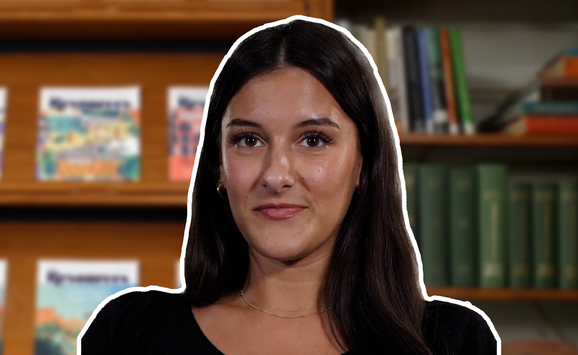

In this episode, host Margaret Walls talks with Jade Stevens, founder and executive director of 40 Acre Conservation League, a Black-led nonprofit land trust in California. The organization, named after the historic promise of “40 acres and a mule” given to formerly enslaved Black Americans after the Civil War, honors the legacy of the promise by expanding land stewardship and outdoor recreation throughout California. A complementary objective of the land trust focuses on wildfire prevention and forest preservation, which involves extensive efforts to thin out overcrowded trees and restore wildlife. Despite challenges in site acquisition and dense tree regrowth, Stevens notes that maintaining outdoor space creates lasting improvements to quality of life for nearby communities. By merging the two aims of conserving land and expanding public lands, 40 Acre Conservation League aims to make the great outdoors more accessible to urban families in California while protecting the ecosystems within it.
Listen to the Podcast
Audio edited by Rosario Añon Suarez
Notable Quotes:
- The history and mission behind the name: “We thought of the 40 Acre Conservation League as a way to create a name that not only acknowledges history, but also gives us something to look forward to in the future. It’s the promise reimagined that really helps us think about where opportunity, stewardship, and community come together, and bringing people together to really expand access to the outdoors.” (3:20)
- Forest and wildfire foresight: “When we are doing our planning for future work and going after additional funding, we’re always thinking about how we can maintain approximately 60 percent canopy cover and keep enough space between the trees so that we can really keep the forest healthy and reduce wildfire risk.” (18:25)
- A partnership between land stewardship and land appreciation-ship: “We can’t bring public access on site without being true land stewards. And then vice versa, being land stewards, we want to make sure that we’re creating a space that is safe for everyone to enjoy.” (19:19)
Top of the Stack
- 40 Acre Conservation League
- The Wild podcast with Chris Morgan
The Full Transcript
Margaret Walls: Hello and welcome to Resources Radio, a weekly podcast from Resources for the Future. I’m your host, Margaret Walls.
My guest today is Jade Stevens. Jade is the founder and executive director of 40 Acre Conservation League, a Black-led nonprofit land trust in California, which was formed with the goal of fostering greater human connections to nature in order to increase community support for conservation.
I recently learned about their conservation efforts in Placer County, near Lake Tahoe, where they have a roughly 700-acre site that’s located in a very high-fire-hazard-severity zone. Those are zones that are mapped in California by the state, and that’s the highest category of risk. So, they are coordinating a significant amount of fuels-reduction work on the site to lower those risks, and at the same time, supporting public access and long-term stewardship of the site.
So, today we’re going to hear from Jade about this project, how it came about, how the organization’s carrying out this work, and what some of the challenges are. We’ll learn a little bit more about the 40 Acre Conservation League and its broader goals. Stay with us.
Hello, Jade. Welcome to Resources Radio. Thanks for coming on the show.
Jade Stevens: Hi, thank you for having me.
Margaret Walls: Jade, we always start with a get-to-know-you question. Tell us a little bit about who you are and how you came to do what you do, especially how you came to—what I would say is—bravely start a new land trust in 2021.
Jade Stevens: Yes. I will say that I am a proud Southern California native. I grew up in an area that’s called the Inland Empire, and the specific city is Moreno Valley, California. I moved to Los Angeles (LA) for college and have not left since. But I’ll say that I’ve had an opportunity to explore all of California through my natural interest in outdoor activities from hiking, camping, and—I won’t say more recently, but I’d say in my adult years—cycling. I’ve had the opportunity to cycle. I’ve already said hike and camp, all through California, and even now through the land trust, spending a considerable amount of time in Northern California.
Margaret Walls: Well, tell us a little bit about how you started this land trust and what … Well, first of all, I want to ask about the name of it. I really think that’s interesting. Why 40 Acres? But then tell us a bit about launching this and where the motivation came about.
Jade Stevens: Of course. So, the 40 Acre Conservation League, that name comes from the historic promise of 40 acres and a mule, which was part of the Special Field Order No. 15 that was issued at the end of the Civil War.
For us, and many know it to represent a promise that formerly enslaved Black Americans would receive land as a pathway to economic independence and self-determination. We know now that that promise was never fulfilled, and most of that land was ultimately taken back, and generations of Black Americans were locked out of land ownership and conservation opportunities.
So, we thought of the 40 Acre Conservation League as a way to create a name that not only acknowledges history, but also gives us something to look forward to in the future. It’s the promise reimagined that really helps us think about where opportunity, stewardship, and community come together, and bringing people together to really expand access to the outdoors.
You also asked about how it came to be and how this land trust was formed. I’ll say that my background is not in land conservation. I am in public affairs by trade and education. I spent a lot of time working for the state of California through elected officials and also working for different agencies in Los Angeles. It really gave me a front-row seat to how policy, community, and different initiatives can come together to make change.
I had an opportunity to really see how not only policy, but also budgets, have come together to advance different initiatives and goals within California. I have always been thinking about—from my own love for the outdoors and ways to really advance different communities—how can we really reimagine what are some of the things that I’ve grown up to find very valuable, which is ownership, whether homeownership or land ownership.
This happened during a time in, I’d say, early 2020s, maybe even late 2019, but we started to see that there was a national and state interest in really expanding access to the outdoors in a way that I believe that we could really get behind. Following 2020, there was a surplus in the budget that designated billions of dollars to go toward ways to not only expand outdoor access, but expanding conservation and finding ways to bring more people outdoors and enjoying these open spaces.
So, while I had really seen this unfolding, I was thinking about it in terms of homeownership at first—again, thinking that that was so important to have in terms of building generational wealth. I also thought about it as, maybe you don’t necessarily need to have an actual home on the land when it comes to ownership.
What would it look like if we could own pieces of land and find ways to use that as a catalyst for others that may not have the resources or the tools or a combination of things to succeed? That led me to land conservation, really seeing what land trusts are doing, and thinking about how we can use this as a way to not only increase outdoor recreation, but also thinking about the economic opportunities that come with that. We had such great support early on that it turned the 40 Acre Conservation League from an idea into an actual organization. And here I am today. And my team, not just me—here we are today.
Margaret Walls: I get the feeling from you, then, from everything you say, that while a lot of land trusts—I know a lot about land trusts, they’re very focused on the conservation aspect of what they do, but you really emphasize the public access—the outdoor recreation piece is really important to you. Is that right? Do I have that right about your organization? Do you feel that?
Jade Stevens: Absolutely. I’ll say that we have three main objectives for the work that we’re doing, and it’s centered around this idea of achieving outdoors for all.
For us, we define outdoors for all by measuring the increased participation of underrepresented groups, and that can really only be done in two main ways, which is placemaking. One, thinking about ways in terms of using the environment that includes either an improved or built environment, but also creates a sense of belonging, comfort, and safety. And there’s a lot of data that backs up why historically underrepresented groups have a general distrust or maybe a little hesitation when it comes to enjoying the outdoors, and a lot of it centers around safety.
And the other part is thinking about programming. How can we create experiences in nature that feel exciting, that feel welcoming? Can we do it in a way where they want to come to appreciate nature and respect it? And then, if they’re not willing to join this community of land stewardship or however we want to define this economy, [can we be] supporting the teams that are willing to do it and understand why we do what we do to take care of it? That’s one main part of achieving outdoors for all.
But simultaneously, we have a co-equal goal of thinking about conservation, where not only how can we leave the land better than we found it, but how do we find the resolve between the conflicts that exist between wildfire prevention, beneficial habitat, and then again, adding public access back to that? We see that as really co-equal goals of these two, and that’s really what guides our work, being able to be land stewards and protecting biodiversity, but bringing more people into this space so that there’s a growing appreciation and investment for it.
Margaret Walls: It’s really interesting. So, Jade, let’s talk about Emigrant Gap. Now, that’s the site I mentioned in my introduction that’s in Placer County. Can you kind of paint a picture for us to describe that landscape?
Jade Stevens: Sure. So, we’re currently managing 676 acres of land. The closest town, for those that are familiar with the area, is Colfax, which is about 15 to 20 miles from Emigrant Gap. Emigrant Gap is an area that is, I like to say, the midway point from Sacramento to Lake Tahoe. If you are driving along the US Interstate 80 freeway, as many often do when they are taking their winter trips or road trips to Lake Tahoe, is literally the midpoint. The landmark that you would see on the way there that signals that you’ve passed our property is Lake Putt, which is visible from the freeway.
Margaret Walls: Okay. And is there a lot of recreational activity there, hiking, camping, that kind of thing?
Jade Stevens: So yes, there are a few areas by Auburn and then a little bit more north in Truckee, where many can go out by nearby lakes. There are parks where they can go and hike, and I don’t think you can camp. But I’ll also say that our neighbor is the Tahoe National Forest, and that has miles of areas for people to explore, as well. I would say that it’s a pretty recreation area where people can enjoy and get involved in all kinds of things.
Margaret Walls: Right. And not too far from Sacramento, too. Lots of people can get there, I guess, in a short amount of time, right?
Jade Stevens: Exactly.
Margaret Walls: So, it’s a very fire-prone landscape. I also mentioned that in my introduction, there is a very high-fire-hazard-severity zone. Tell us a little bit more about that. You and I talked about this before, like some of the tree species, the underbrush. Just in general, from a wildfire standpoint, what does it look like there?
Jade Stevens: Yeah. Let me give you a little history of the property. I’ll start in the 1800s, just to give you [some context] of how we got to a point of where we are.
This area was primarily owned and managed by the Central Pacific Railroad, and they were responsible for building the western portion of the first transcontinental railroad. From there, they completed most of the work in the area that connected the rail lines from the East to the West, which essentially opened the western United States for development. From there, Central Pacific Railroad was acquired by the Southern Pacific Railroad and then merged with Union Pacific, which is the current owner, as one of our neighbors, not where we are, but now a neighbor, and they have ownership over the rail line.
From there, it went on to private owners who historically used it for a lot of logging and multiple loggings, I would say. From there, it has been significantly altered with that recent owner. The forest had been altered by historic logging and decades of fire suppression, which left the area overly dense and vulnerable.
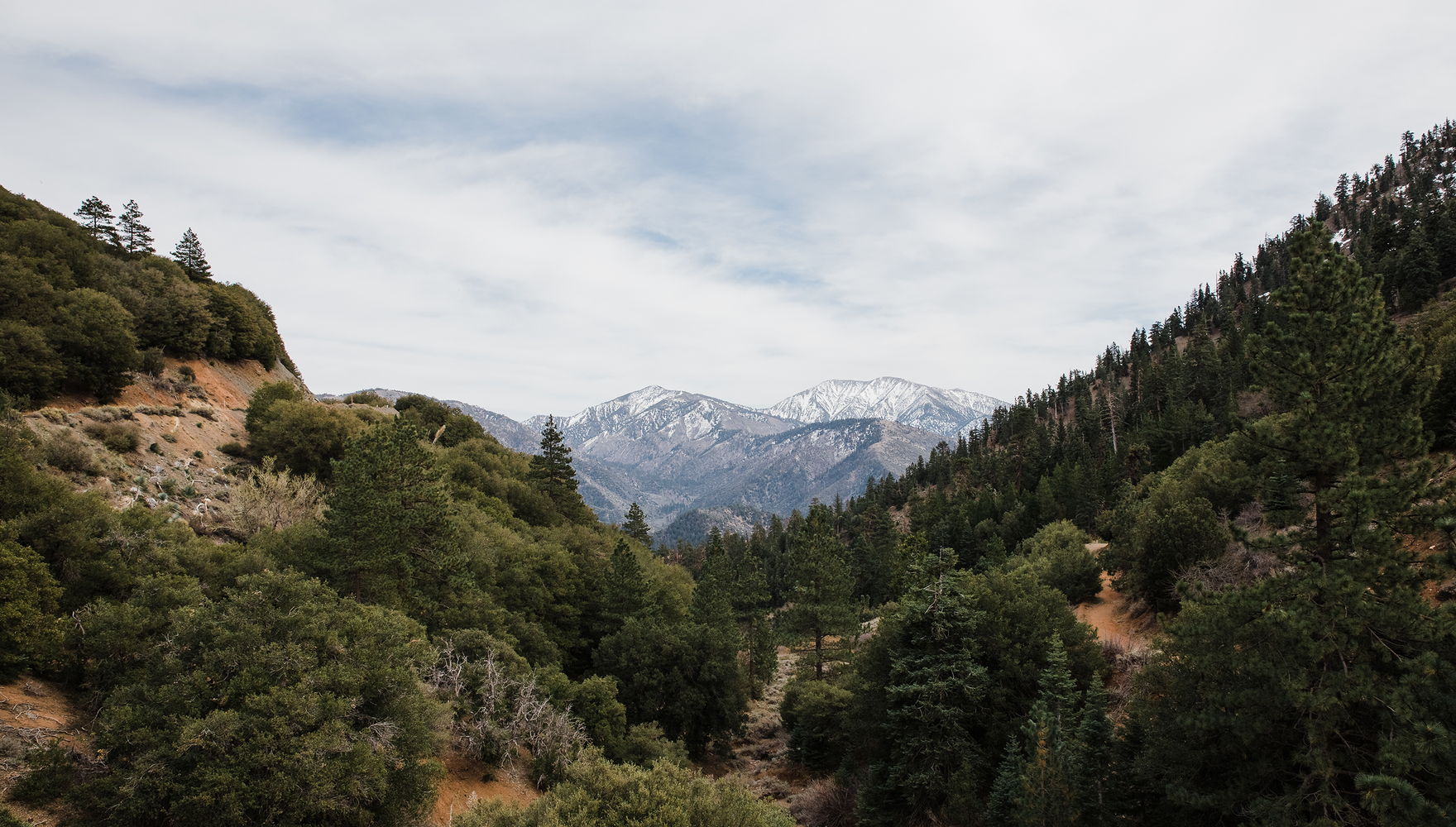
So, to give you a picture of what we have, the property is primarily a mixed conifer forest, oak woodlands, and there’s some chaparral habitat. It’s pretty typical for the Sierra Nevada area. It has very beautiful not only plants and trees, but wildlife, as well.
Margaret Walls: So, you are doing a lot of what we call fuels-reduction work there to get the fire hazard down. Maybe tell people a little bit about that. I want to hear what you’re actually physically doing, how you’re organizing that, and who you’re partnering with. How’s that working?
Jade Stevens: So, like I mentioned, historically, we inherited something that was overly dense and vulnerable to wildfires. So much of the area that we inherited upon acquiring it has a large amount of small-diameter trees—lots of heavy brush—and over time, it has accumulated woody debris, which, as you said, increases wildfire risk.
For us, we know that that weakens the overall forest health. What we learned was that it was almost 20 years of unmanaged growth since the last timber harvest. We were very focused on ways to decrease those fuel loads. So, we have a pretty dynamic and significant team that we were able to fund, brought on through funding with the Wildlife Conservation Board and the Sierra Nevada Conservancy to do a lot of the forest-restoration work that we needed to really decrease the amount of wildfire risk in that area.
I’ll say that this work was extremely important because, as I mentioned, it’s along the US Interstate 80 freeway, which is considered a lifeline when it comes to moving goods from north to south of California and even to the Pacific Northwest. The way that the team went about figuring out how to thin out some of these areas was we were very focused on looking at the areas along the freeway, around the lake, and even a wider, maybe two- or three-mile radius to make sure that this area remained protected so that we did not put at risk the freeway being blocked or shut down for whatever reason. So, thinning has been done over dense forest areas, and this was primarily done to create healthier spacing between the trees.
The other thing that the team considered when doing this work was really doing our research and understanding how we can remove some of the overcrowded trees, the diseased and dead trees, and making sure that we’re not giving way to the ladder fuels, which obviously significantly reduce wildfire intensity. The team also did a lot of pruning the trees and managing some of the understory vegetation to improve the forest resilience of it all.
There was another thing that we considered, which is, How do we restore the wildlife in the area? For reference, there is mule deer, other native wildlife, lots of pollinators, butterflies, bees, and a few other things. That also was taken into account in terms of what we plan to clear and make space for, to make sure that we had an overall healthy forest.
Margaret Walls: Sounds like a lot of amazing work that you … I bet your learning curve was steep. I mean, you work in the—
Jade Stevens: Every day.
Margaret Walls: Yeah. Learning something new every day. That’s amazing.
And another thing I want to ask you about, which is related, is the challenges for you as a private land trust going forward sort of managing this land for wildfire. Because it’s an ongoing thing, right? You’re doing some up-front work that needs to be done, but then there’s going to be some work all along, and that takes money, time, and human resources. How are you thinking about that going forward? Do you have any sort of creative funding solutions you’re thinking about or anything?
Jade Stevens: 100 percent. I think that we’ve learned so much in terms of what it means to manage the forest in a sense of long-term planning. The team did amazing work from the funding that we initially received from the Wildlife Conservation Board and the Sierra Nevada Conservancy to clear out extremely dense areas—and it was looking great, I’ll say that. But what we saw over time is that these woody debris, manzanita, and other chaparral species were growing back at a rate that really forced us to implement and, again,, think about what the long-term plan will be for these treatments, because the funding that we initially received was for one-time use.
So, seeing some of this stuff grow back within 8 to 12 months, even 18 months, we needed to make sure that we could manage that. So, for us, future treatments are really about focusing on how we can maintain the balance between wildfire safety, biodiversity, and forest health, because we know that forests just naturally grow back dense. That means that we’ll have to do periodic thinning when necessary.
One thing that we are extremely sensitive to is finding ways to thin and do fuel-reduction work that helps prevent crown fires—which, for us, is the most destructive type of wildfire. When we are doing our planning for future work and going after additional funding, we’re always thinking about how we can maintain approximately 60 percent canopy cover and keep enough space between the trees so that we can really keep the forest healthy and reduce wildfire risk.
How we fund it: I don’t know that it’s creative, but I think that, in addition to going after grant funding, we do have plans to bring public-access programming and planning onto the site, like a nature center and an entire gateway park that will be funded by visitors. The fees and the additional funding that we’re able to raise against that will also fund the work that we’re doing for the treatments on site, because for us, it goes hand in hand. We can’t bring public access on site without being true land stewards. And then vice versa, being land stewards, we want to make sure that we’re creating a space that is safe for everyone to enjoy.
Margaret Walls: I think that’s really interesting. I do think that’s creative, and I’m interested to see how that all plays out.
Let me turn to a couple of broader questions here, Jade. I know that 40 Acres has a goal—we already talked about this at the beginning—to conserve open space closer to where people live. You told me that you’ve been searching for opportunities in Los Angeles County, right? And that’s really challenging there. Can you talk about that a little bit?
Jade Stevens: Yes. Our site-acquisition strategy, and really our conservation strategy, is identifying locations that are within 100 to 150 miles away from urban areas or major cities, where we can. Emigrant Gap is about 100 miles or so, about an hour drive from Sacramento, which creates a space for people in these urban areas to have a place to go and enjoy and explore outdoor spaces.
This approach is something that we’re applying to the entire state, and we have sites in Los Angeles. I live in Southern California, my family lives in Southern California, and it’s also equally important for me to create opportunities down here, but the cost of looking at different areas is drastically higher, as I’m sure others have seen, in comparison to Northern California opportunities. There is just less inventory, honestly, in terms of willing sellers to give to land trusts.
I think that certain areas are a little bit more focused on development, and finding ways to balance that with open spaces is just ongoing conversations. But different communities think about protecting land in different ways. There are plenty of land trusts who are doing great work down here in Southern California, but in terms of just finding more space and willing owners, it just takes a little bit more time to do.
Margaret Walls: Well, relatedly, I want to ask you to pontificate on the housing affordability challenges that a lot of places are having. In California, it’s especially a big problem. Whether there’s some tension that you see between the land conservation and housing affordability issues—any pushback against conservation? Have you been giving this any thought or have any thoughts about this, in general?
Jade Stevens: I’ve seen it on a more broad level. I think that each community, county, and city—however you want to divide the boundaries—is different. But I’ll say that, for the work that we’ve done in Emigrant Gap, that for that area, our neighbors, the county, and even nearby cities are really invested in having land trust and invested in having open spaces because of their appreciation for access to public lands. And so, I wouldn’t say there’s tension in our area when it comes to housing and development. I think that there is such an appreciation for protecting it, period.
In Southern California, this is an area that obviously is experiencing a need for more housing and more spaces for that. There has been considerable work being done or being put toward that. But I don’t know that there has been any tension directed towards land trusts as being either a prohibitor or contributor to more housing or less housing. From what I’ve seen, there has been support for thinking about how important it is to have open spaces in addition to areas for more housing to be brought in.
Margaret Walls: It’s a balancing act, is the whole thing.
Jade Stevens: It is, yeah.
Margaret Walls: And these places make quality of life higher, so we have to figure out how to make it work.
Jade Stevens: Right.
Margaret Walls: All right, Jade, I see we’re running a little low on time here, and we have to ask you our end-of-the-podcast question. We always ask—which we call Top of the Stack—can you recommend something to our listeners that you might be reading or listening to or watching, or what’s on top of your stack, Jade?
Jade Stevens: Yeah, I do love to listen to podcasts. I dabble between daily news and then also things that are going on in nature and the outdoors. I’ll say that one of my favorites is The Wild with Chris Morgan. I just love learning about different animal species and just different terrains and just hearing about personal stories. So, if you’ve not listened to that, I’d say add the next episode to your listening.
Margaret Walls: Oh, fantastic. I’m definitely going to do that. Sounds like a good one to do when you’re off on a walk.
Jade Stevens: Yeah, just to take it all in.
Margaret Walls: Well, Jade Stevens, it’s been a pleasure having you on Resources Radio, telling us about 40 Acre Conservation League and talking about access to the outdoors, about wildfires, forest management, and everything in between. Thank you so much for coming on the show.
Jade Stevens: I’m truly honored. Thank you for this opportunity.
Margaret Walls: You’ve been listening to Resources Radio, a podcast from Resources for the Future. If you have a minute, we’d really appreciate you leaving us a rating or comment on your podcast platform of choice. Also, feel free to send us your suggestions for future episodes.
This podcast is made possible with the generous financial support of our listeners. You can help us continue producing these kinds of discussions on the topics that you care about by making a donation to Resources for the Future online at rff.org/donate.
RFF is an independent nonprofit research institution in Washington, DC. Our mission is to improve environmental, energy, and natural resource decisions through impartial economic research and policy engagement.
The views expressed on this podcast are solely those of the podcast guests and may differ from those of RFF experts, its officers, or its directors. RFF does not take positions on specific legislative proposals.
Resources Radio is produced by Elizabeth Wason, with music by Daniel Raimi. Join us next week for another episode.