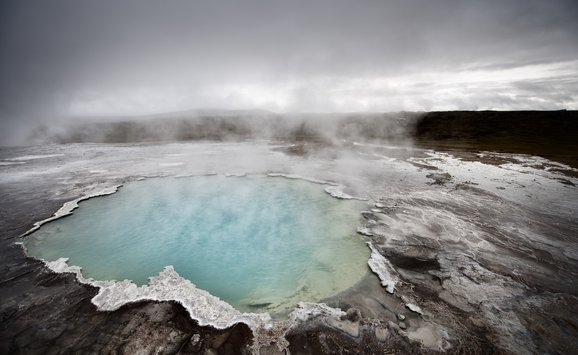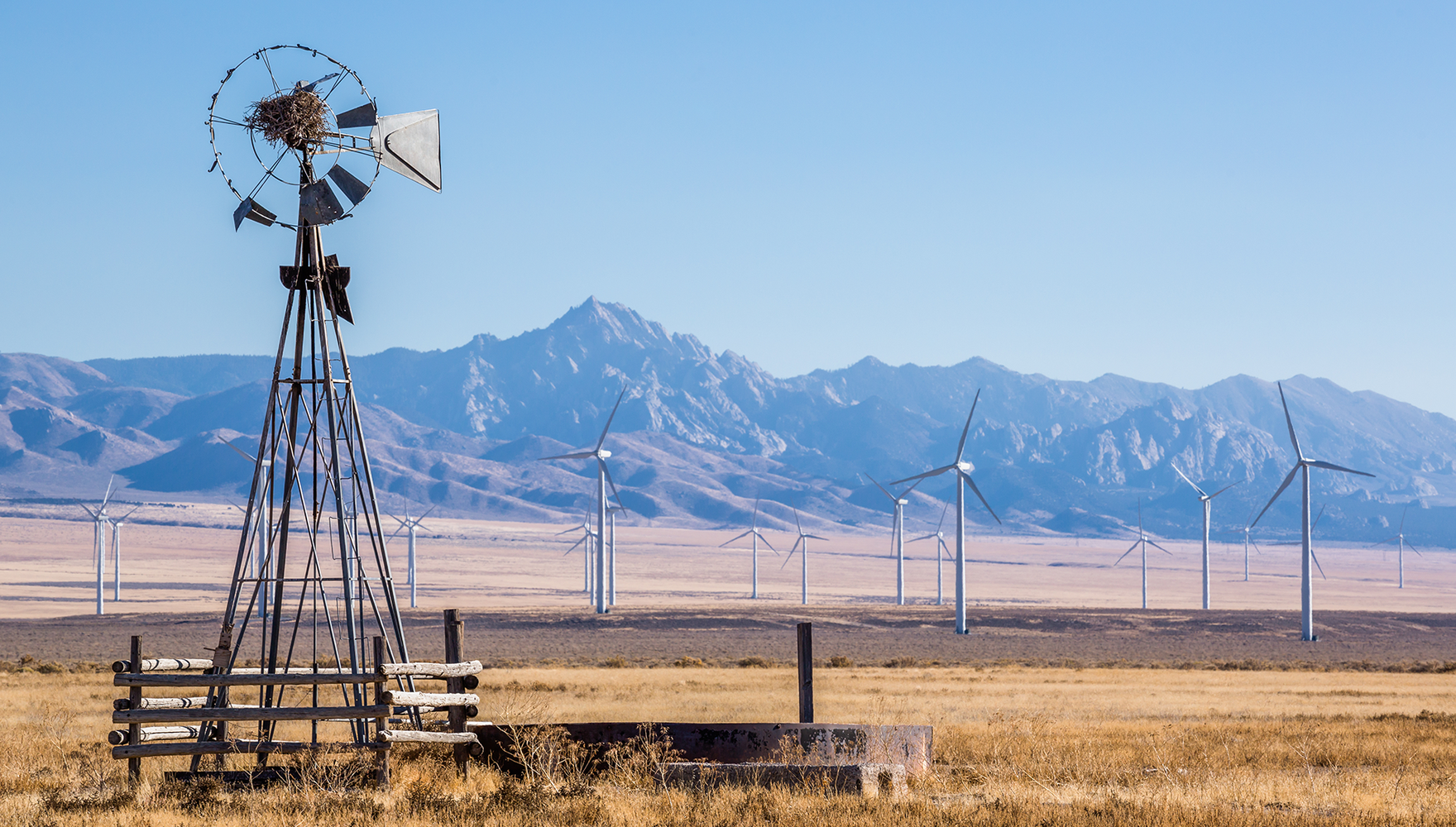

In this episode, host Kristin Hayes invites Sara Baldwin-Griffin to give her perspective on Utah’s growing renewable energy sector—a product of the state’s abundant resources, increasing energy demand, and collaborative policy landscape. Baldwin-Griffin, as chief executive officer of Utah Clean Energy, is supporting the industry’s boom as solar, wind, geothermal, and battery power have grown from less than 5 percent to approximately 20 percent of Utah’s energy generation within just two decades. Not only do sustainable sources of energy offer solutions for affordability and reliability issues, which have been exacerbated by the state’s emerging data center projects, but renewable energy can inject vitality back into struggling local economies. Baldwin-Griffin elaborates on the factors that have led to Utah’s clean-energy success so far, including bipartisan support and community engagement, and speculates on next steps to increase renewable energy adoption across the Western United States.
Listen to the Podcast
Audio edited by Rosario Añon Suarez
Notable Quotes
- Utah is fertile ground for sustainable energy: “From a resource standpoint, the sky is the limit. We have abundant wind, solar, and geothermal potential. Most of it is still untapped. We also have a very fast-growing economy. We were the fifth-fastest-growing state between 2020 and 2025.” (7:40)
- Renewable development can bring community-level benefits: “If I had to pinpoint one thing that’s a common theme among the most successful projects, it’s local buy-in and local engagement. The Green River Energy Center actually sponsored scholarships for students to stay in Emory County and go to school in the area, so that they don’t leave and go to the cities. That is a component to how you do these large-scale projects well: with an eye to transforming the economy locally and hiring locally.” (14:06)
- Energy issues bridge the aisle: “There has been an over-politicization of energy that I think is unnecessary and not helpful, especially when affordability is top of mind. We need more energy. We have huge and rising demand for the first time in several decades. And so, to pick winners and losers, so to speak, is not a productive way to start the conversation.” (15:44)
Top of the Stack
The Full Transcript
Kristin Hayes: Hello, and welcome to Resources Radio, a weekly podcast from Resources for the Future (RFF). I’m your host, Kristin Hayes.
Today, I’m talking with Sara Baldwin-Griffin, who is the chief executive officer of Utah Clean Energy. Sara is a Utah native. She’s got a long track record of work at the intersection of clean energy policy, research, and action. As I prepped a little bit for our conversation, I learned about what an interesting case study Utah is in terms of its energy history and evolution. So, I’m really excited to learn more from Sara about what the state’s up to. We’re going to be talking about what the future holds for this really interesting geographic case study within the United States, with a particular focus on its clean energy potential in a time of rising electricity costs and rising electricity demand, which, of course, is on so many people’s minds. Stay with us.
Hi Sara, and welcome to Resources Radio. It’s really great to have you here.
Sara Baldwin-Griffin: Hey, it’s great to be here. Thanks for having me.
Kristin Hayes: Yeah, of course. Well, as our listeners will know, we always love to start with some introduction to our guests. So, I’d love to ask you to share a little bit about yourself and what brought you to Utah Clean Energy.
Sara Baldwin-Griffin: Yeah. I actually started my career at Utah Clean Energy in 2004, and at the time, the organization was very small. It had all of two and a half staff and was on the cusp of its 25-year trajectory leading the clean energy transition in Utah. At that time, I was a young student graduating from the University of Utah. I wanted to work in energy policy and had a passion for clean energy, and so, I was thrilled to land there. At the time, I didn’t know that I’d be launching my own 22-year career working in this space.
I’ve worked for Utah Clean Energy for 10 years and then went on to work on the national front. I was Vice President of Regulatory for the national nonprofit Interstate Renewable Energy Council, or IREC, and then I moved on to the research firm and think tank Energy Innovation, where I did electrification research as the senior director of that program. I continued living in Utah during those years, but I was working remotely, traveling a lot, had the chance to do so many cool things and work with so many brilliant people.
But when there was an opening for the CEO role at Utah Clean Energy, it honestly felt like a calling I had to respond to. I took the leap to return to my roots and here I am. I love Utah. It is my home, and it’s a really special place. So, it’s an honor to be able to step back into Utah Clean Energy with a renewed commitment to work where I live, lead an incredible team, and continue advancing our mission.
Kristin Hayes: That’s fantastic. It’s really nice when those homecomings can happen in places that you really feel like … You got your start, and now you’re back in a leadership capacity. So, that’s wonderful.
Sara Baldwin-Griffin: Exactly. Yeah.
Kristin Hayes: Well, I’m very happy to say I have been to Utah. It was a brief stay, but it was lovely.
Sara Baldwin-Griffin: Wonderful.
Kristin Hayes: But I will also admit, even though I’m a child of the Midwest—so, closer to Utah than where I live now—it’s not a state that I’m super familiar with. So, I would love to start by setting some groundwork of understanding around Utah’s energy history, if I could.
I did a little bit of research, and my understanding is that the grid in particular has been quite coal-heavy for some time, but that’s also shifted quite a bit in the past 10 years. So, feel free to correct any of that, but really I wanted to ask if you can give us a flavor of the trajectory of that power mix since the last decade, let’s say.
Sara Baldwin-Griffin: Well, you’re correct. Not everyone knows that Utah’s official state rock is actually coal—that should give you an idea of where we’ve been, historically. That’s due to the fact that we have had a significant volume of coal in a handful of our counties, and the state leaned into that resource, and it was an instrumental part of our growth in its early days. When I started with Utah Clean Energy, we were over 95 percent coal-powered, back in the early 2000s.
Today, we’re generating approximately 20 percent of our resource mix from renewable energy. So, solar, wind, geothermal, and now batteries are in the mix as well. The early years at Utah Clean Energy were devoted to changing the policy, regulatory, and market landscapes to remove the barriers to the adoption of clean energy and scale resources that were increasingly economic and cost-effective as they were scaling nationally and globally.
Really, as you said, 2013 and then the past decade … The past decade has been a game changer on so many fronts. Coincidentally, in 2013 we worked collaboratively with a group of businesses and state officials to pass an important law that opened the door to utility-scale solar for the first time in Utah. And since that wind, we’ve seen dozens of solar farms come online, and we’ve seen a huge growth just in that resource alone. Same with wind. We have a lot of great wind resources scattered throughout the state, and we have one of the top-five geothermal resources in the country.
While historically, renewables have not been a major player in our energy mix, that is changing very quickly. And we are taking advantage of some of the best economics we’ve seen to date for clean energy and trying to move the marker.
Since I’ve started as CEO, I had the opportunity to go down to celebrate the official commissioning of the state’s largest solar-plus-storage project; it’s in PacifiCorp’s system. It’s the Green River Energy Center developed by rPlus [Energies]. This project is going to be providing new electricity to power over 100,000 homes while also bringing new tax revenue to small, rural communities. One of the most interesting things about this project is it’s actually located in Emory County, which is one of our main counties for coal, historically. So, we are seeing this fascinating overlap of diversification of our energy resource mix at a time when I think it makes a lot of sense, given our growing demand and growing population.
Kristin Hayes: Well, I’d love to ask you to prognosticate just a little bit, then. You mentioned solar capacity is in the gigawatts now; you’ve got significant geothermal, which we’ll talk about a little bit later. What sort of future growth … You mentioned quite a bit of growth over the past 10 years. Do you have any sense of future growth in these technologies? Do you think they have the potential to form an even bigger backbone for Utah’s grid?
Sara Baldwin-Griffin: Oh, absolutely. I think, from a resource standpoint, the sky is the limit. We have abundant wind, solar, and geothermal potential. Most of it is still untapped. As I mentioned, we also have a very fast-growing economy. We were the fifth-fastest-growing state between 2020 and 2025. I think that is only expected to continue—people are discovering us and want to live here, because of the same reasons that all of us who do live here stay here. It’s an incredibly beautiful place. It’s a unique, diverse economy, and we have a lot of excitement around our potential growth, both for clean energy and more broadly.
I think, if the past is any indicator of what’s to come, we should definitely lean into that, because a recent report from Atlas Public Policy, “Advancing the Future of Energy in Utah,” found that Utah has actually become, pretty quietly, one of the most active energy builders in the country, with an estimated $17 billion invested in clean energy generation just through March 2026. That’s 8.5 gigawatts of net clean power capacity across 161 projects. So, we’ve done a ton in the last few years, and that is only going to continue.
With that said, we have to make sure we stay the course. Our leaders, our elected officials, and our business community need to continue to send the signal that Utah is the place to do business. There are a lot of states in the Intermountain West that are sending that signal as well, so we are now in a competition for who’s going to attract the next round of jobs and economic development opportunities, but I’m very confident that we have a bright future in this space.
Kristin Hayes: Really interesting. One thing that I wanted to ask you for a little bit more detail on: I was reading about Utah’s Renewable Energy Corridor, which I think is in three different counties—Millard, Beaver and Iron County. That’s an intriguing concept to me, this idea of an actual corridor. I wanted to get a little bit more context on whether that was a pretty organic process, where those counties were particularly well positioned—they had great resource access and they were well positioned to host that new clean energy development—or was it something a bit more planned, where the powers that be came together, no pun intended, and said, “This is where we’re going to develop, quite purposefully, this renewable energy corridor.”
So yeah, if you could say a little bit more about that, including, I suppose, if there are lessons for other regions, either in Utah or in other states.
Sara Baldwin-Griffin: Yeah, I think it is a really fascinating case study. Coincidentally, my grandparents and great-grandparents are from Beaver County—grandfather born in Milford, grandmother born in Beaver. So, the fact that these places have become the epicenter of Utah’s renewable energy economic-growth potential is very exciting to me, as a Utahn.
You asked about the process. I think it was yes, organic, but also intentional. So, it was identified back in … Governor Huntsman, between, I want to say 2006-ish, 2008, initiated a Utah Renewable Energy Zones effort and a Blue Ribbon Advisory Council on Climate Change and worked very closely with the legislature to adopt proactive policies. We were working on regulatory changes. And all of those things were happening concurrently, as the economics of renewable energy were starting to improve, and it was becoming a clear way to inject a lot of economic development in these very rural places that otherwise are at risk of becoming ghost towns, or losing schools or losing public services because people are leaving.
And so, the combination of these efforts back in the early days set the stage for the industry to come in and say, “All right, we’re seeing momentum here. We have identified renewable zones.” Work was done early to coordinate with the Bureau of Land Management to identify least-impactful places and more optimized zones for development to mitigate impacts on wildlife and wildlife corridors. So, all of these things were happening, and I’m not sure if there was any single one moment that led to this boom, but it also has a proximity to transmission lines, favorable geography, great resources, all of these things. It was really a trifecta, a combination of things that made it quite attractive.
There were folks in those communities who also stepped up and said, “Hey, I would love to see my community benefit.” One teacher, Andy Swapp, was a shop teacher, and he started teaching his students in Milford High School the mechanics of wind power. He attracted some interest from some developers who thought, “Well, if there’s good enough wind resources down here, maybe we should do some prospecting.” And that’s snowballed into another stage of interest from numerous developers. Today, it sits at the height of its economic development, and there are tons of great things happening down there. So it’s very, very exciting to see.
Kristin Hayes: Yeah, that’s great. You gave me an even richer answer than the one to the question that I posed to you. I was actually thinking during your earlier comments, too, that I should ask you about how these things … I didn’t really ask you about the “how,” I asked you about the “what,” but you gave a great explanation of the “how,” and it was this multifaceted … Costs were coming down right at the same time that there was a little bit of policy attention, combined with some local buy-in and local drivers. And so, thank you. That was a really great additional answer to a question that was percolating for me: How did this really come to be in Utah? I don’t know if there’s anything else you’d want to add on the “how” question.
Sara Baldwin-Griffin: Yeah. I mean, gosh, it takes a longer time than we have today to tell you the full story of all the different policies that we had to pass and all the different regulatory mechanisms that we had to enable. But a combination of things sent the signal, the market signal, like, “Hey, we’re ready to build. We want you to come here and you have off-takers.” Some of that power is going to California. Some of it is staying here and serving Utah.
I think the secret sauce, if I had to kind of pinpoint one thing that’s a common theme among the most successful projects, is that local buy-in and that local engagement. The Green River Energy Center that I mentioned, they actually sponsored scholarships for students to stay in Emory County and go to school in the area so that they don’t leave and go to the cities. That is yet another component to how you do these kinds of larger scale projects well, with an eye to transforming the economy locally and hiring locally. They did a ton to not only sustain jobs, but also create jobs in the local economy. And so, these success stories have a way of becoming more common and more attractive and other counties start going, “Hey, how’d you do that? We’d like some of that.”
Kristin Hayes: Yeah. Sara, this is leading me to a question that definitely was in the back of my mind as I thought about our conversation today. You mentioned Governor Huntsman, for example, a Republican in what I would consider, typically, a fairly conservative state. And I did want to ask—it’s not really our business here on Resources Radio to talk about politics—but in this case, I want to take a little bit of an opening to ask you about what the political conversation around clean energy looks like in Utah.
And maybe just to give an additional bit of context, I feel like sometimes it’s very easy to put things into: blue states are hugely in favor of clean energy, and red states are not. I think that’s a complete oversimplification of the reality, and I think you’re a great person to put that to and talk a little bit more about what the political conversation around clean energy in Utah really looks like.
Sara Baldwin-Griffin: Yeah, it is a good question, and it is a little challenging. In today’s context, especially, there has been an over-politicization of energy that I think is unnecessary and not helpful, especially when affordability is top of mind. We need more energy. We have huge and rising demand for the first time in several decades. And so, to pick winners and losers, so to speak, is not a productive way to start the conversation, from my standpoint.
Clean energy in a red state is somewhat surprising, but it really shouldn’t be when you dig down and consider solar and wind storage are the most cost-effective resources to build today. They’re also the fastest to come online. We are not in a holding pattern because of supply chain constraints. We can build them today. We can get them online provided we have transmission, provided we have distribution and grid infrastructure to support them. They are the economic powerhouse of our energy economy today.
And that’s honestly with or without tax credits. Obviously, tax credits make it more favorable, and we have a time-limited opportunity in the next couple of years to build as much renewables as we can nationwide to take advantage of the remaining tax credits from the IRA, the Inflation Reduction Act, and then the changes made in the One Big Beautiful Bill Act. We still have a few years to take advantage of those tax credits, and that is winding down quickly, but my crystal ball says we’re still going to see a ton of renewables built, even after they expire.
But coming back to your broader question around red state policies versus blue states, I think we have another governor today, Governor Spencer Cox, that is an example of an all-of-the-above energy strategy guy. And he’s really leaning in. He hosted a Gigawatt Summit. He had a superabundance agenda within the Western Governors’ Association and attended the commissioning for this Green River Energy Center project. And he, I think, sees that we do need all these resources, wants to see these resources built out more broadly across the state, and sees the economic benefits that they bring.
We, as Utah Clean Energy, a couple years ago initiated a Utah Climate and Clean Air Compact, which was a bipartisan compact with signatories from businesses, elected officials, local and state leaders, all of which came together to say: Climate is a thing that needs to be addressed. Clean air is an important component to our quality of life. Utah has a lot of stresses that we’re experiencing already on our Great Salt Lake, on our water resources. Many of those things are exacerbated by heat-trapping emissions and pollution. How can we work together collaboratively in a bipartisan way to advance pragmatic solutions that work? And it was highly successful. We got over 200 signatories to that compact, and that work continues.
It’s sometimes quiet, and sometimes that means that it doesn’t get the attention it deserves, in my opinion. We have a race-to-the-bottom media environment that wants everything to be a fight and an emphasis on the conflict, but there’s so much excellent work happening that is sustaining the economy, but also bringing new opportunities to new places in Utah that haven’t experienced it. I think that story is a more compelling story than the political fight.
Kristin Hayes: Yeah, that’s great. Thank you.
Well, I want to go back to talking about growth for just a second here, because we’ve talked around growth a little bit, but I’d love to move into more of the future-looking part of our conversation. So, if I can start by reflecting on where we are with electricity use in the state. I think you mentioned that it’s ramping up—per capita electricity use just hit another record high, and that’s before you even factor in data centers, I believe.
So, I’m wondering, again, if you could reset the baseline for us: where we are now, and how much of that growing electricity use in the state is about general population growth and economic growth versus something that’s really more structural, like the electrification of homes or vehicles? Give me a little flavor of how electricity use is growing now.
Sara Baldwin-Griffin: Yeah, here in Utah it’s a combination of all those things. We definitely have a growing population, as you mentioned, both natural growth and a lot of folks relocating to the state and building businesses here, and bringing people to live here, work here, and play here. I think we added about 44,000 in one year, which is quite a lot. So, we’re definitely moving quickly in that direction to continue that pace.
Electrification of buildings and electrification of transportation, both are on the rise, and we’re excited to see those trends continue. A big part of Utah Clean Energy’s work is also to enable the electrification of buildings and more efficient buildings, as well as clean transportation, because we have air quality challenges here, and both of those sectors have a huge role to play in helping us overcome our air quality challenges while also saving water, which we need to be doing a lot more of, because we are in a major drought. So, those are trends that are going to continue, but those are more predictable and less spiky trends.
The data centers are the bigger load additions, and this is not unique to Utah, though we do have a lot of data centers already. I think we have—according to one analysis done by our Kem C. Gardner Policy Institute at the University of Utah and the David Eccles School of Business—we have about 48 operational data centers, representing about 920 megawatts of capacity. The projects that are under construction are going to add another 2,600 megawatts. So, we have a huge trajectory. How many of those are actually going to be fully built out remains to be seen. There’s a lot of speculation in the data center world, but based on what I’ve seen, we can expect that growth to happen at pretty much the pace that the forecasts are telling us. That topic has been, candidly, it’s been dominating the headlines.
Kristin Hayes: I’m sure it has. It’s been dominating so many places, but it does seem like Utah is one of these emerging-growth markets, a place that people are focused on. I’m happy to hear more about how that conversation is unfolding.
Sara Baldwin-Griffin: Well, part of the reason that it was dominating headlines more recently is because of the proposed data center called Stratos, which was kind of dropped on everyone’s head—the Kevin O’Leary (Mr. Wonderful) announcement, in concert with some of our local officials, announcing nine gigawatts of electricity generated entirely from natural gas, served by the Ruby River pipeline. And just to put that in context, nine gigawatts of electricity would nearly double the entire state’s peak electricity demand from 2025. So, that’s an unprecedentedly large project.
There were a lot of reactions to that announcement, most of which were negative. The process had challenges. There were a lot of things to say about that, but at the end of the day, folks hearing that were alarmed, because it’s an alarmingly-sized project, and the fact that it was all proposed to come from gas would also mean a huge impact on our water resources, a huge impact on our Great Salt Lake, which is currently in decline and threatening to become worse if we don’t quickly adjust course. Not to mention doubling, or up to 75 percent increase of, our carbon emissions, and a similarly large amount of increase in our NOx emissions. Again, we have air quality problems, and NOx contributes to bad air. So, the confluence of those factors, in addition to this being a process that did not seemingly allow for any public input in a meaningful way, I think that’s what led to a lot of folks raising the alarm saying, “Hey, wait a minute. We need more information. Hold the phone.”
All that is to say, I think the nine gigawatts of gas and the Stratos project are a bit of an anomaly, but we are seeing a lot of one- to two-gigawatt projects, that are also planning to use entirely gas, across the state. We’re keeping a close eye on that trend, because it could have major repercussions, especially if all of them are proposing to be off-grid or disconnected from the utility’s electricity system. There’s more to say on that, but at the end of the day, what that translates to is that these are projects that become somewhat invisible and have no connection back to the electricity grid. So, there’s no opportunity to leverage those resources or those projects to optimize clean energy for the grid. There’s no opportunity to leverage the huge amount of money, the billions of dollars that are slated for investment, to improve and make our grid stronger and more reliable.
I think there’s also a lot of pitfalls around the proposal, to rely solely on gas for those. That’s not a good deal for our future, as we’re challenged with a lot of things today.
Kristin Hayes: Interesting. Is it your sense that the reliance on gas is because that’s what’s fastest to build off-grid, and so that’s what people are defaulting back to? Is that what they’re able to access most cheaply, most expediently? What’s leading to that focus on gas at this moment, versus some of the many other resources that you’ve articulated are available at low cost?
Sara Baldwin-Griffin: That is a great question, and I honestly don’t know. I’m not at those tables, so I don’t know the conversations that are happening.
I do think that not all data center companies are created equally. Some are very committed to figuring out how to optimize and leverage the existing grid. Some are trying to be great grid citizens and contribute more than they are taking. Some are building as much solar and battery storage, and sometimes wind, as they possibly can, and then using gas as a smaller subset of their backup. And others are going straight to reciprocating internal combustion engines—or RICE engines, as they’re called—because they are available on the market, and they know it, and they can just “plug and play.” But that’s not necessarily the best or most optimal approach from a long-term standpoint, so I think there’s a lot of factors.
We are really in the middle of this conversation, not only in Utah, but nationally, and I’m fascinated to see how it all plays out. We’re really hoping that, at the end of the day, we do start to build smart from the start with these data centers and say, “Okay, what’s the land available? How much solar can we put here? How much battery storage can we put here? What remaining amount do you need to be served by gas? Is there geothermal potential near your data center, or can you locate near a ripe geothermal project or one under development?”
We’ve seen several companies announce very exciting, big projects on the horizon, and we know that space is very much of interest to a lot of folks. It’s a bipartisan resource. Where and how can we double down on that, and opportunize the geothermal resources with those data center developments? It’s going to require some more strategic conversations that aren’t happening currently and I hope will happen soon.
We are actually part of the recently announced Mountain West Geothermal Consortium, which is a group of Western states, all of which are in coordination with geothermal industry folks, elected officials, and other organizations like ours trying to crack open the nut and figure out the future of geothermal here in the Mountain West, where we have the resource and we need to do more to get it online.
Kristin Hayes: Yeah. I’m so glad that you brought it back around to geothermal, because that was another thing I definitely wanted to hear more from you about, because it does seem like it has a lot of interesting and compelling properties. It’s baseload power; a lot of folks have concerns that solar, wind aren’t as reliable. So, it’s got that going for it. Plus, as you pointed out, it really does have this bipartisan support. It’s an energy source that is less politicized at this moment in time, and it’s also really having a moment.
So, with Utah being at the forefront of that, it must be an exciting time and place to be in that part of the clean energy conversation.
Sara Baldwin-Griffin: Yeah, it’s really exciting. I mean, geothermal as a resource has always been a bit of an underdog, and it’s great to see that it’s finally getting the attention it deserves, for the reasons you’ve mentioned. But also, it hasn’t gotten the same level of policy support, or consistent policy and regulatory attention, over the years. So, I’m really hoping that we not only start to tap that full potential, but recognize that the technology has evolved, that the opportunities to find geothermal resources are getting more sophisticated, and tap into technologies to figure out how to avoid expensive drill holes that cost a lot of money.
There’s just a ton happening here. And now that it’s getting its day in the sun, I’m very hopeful that we’re going to see a bright future for geothermal, not only here in Utah, but throughout the West.
I will say that it would be wonderful if more of Utah’s geothermal resources could be utilized by Utahns. Tons of projects have been announced, but none, currently, are being proposed to serve Utah customers. And that seems, to me, like a wildly missed opportunity given that it’s our state, our resource, and we have the history there.
Kristin Hayes: Yeah. Interesting. Well, this has been great, Sara. I knew I was going to learn a lot about a state, again, that I’m not as familiar with. You’ve definitely piqued my interest. So, I’ll see you next week in—no, I wish I could see you next week in Utah, but …
Sara Baldwin-Griffin: Come on down. Actually, it’s very hot right now.
Kristin Hayes: Oh, okay.
Sara Baldwin-Griffin: Probably wait until fall when it’s a little bit more temperate and we don’t have as many wildfires, because July is not our most pleasant month down in the valley, anyway.
Kristin Hayes: I’ll be honest, it’s not our peak month in DC, either.
Sara Baldwin-Griffin: True.
Kristin Hayes: So, we’ll just power through and then make it to our beautiful seasons.
Sara Baldwin-Griffin: Exactly.
Kristin Hayes: Yeah, but this has been great.
So, let me close with Top of the Stack. I’d love to invite you to share some more good content. It can be about Utah, of course—obviously a place very close to your heart—but I would welcome any recommendations you might want to make to our listeners. So Sara, what’s on the top of your stack?
Sara Baldwin-Griffin: Yeah. I would just say, we have been doing this work for 25 years in Utah, and so many organizations across the country have been at this for decades. This is not a new movement. This is not novel technology. It’s proven, it’s scalable, it’s here now. It works. And for folks who want to learn more about our work, what we’re doing here: utahcleanenergy.org, you can find us. It’s going to be an exciting decade to come. And I’m looking forward to seeing, not only our grid evolve and our thinking evolve, but really our energy future become more aligned with what we need to be doing for our children, our grandchildren and future generations.
Kristin Hayes: Fantastic. Well, that’s great. And I can attest that the Utah Clean Energy website is great. It’s full of a fascinating set of case studies of leadership. So, I definitely encourage people to take a look at that, too. Thank you so much for telling us all about your wonderful home state.
Sara Baldwin-Griffin: Well, it’s my pleasure, and it’s really an honor to be on the show. Thanks for great questions and great conversation, Kristin.
Kristin Hayes: You’ve been listening to Resources Radio, a podcast from Resources for the Future, or RFF. If you have a minute, we’d really appreciate you leaving us a rating or a comment on your podcast platform of choice. Also, feel free to send us your suggestions for future episodes.
This podcast is made possible with the generous financial support of our listeners. You can help us continue producing these kinds of discussions on the topics that you care about by making a donation to Resources for the Future online at rff.org/donate.
RFF is an independent, nonprofit research institution in Washington, DC. Our mission is to improve environmental, energy, and natural resource decisions through impartial economic research and policy engagement.
The views expressed on this podcast are solely those of the podcast guests and may differ from those of RFF experts, its officers, or its directors. RFF does not take positions on specific legislative proposals.
Resources Radio is produced by Elizabeth Wason with music by RFF’s own Daniel Raimi. Join us next week for another episode.