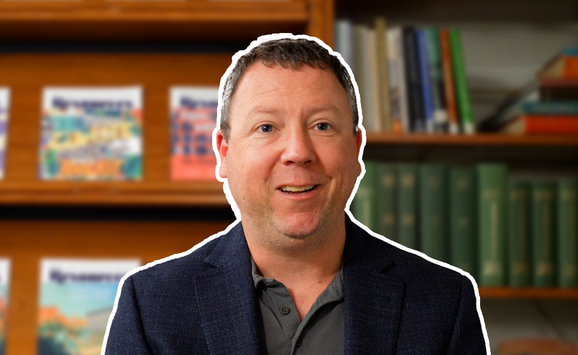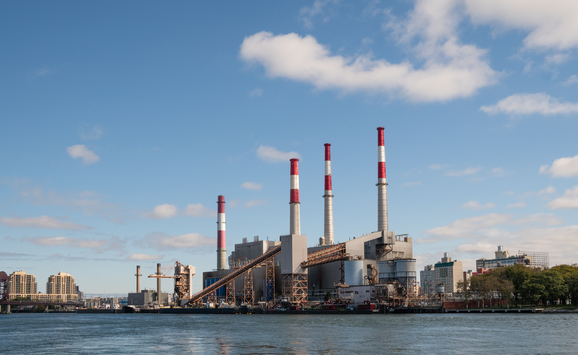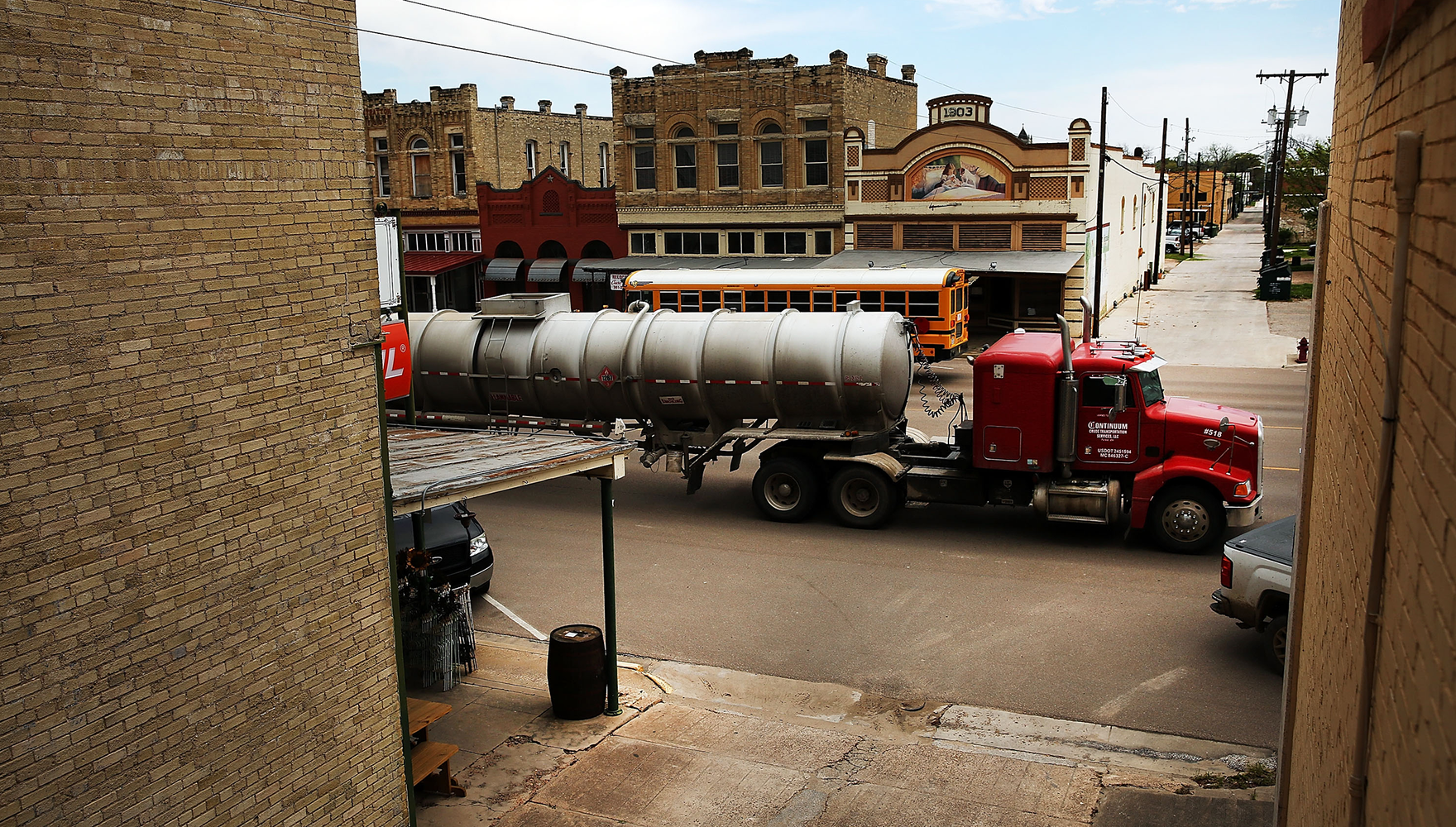

In this week’s episode, host Kristin Hayes is joined by podcast-host-turned-guest Daniel Raimi, a fellow at Resources for the Future (RFF) and director of RFF’s Communities in the Energy Transition initiative, to discuss Raimi’s research on energy communities and his work establishing a highly collaborative ongoing project: the Resilient Energy Economies initiative. Though all communities depend on energy, “energy communities” are communities whose economic livelihoods are dependent on fossil fuels. Raimi recounts how his early career experiences inspired him to study the complex dynamics of fossil fuel–dependent communities amid a shifting energy sector. The oft-overlooked economic complications that arise in energy communities have been motivating federal, state, and local efforts to preserve and protect financial stability for residents after energy companies leave town. Whether in Wyoming, Pennsylvania, Texas, or a Tribal nation, Raimi maintains that engaging with the people who actually are living in these fossil fuel–dependent local economies enables a holistic understanding of the mammoth impact of the fossil fuel industry in the development of the United States and in the communities where the industry is central to their life and livelihoods.
Listen to the Podcast
Audio edited by Rosario Añon Suarez
Notable Quotes
- Fossil fuels help finance fundamental public services: “Fossil fuels provide more than $150 billion annually for government budgets around the United States. In a lot of places like Wyoming, Alaska, parts of Appalachia, West Texas, Oklahoma, and Louisiana, these industries are responsible for a third or a half or even more of local budgets that fund schools and police and other essential services. So, it’s a really big deal.” (6:30)
- Personal stories make energy transitions personal: “I remember I was at a bar in North Dakota talking to some guy about how he’s putting his kids through college by building these pipelines. And I would hear tons of stories like that, and it just helped me appreciate that, in many parts of the country, the boom in oil and gas was a really good thing for a lot of people. Of course, it had a lot of negative consequences, too … but many of the economic impacts have been substantially beneficial for a lot of these communities and a lot of workers.” (10:12)
- The confluence of climate change and energy communities: “There certainly are plenty of people in these communities that understand the risks of climate change and understand that changes in the energy system are needed. They might not like that, but a lot of people can understand that this is a societal priority, and they know that it’s going to mean changes for their community. There are other people who just are not willing to make that trade-off.” (13:58)
Top of the Stack:
- Resilient Energy Economies initiative
- “Building More Resilient Energy Economies” webinar series hosted by Resources for the Future
- Vigil by George Saunders
The Full Transcript
Kristin Hayes: Hello, and welcome to Resources Radio, a weekly podcast from Resources for the Future (RFF). I’m your host, Kristin Hayes. I feel like my guest today doesn’t need any introduction because you all have heard his voice so many times but, nonetheless, I will take this opportunity to note that today I’m going to be talking with Daniel Raimi—but in his research capacity. He is both a wonderful researcher alongside being a wonderful Resources Radio host.
We’re going to be talking about Daniel’s leadership of something called the Resilient Energy Economies initiative (REE). This is a body of work that he’s really brought to fruition here at RFF, and it really looks across the United States at a range of communities who are dependent on fossil fuel for revenue and for jobs. I’m really excited to get an update from Daniel on this body of work which he’s been developing for the past few years.
So, get ready to hear Daniel in all of his research glory, and stay with us.
Hello, Daniel.
Daniel Raimi: Hi, Kristin.
Kristin Hayes: Hi. It’s wonderful always to have you back as a guest on the show. I’m sure at least one of the previous interviews with you was one that I did, but I feel like it’s been a while, so it’s very much a pleasure to be on this side of the microphone, with you on the other side of the microphone, so to speak. We are in fact in different basements, but you know what I mean.
Daniel Raimi: I know what you mean. We are in two different basements in two different parts of the country, but I feel as close to you as ever, Kristin.
Kristin Hayes: That’s right, exactly. The beauty of technology.
Daniel, I’m very excited today to talk about one of the largest efforts, certainly, that you’ve undertaken at RFF, and certainly one of our biggest efforts overall at the institution right now: something called the Resilient Energy Economies initiative.
I’m going to ask you a range of different questions about REE, but I want to start, if you could, with the title “Resilient Energy Economies.” I’m going to start with my typical definitional question which is, How do you define an “energy economy” (I’m going to put that part in quotes), and an energy-economy community in the context of this overall initiative?
Daniel Raimi: That’s a really good question, and I’m going to answer it in a second, but first, I just want to acknowledge my partners on the project.
RFF is maybe the administrative home of Resilient Energy Economies but, in terms of putting everything together and doing all the work, it’s myself working with Noah Kaufman from Columbia University, Emily Grubert from the University of Notre Dame, and Julia Haggerty from Montana State University, and we have this great manager who’s named Christina Cilento, who is now working with us at RFF—so it’s definitely a team effort.
But to answer your question, “What is an energy economy, or what is an energy community,” there’s not a precise definition that we can use. If you really wanted to be broad, you could actually define all of the world as an energy-dependent community because none of us would be able to survive without energy.
In the United States, we are a very energy-intensive economy; we use refrigerators and washing machines and dryers, and people drive cars, and we have energy all around us all the time, so, in some sense, we are all dependent on energy. But when we talk about energy communities and energy-dependent places for the Resilient Energy Economies work, what we’re really focused on is the parts of the United States where the fossil fuel industries—meaning the coal industry, oil industry, natural gas industry, coal-fired or natural gas–fired power plants, oil refineries, and other related infrastructure—we’re interested in the places that host that infrastructure and where that infrastructure and those industries are the bedrock of the local economy.
So, we are relatively narrowly focused on places around the United States that include Wyoming. Wyoming is a very fossil fuel–dependent place, because there’s tons of fossil fuel extraction and, actually, a pretty small population. In West Texas, in the Permian Basin, the oil and gas industry is the dominant industry in that place. The state of Alaska is incredibly dependent on the oil industry for public revenues. Those are the types of places that we’re interested in, and there’s definitely some gray area in terms of which are the most dependent all the way up to those that are the least dependent. New York City wouldn’t exist without energy, but I wouldn’t define New York City as a fossil-dependent community.
Kristin Hayes: Mm-hmm. So, how many people are we talking about? You gave a few examples of places like West Texas and Alaska. Are there other spots or other geographies that you’re looking at? I’m curious about the population sizes, as you mentioned. Some places have pretty small populations, but they’re very substantially impacted by any changes in the fossil fuel community. So, what are we talking about in terms of people?
Daniel Raimi: Yeah. There’s, again, different ways to define this and different sets of expanding circles that you could imagine. The most directly affected people would be workers in the coal industry or in the oil and gas industry or working at power plants or refineries—things like that. If we just focus on those folks, we’re talking about on the order of a few hundred thousand people.
That’s a relatively small number, but then you have to think about the families of those people. In many cases, jobs in coal, oil, and gas are actually really high paying—often over $100,000 a year—and so, the workers who work in those industries are often the main breadwinners for their households, and they’ll be supporting their family. So, now you can imagine doubling or tripling or quadrupling the number.
But then, you also need to think about the people who might be in the supply chains for these industries. For example, they might be making steel tubing that goes into oil and gas wells, or they might be manufacturing mining equipment that gets used in coal mines—that’s the secondary impact. And then, you have a tertiary circle of folks who might work at a restaurant where all the oil and gas workers eat, or they might work at a laundry company that provides clean clothes for people who work at a coal mine. I don’t actually know if that’s an industry (I just made it up), but you get the idea.
So, you have direct impacts, secondary impacts, and tertiary impacts. When you get out to those tertiary impacts, you’re talking about millions of people. We’re talking about 10 to 15 states where this is an important issue, probably hundreds of counties and, in many cases, it’s not necessarily the jobs that are really important for communities—it’s also the tax revenue.
We’ve done some work at RFF with colleagues where we estimated that fossil fuels provide more than $150 billion annually for government budgets around the United States. In a lot of places like Wyoming, Alaska, parts of Appalachia, West Texas, Oklahoma, and Louisiana, these industries are responsible for a third or a half or even more of local budgets that fund schools and police and other essential services. So, it’s a really big deal.
Kristin Hayes: Yeah. Maybe one follow-up question to that is in … I imagine there’s a wide range of answers to this question, but I can also envision that, for some of these places, this industry—and its secondary and tertiary effects—are in fact a huge driver of economic activity. It’s 80 percent of the … I’m completely making up that number but … So, it’s not easily replaceable either. These often are places that really—I won’t say exist because of this industry—but they really have made that industry central to their economies and so it’s not easy to take that away and have something else spring up in its place. Is that fair? I don’t know. Tell me more about …
Daniel Raimi: That’s very fair. In a lot of cases, that is true. It’s not always true. For example, the city of Los Angeles was an oil town before it was Hollywood. But over time, the city of Los Angeles has grown to become very economically diverse and, if the oil industry went away from Los Angeles, Los Angeles would mostly be okay. But there are other places that have grown up alongside a coal or an oil and gas resource, and it really … As you said, its primary reason for existence was that resource.
There’s a town in Montana called Colstrip because they strip mine coal out of the ground there, and they burn it out at the power plant. It was originally founded to help power the railroads, but now it’s got this big power plant and, if that power plant goes away and the coal mine goes away, it’s really hard to know what happens to that community after that change. There are dozens, if not, hundreds of other communities around the United States that are in a similar situation.
Kristin Hayes: Daniel, I’m curious how you personally got interested in working on topics related to these fossil fuel–dependent places. I’ve known you for a while now—at least a decade, maybe a little bit longer—and you’ve been working on these topics since the beginning. We actually … One of our first times getting to hang out together was in an oil and gas … in a natural gas community in Southwest Pennsylvania, where we were exploring what it was like to understand how these communities were dealing with the shale gas boom back then.
This has been a longtime passion of yours, and I’m curious why it piqued your interest all those years ago.
Daniel Raimi: Yeah. It piqued my interest because it’s just fascinating, and I’ve been lucky enough to travel around to different parts of the country to do research in oil and gas–producing communities, including with you, which was great. On Election Day 2016, I remember we were—
Kristin Hayes: Election Day 2016, yeah.
Daniel Raimi: … in Southwest Pennsylvania.
Kristin Hayes: In the Waffle House, yup.
Daniel Raimi: Yeah, the Waffle House.
So, it was about 10 years ago, maybe a little while longer, when I started doing a research project with our former boss Richard Newell when we were both at Duke University, and the research project sent me around to different oil and gas–producing places. This was before I had kids or a wife, so it was easy to travel anywhere I wanted to, and I would go to these places, and I would just observe the importance of the industry for local communities.
The specific research project was focused on understanding how the shale boom was affecting local government finances, so it was a narrow topic, but then I would get done interviewing local government budget officials during the day, and then I would go out to a bar or go out to a restaurant, and I would meet workers in the oil and gas industry.
I remember I was at a bar in North Dakota talking to some guy, and he was talking about how he’s putting his kids through college by building these pipelines around North Dakota. I would hear tons of stories like that, and it just helped me appreciate that, in many parts of the country, the boom in oil and gas was a really good thing for a lot of people. Of course, it had a lot of negative consequences, too—and continues to have a lot of negative consequences—but many of the economic impacts have been substantially beneficial for a lot of these communities and a lot of workers.
At the same time, 10 years ago, I was thinking about how we’re having this historic oil boom, but we need to deal with the problem of climate change, and so that means we need to use less oil and gas in the future, not more, and so how do you square that circle?
And that’s how I got interested in the combination of fossil fuel–dependent places and energy transition and how these places can navigate the changes in the energy system that are needed to deal with climate change.
Kristin Hayes: Yeah. I remember that early project, and it started with this, as you say, this tax-revenue, very focused question about this. But my understanding is that there are just a range of issues that come into play, too, around identity and history … There are a lot of ways in which these communities are more than just jobs and tax revenue—even those are critical.
I think it’s great that you guys are looking at these communities so holistically. I know you and your partners have really embraced a range of different types of research projects related to the transition plan within these communities. You’ve been really focused on listening to community members themselves as they actually articulate what they expect the future of their either fossil fuel production or other energy production will be, so it’s nice to have a chance to talk with you about this.
Daniel Raimi: Yeah, that’s one of the things that makes this work so enjoyable and fascinating for me and my colleagues. If you work at a university or you work at a think tank in DC, you’re surrounded by—I don’t want to say a homogenous mindset, because it’s not homogenous—but you don’t have the same perspective as when you go to Gillette, Wyoming, and talk to people, or when you go to Midland, Texas, or Oklahoma City, or all these places where the way of life is just really different and the economy is really different.
I think it’s essential, if you are working at a place that’s not directly connected to these communities, that you spend a lot of time listening to people and being in touch with them.
Kristin Hayes: Well, you’ve really lived that value, so I’ll give you a little shout-out there. Well, maybe I’ll ask you a two-part question, then.
You approach this with this sense of—I’m putting words in your mouth, but I think this is an accurate representation of where you are—these communities are clearly very vested in fossil fuel production and use right now, and there is this broader societal need to address climate change, which, over the long term, will require a smaller use of fossil fuels as you indicated.
So, a two-part question. One is, How much is that sense of trajectory (I won’t say inevitability, but trajectory) is represented in the communities that you’ve talked to? Is there this sense that eventually we are going to have to transition, or is there really a range of perspectives on that? And then I would also ask, if this transition is in fact inevitable on some level, how have federal or state governments been working with these communities to make that transition feasible and less painful?
Daniel Raimi: Yeah. You’re right, Kristin, that there are a really wide range of perspectives out there, and you talk to different people, and they have different ideas about the future. There certainly are plenty of people in these communities that understand the risks of climate change and understand that changes in the energy system are needed. They might not like that—
Kristin Hayes: Yeah, understandably.
Daniel Raimi: … but a lot of people can understand that this is a societal priority, and they know that it’s going to mean changes for their community. There are other people who just are not willing to make that trade-off. If you think about the things that Secretary Chris Wright says, he articulates this idea that maybe climate change is a problem, but a bigger problem is lacking access to energy or having unaffordable energy. And so, you do hear that view pretty frequently—that it’s simply not worth the trade-off to move away from fossil fuels. Obviously, that’s not my view, but that is a view you hear a lot.
When you think about the types of public policies that have been put in place to try to support workers or communities as the energy system changes, you actually can go back more than 10 years. During the Obama administration, there was something called the Partnerships for Opportunity and Workforce and Economic Revitalization (POWER) Initiative, which basically provided relatively small grants to coal-dependent communities to help them navigate the transition away from coal fire to power.
There’s actually a study right now that’s being done under the Resilient Energy Economies umbrella that is going to try to evaluate the effectiveness of that program. The POWER Initiative was actually continued in a slightly different name under the first Trump administration—it was shrunk a little bit, but it actually did continue. Then, when President Biden came into office, there was a suite of new activities.
So, the first one was the establishment of this thing called the Energy Communities Working Group—it actually had a longer name than that [the Interagency Working Group on Coal and Power Plant Communities and Economic Revitalization]—but basically what it was was an interagency effort to try to get the different parts of the federal government working together to channel resources toward coal-dependent communities, coal-mining communities, and coal-power communities.
Kristin Hayes: Coal specifically?
Daniel Raimi: Yeah. They didn’t focus on oil and gas, and I think that was largely a political decision. The administration didn’t want to be seen as doing anything that could potentially look at all like they were increasing gasoline prices, so I think they stayed away from oil and gas, but they did a lot of interesting things to try to support coal communities. We actually had a former staffer from the US Environmental Protection Agency named Matt Dalbey who spent a year with us at RFF, and we learned a lot about that program and wrote about it, as well.
Now, there were other federal efforts during the Biden administration. There was something called the Energy Communities Tax Credit as part of the Inflation Reduction Act, and the idea there was to provide a little bonus, a 10 percent tax credit to certain clean energy projects if they were built in an “energy community.”
Unfortunately, the way that Congress defined an energy community in the law was really strange and actually super broad—it actually covered literally half of the land area of the United States and managed to exclude West Texas, parts of Oklahoma, and these places that actually were very energy dependent. I wrote a couple of things about it a while back, so that was a strange quirk, but it did signal at least an interest in supporting these communities.
Outside of the federal government is probably where, actually, the most interesting stuff has been happening. There are a variety of efforts at the state level, at the local level, and also among some Tribal nations to try and build out more diverse resilient economies.
The state of Colorado has a program that’s designed to support coal workers and coal communities as they move away from coal. The state of New Mexico recently published this economic-diversification strategy based on a lot of work they did to try and move away from dependence on oil and gas. Illinois, Minnesota, and Michigan all have programs and offices designed to support coal workers and the communities that might be affected by changes in the energy system.
Even states that are governed by Republican lawmakers, like Wyoming and Louisiana, are doing pretty interesting things to try and attract new kinds of energy development and become less dependent on fossils. Things like nuclear energy in Wyoming, hydrogen in Louisiana, and carbon capture in Louisiana.
So, it’s not just a sort of Democrat-led thing—there are a variety of states and policymakers that recognize the benefits of trying to diversify your fossil-dependent economy. Even if you don’t care about climate change, even if you don’t think climate change is a priority, having a more diverse economy and a more resilient economy is still a really nice thing to have. Oil and gas is famously cyclical, it goes up and down—
Kristin Hayes: Right. We’ve had boom and bust cycles in oil and gas for as long as we’ve been producing oil and gas.
Daniel Raimi: Totally, yeah. And so, having alternative economic growth engines is just an appealing thing for pretty much any lawmaker, and I think that’s why we see so much action happening on this topic around the country.
Kristin Hayes: Interesting. It sounds like the focus here is really about economic diversification. Does that include direct support for the workers themselves? It sounds like a lot of it is about attracting new industries and perhaps industries that have—I won’t say related skillsets, but—transferable skill sets, or other ways where people who are in the community now could perhaps more easily move into the new jobs that are created. But I don’t know—if you have a little bit more flavor of what they’re actually supporting with these programs, I’m curious.
Daniel Raimi: Yeah, I would say that the main thrust of these programs is twofold. The first would be directly supporting workers through things like wage assistance and retraining. But retraining only makes sense if there’s another industry to train someone for—you can’t just retrain someone for some nebulous goal. And so, in many cases, what these programs try to do is sort of merge the workforce-training element with an economic-development angle so that you’re training workers for industries that are expected to grow in that state and that can absorb the labor that is coming out of the coal mine or the coal-fired power plant or whatever.
And then, in many cases, it’s really trying to attract investment in some of the places that are very dependent on fossil fuels. Oftentimes, that’s through local entrepreneurship efforts, sometimes it’s about trying to build up the tourism sector in those places, and sometimes it’s about attracting other types of energy. But it’s not always just about changing from fossil energy to clean energy—it’s about changing from fossil energy to whatever people think might actually work well in a given community.
Kristin Hayes: Interesting. I feel like that’s an extremely hard thing to define right now, because you layer artificial intelligence on top of that and, all of a sudden, I don’t think any of us really know what the jobs of the future might look like.
Daniel Raimi: Totally.
Kristin Hayes: Nonetheless, I take your point that looking ahead is an important piece of the puzzle, and actually building those new industries even as you’re supporting retraining makes a lot of sense.
I’m curious how … You mentioned our past couple of administrations. I’d like to talk about our current administration for just a second, and the second Trump administration’s real support for fossil fuels and continued fossil fuel production. How has that actually played into this issue? Are there brand-new ways that this question of communities who are fossil fuel–dependent are being treated here in 2026?
Daniel Raimi: Yeah, it has thrown some places for a loop. The biggest place where it’s made a difference is around coal-fired power plants. There are a handful of coal-fired power plants around the United States that were slated to retire that the administration is forcing to run or at least forcing to stay open, and that has created quite a bit of confusion in the places where those coal plants are. In many cases, the coal plants are, by far, the most important component of the tax base, again, that supports schools and cops and stuff like that, and they also provide lots of relatively high-paying jobs.
And so, when communities plan for a big closure like that, it’s like a multiyear process to get ready for it to try to figure out what you’re going to do about taxes and what you’re going to do for the workers. When the administration comes in at the last minute and says, “Actually, hold on, everybody, you’re not going to close,” then that just introduces this deep uncertainty into what previously had been a relatively orderly planning process.
That’s not true for every power plant, but for many power plants, it’s thrown a pretty thoughtful planning process really up in the air, and I think that just creates challenges and uncertainty and anxiety for people. That’s probably the biggest place where it’s made a difference.
The administration likes to talk about unleashing domestic oil and gas, but it really has very few tools to do so. The main way that it has affected oil and gas is by invading other oil and gas–producing countries and causing a spike in the oil price, but I’m pretty sure they didn’t do that for the benefit of energy communities.
I think the main way that they’re trying to support oil and gas production is by encouraging drilling, but companies are only going to drill more if the economics are aligned. And so, that’s all about global oil prices and the administration—outside of invading Iran and having them block the Strait of Hormuz—doesn’t have a lot of say into what happens with the global oil price.
Kristin Hayes: Yeah, okay. Well, thanks, it’s good to understand the current context there, too.
Daniel, you mentioned Tribal communities. I know that’s another particular set of communities that you’ve done some research on and some of those Tribal nations are, in fact, heavily dependent on fossil fuels too. So, I want to just ask you to tease out some of the differences and the similarities between those Tribal and non-Tribal communities that you’ve seen. What are some of those differences or similarities when it comes to this fossil fuel dependence? How does it play out in those Tribal communities?
Daniel Raimi: Yeah, it’s a super interesting topic, and I’ve been lucky to partner with some Tribal nations and do some research with them over the last several years. So, there’s probably about a dozen Tribal nations out West that have reservations where this is a big issue, and then there’s probably another dozen in Oklahoma that have less certain status in terms of their reservation status. But for all of them, there’s a set of challenges and a set of opportunities that has to do with their governance structure that is quite different from state governments.
In terms of challenges, some Tribes have far less internal capacity than state governments. So, small Tribes with small populations—I’m thinking about the Crow Nation in Montana or the Caddo Tribe in the state of Oklahoma and the Jicarilla Apache Tribe in New Mexico—these are relatively small, low-population Tribes that don’t have a lot. They don’t have a big staff or a big infrastructure or a lot of technical expertise or a whole lot of money to navigate this issue and try to figure out how to plan for the future. They’re interested in planning for the future, but they don’t always have the staff capacity to do it.
Another challenge that some Tribes face is the difficulty of imposing taxes on fossil energy production. In many cases, they can impose something like a severance tax to collect revenue from coal or oil or gas production but, when they do so, it actually, in many cases, adds on to an existing state tax. So, essentially, they would be double-taxing the industry, which would then deter industry from investing in the first place, which would, again, reduce the revenues available to them. And so, there’s some interesting work that I think could be done harmonizing tax policy between states and Tribes, because right now it can be a real barrier for Tribes.
But there’s also some cool opportunities that Tribes have. Unlike states or local governments, Tribes can actually start their own businesses, and they can be entrepreneurial. There are some pretty great stories along these lines—maybe the best one is the Southern Ute Indian Tribe, which I’ve been able to work with over the last few years. They’ve started a number of companies going back almost 50 years that have been incredibly successful, both producing energy but also doing other types of investment around the United States.
The businesses that Tribes start can end up being some of the biggest businesses in the community. So, they can provide jobs—they can give folks a real sense of purpose and a sense of pride in the things that their Tribal nation is doing, and that is a really exciting model in the energy space.
There are a bunch of Tribes who are interested in being energy developers. The Southern Utes are, again, the classic example here, but the Navajo have an energy company, and the Jicarilla Apache nation is interested in doing geothermal energy. There are lots of opportunities for Tribes to take advantage of the natural resource wealth that they have; it’s just a question of whether they have the capacity and the expertise to do it. One of the things that we at RFF and some other organizations have been doing in the last several years is to try to lend a hand where we can so that Tribal nations are able to take advantage of those opportunities.
Kristin Hayes: Yeah, great.
Well, Daniel, we are getting close to time here but before … I haven’t given you a lot of opportunity to talk about the Resilient Energy Economies initiative as a whole. We’ve been talking about all the issues in these communities and definitions and all that good stuff, but I want to just give you one more chance to say a bit specifically about what the REE initiative has been doing—what you and your partners have been doing, the types of research that you’ve been funding, and just ways that you’ve been working to address some of the challenges and opportunities that you’ve been discussing.
Daniel Raimi: Right. It’s been a really fun few years working with my colleagues, and I want to give a shout-out to the Bezos Earth Fund and the Alfred P. Sloan Foundation for supporting a lot of this work.
Essentially, we’re trying to do two things. The first thing we’re trying to do is to try to learn what are the policy strategies that can actually work in supporting fossil fuel–dependent places and helping them build more diverse resilient economies.
To do that, we’ve been funding research around the United States. I say “we,” when really, it’s the funds from the Earth Fund and the Sloan Foundation, but we’ve been running these processes to award grants to researchers, and we’ve specifically been focused on supporting researchers who live and work in and around affected communities.
We know that, if all the solutions are developed in Cambridge, Massachusetts;Washington, DC; and Los Angeles, California, that they’re not going to have a lot of credibility for people, let’s say, in Wyoming, Louisiana, or Oklahoma. So, we’re being very thoughtful about trying to support research in the places where this topic really matters.
The other thing that we’re doing is we’re trying to build a community of people who are interested in working on these topics who can all learn from each other. To do that, we hold webinars but, more importantly, we hold in-person meetings. We get people together a couple times a year, in different-sized meetings—we have one big meeting and one small meeting each year, and we spend two days together doing panels and doing discussions, but we also have a lot of time for networking and informal time.
For our smaller meetings, we tour energy infrastructure. We got to tour an open pit coal mine in Gillette, Wyoming, a few months ago, which was pretty fantastic. We visited the Crow Nation which is a coal-dependent Tribe in Montana, and we spent time in New Mexico and elsewhere to make sure that we are really talking to the policymakers and decisionmakers in the affected communities.
We bring these people together—it’s a mix of researchers as well as policymakers from the state and, primarily at the state and Tribal level—but we also have folks who work at the federal level and local level and other stakeholders who are there. So, that’s really what we’re trying to do; we’re trying to learn lessons about what works and then allow those lessons to be shared quickly by a group of people who know each other and, hopefully, grow to trust each other over time.
Kristin Hayes: Very cool. Well, I encourage our listeners to check out … The Resilient Energy Economies initiative has its own website, I believe.
Daniel Raimi: We do.
Kristin Hayes: Yes. It shares a lot of great information about the projects that you’ve funded and the people who are leading these efforts. I would encourage everyone to check that out.
Daniel Raimi: Let me just say also that we are now publishing results. So, I think we’ve got six or seven reports now that are up on the REE webpage and sharing insight about what we’ve learned, and we’re also doing a webinar series to try and further share those insights. I’d encourage people to check that out, too.
Kristin Hayes: Fantastic, all right. Well, Daniel, I don’t have to explain Top of the Stack to you—it’s a delight. I’m just going to turn it over to you and give you the chance: What’s on the top of your stack?
Daniel Raimi: Nice. So, I am in the middle of reading the new George Saunders novel, which is called Vigil. George Saunders is a great American author of fiction and nonfiction writing and this book, Vigil, it’s actually … It does have an energy connection.
It’s about an oilman who is lying on his deathbed, and he is talking to what I think are angels who are visiting him and helping him reflect back on his life. He’s reflecting about his role in spreading climate misinformation, and the angels that visit him have different perspectives on it. One of them is very sympathetic to him and tries to help him feel okay about his life spreading climate misinformation, and then there’s another angel that’s visiting him who just yells at him all the time and castigates him for being such a terrible person.
But it’s just a fascinating book, and it’s an exploration of free will, actually, more than anything else, but it’s got a fun energy and climate angle, too, and the writing’s amazing, so I would really encourage people to check it out.
Kristin Hayes: Well, thanks, Daniel, great to talk with you. As always, I probably have a meeting with you tomorrow, so talk to you soon.
Daniel Raimi: Thanks, Kristin. Great talking to you.
Kristin Hayes: You’ve been listening to Resources Radio, a podcast from Resources for the Future, or RFF. If you have a minute, we’d really appreciate you leaving us a rating or a comment on your podcast platform of choice. Also, feel free to send us your suggestions for future episodes.
This podcast is made possible with the generous financial support of our listeners. You can help us continue producing these kinds of discussions on the topics that you care about by making a donation to Resources for the Future online at rff.org/donate.
RFF is an independent, nonprofit research institution in Washington, DC. Our mission is to improve environmental, energy, and natural resource decisions through impartial economic research and policy engagement.
The views expressed on this podcast are solely those of the podcast guests and may differ from those of RFF experts, its officers, or its directors. RFF does not take positions on specific legislative proposals.
Resources Radio is produced by Elizabeth Wason with music by RFF’s own Daniel Raimi. Join us next week for another episode.