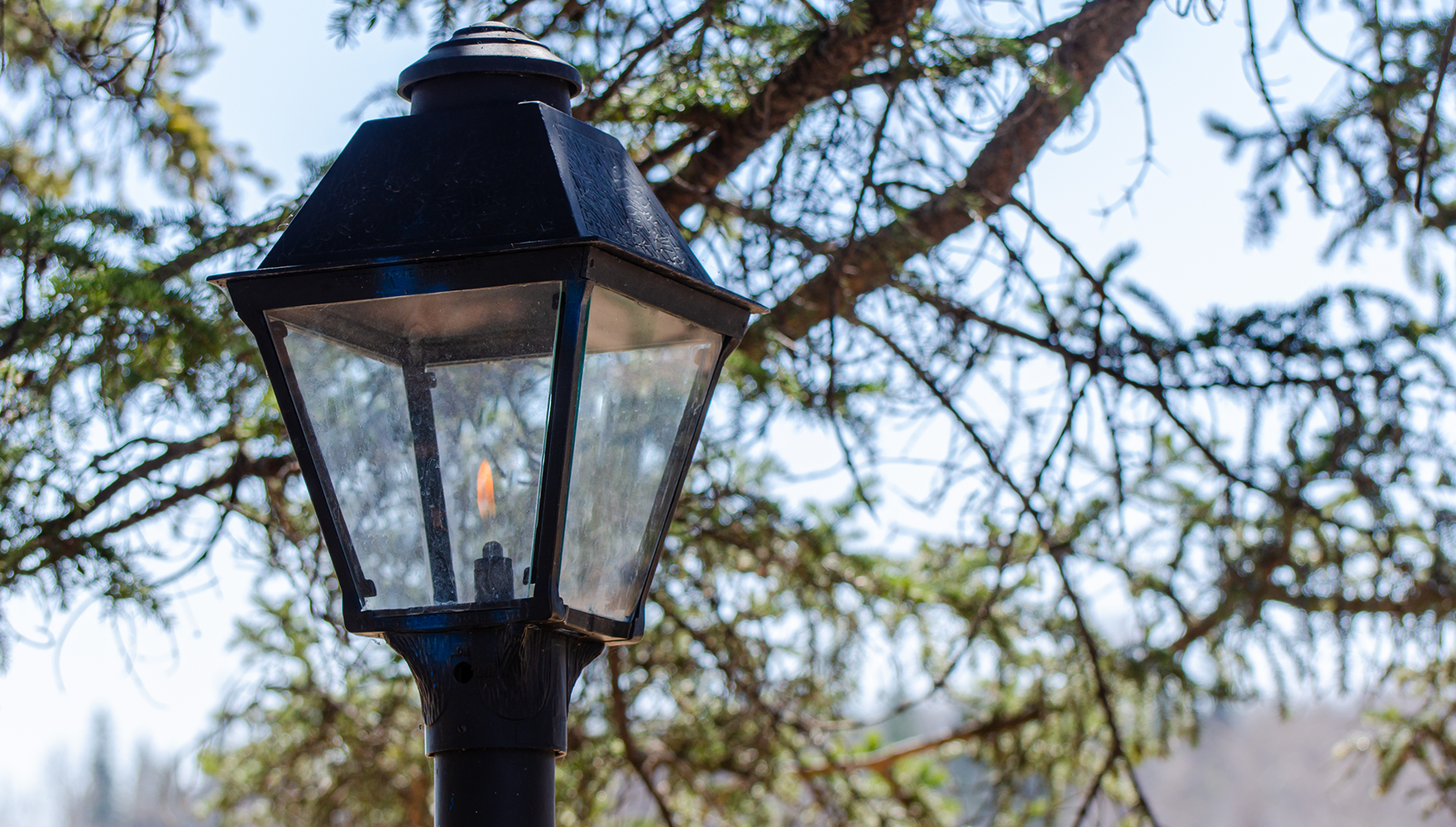

In this episode, host Daniel Raimi invites podcast guest Amy Townsend-Small, a professor at the University of Cincinnati, to illuminate the history, environmental impact, and cultural significance of gas-powered streetlights. These functional fixtures lend old-time ambiance to historic districts in cities like Boston and Cincinnati, but their aesthetic comes at a cost: gas lamps leak methane at a wasteful rate, and these charming relics can drain cities of hundreds of thousands of dollars in fuel and maintenance. By integrating her field research on streetlights with cultural and historical context, Townsend-Small localizes the numbers behind gaslight emissions—and sheds light on the sentiments that might have allowed them to persist, even as fuel-efficient electric alternatives become more affordable and available.
Listen to the Podcast
Audio edited by Rosario Añon Suarez
Notable Quotes
- Natural gas–powered streetlights leak outsize emissions: “We found that [gaslights are] emitting a relatively large percent of the gas they use—about 2 to 4 percent of the gas that goes through the gaslight. In other words, they’re really wasteful. They’re actually higher emitters than other appliances like stoves or hot water heaters.” (8:01)
- Old infrastructure takes a toll on taxpayers: “There’s a lot of maintenance needed. [Gaslights] are continuously breaking down … In both Cincinnati and Boston, the cost of gas and maintenance for the gaslights is spread across all the taxpayers, not just the people in those neighborhoods who ‘benefit’ from the charm of the gaslights.” (18:32)
- Gas appliances have a cultural foothold: “It’s going to be very hard to make the transition from gas to electric, because it just feels right to cook with gas for a lot of people, even though there’s a lot of advantages to cooking with electricity. So, it’s not just going to be a scientific question. It’s going to be something more emotional.” (23:47)
Top of the Stack
- “Gas streetlights, methane emissions, and the cultural resistance to climate change mitigation” by Amy Townsend-Small, Sacha Brewer, and David Stradling
- “Quantification of methane and carbon monoxide from natural gas streetlights in Boston: a ‘low-hanging fruit’ for emissions reduction” by Amy Townsend-Small, Sacha Brewer, Nathan Phillips, and Ania Camargo
- Hacks television show
The Full Transcript
Daniel Raimi: Hello, and welcome to Resources Radio, a weekly podcast from Resources for the Future (RFF). I’m your host, Daniel Raimi.
Today, we talk with Dr. Amy Townsend-Small, professor in the School of Environment and Sustainability at the University of Cincinnati, where she holds the UNESCO [United Nations Educational, Scientific, and Cultural Organization] Chair in Water and Climate Change.
In the last few years, Amy has been working with colleagues to measure emissions from natural gas–burning streetlamps, which can be found in a handful of cities across the United States. Although they are not big overall sources of emissions, these lamps can lose a high percentage of their natural gas, which has a meaningful impact on climate change. In today’s episode, Amy and I will talk about the history, environmental impact, and cultural significance of these lamps. Stay with us.
Amy Townsend-Small, from the University of Cincinnati, welcome to Resources Radio.
Amy Townsend-Small: Hi.
Daniel Raimi: Hi, it’s great to have you.
So, I’ve followed your work for quite some time, and we’ve crossed paths here and there working on methane emissions and orphaned wells and things like that. We’re going to talk about some really interesting work that you’ve been doing recently on natural gas–fueled streetlights.
But before we do that, we always ask our guests to introduce themselves and let us know how they got interested in working on environmental issues. So, what steered you into this line of work?
Amy Townsend-Small: Yeah, thanks for having me. This is really fun.
I would say I was interested in science as a kid. And like many young people, probably, I thought that might lead to a career in medicine. But when I learned there were scientists that got to work outside, that was kind of mind-blowing to me. So, I ended up pursuing a career in environmental science.
Now, looking back, I feel really happy to have a career that’s a combination of the creative thinking that’s needed in research, as well as working in the environmental world. So, field work, as well as working on data and working the lab. It’s been really fun.
Daniel Raimi: That’s really cool. What type of science were you interested in as a kid? All things science, or were you really interested in planets or geology, or something like that?
Amy Townsend-Small: Let’s see. I guess I would say animals, pets, that kind of thing. That’s probably the earliest memory that I have, like a lot of little kids.
Daniel Raimi: Yeah. For my son, it’s penguins.
Amy Townsend-Small: Oh, cute.
Daniel Raimi: Okay, let’s get into the substance of our chat today. So, as I mentioned, we’re going to talk about natural gas–fueled streetlights. You can imagine a streetlight that’s got a flickering flame powered by natural gas. They’re not super common today, but how common were they back in, I don’t know, the 1800s or the early 1900s?
Amy Townsend-Small: Yeah, I think early 1800s in some cases … As you said, you and I know each other from the world of historic oil and gas wells, and that’s actually how I got the idea for doing this project. Natural gas streetlights, and even inside illumination, are a legacy of the early days of natural gas drilling and, I think, date to the early 1800s in some cases.
One famous example is that natural gas was being used to illuminate Ford’s Theatre, where President Lincoln was shot in 1865. I think there’s still gaslights outside Ford’s Theatre today, but of course it’s been electrified inside. And nearby in Washington, DC, the White House also had natural gas lighting inside. I looked it up today: they didn’t get interior electric lighting until 1891. So that was surprising.
And where I live in Cincinnati, there’s vintage natural gas streetlights in the neighborhood near our campus. I saw them all the time and always wondered about their emissions—especially as I was measuring emissions from these old oil and gas wells, which were dated from the same era, some of them from the 1800s.
So, to answer part of your question, I don’t know how many natural gas streetlights there were at the peak, but it was, at one time, the most common type of illumination—both inside and outside—before electrification became widespread. But before there was natural gas, people used other fuels like candles, oil, etc.
Daniel Raimi: Right. Famously, they used whale oil.
Amy Townsend-Small: Whale. Yeah, right. That was probably a brief period.
Daniel Raimi: Yeah, not super common. People in the oil industry like to say that they saved the whales, which is kind of, partly, true.
Amy Townsend-Small: Right.
Daniel Raimi: So, let’s talk now about where things are today. As you mentioned, there are still natural gas streetlights around the United States, but they’re not very common. So, where are they today? Obviously, they’re near your house in Cincinnati. They’re outside Ford’s Theatre in Washington, DC. Where else are they fairly common?
Amy Townsend-Small: Yeah. Well, one of the most famous cities in the United States is New Orleans, especially the French Quarter. Many people may have seen them there. I wasn’t able to find a number for how many there are in New Orleans or how old they are, but I think there’s most likely thousands of public and private gaslights in New Orleans.
Other cities that I’ve found in the United States are … There’s some small cities in New Jersey. South Orange is one. Cape May, another one. Boston, Cincinnati, of course. And then there’s European cities such as Berlin, Dusseldorf, Prague, and London. In Cincinnati, they were first added in 1843, and the peak number was 10,000, approximately. And that was in 1892.
Daniel Raimi: Wow. 1843. So, that’s more than 15 years before the commercial oil industry really got underway. I’m surprised it’s that early.
Amy Townsend-Small: Yeah. So, they were not natural gas. They were coal gas at that time.
Daniel Raimi: Right. For people who don’t know what coal gas is, can you explain that real quick?
Amy Townsend-Small: I don’t know a lot about it myself, but they still make it here, and in other places, today. It’s a gasification process using coal.
Daniel Raimi: Right. You take coal and you burn it and … Maybe you burn it. You do some sort of process with it, through which you extract the methane, and then the methane goes around in pipelines and it provides lighting.
Amy Townsend-Small: Exactly. Yeah.
Daniel Raimi: Well, first of all, I think we need to plan a research trip to the French Quarter as soon as possible. That sounds like my priority.
Let’s talk about some of the work you’ve done measuring emissions of methane and other pollutants from these gaslights in Boston and Cincinnati. So, can you give us a sense of, on average, how much methane they were emitting and how much those emissions vary from site to site?
Amy Townsend-Small: Yeah. We found gaslights are emitting an average of about one to two grams of methane per hour. So, a pretty low emission rate compared to the highest sources in the natural gas supply chain—that would be actively-producing wells. Those can emit hundreds of grams of methane per hour or more.
But we also found [gaslights are] emitting a relatively large percent of the gas they use, about 2 to 4 percent of the gas that goes through the gaslight. So, in other words, they’re really wasteful. They’re actually higher emitters and more wasteful than other appliances like stoves or hot water heaters. Basically, they’re really old, and they’re not maintained frequently, like a stove or a hot water heater, which kind of makes sense. They’re outside, so people think they’re not as much of a safety hazard because they’re outside, and they’re in a very well-ventilated area.
Another thing we found is that gaslights have a skewed distribution of emissions, and I’ll explain what that means. It means only a few gaslights that we measured are responsible for most of the emissions. Another way of saying this is that the median value of all the emissions we measured is lower than the mean, or that one or two gaslights we measured are either not lit or malfunctioning in some way and contributing most of the emissions to the whole population of the samples.
And that’s actually—you probably already know this, Daniel—the same thing that’s been found across the whole natural gas supply chain. There’s a few sources that make up almost all the emissions. It’s like there’s a few bad actors, I guess.
Daniel Raimi: Right. Bad actors, or just parts in the supply chain where the equipment is broken or malfunctioning for some reason and it hasn’t been noticed by the operators.
Amy Townsend-Small: Yeah. It’s the same thing in pipelines, wells, appliances—most of the emissions come from a few sources.
Daniel Raimi: Sometimes people call these things “super-emitters.” I’m not sure if there’s a technical term or technical definition of super-emitter, but that’s the basic idea.
Amy Townsend-Small: Yes, that’s a very common phrase.
Daniel Raimi: So, I’m curious: you said a little bit about the sort of mechanism through which these leaks occur. I’m curious if you can help us understand better. Are a lot of the emissions coming from lights that are unlit, where the methane is just sort of venting off, or is it coming from incomplete combustion of the methane at a lit gaslight, or is it a leak from somewhere else in the pipe? Where, physically, is the leak happening?
Amy Townsend-Small: I think it’s all a combination of all of those things. Either it could be a broken fitting in the gaslight, or we did see a few gaslights where the flame went out. That could happen sometimes. Yeah, I think either of those things could happen.
So, if you can picture it, there’s a little pipeline that’s going up from the ground into the top of these streetlights, and that pipeline could break sometimes, or the little fitting in the pipeline could become loose. And so, all of those fittings in the pipeline are subject to leaking. It’s the same pipeline that goes into your house for your home gas.
Daniel Raimi: Right. Super helpful. One more question that we were talking about a little bit before we started recording would be, can you just contextualize the scale of these leaks? Are these gaslights accounting for a major proportion of US methane emissions? I think the answer is no, right?
Amy Townsend-Small: Yeah. There’s not that many gaslights compared to other sources, as far as I know. I don’t know how many gaslights there are. There’s no national inventory of gaslights, so they’re not in the Environmental Protection Agency inventory yet. Maybe they will be now. And the Department of Energy doesn’t have an inventory of them, unlike other appliances like stoves or hot water heaters. But there’s definitely fewer gaslights than other appliances like stoves or hot water heaters, which most of us have.
So, they’re a very low source nationally, even though they are emitting a higher percent of the gas that they use. But because they’re wasteful, as I mentioned before, in some of these cities like Cincinnati and Boston—where we mentioned that we did the studies—they can be a significant source in those cities. But not as a country. We have hundreds of millions of cows, for example, in the United States.
Daniel Raimi: Perfect, that’s really helpful. Thank you.
So, one other thing that I noted from one of the papers that you wrote is that these lights typically don’t turn off, even in the daytime, which seems kind of weird. You’ve mentioned “wasteful” a couple of times, and it seems kind of wasteful. So, why is it that the lights don’t have a mechanism to turn off?
Amy Townsend-Small: I think, basically, to save money. In the Cincinnati study—this is my first experience working with a history professor on a project, which was really fun—he did a lot of research on the history of these gaslights. And what he found is that, up until around 1930, the city did employ lamplighters to light and extinguish the lamps up until, like I said, 1930. So, that’s obviously an old-timey kind of a job that doesn’t exist anymore. They replaced them with adjustable timers, but they weren’t, apparently, very good. They came around and checked them every night, so it didn’t really eliminate the cost of the job of the lamplighter, apparently. So, by the mid-1950s, they decided to just let them burn 24 hours a day.
In Boston—this is very interesting—gaslights are new. They were added in the 1960s to 1980s. Boston may have had gaslights in the 1800s, but then it was electrified. Then they added them back again, only in these neighborhoods that were historic neighborhoods with a lot of tourism value—like Charlestown, Beacon Hill—where people go, specifically, to go back in time.
So there, most of the gaslights are illuminated 24 hours a day, like in Cincinnati. Some of them, though, do have solar-powered timers. It’s a tiny solar panel that has a switch in it to turn them on at night and then off at dawn, but they’re not a great system. What we found is evidence that they increase the methane emissions. They lead to higher methane emissions. They may save gas over time, but they lead to more leaks.
Daniel Raimi: That’s interesting. So, do they leak when the light is turned off?
Amy Townsend-Small: No, they don’t leak when the light’s off. We found that they weren’t leaking during the day, but when they’re on, they were leaking more than the lights that didn’t have the switch.
Daniel Raimi: Huh, that’s really interesting.
Amy Townsend-Small: Yeah.
Daniel Raimi: Okay. So, we’ve been talking about gaslights, and obviously, the alternative to gaslights would be electric lighting. I’m curious: if you were to electrify all of the gaslights that are currently being used, what would be the net effect on emissions?
I’m thinking specifically about how electricity comes from a variety of sources, and the largest source in the United States is natural gas. Natural gas, of course, has CO2 emissions when it’s combusted, but also upstream methane emissions from wells and pipelines and elsewhere, like we’ve talked about.
So, I’m curious if you’ve run the numbers to see: if we were to switch all these gaslights over to electric, how much greenhouse gas emissions would you actually reduce?
Amy Townsend-Small: Yeah, I haven’t done that calculation. Like I said, I don’t know how many gaslights there are nationally. That’s a great project to work on next. And, like you said, it would involve spending a lot of time in a really fun place—New Orleans. Let’s definitely do that.
So, I can’t do the calculation because we don’t have an inventory of gaslights, but I do know that switching to electric streetlights in these cities where we do have the inventory will help save a lot of money and also make the cities safer. There’s a lot of evidence that increased gas leaks leads to increased 911 calls. Especially these gaslights; when a car hits them, you have to call the fire department because there’s a big gas leak, that kind of thing.
I have the data on how much they spend on gas for these streetlights. I can tell you that in Boston in 2024, they spent $729,000 just for the streetlights. There’s 3,000 streetlights. Three-quarters of a million dollars. If they were LED, it would be about $86,000 for the electricity. So, they would save $643,000 annually.
Daniel Raimi: That’s really interesting.
Amy Townsend-Small: And that’s in addition to the maintenance and safety costs of these gas streetlights. There’s a lot of maintenance needed. They are continuously breaking down, as I said. The highest emitters are the gaslights that are unlit, so they’re constantly having to replace the mantles and relight them, that kind of thing. And they’re on fire, right? So, they have to fix them all the time, because they’re always breaking.
And, in both Cincinnati and Boston, the cost of gas and maintenance for the gaslights is spread across all the taxpayers, not just the people in those neighborhoods who “benefit” from the charm of the gaslights.
Daniel Raimi: Interesting. You mentioned a moment ago that for some people, these lights might provide benefits, right? They have this old-timey feeling. Maybe it enhances the look of a place for tourism in Boston or other places.
Can you tell us about the preferences that people might have for gas lighting versus electric lighting? And are these really strong feelings? If you tried to electrify the lighting in your neighborhood in Cincinnati, would a lot of people be up in arms about it? Do you have a sense of that?
Amy Townsend-Small: Yeah, that was one of the most interesting parts of doing these measurements with my students—the conversations that it would start with residents.
So, we were up on the ladder measuring the gaslights, and people would come over and talk to us about what we were doing. Many people started the conversations saying something like, “Oh, we love these gaslights.” So, people definitely seem to like living in a neighborhood without, I guess, harsh overhead lighting. Maybe it’s more exclusive feeling. And they are cute at night. They’re very charming. I will say that. I don’t live in one of those neighborhoods myself.
But one very interesting thing was that some people did ask us what they were, or what exactly a gaslight was, or what natural gas is. So, that was a fun conversation that led to conversations about what natural gas is, where it comes from. I told them it was the same gas in their stove and other appliances. So, that was very interesting. I don’t know if you’ve ever had to explain that to people or had that conversation, but …
Daniel Raimi: Well, in the class that I teach at Michigan, we start the semester by talking about what natural gas is, and what oil is, and what are the different types of hydrocarbons that get used for different purposes. But I definitely have the experience of, if you say you’re using natural gas, somebody will understand that that is the thing that you burn on their stove, but they won’t be able to explain to you where natural gas comes from, or exactly what it’s made out of, or its history or something like that.
Amy Townsend-Small: Right. Yeah. And some people did express that they liked the gaslights but also mentioned their neighborhood’s too dark at night, so that’s interesting.
And we do know from historic records that the gaslights that do remain in Cincinnati, some of them are because neighbors have fought to retain them. So, that sort of leads to the next question, whether they would keep fighting for them if they knew about natural gas production and the climate implications of these lights, how natural gas production is affecting people that live in production areas.
I think the project opens up new avenues for research around preferences for fossil fuel–burning versus electric appliances. Even cars. And maybe that’s something physical and social scientists can work together on.
I don’t know if you saw—recently, Ferrari introduced an electric car. People are concerned that it doesn’t make the right sound when the engine revs, and I was like, “That’s what they’re worried about?” But people do love fossil fuels for some interesting reasons, you know?
Daniel Raimi: I remember the same thing was happening with Harley-Davidson when Harley announced its electric motorcycle, because Harleys … Well, many motorcycle brands have sort of distinctive engine sounds, and Harley definitely has one. I know a lot of Harley-Davidson riders were worried that the new, electric Harley wouldn’t have the right sound or the right feel.
Amy Townsend-Small: Interesting.
Daniel Raimi: So yeah, people get attached to these things for sure.
Amy Townsend-Small: Yeah. I think one thing that people like about the gaslights is … I totally get it. They like looking at a flame, you know? It’s like something primal. I think people love cooking with gas, too. I think it’s going to be very hard to make the transition from gas to electric, because it just feels right to cook with gas for a lot of people, even though there’s a lot of advantages—a lot, a lot of advantages—to cooking with electricity. It just is going to be something that doesn’t feel right to people. So, it’s not just going to be a scientific question. It’s going to be something more emotional.
Daniel Raimi: Right. As the husband of a social psychologist, I can attest to the fact that people’s preferences and feelings about technologies matter a lot. It’s not just about efficiency or cost.
Amy Townsend-Small: Okay, very cool. That’s something we should definitely discuss more.
Daniel Raimi: Yeah. Well, Amy, just one more question before we go to our Top of the Stack segment, which is about carbon monoxide. So, we’ve been talking about methane, primarily, in this conversation, but you also measured carbon monoxide emissions. And, of course, carbon monoxide can be harmful for people’s health, if people encounter the gas in sufficient doses.
So, I’m curious how much carbon monoxide was coming off of these wells and whether they might’ve been substantial enough to actually affect the health of anyone who was living in the neighborhood.
Amy Townsend-Small: Yeah. The gaslights do emit carbon monoxide. Some of them in levels high enough that … The biggest concern I would have is workers close to the lights. People that were fixing them, for example, would be the biggest concern—if you put your face right next to it.
But, we did see some lights very close to people’s windows and balconies. And since they’re always on, that would be another concern. If they’re right by your house, your window, or your balcony, and it’s venting right by your house 24 hours a day, seven days a week, you might want to get a carbon monoxide detector.
Also, we didn’t measure any other gases, but there’s co-emitted toxins with natural gas burning such as benzene, heptane, and nitrogen oxides that are also likely emitted. And, if the streetlight is near your window or balcony, that could be a problem, too.
Daniel Raimi: Right. Really interesting. Well, Amy, this has been so fascinating. I wanted to have this conversation because I saw your papers on this, and I just never really thought about this topic. I’ve really enjoyed learning a little bit about it, and I’m sure our audience has, too.
Amy Townsend-Small: Good.
Daniel Raimi: Let me ask you, now, the last question we ask all of our guests, which is to recommend something that you’ve read, or watched, or heard, that you think is really great and that our audience might enjoy.
So, what’s at the top of your literal, or your metaphorical, reading stack?
Amy Townsend-Small: Okay. Well, I will say my student and I listened to your podcast episode about Landman. I was only able to watch season one of Landman, and I do agree with what you all said about Landman—the positive and negative aspects of the oil and gas industry that they illuminated in the show. There’s some other things about Landman that I did not like.
But let me give you another show that you may or may not have seen that does a good job of integrating climate awareness: the HBO show Hacks. Have you watched it?
Daniel Raimi: Oh, yes. I’m about halfway through the final season.
Amy Townsend-Small: Okay, good. They do a really good job of integrating climate into the show. It’s a good show. It’s funny. And more to the point, I think they do a good job of incorporating climate into the plot. There’s jokes about extreme heat, sustainability, capitalism, overconsumption, energy transition. The characters drive electric vehicles and it’s not a big deal. It’s not preachy or naggy. So, I would say Hacks.
Daniel Raimi: That’s awesome. Yeah. Hacks is a great show, not just for the climate content, but also for the quality of acting and the writing and all that stuff.
Amy Townsend-Small: It’s funny. It’s not about climate change, but they add it.
Daniel Raimi: Yeah, really interesting.
Well, Amy Townsend-Small from the University of Cincinnati, one more time, thanks so much for coming on Resources Radio and helping us learn all about gaslights.
Amy Townsend-Small: All right. Thank you.
Daniel Raimi: You’ve been listening to Resources Radio, a podcast from Resources for the Future, or RFF. If you have a minute, we’d really appreciate you leaving us a rating or a comment on your podcast platform of choice. Also, feel free to send us your suggestions for future episodes.
This podcast is made possible with the generous financial support of our listeners. You can help us continue producing these kinds of discussions on the topics that you care about by making a donation to Resources for the Future online at rff.org/donate.
RFF is an independent, nonprofit research institution in Washington, DC. Our mission is to improve environmental, energy, and natural resource decisions through impartial economic research and policy engagement.
The views expressed on this podcast are solely those of the podcast guests and may differ from those of RFF experts, its officers, or its directors. RFF does not take positions on specific legislative proposals.
Resources Radio is produced by Elizabeth Wason, with music by me, Daniel Raimi. Join us next week for another episode.