
In this episode, Sarah Armitage, an assistant professor at Boston University, sits with host Daniel Raimi to share findings from a working paper she wrote with coauthors about the transfer sales of oil and gas wells and why this practice of oil and gas companies selling wells to each other can lead to negative consequences of “unplugged,” or “orphaned,” or abandoned wells. Armitage explains why unmaintained oil and gas infrastructure, such as orphaned wells, can lead to negative environmental consequences if not “plugged” or sealed after use; these abandoned wells often contain pollutants that can leak into the environment. She also lays out key factors behind project financing that can mitigate a mismatch in business incentives and environmental safety. Given that oil and gas wells, new and old, are spread across the United States, Armitage points to the continued challenges of navigating the state regulations and potential financial solutions that can make proper maintenance easier for old oil and gas wells. Policies that ensure some level of financial assurance, Armitage and coauthors find, can help fill a gap in incentives and put a plug on pollution before it starts.
Listen to the Podcast
Audio edited by Rosario Añon Suarez
Notable Quotes:
- Current regulations aren’t a sufficient solution: “Lots of wells are orphaned, and lots more are at risk of being orphaned in the future. So, these regulations are not necessarily sufficient to prevent the orphaning that we’re seeing in practice.” (8:17)
- Well transfer sales can lead to an unwell environment: “Evidence provides a consistent picture that these wells are less likely to have their environmental remediation completed in the aftermath of a transfer.” (22:24)
- Research confirms a path to make environmental standards easier to meet: “Requiring adequate financial assurance, like bonding, from the very start of a well’s life would help to ensure that environmental obligations are met.” (24:43)
Top of the Stack
- “Cutting Costs or Cutting Corners: Asset Reallocation in Oil and Gas Production” by Sarah C. Armitage, Judson Boomhower, and Catherine Hausman
- Junkyard Planet: Travels in the Billion-Dollar Trash Trade by Adam Minter
- The World for Sale: Money, Power, and the Traders Who Barter the Earth’s Resources by Jack Farchy and Javier Blas
The Full Transcript
Daniel Raimi: Hello and welcome to Resources Radio, a weekly podcast from Resources for the Future. I’m your host, Daniel Raimi.
Today, we talked with Dr. Sarah Armitage, assistant professor at the Questrom School of Business at Boston University. Along with a couple of coauthors, Sarah recently published a paper documenting how oil and gas wells get sold from one company to another.
This might sound like an obscure topic, but it’s actually really important to understanding how some oil and gas wells become orphaned and abandoned, which imposes environmental and health risks for residents, along with financial burdens for governments. I’ll ask Sarah to help us understand why companies transfer wells to one another in the first place, how those transfers affect the risk of wells becoming abandoned or orphaned, and what policymakers can do to reduce those risks. Stay with us.
Sarah Armitage, welcome to the show.
Sarah Armitage: Thank you so much for having me. It’s great to join.
Daniel Raimi: We are thrilled to have you. I’m super excited to talk about orphaned oil and gas wells today and issues related to them. It’s a topic near and dear to my heart. But before we get into the meat of our conversation, we always ask our guests to tell us a little about how they got interested in environmental issues, if you had some early-in-life inspiration, or whether you came to these issues later in life. So, how’d you find your way into this field?
Sarah Armitage: I did have early-in-life inspiration. I was always interested in environmental issues. I came to economics much later, though. But I grew up in a town outside of Boston where Walden Pond is located and where Henry David Thoreau lived and worked. And so, there was something in the air, and I was just always very interested in environmental topics and always knew I was going to work on them in some capacity. It just took me a little while to find my way to economics as the specific approach.
Daniel Raimi: That’s awesome. Did you go to Walden Pond as a kid and hang out there?
Sarah Armitage: Yeah. It was our local swimming hole, so we spent a lot of time there.
Daniel Raimi: That’s so cool.
Well, let’s talk about orphaned oil and gas wells. What are these things? What are orphaned oil and gas wells? Why are they called orphans? Why do we care about them? Why are they an environmental risk?
Sarah Armitage: Yeah, it’s a good question. So, let’s take a step back and first talk about just abandoned wells. Broadly, you can think of abandoned oil and gas wells as wells that don’t have any recent production, injection, or any other use.
Some of those abandoned wells are unplugged. Plugging refers specifically to the process by which end-of-life wells are permanently sealed. So, old equipment is removed, and then, essentially, mechanical plugs are placed at different depths of the well hole to seal off the oil- and gas-producing regions to prevent leakage and various adverse environmental outcomes that we can talk about in just a moment.
Estimates vary, but by one estimate, there’s about two million abandoned and unplugged wells across the United States. Then a further subset of those abandoned and unplugged wells are what we call “orphaned.” That essentially means that there’s no firm that is responsible for plugging or liable if some sort of contamination event occurs. That could either be because the past operator can’t be found or because the past operator has gone out of business. So, there are a lot of these orphaned wells across the United States. We don’t necessarily know the exact number.
When funding for cleaning up these orphaned wells became available through the Bipartisan Infrastructure Law, the number of known orphaned wells significantly increased because states now had an incentive to document these wells, but you can … Recent estimates have put the total somewhere around 120,000, meaning that the state has determined that those wells either have an insolvent or an unknown operator. Beyond that, maybe an additional 300 to 800,000 wells that are believed to be orphaned, but haven’t yet been fully documented.
That’s what we mean by orphaned wells. Then, the second part of your question, why do we care about them? Why are they a problem?
Well, there are all sorts of bad outcomes associated with orphaned wells. There have been many studies—including some that you have worked on—that have documented higher average methane emissions at unplugged wells relative to plugged wells. Of course, methane is a potent greenhouse gas. There are also other types of air pollutants associated with unplugged wells that could harm human health. One example would be benzene, which is a known carcinogen.
Beyond that, these unplugged wells also pose an ongoing risk of groundwater and soil contamination. Those risks can then affect local land values, affect local ecosystems, and so forth. There’s many reasons why we would want to seal off those wells through plugging to prevent these types of adverse outcomes. But if a well has been orphaned, then there’s no known operator on the hook to do that remediation, and plugging will generally only occur if the state or federal government provides the funds.
Daniel Raimi: Great. Super useful. Just so folks have a sense of the order of magnitude of this challenge, it often costs $50,000 or $100,000 to plug one orphaned oil and gas well. And so, if you think about that multiplied by the 300,000 to 800,000 wells that might be out there, this problem starts to get pretty big. And then when you think about the two million abandoned wells that are out there that could become orphaned, the problem gets even bigger. So, it’s a pretty meaningful issue.
One thing people might wonder about is state regulations. So, states actually do have regulations that are designed to prevent this from happening, but they don’t always work as they’re supposed to. Can you tell us about state regulations and whether and why they are effective?
Sarah Armitage: Yeah. So, exactly, as you said, states, of course, want to incentivize oil and gas operators to pay for this plugging when the well reaches the end of its productive life. Oil- and gas-producing states all generally require oil and gas operators to provide some sort of financial assurance, often in the form of a bond, to ensure that funds will be available for these end-of-life cleanup costs when they come due.
The exact requirements vary by state, and there’s been a lot of evolution over decades, but—exactly as you suggested—many researchers and environmental advocates as well have argued that the existing bond requirements imposed by states are too low relative to the actual end-of-life costs, such that the existing requirements don’t provide a large enough incentive to ensure that the wells are actually plugged.
So, to take the numbers that you just gave, if plugging a well costs an operator, say, $50,000, and then the bond that the operator has posted is maybe $5,000 to $10,000, that’s generally not sufficient to ensure that the plugging is actually going to occur. That’s one side of the state regulations—these financial-assurance requirements.
In addition to those requirements, states also have various forms of idle well–management programs—so, regulations associated with wells that haven’t been producing for a long time and are at risk of becoming these abandoned; unplugged; and potentially, ultimately, orphaned wells.
Those idle well–management programs might include things like requiring that operators plug their wells. If a well has been idle for a certain amount of time, you require that the well is capped in some capacity. Penalties for not complying might include fines. At the extreme, it could include the loss of license to operate the company’s other wells. But while these regulations sound potentially stringent, many existing state programs seem limited in practice.
So, there are a lot of anecdotal accounts of limited enforcement out there. There seems to be underlying a lot of this and ongoing concern that if regulators push a company too hard, that company might simply declare bankruptcy and walk away.
In practice, as we said as we started out, lots of wells are orphaned, and lots more are at risk of being orphaned in the future. So, these regulations are not necessarily sufficient to prevent the orphaning that we’re seeing in practice.
Daniel Raimi: Great. Super helpful. With this kind of background in place, let’s talk about the paper that you recently coauthored with our friends and colleagues, Judd Boomhower and Catie Hausman. It’s a working paper published in the National Bureau of Economic Research. We’ll have a link to it in the show notes.
This paper is really focused on the issue of transferring wells—and oil and gas companies sell wells to one another, or transfer wells to one another, quite often. One of the cool things that you do in this paper is, for the first time, really, quantify the frequency and magnitude of these transfers. Can you help us understand the basics of this? And first, maybe tell us what is the motivation? Why would one oil and gas company sell their well to another company?
Sarah Armitage: It’s a great question and something that we set out trying to understand more when we undertook this paper. But as you noted, oil and gas wells change hands frequently, and these transfers have long been part of the oil and gas industry, whether we’re talking about corporate mergers or specific asset acquisitions. These transfers could happen for all sorts of reasons. For example, maybe a company has decided to divest from assets in a particular oil- and gas-producing region in order to focus on another region, or maybe a company is acquiring assets to expand production into a new region.
One reason why wells might change hands is because of these broader strategic decisions at oil and gas companies. Alternatively, another reason is that one operator specializes in the drilling and initial production stage of the well life cycle, while a different operator specializes in cost efficiently operating older wells with low production volumes. So, in that case, wells would be transferred from one operator to another as they age in order to take advantage of this specialization.
A third potential motivation for these transfers relates to an idea in law and economics that’s called the “judgment-proof problem.” The judgment-proof problem refers to the idea that firms do not fully internalize the expected costs of risky behavior because they know that they can declare bankruptcy if an adverse event occurs.
From the perspective of a company that’s operating in a limited-liability regime, if the environmental liabilities or other forms of liability exceed expected future profits for the company, then it makes sense to declare bankruptcy, discharge those large liabilities, and forfeit the smaller amount of the expected future profits. One implication of this judgment-proof problem is that smaller firms in particular—so, those whose expected future profits are naturally lower—are less likely to fully internalize the expected costs of their liabilities, because it takes a smaller amount of liability to tip the calculus toward declaring bankruptcy.
This phenomenon has received a lot of attention from researchers over the years. My colleague and coauthor in this paper, Judd Boomhower, has documented evidence of the judgment-proof problem among the oil and gas wells in Texas. So, this is a known issue. Now, how does this judgment-proof problem relate to well transfers? Well, as wells age, and their production value declines, and their end-of-life liabilities loom, or the risk of accidents starts to increase, they might be more profitably operated by small firms, because those small firms are more likely to declare bankruptcy if anything bad happens or if those end-of-life costs finally come due.
Small firms have less to lose by closing down compared to, for example, a big oil and gas major like British Petroleum (BP) that will pay for liabilities rather than closing. The expected cost of a small company operating an aging well might be lower than the expected cost of a large company operating the same well, not in this case because of specialization in the production process, but because of differences in the extent to which these two different companies fully internalize the asset-retirement obligations, the term for these end-of-life cleanup costs, or other liabilities.
A natural consequence of this would be that wells are transferred to smaller firms as they age. Several environmental groups have suggested that transfers in this last category might explain why we see in practice so many abandoned, and unplugged, and ultimately orphaned wells. The idea is that wells are transferred to smaller operators as they age, and then those smaller operators are more likely to orphan their wells. That’s one claim.
On the other hand, industry groups have noted that the transfers of aging wells to smaller operators could also be explained by smaller operators simply specializing in producing these low-producing wells. Needless to say, all of this discussion sparked our interest in learning more about well transfers to try to see what we could actually find in the data.
One last point that I want to make on this topic is I’ve been saying bankruptcy here because that’s how we typically articulate the judgment-proof problem. But in the context of oil and gas wells, it might not necessarily be a formal bankruptcy proceeding, but essentially the operator disappears. So, they stop submitting reports to the state or meeting other compliance obligations, leaving state regulators uncertain about the identity or the whereabouts of the responsible party. If you recall, going back to the start of our conversation, the definition that I gave of orphaned wells includes both wells where the responsible operator of record can’t be traced, or where the operator has formally gone out of the business. So, it’s a broad understanding of that term.
Daniel Raimi: Right, totally. Some of these wells, because they were drilled in like the 1860s, way before there was any regulation—no one has known the original driller of that well or operator of that well for probably over 100 years. In many cases, it’s not necessarily like a modern company disappearing. Although that might be happening, too, it’s often somebody from 1865 who never appeared in any government record book, ever.
Sarah Armitage: Yeah, absolutely.
Daniel Raimi: In this paper, you bring a whole bunch of cool data to analyze this topic. What does the data tell us about how often these types of well transfers happen? Can you tell us a little bit about the patterns that you observe about which types of companies are selling, and which types of companies are buying, and tell us why that matters?
Sarah Armitage: Yeah. We had a lot of fun looking at the data. As I’ve just said, in our study, we set out trying to understand the relationship between transfers and the broader life cycle of oil and gas wells. There’ve been all these anecdotal accounts of transfers, but we didn’t know of a study that had systematically looked at the data on transfers—which wells are transferred, which operators are involved in the transfers, and what are the long-run outcomes for the wells that do get transferred.
In order to do this, we pooled data from four different oil- and gas-producing states where we could access information on operator history—so, not just the well’s most recent operator as is commonly available in various commercial data sets. The states that we looked at were California, Texas, Pennsylvania, and Colorado. We went back as far as we reliably could in the data, to the early 1990s in several of our states.
With this data, we tried to systematically document patterns of well transfers that we saw on the data. The first thing that we observed is that lots of wells are transferred. As a first cut, when we look at any change in the unique operator ID from one year to the next for a given well, we found that about 10 percent of wells experience a transfer in a typical year. But that of course includes some transfers that aren’t really our focus. So, things like internal reorganizations from Texaco, California, to Texaco exploration and production. It also includes large corporate mergers such as the Chevron-Texaco merger.
So, we then refined how we were thinking about a transfer to focus on the subset of transfers that were of greatest interest to us, where we excluded those internal reorganizations and large corporate mergers. With that preferred definition, we still find that about 8 percent of wells experience a transfer in a typical year.
That translates to one sale every 13 years on average for a well. That’s the first point, that we see lots of transfers in the data. These transfers are frequent within lots of different subgroups, as well. If we cut the data by looking at recent years and older years, wells that are still producing at the time of transfer and wells that aren’t still producing at the time of transfer, wells with large peak production and wells with small peak production, looking across all four states, gas-only wells, oil-only wells, wells that are producing both oil and gas, and so forth.
So, through lots of different ways of cutting the data, we still see that transfers are very common. This is an important phenomenon in this industry. That’s the first part—that transfers are frequent.
The second thing that we observed is that wells are more likely to be transferred as they age and decline in value. To give you a sense of the magnitude here, in our preferred analysis, we estimated expected future revenue for each well using various assumptions about well-specific decline rates, commodity prices, discount factors, and so forth. We find that a well moving from the 75th percentile to the 25th percentile of expected future revenue is around 2 percentage points more likely to be transferred in a given year relative to the average transfer rate of 8 percent. That’s a meaningful change associated with differences in well size or productivity.
The third thing that we observed is that low-value wells—and I mean “low value” in the sense of low producing, and likely to mean low producing based on their recent production trajectories—are more likely to be transferred to low-value operators. That is, the operators whose portfolio of wells have lower current and expected future production.
Again, to give you some sense of magnitudes, wells above the 75th percentile were more likely to be transferred to buyers that were larger than the sellers, but wells that are below the 75th percentile were more likely to be transferred to buyers that were smaller than sellers. This is what some industry observers have called transferring “down the food chain”—so, moving to smaller operators through these transfers.
These patterns that we found are consistent with a few different reasons why transfers might occur over the well cycle. For example, that wells might be transferred because the smaller firms are specializing in productively operating these low-producing wells. And secondly, that wells might be transferred to smaller firms to avoid liabilities as they age. So, the overall patterns are consistent with both of those stories, but taken together, these results do suggest that transfers are an important part of the well life cycle.
Additionally, we’re seeing some evidence of sorting between wells and operators that’s occurring through this transfer mechanism.
Daniel Raimi: Great. We have the sort of lower-productivity wells generally moving toward the smaller, less-well-capitalized operators.
Sarah Armitage: Exactly.
Daniel Raimi: Can you help us understand what that means for the risk of wells becoming orphaned in the future?
Sarah Armitage: The next step of our analysis was to look at what actually happens to these wells that are transferred later in life. We looked at wells where transfers occur after age 15, and then we looked at outcomes 5 to 10 years after the transfer. The first thing that we found is that these wells that are transferred later in life are less likely to be plugged—so, less likely to have this environmental remediation completed—even when we restrict the sample to the nonproducing wells.
Notably, this pattern is persistent. So, it’s not just something that we observe in the immediate aftermath of a transfer, but we see a consistent difference in the likelihood that a well is plugged 5 to 10 years after the transfer occurs. We didn’t look past 10 years, because then our sample sizes started to get too small. So, that’s the first finding—that these transferred wells are less likely to be plugged after the transfer.
Of course, which wells get transferred isn’t random. All of these analyses are controlling for various measures of well productivity. So, things like production levels at various points before the transfer, the well age, peak production levels, the initial decline rates of the well, measures of more recent decline rates, time period, commodity-type region, and so forth.
Likewise, we also are controlling for various measures of well-specific plugging costs. So, age, well depth, elevation, the state—which informs the regulatory environment—and so forth. We also looked at this question in various ways. So, looking at all transfers of aging wells, looking at wells that were transferred in the immediate aftermath of a large corporate merger, looking at transfers related to price volatility or lack thereof.
We also, in a separate set of analyses, look directly at the question of whether small operators (since of course we know that these wells are getting transferred to smaller operators), whether the small operators are less likely to plug their wells. Taken together across all of these analyses, we consistently find evidence that these transferred wells are less likely to be plugged after the transfer.
And so, the analysis doesn’t perfectly isolate the causal impact of transfers on long-run outcomes, but I think the collection of evidence provides a consistent picture that these wells are less likely to have their environmental remediation completed in the aftermath of a transfer. That’s the sort of first point about these long-run outcomes. The first analysis just looked at transfers of all aging wells. Then the second set of analyses looked at specifically aging wells that are transferred to smaller operators.
We find that those wells are especially less likely to be plugged in the aftermath of a transfer. Again, we’re restricting the sample to nonproducing wells. This makes sense with the underlying economics: the logic of the judgment-proof problem tells us that reducing liabilities could be an important motivation for why wells would be transferred from larger to smaller operators as they age.
The last result in terms of these long-run outcomes that I wanted to highlight is that we don’t really see evidence for meaningful increases in production volumes for aging wells that get transferred, including for aging wells that get transferred to smaller operators. That doesn’t mean that transfers aren’t also motivated by operators specializing in various parts of the production process, as that could take the form of cost efficiencies—not just production-volume increases. And in fact, we do find that transferred wells are more likely to be producing at all, which is consistent with this cost-efficiency story, but our results suggest that we can rule out large increases in production volumes for transferred wells.
Daniel Raimi: Got it. So, it does lead to some longer production, but not a whole lot of additional production as it gets transferred down the food chain. Interesting.
Clearly we’ve got a challenge here, and a challenge that appears to be at least at risk of becoming worse in the coming years because of these issues with bonding levels and the policies that you’ve described earlier. What are some of the policy solutions that you think states could put in place to reduce the risk that today’s wells, especially wells that are transferred and will become orphaned in the future years?
Sarah Armitage: Yes. Just to start at a high level, the findings of our paper underscore what researchers and advocates and regulators have known for a long time, which is that requiring adequate financial assurance, like bonding, from the very start of a well’s life would help to ensure that environmental obligations are met—that adequate bonding ensures that companies can afford to pay for both the unexpected accident costs that might occur and the expected end-of-life plugging and remediation costs.
Nothing about our analysis of transfers fundamentally changes that logic. But of course, the challenge is that we have these millions of oil and gas wells that have already been drilled without adequate financial assurance and that have already reached low production levels or maybe that have already been abandoned. And so a key question is, What do we do about those wells?
One potential reform that several states are exploring is requiring increased financial assurance at the point of transfer. So, in order for a transfer to proceed, the operator would need to post a higher bond, for example. The results of our paper are consistent with this approach helping to reduce transfers that are motivated by the liability shielding form of transfers, while still allowing transfers that are motivated by operator specialization in different parts of the production process.
One potential complication to this is that smaller firms often face higher costs of capital and therefore higher costs in obtaining financial assurance. That then raises concerns that bonding at transfer would shut down potentially valuable transfers. And so, a really important point here is that if that higher cost of obtaining financial assurance reflects the fact that smaller operators are more likely to declare bankruptcy, then the market for financial assurance is operating efficiently.
That alone wouldn’t introduce inefficiencies into the transfer market. But if, on the other hand, the higher costs for smaller operators stem from, for example, greater asymmetric information in financial transactions, then there really would be a trade-off between avoiding liability shielding and exacerbating these financial frictions through this type of policy design. That’s somewhat of an open question that would be really interesting for a future study to look at.
Daniel Raimi: Yeah, for sure. There are so many interesting questions about orphaned wells. It’s such a fascinating topic. Partly, it’s so fun, because there’s so much history there, and you get to learn all sorts of interesting stuff.
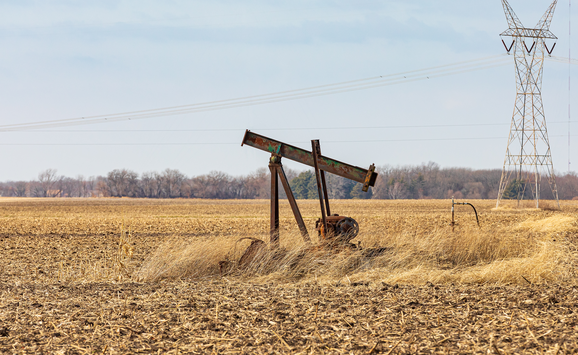
I was actually in northwestern Pennsylvania, where the oil industry began in the United States in 1859, just a few weeks ago. I was walking through this park—Oil Creek State Park—which is right in the middle of where the oil boom happened in the 1850s and 1860s. You just literally see these things everywhere. There are pipes sticking out of the ground, there are tanks, like rusty tanks sitting around, there are these old little pump jacks sitting around in the forest, and they’re all just totally overgrown.
Sarah Armitage: Yeah.
Daniel Raimi: Clearly, no one has touched them in decades. It’s a really fascinating topic.
Sarah Armitage: Yeah.
Daniel Raimi: Sarah, let me ask you now to close us out with the same question we ask all of our guests. Obviously, we’ve been talking about environmental issues and energy issues. You can recommend something related to that or not. We’re not very picky, but we’d love for you to let us know what’s at the top of your literal or metaphorical reading stack.
Sarah Armitage: Yeah, this was a fun question. I have gotten interested recently in learning more about physical material flows through the economy. A book that, to me, was an absolute page turner that I read recently is called Junkyard Planet: Travels in the Billion Dollar Trash Trade by Adam Minter, who’s a Bloomberg journalist. The book is about the global trade and scrap materials.
It has some wonderful historical accounts such as why copper scrap in electric motors was transformed essentially from a worthless item to a very valuable commodity, and then also has these wonderful journalistic accounts from the scrap trade, particularly in China. So, we meet various small scrap-sorting businesses that collectively process millions of pounds of Christmas tree lights, for example. The book was written in 2013, so the geopolitical details have changed quite a bit, but it was a really fascinating read.
Daniel Raimi: That sounds so good. It reminds me a little bit of the book, The World For Sale: Money, Power, and the Traders Who Barter the Earth’s Resources by Javier Blas and his coauthor, whose name I’m blanking on right now, but it basically follows the world of commodity traders and how commodities get around the world. It’s also really fascinating.
Sarah Armitage: Oh, interesting. I’ll have to add that to my list next.
Daniel Raimi: Yeah, it’s like the inner guts of the world economy. It’s super cool.
Well, that’s a great recommendation. We’ll have a link to it in the show notes, and of course we’ll have a link to the paper that you published recently with Catie Hausman and Judd Boomhower.
But I just want to say one more time, Sarah Armitage from Boston University, thanks so much for joining us today on Resources Radio.
Sarah Armitage: Thank you for having me, Daniel.
Daniel Raimi: You’ve been listening to Resources Radio, a podcast from Resources for the Future, or RFF. If you have a minute, we’d really appreciate you leaving us a rating or a comment on your podcast platform of choice. Also, feel free to send us your suggestions for future episodes.
This podcast is made possible with the generous financial support of our listeners. You can help us continue producing these kinds of discussions on the topics that you care about by making a donation to Resources for the Future online at rff.org/donate.
RFF is an independent, nonprofit research institution in Washington, DC. Our mission is to improve environmental, energy, and natural resource decisions through impartial economic research and policy engagement.
The views expressed on this podcast are solely those of the podcast guests and may differ from those of RFF experts, its officers, or its directors. RFF does not take positions on specific legislative proposals.
Resources Radio is produced by Elizabeth Wason, with music by me, Daniel Raimi. Join us next week for another episode.