
In this episode, Destenie Nock, an associate professor at Carnegie Mellon University, joins host Daniel Raimi to discuss measures utilities and policymakers can take to better capture energy-accessibility and affordability metrics. Whereas energy data is often specific to energy providers, Nock argues that evaluating energy at a household level enables a more holistic understanding of energy usage and the energy transition. With electricity rates on the rise, accurate energy consumption data is central to ensuring comfortable temperatures in more homes. Progress in energy affordability, Nock notes, requires a multifaceted policy approach that integrates energy-equity and wellbeing metrics into measures of success. Energy affordability is not a standalone problem, and decisionmakers must recognize its ties with other cost-of-living issues and the need for inclusive data to effectively address energy burdens.
Listen to the Podcast
Audio edited by Rosario Añon Suarez
Notable Quotes:
- Energy reliability is a close-to-home issue: “[The grid] is really designed by the utility in the local community, and that’s where people are really going to feel the impact. If the grid isn’t reliable, people are going to start calling their utilities. They’re not going to call somebody halfway around the world. That’s why I tend to keep my focus on the more local, utility level.” (5:25)
- Core assumptions can miss the mark: “Assuming that everyone can set their temperature where they want them to be assumes that everybody has a centralized air-conditioning unit. It misses people with window units, it misses people that don’t have the money to afford those window units and are just trying to do it with fans, and it also will miss people who have broken units that they couldn’t afford to fix.” (12:49)
- Good data serves a bigger purpose: “That lack of data provides this huge limitation on actually achieving what I would call a just energy future … The goal is to have lower bills, but it’s also to be safe [and] warm in a comfortably lit house so that you can actually do all the things you need to do in order to be a productive member of society.” (15:19)
Top of the Stack
- “Justice as a Measure of Energy Transition Success” by Destenie Nock
- Evicted by Matthew Desmond
- “Unveiling Hidden Energy Poverty, with Destenie Nock” from Resources Radio
The Full Transcript
Daniel Raimi: Hello and welcome to Resources Radio, a weekly podcast from Resources for the Future (RFF). I’m your host, Daniel Raimi. Today, we talk with Dr. Destenie Nock, associate professor at Carnegie Mellon University and the CEO and founder of Peoples Energy Analytics.
Destenie recently published a piece in Nature Energy called “Justice as a Measure of Energy Transition Success.” In it, she argues that energy companies and policymakers should do more to incorporate measures of energy access and affordability into the way that they track progress as the energy-system changes. Destenie will help us understand what those metrics are and why they matter in today’s episode. Stay with us.
Destenie Nock from Carnegie Mellon University, welcome back to Resources Radio.
Destenie Nock: Thank you so much for having me.
Daniel Raimi: Destenie, since the last time you joined us, you were promoted to associate professor at Carnegie Mellon. Congratulations on that, first of all—way to go! In addition to that, you actually started a company. The company’s called Peoples Energy Analytics.
I was really curious to hear—What is this company? What does it do and why did you want to start it?
Destenie Nock: Well, thank you so much for the congratulations on both fronts. When I started Peoples Energy Analytics, the big thing that we were focused on was really spinning out the research I had done in the energy-justice space and energy-metrics space to really help utilities identify: One; Who’s at the greatest need within their territories? And then two; having a for-profit company where we perform data analytics for electric and gas utilities to use all that meter data that they have been collecting over numerous years, and then identify the people who are putting themselves at risk of pipe freeze and heat stroke, due to lack of consumption of energy, and then connect them with assistance.
Since we started the company, it actually has grown into multiple offerings. We’ve been able to have the pleasure of working with [Peoples Gas] right here in Pittsburgh, but also Duke Energy (through their South Carolina team) and Southern Company, looking at their electric customers across Alabama, Mississippi, and Georgia to really highlight who’s limiting their consumption in the winter and most likely putting themselves at pipe-freeze risk.
Once we actually showed that our data analytics were successful at finding people who are putting themselves at risk, now we’re also talking about expanding our product offering to try to understand who has affordability gaps, which is going to be really important as more data centers are coming online and utilities are trying to think strategically about how to recover the cost of building out the grid of the future.
Daniel Raimi: That is so interesting. We’re going to come back to that topic of energy-limiting behavior, which of course you’ve done lots of great research on, and we’re going to touch on that in our conversation today as well. But I want to start us off with a little bit of stepping back for a minute.
When people talk about energy transitions, whether it’s at a global scale or a national scale, what are some of the traditional metrics that scholars or experts or policymakers might use to track whether or not a country or the world is on track to achieve an energy transition?
Destenie Nock: Typically, when people talk about energy transitions, you’ll see a lot of metrics that are cost or economic based. So, that’s like, How much did the system cost to build? How far did those dollars go? Then you’ll also see reliability metrics. So, how many disruptions do customers feel? How many outages per week, per month, or per year do they see and what’s their risk of having an outage?
You’ll also see efficiency measures. How much energy output is there for every unit of generation that they have to send into the grid? You really want to aim for a one-to-one in a completely ideal, unrealistic case, and the closer you get to 100 percent efficiency, the better. For the traditional things, you really do see outages and reducing outages as good. Then, how cheaply could you build the system while maintaining reliability? And then of course, just more system-level, technical-based metrics.
Daniel Raimi: Great. So, it sounds to me like you are thinking largely in the mindset of an electric-utility type operator. You’re not necessarily thinking about the global energy mix or the US energy mix. You’re thinking about, for a given electric provider or a natural-gas provider, What are these metrics that they’re tracking from day-to-day? Is that about right?
Destenie Nock: Yes, that’s correct. I would say that’s because it’s one thing to talk about the global energy system, and there are a lot of touchpoints that countries will have with each other in terms of buying fuel types. We’ll buy coal from one country, get our oil from another part, but the grid is not all one unit. It is separated by regions. It is really designed by the utility in the local community, and that’s where people are really going to feel the impact. If the grid isn’t reliable, people are going to start calling their utilities. They’re not going to call somebody halfway around the world. That’s why I tend to keep my focus on the more local, utility level.
Daniel Raimi: Got it. That totally makes sense. In that context, what are some of the traditional metrics missing and what are some of the additional metrics that you propose should be added to our collective dashboard or maybe a utility company’s dashboard when they are thinking about the success of their particular energy system or energy transition?
Destenie Nock: When I think about traditional metrics, it’s really focused on the business of energy. But when we are talking about measuring the success of the energy transition, a big part that’s missing is the wellbeing of the households in that territory.
When you think about how electricity started and why it started, it wasn’t because somebody thought it would be cool if they could get everybody addicted to their cellphones and charging and electric stoves. It was because this was a better alternative to what was available at the time.
Lighting was a better alternative to candles. And as opposed to wood stoves, now we have natural gas stoves or electric stoves, and you also have that for heating as well. And so, this shift was really about a human-wellbeing shift. But the challenge is that we don’t typically use wellbeing as a measure of success in these traditional metrics. I believe that we should have human-wellbeing metrics added into our measures of success.
Now, some of these are going to include ranges of affordability metrics. That can be, How much are people spending on their bills and what percent of their income is that? That’s where you hear of the traditional energy-burden measure, which is the percent of income you spend on your bills. The other metrics that I believe should be included are really about what your use of energy allows you to do. That’s what I would call the energy-limiting behavior metrics or the energy-equity gap metrics.
Let’s talk about energy-limiting behavior for a second. If you are spending your money on your bills, if you are spending a low percent of your income and your house is warm in the winter and you’re able to cook, clean, watch television, charge your phone, and you have no problems, then typically you’re not going to be too upset about your bill, right?
But if you spend a high percent of your income on your bill and your house is super cold in the winter and you’re always at risk of your pipes freezing and you’re at risk of your utilities getting cut off because you’re worried about whether or not you’ll be able to afford your bills, then that’s what we would consider an unaffordable energy transition and an unaffordable bill.
And so, when we are looking to really measure success, it should be, How many people are warm in their homes? So, that’s going to be, Are people able to set their thermostats or the temperature in their home to where they want it to be? And if that’s true, then you would have low instances of energy-limiting behavior. Then you also have disconnections, right? If people are able to afford their bills, then we should not see high rates of homes getting disconnected from their electric or gas providers.
In addition to that, I also have this energy-equity gap measure where I look at the average outdoor temperatures at which different income groups would turn on their heating or cooling systems. In the past, we’ve seen that for the summer, low-income groups tend to wait five to seven degrees longer than high-income groups just to turn on their air-conditioning units. That has been tested extensively by many PhD students, many postdocs, and even looked at by some people at my company, and it always comes down to income.
We’ve looked at different house sizes, different housing types, different numbers of people living in the homes, and this discrepancy is always a function of the income. We’ve also looked at that in the winter as well, and for the winter, we actually see the opposite effect where low-income households tend to see their heating kick on eight to ten degrees earlier than the high-income households.
You might be saying, “Well, Destenie, why on earth would people wait longer in the summer to turn on their cooling, but then turn their heating on earlier in the winter?” We actually have found that it’s not an active choice people are making, because in the winter there are recommended thermostat set points and temperature set points in order to protect your pipes from freezing.
Landlords will intervene with households to say, “Hey, it’s winter. Make sure your thermostat is set to 55 or 60 degrees so that you’re not putting yourselves at risk of your pipes freezing.” People have that concern, and they have somebody to intervene to try to tell them, “Hey, you need to regulate your indoor temperature.” While low-income people tend to live in houses that are older, they have worse insulation, they have single-pane windows as opposed to those energy-efficient double-pane windows.
Poor housing quality is actually a driving disparity in the amount of energy that people have to use to maintain the safe and comfortable temperature that is recommended. Whereas in the summertime, even though there are recommendations, often you don’t see that intervening nature from landlords to talk to their tenants. That actually does lead to heat stroke and heat-illness risks occurring in these low-income households due to lack of energy use in the summer.
Daniel Raimi: That’s really interesting. Yeah, I never really thought about that. There’s no equivalent of your pipes freezing in the summer, right? It’s not like your electricity line’s going to burst into flame when it gets too hot or something like that.
Destenie Nock: Yeah.
Daniel Raimi: Yeah. Interesting. As we discussed last time you were on the show—and we’ll have a link to that conversation in the show notes so people can dive deeper into this if they want to—but I think you’ve alluded to this just now in your response to my previous question. But some of the energy-justice challenges that you’re describing are hidden because we just don’t track them, right? We don’t have data that consistently reports them. Can you talk a little bit about some of those data gaps?
Destenie Nock: Yeah, of course. For some of the data limitations, one challenge is that back when I was first starting this work, a lot of utility companies and well-meaning people said that they assumed everyone set their thermostats where they wanted them to be. That guiding assumption has led to a lack of data collection and just a fundamental misunderstanding and an oversight in households.
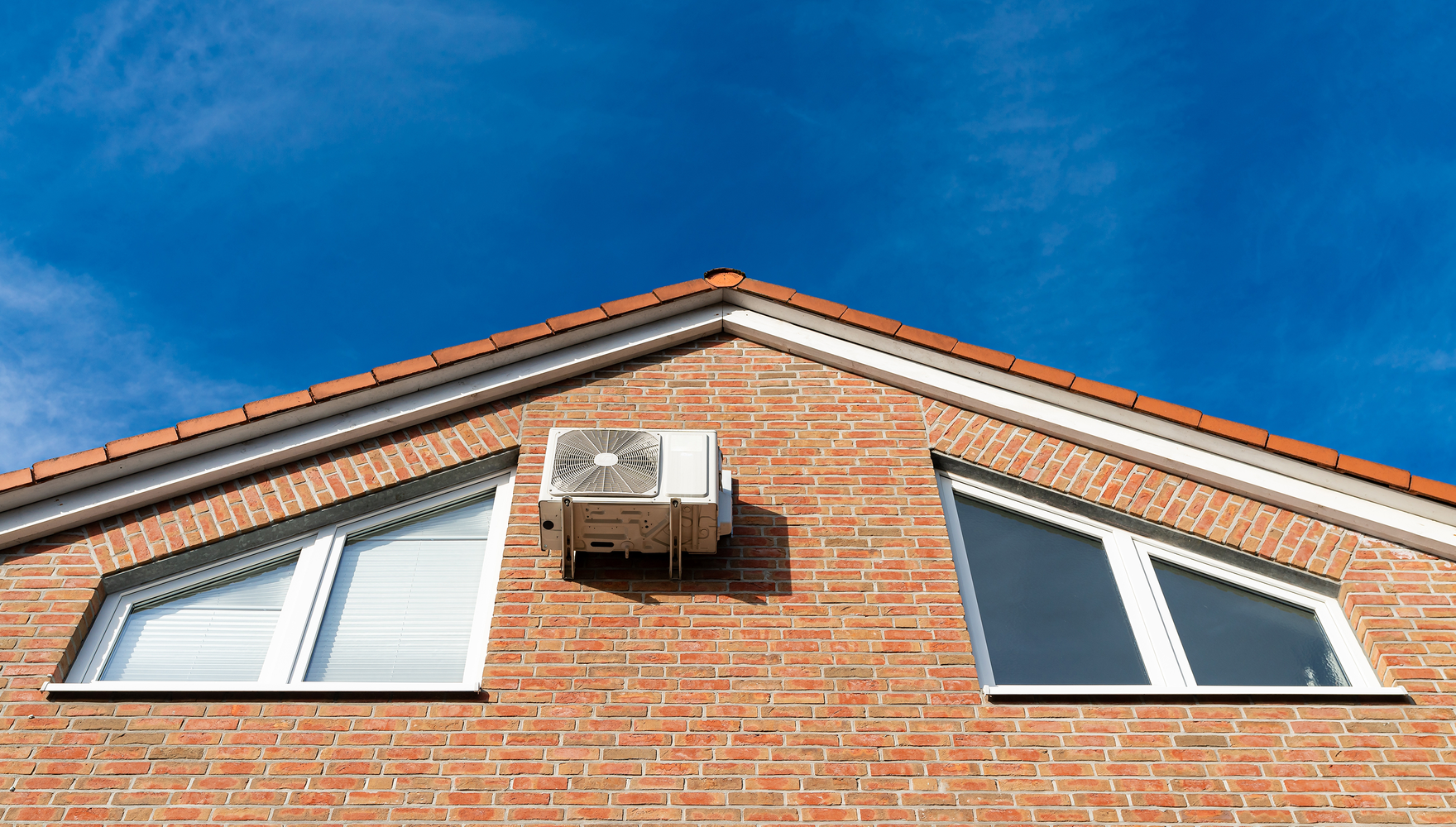
If we just look at the summer, for example, the utility needs to first ask, “Do you even have a thermostat that’s capable of adjusting your air conditioner?” Because assuming that everyone can set their temperature where they want them to be assumes that everybody has a centralized air-conditioning unit. It misses people with window units, it misses people that don’t have the money to afford those window units and are just trying to do it with fans, and it also will miss people who have broken units that they couldn’t afford to fix.
That fundamentally misses a large portion of people who are at risk in the summer, but it also then leads to some oversights in terms of the energy transition. I talked about energy efficiency a little bit earlier in our talk, and when people are deploying efficient cooling systems, one thing that they typically expect to see is that once that household gets the nice cooling system, it’s running 80 percent more efficiently. So, the energy usage should go down, and that is primarily because they’re assuming that the home was using as much energy as they wanted to achieve a comfortable temperature before they got the efficient system.
But sometimes what you see is that because we did not have data on who didn’t have an air conditioner, you’ll see that, okay, this home, they got a new heat pump, heat pumps provide both heating and cooling. The utility expected that all the energy usage would go down because they replaced their old heating system.
But they forgot to ask, “Did the home even have a cooling system?” Some utilities actually have declared these heat-pump deployment projects unsuccessful because they were measuring success by reduction of energy use. But then all of a sudden they say, “Oh, well, overall in the summer, the energy use went up, so this program didn’t work.” And it’s like, no, you probably just saved that household from being at risk during heat waves and having heat stroke and heat illness.
You made their life so much better because obviously if they’re spending the money on it or they’re using energy at this time, they wanted to and they couldn’t before because their home didn’t have an air conditioner, or that one window unit they had in one room of their home could not cool their entire house.
Because of that data limitation of how much infrastructure do people have in their homes—where do they want to set their thermostats? Where would they like their indoor temperature to be? How far away are they from that ideal energy-use standpoint?—All of that lack of data provides this huge limitation on actually achieving what I would call a just energy future, because as we are building out the grid—making it more reliable, making the generation have cheaper options—the goal is to have lower bills, but it’s also to be safe [and] warm in a comfortably lit house so that you can actually do all the things you need to do in order to be a productive member of society.
Daniel Raimi: Yeah. Right. Of course, of course. You’ve outlined some of the challenges. In the recent article you wrote, you also outlined some of the areas where progress has been made in understanding and quantifying these metrics. Obviously, your company is making progress on some of these things, but can you give us an example or two of what you had in mind with where progress has been made?
Destenie Nock: Yeah, I would say that in terms of progress being made, you do see a good amount of equity-mapping tools that are being incorporated into state planning processes. I think that that’s a pretty big win, because if you don’t know where the issues are occurring, it’s really hard to try to have targeted outreach to people in need.
With weatherization and energy-assistance programs, having improved data-tracking and outreach strategies I think is very important. One of the things that you also see is that some utilities are experimenting with more equity-centered rate design and resilience planning. One of the things that I have been working on is I also speak in regulatory proceedings and the Massachusetts Office of the Attorney General had invited me to come and speak as a part of their docket [no.] 2415, which is their energy-burden rate case [docket], and they actually were proposing a low-income discount rate that would provide low-income houses with a different tier of charging.
That’s a really important move for us in this society, especially because there are going to be different amounts of the energy bill that people can afford given how rates are increasing over time. That is typically how it has been done in the past, that high-energy users like our commercial industry would subsidize low-energy users, so that was more the residential sector.
But as our homes have gotten bigger and bigger for those that are able to afford that, and we also just have more wealth disparity across the nation, I do think that it’s unrealistic to assume that we will have everyone paying the same exact rate no matter what. I do think that in the future, it is good for high-income electricity users to subsidize the low-income electricity users.
Daniel Raimi: Yeah, I’ve seen proposals about that in California and elsewhere with, I think it’s called something like income-based fixed charges maybe is the term that is coming to mind.
Destenie Nock: Yeah, I’ve seen that. I’ve seen different discount rates, I’ve seen a low-income discount rate, an income-challenged discount rate. There’re a lot of names for it. At the end of the day, it’s all about who subsidizes who. One of the challenges is if people in the low-income brackets are subsidizing high-income households, which tends to happen because their houses are older, so they tend to use more electricity to reach the same level of comfort, then that makes it challenging to even save the capital to update their house at some point. That also needs rebalancing, I think, in society.
Daniel Raimi: Yeah. I was also thinking about prices varying across consumer types. If my memory is correct, residential electricity prices are typically higher on a per kilowatt-hour basis than commercial, industrial, or other users. You certainly wonder, as these data centers are growing, whether that gap might be narrowed as well.
Destenie Nock: Yeah. I think that’s also from back in the day where a lot of commercial entities didn’t bring their own generation. When you’re looking at some of these hyperscalers and they are bringing their own generation, now the per kilowatt-hour price is going to be impacted by that. You have a part of this utility death spiral where they’re getting off the grid, but they want to still be connected to the grid for backup power capabilities.
And so then the question is, How do you charge for that reliability that the grid infrastructure provides when traditionally the distribution and transmission lines were paid for as a function of the energy usage? A part of that bill does go to the distribution and transmission lines.
Daniel Raimi: Yeah. Artificial intelligence and data centers and electricity—a topic for another day.
Destenie Nock: Yes.
Daniel Raimi: Let me come back to policy. As you mentioned, there are some US states, and of course the federal government under the previous administration, was making considerable effort to try to track energy-justice and environmental-justice issues and really try to address them. When you think big picture about the policies that have been implemented, whether or not they still exist, are there any key lessons that stand out for what you think can be most effective moving forward?
Destenie Nock: From all the work that I’ve done with the Massachusetts Office of the Attorney General, and just being more involved in the regulatory landscape over the last few years, a big part of energy justice and achieving energy justice is in the tracking. So, knowing who is in need of assistance and also who has historically gotten the benefits of the energy transition and where have those benefits not gotten to—which communities have been left out of those benefits.
I think that was a big thing of the Justice40 initiative that was so great to see, and I was really sad to see that go. But then on top of that, I was really surprised when I started working with the Massachusetts commonwealth, that they had said they wanted me to come in, help out with the energy-affordability case and the energy-burden docket, and they wanted me to help them write out a plan for their long-term working group.
I was like, “Okay, great. Happy to help you with energy affordability. What exactly is your definition of energy affordability?” They didn’t have one. So it’s really hard to reach a North Star that doesn’t exist. We actually spent the first few weeks—a month—going back and forth on an actual definition of, What does it mean to have affordable energy?
If your house is cold because you just love wearing sweaters and you hate the heat, then once we made that definition—and it’s nice that it’s included in the [Interagency Rates Working Group’s] actual report, that definition—then it became easier to have conversations about, “Okay, if we wanted to do a low-income discount rate, what is the goal now of that discount rate? What are we trying to achieve?” It wasn’t just the percent of income spent on the bills anymore. It wasn’t just energy burden, but it was a reduction in the energy burden and a reduction of people limiting their energy use to save money on their bills.
Now you can have a richer discussion, but then also talk about where the utility has levers they can pull to try to assist with that and where you might need to think more creatively or bring in other entities. For example, with pipe-freeze risk reduction, a part of that’s going to be the utility for the electric and gas side, but it’s also probably going to come from the water utility as well, reaching out to households.
Now you might have a more holistic solution, because if somebody’s coming to their water utility for help and support and saying all their pipes burst, that’s going to be the perfect time to intervene to say, “Okay, we’re going to help you with your water side, but let’s also understand why your pipes burst. Are you struggling to pay your electric and gas-heating bill? Do you want us to help you sign up for those affordability programs through the electric and gas utility?”
Because, a lot of times, we’ve actually found through the work at my company that households who qualified didn’t know that they qualified or they didn’t know the benefits or how much money they could get from actually being involved in these programs. And so, they didn’t invest the time because there’re so many needs that they have. That has been a really big lesson for policy efforts—that trying to work in an energy silo and solve the energy crisis by only working in the energy sector is just not realistic. You need a holistic solution. I think that a holistic policy solution is super important for addressing energy-justice issues in addition to gathering the data and working with multiple entities.
Daniel Raimi: Right, absolutely. Yeah. Energy is not a silo, like so many other parts of our world.
Destenie, I’d love to ask you one more question before we go to our Top of the Stack segment, which is just to get really concrete. You lay out some particular steps in your paper that outlines the things that researchers can do, energy companies can do, and policymakers can do to really measure and track these energy-justice metrics in a more holistic way. We just have a couple minutes left, but I’d love to hear a couple examples you might want to share on that front.
Destenie Nock: Yeah. I think that at the high level, it requires a lot of change. Utilities must adopt equity and justice metrics as core performance indicators and policymakers are going to have to design programs that are accessible by default. For example, there’re a lot of programs where you have to opt in to providing your information, but for different needs and for communities that are struggling, we know that if you’re struggling in one sector, you’re most likely struggling in another.
For example, if you are visiting the food bank because you are food insecure or you’re worried about where you’re going to get your food, then we know that you might also be having issues with where you’re going to get the money to pay your energy bills, [and] where you’re going to get the money to pay your water bill. Policymakers need to design programs that are accessible by default and more of an opt-out. Once you’ve given your information for one of these programs, then we should have your information shared around and give you the community of support.
From a research side, researchers are going to need to continue to build tools that reflect the diverse needs of our households. Household energy needs vary by the age of the home, the energy infrastructure in the home, and just how people are living in that house. The energy burden, or the percent of income people spend on their [energy] bills, for a natural-gas-heated home is going to be very different from the amount of income needed to keep an oil-heated home warm.
That is going to be a big need in our models because assuming that everybody has one energy-infrastructure type is going to really hide the challenges that people are finding when they’re at the tail end of the spectrum for those electric-resistance homes and those oil-heated homes. Overall, I think that really trying to build models and build policies that capture the wide range of energy needs that households have is going to be so important for making sure that the energy transition is just and fair.
Daniel Raimi: That’s a great point, especially for our research-wonky audience, many of whom probably do build models and maybe have one running right now on their computer.
Destenie, this has been a great conversation. Thank you so much for coming back on the show and sharing this work.
I’d love to ask you now the same question we ask all of our guests at the end of each episode, which is to recommend something that you think is really great. It could be something you’ve read or you watched or you heard, could be related to energy or environmental issues, but we’re not that picky. So, what’s at the top of your literal or your metaphorical reading stack?
Destenie Nock: At the top of the stack, I would say that one book that I read that still sticks with me to this day is Evicted by Matthew Desmond. That one is where I really understood the low-income household’s experience because in there he touches on energy, but he really touches on what it is like to be a person that has these housing challenges and is at risk of eviction. He just had followed so many people in the community where there’s no way to unhear, unsee, or unread that book. It has just stuck with me throughout my entire career.
If anybody wants to read a book to understand the challenges that some households go through when it comes to just surviving on a day-to-day basis and why housing and energy are so linked, I would encourage them to read Evicted or listen to the audiobook. The audiobook was actually pretty good.
Daniel Raimi: Very cool. That is a great recommendation.
Well, one more time, I want to say thank you, Destenie, for your work, for coming on the show, and congratulations on Peoples Energy Analytics. It sounds like you’re doing really great work there.
Destenie Nock: Thank you so much.
Daniel Raimi: You’ve been listening to Resources Radio, a podcast from Resources for the Future, or RFF. If you have a minute, we’d really appreciate you leaving us a rating or a comment on your podcast platform of choice. Also, feel free to send us your suggestions for future episodes.
This podcast is made possible with the generous financial support of our listeners. You can help us continue producing these kinds of discussions on the topics that you care about by making a donation to resources for the future online at rff.org/donate.
RFF is an independent nonprofit research institution in Washington, DC. Our mission is to improve environmental, energy, and natural resource decisions through impartial economic research and policy engagement.
The views expressed on this podcast are solely those of the podcast guests and may differ from those of RFF experts, its officers, or its directors. RFF does not take positions on specific legislative proposals.
Resources Radio is produced by Elizabeth Wason, with music by me, Daniel Raimi. Join us next week for another episode.