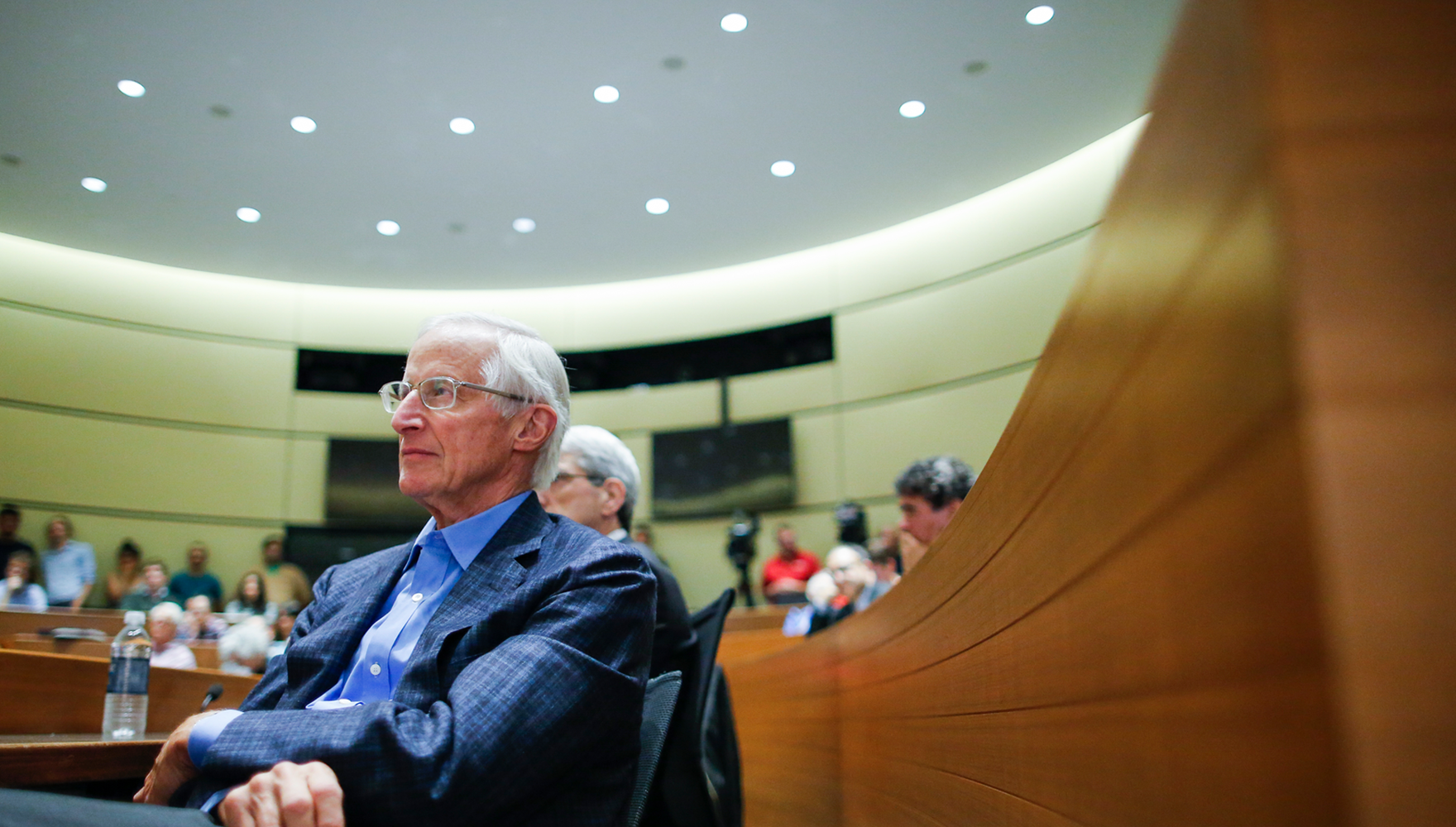

In this episode, host Kristin Hayes talks with Robert Stavins about the policy contributions of the late Nobel laureate economist William Nordhaus, who passed away last month. Stavins, a Harvard Kennedy School professor and former co-chair of the Resources for the Future Board of Directors, had a professional relationship with Nordhaus for more than two decades. Nordhaus was the first well-known economist to consider climate change in his research; Stavins asserts that Nordhaus’s work took its trajectory as a natural outgrowth of incorporating externalities into economics. Nordhaus was famous for his Dynamic Integrated Climate-Economy (DICE) model, which the Obama and Biden administrations applied in their policymaking. Although he stuck to academic research and not advocacy, Nordhaus took interest in decisionmakers having access to knowledge that facilitates good decisions; he worked a brief stint in the Carter administration. Stavins discusses the ways in which Nordhaus made policy contributions (through participation, direct influence, and indirect influence), why Nordhaus exerted such broad influence and won the Nobel Prize, how “climate clubs” fit into Nordhaus’s legacy, and more.
Listen to the Podcast
Audio edited by Rosario Añon Suarez
Notable Quotes
- Open source makes research accessible: “Something very important is that it was open source. From the very beginning, he made sure that all the code was available. Now, that’s much more common today within economics, so that other people can replicate your work … [Back] then, it was extremely unusual, if not unique. He made it accessible broadly, so everyone could play around with it. They could modify it if they liked, or they could look at particular scenarios. And I think that’s one of the reasons (in addition to its excellence) that the DICE model became so important.” (5:54)
- Not the first, but the best: “Henry Ford did not produce the first car in the United States; there were others before his. But he brought together that idea of a car with, it turned out, a very important methodological innovation—an assembly line—and produced the Model T. That’s the way I think of Bill’s contribution. Integrated assessment models were around. He produced one that was even better, with a specific technology that he had from economics, and then he had the wisdom to make it open source and available. Put all that together, and I think that’s what explains a lot of his influence and prominence.” (18:48)
- Remembering William Nordhaus: “As a person, as an individual … he was very straightforward, scrupulously honest. He loved learning. He was an effective leader, which is why he played so many important administrative roles at Yale University. But most of what strikes me … is that he was kind and thoughtful … he demonstrated that kindness and thoughtfulness over and over.” (23:32)
Top of the Stack
- “William Nordhaus Dies; Nobel Winner Influenced Climate Policy” obituary by Lydia DePillis
- “Rolling the Dice in the Corridors of Power: William Nordhaus’s Impacts on Climate Change Policy” by Joseph E. Aldy and Robert Stavins
- “Building a Scalable Climate Coalition for Heavy Industry” by Catherine Wolfram, Joseph Aldy, Candido Bracher, Gregory Casey, Vaibhav Chaturvedi, Kimberly Clausing, Carolyn Fischer, Christian Gollier, Allan Hsiao, Frank Jotzo, Marcelo Medeiros, Kyle Meng, Athiphat Muthitacharoen, Axel Ockenfels, Mari Pangestu, Marilyn Pereboom, Arathi Rao, Ivan Rudik, Daouda Sembene, Naomi Shimberg, E. Somanathan, Dustin Tingley, and Jennifer Winter
- The Second World War, a six-volume history of World War II by Winston Churchill
The Full Transcript
Kristin Hayes: Hello and welcome to Resources Radio, a weekly podcast from Resources for the Future. I’m your host, Kristin Hayes. My guest today is Robert Stavins, the A. J. Meyer Professor of Energy and Economic Development at the Harvard John F. Kennedy School of Government. I will note that this is one of many, many affiliations that Rob holds, but I’ll just pick that one, for the sake of brevity. You’re welcome to look up his full bio online. I will also note that Rob recently retired from the RFF Board of Directors after many years of service, and that’s where I first interacted with him.
So, Rob is joining me on the show today to talk about the life and legacy of William Nordhaus, who was a Nobel laureate and a longtime economics professor at Yale, and who passed away on October 30, 2026. Dr. Nordhaus (or Bill, as he was known to his friends) was a real powerhouse in the world of climate economics, and we wanted to take just a bit of time here on Resources Radio to remember his contributions. Stay with us.
Hi, Rob. Welcome to the show. Thank you so much for coming on. We realized it’s been a while since we’ve had you, so it’s great to be talking with you today.
Robert Stavins: It’s great to be with you, Kristin.
Kristin Hayes: Thanks. I usually ask our guests to introduce themselves, but this time I’m going to ask a slightly different introductory question, since this is an episode that’s dedicated to the memory of someone else. I’d like to ask how and when you first met Bill Nordhaus, and how did you interact with him over the years?
Robert Stavins: I think Bill and I first met at the Aspen Institute in Colorado, and I will estimate that it was 25 years ago. I think he invited me for a session or a program that he was putting together.
In terms of how I interacted with him subsequent to that, numerous times. Dozens and dozens of times. Many phone calls.
Once or twice a year at the research workshops of the National Bureau of Economic Research. At Harvard, when I invited him to come here for seminar presentations. At Yale, when he invited me to go there for seminar presentations. And then at various other kinds of conferences and events that were focused on climate change.
Kristin Hayes: Well, that’s great. And I know that your professional lives intersected in a lot of ways. That’s one of the reasons that we, of course, asked you to be a guest today, but it’s great to just have a little bit more of that context.
You mentioned the magic words: “climate change.” Way back in the 1970s, when Dr. Nordhaus started working on climate economics, I think it’s fair to say there were hardly any economists who were working on climate. So, I’ll invite you to answer this question for yourself, but I also am wondering if you can just reflect on how he came to focus on the topic ahead of his time, if you will.
Robert Stavins: I think he was the first economist—certainly the first economist of any prominence—to look at climate change.
It’s either my recollection, or maybe it’s just my guess, that the way it happened was that he first got interested in the environment other than climate change. I think that the way he first got interested in it was with regard to his work on the national income accounts for the US government, and looking at ways that those national income accounts could go beyond the typical measures of gross domestic product. In particular, looking at resource depletion, environmental degradation, valuing work (at that time by housewives, essentially, within the home) that wasn’t priced. I think that was how he first began to think about incorporating externalities into economics.
Kristin Hayes: And of course, the work that Dr. Nordhaus and Paul Romer won the Nobel Prize for revolves around the creation of something called the DICE model. So, I wanted to give you a chance to talk about, in this long career that he had, there was nonetheless this piece that got celebrated the most. So what is that model, and what made it such a break from what had come before? Why was it really groundbreaking?
Robert Stavins: Well, it’s an integrated assessment model. In other words, a model that combines science and economics, essentially. Very broad-based—a macro perspective, although often with micro-foundational inputs into it.
The DICE model was one focused on climate change. It wasn’t the first integrated assessment model, or IAM, to look at climate change. His was in 1992, I believe. And back in 1983, the Edmonds-Reilly model (so, it had been around for nine years) began to look at that. But Bill’s was the first model that was with really superb economics, I would say.
Also, something very important about it is that it was open source. From the very beginning, he made sure that all of the code was available.
Now, that’s much more common today within economics, so that other people can replicate your work. Indeed, as you probably know, some professional journals require that. But then, it was extremely unusual, if not unique. He made it accessible broadly, so everyone could play around with it. They could modify it if they liked, or they could look at particular scenarios. And I think that’s one of the reasons (in addition to its excellence) that the DICE model became so important.
Kristin Hayes: Do you know why he was so committed to that open-source way of being, way before that was, as you said, as common as it is today? Do you know where that impulse came from?
Robert Stavins: I can’t say for sure. My guess (maybe I’m just saying a model that’s consistent with the data) is that his personality type was to be very generous with his time, very generous with his thinking, very straightforward. And so all of that, to me, is basically consistent with someone producing a model and saying, “Okay, here it is, guys. Go ahead and work with it, if you want to.”
Kristin Hayes: Yeah, and it’s interesting to think about whether (again, pure speculation on my part) that actually maybe led to some of the interest in open-source model development—model application over time, too. Whether he set a precedent that all of us are now reaping the benefits of. Maybe that’s giving way too much credit to this one example, but I do think it’s really interesting to hear that, as you say, it matches the generosity of his personality.
Well, I’m going to ask you one more question about that awarding of the Nobel Prize. I had been reading that some in the climate community, in particular, actually criticized the awarding of the Nobel Prize to Dr. Nordhaus. I found one particularly provocative headline in a Los Angeles Times op-ed. The headline reads, “The economics Nobel went to a guy who enabled climate change denial and delay.” Oof.
So, here’s someone who’s dedicated his life to climate economics, and yet faced a lot of criticism within the advocacy community at that moment. I’m just wondering if you can explain that controversy a little bit, maybe put it in the context of why some people felt like he actually wasn’t as helpful a voice in the climate debate as they might have liked.
Robert Stavins: Well, I can explain that. And let me first validate what you’re saying: That still remains today.
I know this, because I was quoted a couple of times in the New York Times obituary of Bill Nordhaus. Because of that, I received notifications when people online were making comments about the editorial. I looked at the comments, and I read through the first 10, maybe. There were hundreds. The first 10, every one of them was negative, very much along the lines that you’re saying. I might expect that in a Wall Street Journal obituary, but not in an obituary in the New York Times.
Kristin Hayes: Yeah, it was eye-opening for me, too, and it seems like it has a lot to do with his longtime affinity for a carbon price, but perhaps at a rate that was lower than what many people felt was needed to actually move the needle on climate change. If you can say just a little bit more about that, that’d be great.
Robert Stavins: It’s absolutely correct that Bill was not an advocate. So many academics are also advocates.
In the case of climate change, they might be on either side of the issue, but nevertheless, they enjoy being advocates, as well. He did not. He was not an advocate.
His view was, “Let the chips fall where they may,” and whatever the research would show, to the best of his ability, then that’s what he would publish.
Now, remember that, with his work with the DICE model, he was searching for the efficient time path, a dynamically efficient time path of action over time. And because of that, he’s immediately balancing, of course, benefits and costs, which is taken for granted at places like Resources for the Future. But in the advocacy world, that isn’t always taken for granted. And the result is that, particularly early on, he was coming up with what is now called the social cost of carbon—but a carbon price that was lower than what people wanted.
Kristin Hayes: Interesting. Yeah, and it’s interesting to think about how his own perspective on that may have changed over time, too.
I know here at RFF, we’ve done a lot of work on the social cost of carbon and how that’s actually evolved as we learn more about impacts. I imagine that his own thinking perhaps evolved, too. I don’t know if you have any reflection on that.
Did he also revisit some of his earliest estimates of what would be useful, or was he fairly consistent in thinking that he had really landed on the most efficient solution?
Robert Stavins: No, I would say over time that he continued to update the DICE model on a regular basis. I mean, there must be a dozen, maybe more, times that it was updated. Gradually—over time, as a result of changed estimates on the biophysical side of what the damages would be of climate change—his estimates changed.
And it’s true, what you just mentioned about RFF: RFF played an extremely important role (probably still does) in coming up with estimates of the social cost of carbon when the first Trump administration stepped away from that, in order to continue the process.
In the work that RFF did, as well as the work done in the Obama and the Biden administration (as I recall in the case of the US government), of the three integrated assessment models they used, including most recently with Biden, one of them was the DICE model.
Kristin Hayes: Yeah, it’s funny to talk about the DICE model. I feel like when I came to RFF in 2009, it was almost talked about in reverential terms, and you can see why. It really was so seminal. But yeah, all the way up and through the 2020s, it was obviously very central to how people were still thinking about these calculations and trade-offs, as you said. So, it has a long legacy behind it for sure.
You mentioned that Bill was not an advocate, that that was not how he presented himself, but I would say it seemed like he definitely interacted with the policy process in various ways. He wanted his work to matter. He wanted to input information to people in decisionmaking positions.
I think he served a brief stint within the federal government. I think that was on the Council of Economic Advisers during the Carter administration—so, a while ago, now. But he largely connected with that process from inside academia. So, if he’s not an advocate, how would you characterize his influence on climate-policy thinking within the United States?
Robert Stavins: In three ways. In my outlining of these three ways that he contributed, let me give credit to my friend and colleague here at Harvard Kennedy School and someone who is, I believe, a fellow at Resources for the Future: Joe Aldy. We wrote an article together for a journal, Climate Change Economics, I think about four or five years ago on the topic of, What are the policy contributions of Bill Nordhaus? We thought about it very, very carefully. And in fact, the reporter for the New York Times who wrote the obituary, she had come across that article, which is why she called me to talk for his obituary.
In any event, there were three areas. The first is direct participation. The case of many people from RFF serving on the [US Environmental Protection Agency] EPA Science Advisory Board in previous administrations would be an example. And in his case, he was a member of the Council of Economic Advisers, as you said, during the Carter administration. So, that was, like, 1977 to ’78. That was not a role in which he had a lot of influence on climate change policy, but that was influence on public policy more broadly.
And then a second category is direct influence, which is not very common. I think economists think that we have a lot of direct influence on policy, but usually, we don’t. But he did, in the sense of the DICE model. It wasn’t just the kind of influential of, “Oh, I saw a number that influences me in government,” but rather, the DICE model was used for the official government calculation of the social cost of carbon in the Obama and Biden administrations.
And then the third area is indirectly informing policy. It’s very hard to characterize it. One of the reasons that it’s difficult is that, as the saying goes, “Success has many fathers, but failure is an orphan.” A lot of people take credit for anything that’s successful in government. But the truth is that, at EPA, at the Department of Energy, in the Office of Management and Budget, in many parts of the government, Bill Nordhaus’s work was influential in the sense of it modifying how people thought—maybe because of something that had happened five years earlier or 10 years earlier, but it changed their perceptions.
Kristin Hayes: Yeah, that’s really interesting. I have two follow-up questions for you, if I could.
Robert Stavins: Sure.
Kristin Hayes: I’m super curious, what led you to want to write something about Bill Nordhaus years before he passed away? Obviously you saw him as a pretty seminal figure years ago. What led you to want to write that article?
Robert Stavins: It was a commissioned piece for Climate Change Economics by Rob Mendelsohn, who’s also at Yale, like Bill. He was doing an issue of his journal completely dedicated to the work of Bill Nordhaus, and he asked me if I would like to write about [Bill’s] influence on policy. Everything else was going to be on [Bill’s] scholarly work itself. And I said, “Of course! Can I invite someone to be a co-author?” And my first choice, as it has been for a number of things I’ve done over the years, was Joe Aldy. That’s how we came to do it.
Kristin Hayes: That’s really interesting. I’ve been thinking a lot about people’s legacies in recent years. It’s something that’s been on my mind for lots of reasons, and it’s always really moving when you realize how long the tail of someone’s legacy is and that people honored them—again, not just after they’ve passed away, as we’re doing, but during their own lifetime. That’s really, really lovely. I’m glad you got the chance to do that.
Robert Stavins: Well, one of the striking things about the Nordhaus obituary goes to the heart of what you said. Normally, obituaries of prominent people at the New York Times are gradually drafted over decades. So, they’re all ready to go, and they have to put in the cause of death and maybe one quote, but they’re ready.
But the author—she’s not an obituary writer normally; she’s an economics writer at the Times—she mentioned to me that they didn’t have one ready. So, she was working quickly to write one, which is why I think, if you read the obit, it focused so much on his policy contributions rather than his broader contributions which won him the Nobel Prize.
Kristin Hayes: Yeah. Interesting.
Well, my second quick follow-up question for you was asking a little bit more about why you think he was so influential. Maybe that seems like a silly question. I mean, on some level he had a great tool, he wanted it to be relevant, so it was relevant. But I’m curious if you have a sense of, Was he really just ahead of his time, and he filled a gap that other people didn’t even really realize was there? Was he a uniquely good communicator or relationship builder? What really allowed him to have not the advocacy impact, but the nonetheless real policy impact that he had?
Robert Stavins: I would compare it to Henry Ford. Henry Ford did not produce the first car in the United States; there were others before his. But he brought together that idea of a car with, it turned out, a very important methodological innovation—an assembly line—and produced the Model T.
That’s the way I think of Bill’s contribution. Integrated assessment models were around. He produced one that was even better, with a specific technology that he had from economics, and then he had the wisdom to make it open source and available. Put all that together, and I think that’s what explains a lot of his influence and prominence.
Kristin Hayes: Interesting. Okay.
Well, I want to ask you about one other idea. We’ve talked a lot about the DICE model. We’ve talked a little bit about his interest in carbon pricing. I wanted to ask you about one other idea that I think has become at least somewhat associated with him. This is an idea that I think came to prominence later in life, but later in his career he is a person who talked about “climate clubs.” I’ll put that in quotes and ask you to explain that a little bit more. But, climate clubs as a way around the free-rider problem. Lots of different economic terms in there.
Maybe I can just ask you to explain for one second what that means, and then maybe how that fits with his earlier work, and what you see as the long-term trajectory of that way of thinking.
Robert Stavins: So a “club,” both in economics and in political science, refers to a coalition of the willing—just like the members of a country club, that gives itself some benefits like access to the golf course, but puts in place a price of entry, like you have to pay a fee. That’s what a climate club is.
An example of a climate club that already exists, therefore, is the European Union Emissions Trading System combined with the carbon border adjustment mechanism. That is a climate club.
Bill was not the first economist or political scientist to think about a climate club, but he was the most prominent—partly because, in his Nobel address, that’s what he talked about.
But before him, Scott Barrett in economics and David Victor in political science had looked at climate clubs and had been proponents of climate clubs. He played a very important role.
It continues to be influential, this notion of a climate club, because at COP30 last year in Belém in Brazil, the Brazilian Ministry of Finance put forward what they called an open coalition of carbon-compliance regimes. It’s an open coalition. The important thing is that the open coalition was then joined by the United Kingdom, the European Union, and China, as well as other countries. So, it became very important. It is essentially a climate club. How it evolves, we don’t know.
To give credit again to my colleague and your good friend and acquaintance, Joe Aldy, there’s an initiative from Harvard and MIT, the principal authors of which are Joe Aldy, Dustin Tingley (who’s a political scientist here), and Catherine Wolfram (who I believe succeeded me as vice chair of the board of RFF; she’s at MIT). They have a really wonderful proposal for how to take that open-coalition idea from those governments and make it an effective carbon pricing club.
Kristin Hayes: Interesting. So, it sounds like he wasn’t necessarily a complete pioneer, but he used his communications chops and his venues to elevate that in the discussion in a way that has been helpful as time has gone on and these ideas have continued to percolate. Is that a fair assessment?
Robert Stavins: I think that’s a perfect assessment. I mean, he used his platform. Usually, there’s this Nobel laureate syndrome: “I won in chemistry, so I could be an expert on international relations,” or whatever. He did not have that because he was a modest guy, but he did use the platform very effectively to promote the idea of climate clubs.
Kristin Hayes: Interesting.
Well, let me ask you one closing question about Bill Nordhaus. When you picture him—this person who you obviously interacted with many, many times in a professional context—what do you want our listeners to remember, whether it’s about his work, or about him as a person?
Robert Stavins: Well, I’ll say, him as a person, as an individual, that he was very straightforward, scrupulously honest. He loved learning. He was an effective leader, which is why he played so many important administrative roles at Yale University. But most of what strikes me, or I remember of being with him, is that he was kind and thoughtful, particularly for people. I was junior faculty much of the time when I knew him, and he demonstrated that kindness and thoughtfulness over and over.
Kristin Hayes: Well, that is really lovely, and makes me even happier that we had a chance to celebrate him today and that you were willing to do that celebration. So, I really appreciate it.
I do want to close with our regular feature, Top of the Stack. I’d love to turn it over to you, Rob, for any more good content you might want to recommend to our listeners of any variety on any topic—but certainly, if you’d like to recommend something related to Bill Nordhaus, that’s great, too.
Robert Stavins: So this is not on Bill Nordhaus, and indeed it predates not his life, but certainly his professional life, because it’s back to World War II. I’m an amateur historian, I guess. I mean, I’m a consumer of history as an amateur. I read history books; in particular, US history and the history of World War II. And I am now in volume four of the six-volume history of World War II by Winston Churchill.
Kristin Hayes: Wow. Okay. All right.
Robert Stavins: There is a connection, because it was for that history of World War II that Churchill won the Nobel Prize in Literature. He didn’t win the Nobel Peace Prize; he won the Nobel Prize in Literature. And volume four is itself something like 1,400 to 1,500 pages long.
Kristin Hayes: Oh my goodness.
Robert Stavins: So it’s a real task to read the six volumes. But for people who love history and love Churchill, as I do, it’s a real treat.
Kristin Hayes: Wow. I honestly had no idea that Winston Churchill had won a Nobel Prize in Literature. Not going to promise that I’m going to pick up that Top of the Stack, because that would be a thick stack. But I am going with my family to Normandy next year, so I might have to pick and choose my pieces. That’s a great recommendation.
Robert Stavins: I am envious. I assume you’ll go to the beaches where D-Day—
Kristin Hayes: We are. We’re actually taking the ferry over from England to have the somewhat full experience. This is my brother’s request, so we’re doing it. And I will have Winston Churchill as my guide.
Robert Stavins: That’s fantastic. Are you going to be in London?
Kristin Hayes: Yeah, we’re starting out from London, then going to Portsmouth, and then heading across the channel from there.
Robert Stavins: So in London, before you go to Normandy, make a reservation to go to the Churchill War Rooms.
Kristin Hayes: Yep. I love the Churchill War Rooms.
Robert Stavins: Oh, you’ve been there?
Kristin Hayes: I have, yeah.
Robert Stavins: Yeah, I’ve been there several times with my wife, my children, etc. Well, enjoy.
Kristin Hayes: Thank you! And thank you again for this conversation; I really appreciate it. It’s been great talking.
Robert Stavins: Great for me. Thanks.
Kristin Hayes: You’ve been listening to Resources Radio, a podcast from Resources for the Future, or RFF. If you have a minute, we’d really appreciate you leaving us a rating or a comment on your podcast platform of choice. Also, feel free to send us your suggestions for future episodes.
This podcast is made possible with the generous financial support of our listeners. You can help us continue producing these kinds of discussions on the topics that you care about by making a donation to Resources for the Future online at rff.org/donate.
RFF is an independent, nonprofit research institution in Washington, DC. Our mission is to improve environmental, energy, and natural resource decisions through impartial economic research and policy engagement. The views expressed on this podcast are solely those of the podcast guests and may differ from those of RFF experts, its officers, or its directors. RFF does not take positions on specific legislative proposals.
Resources Radio is produced by Elizabeth Wason, with music by RFF’s own Daniel Raimi. Join us next week for another episode.