


In this week’s episode, host Daniel Raimi talks with research colleagues at Resources for the Future—Senior Fellow Karen Palmer, Fellow Kevin Rennert, and Senior Fellow Margaret Walls—about the top 10 issues of 2025 they’ve been tracking in energy and environmental news from the past year. Among the topics they’ve chosen for conversation: public land sales, electricity load growth and affordability, fires and floods, California and its recent major package of environmental legislation, federal permits for renewable energy projects, and more. It’s a fun conversation with insights on the happenings in 2025 and some prognostications for the coming year.
Listen to the Podcast
Audio edited by Rosario Añon Suarez
Notable Quotes
- Federal permitting as a strategy to slow energy projects: “There’s been really a very comprehensive use of the permitting process to work against the deployment of renewables.” —Kevin Rennert (6:10)
- Federal response to natural disasters has become disorganized: “Poor FEMA [the Federal Emergency Management Agency] has been in a state of disarray. We got lucky this year that we did not have a lot of disasters.” —Margaret Walls (11:04)
- Public anxiety over electricity affordability: “Affordability of electricity is something that a week doesn’t go by when there’s not a headline in a major news outlet … We definitely have a lot to learn here about what the causes are, because understanding those causes are going to be important to addressing them.” —Karen Palmer (22:52)
- Recent increase in US energy exports: “The Trump administration has been trying to achieve this goal of energy dominance through a variety of strategies. And one of the big ways that they’ve tried to do this is by increasing US fossil fuel exports, particularly oil and gas exports, which have been rising dramatically over the last 5 to 10 years. But the administration is trying to boost that even further.” —Daniel Raimi (36:18)
Top of the Stack
- “What’s Happening to Electricity Affordability? in Five Charts” by Jesse Buchsbaum and Jenya Kahn-Lang
- “California’s Innovative Vision for Climate Policy and Energy Affordability” by Dallas Burtraw
- “California’s Revamped Energy and Climate Policies” podcast episode with Kate Gordon
- “Shifting Ground: Changes in Public Land Policies” webinar event from Resources for the Future
- “If/Then: A Last Hurrah for Transatlantic Fossil Fuel Energy Trade?” by Milan Elkerbout and Zach Whitlock
- Landman television series
- Haroun and the Sea of Stories by Salman Rushdie
- The Art Thief by Michael Finkel
The Full Transcript
Daniel Raimi: Hello, and welcome to Resources Radio, a weekly podcast from Resources for the Future. I’m your host, Daniel Raimi. This week, it’s our special end-of-the-year episode featuring three of my colleagues: Karen Palmer, Kevin Rennert, and Margaret Walls. In today’s episode, we’re going to have a little bit of fun talking about the 10 topics that we thought were the most interesting this year. It’s not exactly a Top 10 list, but it’s something close to it. In any case, you’ll hear that we’re having a lot of fun, and I hope you enjoy this episode, as well. Happy New Year!
Karen Palmer, Kevin Rennert, and Margaret Walls, welcome back to our special, extra-fun, end-of-the-year episode here on Resources Radio. It’s great to have you all.
Kevin Rennert: It’s great to be here.
Karen Palmer: Thanks.
Margaret Walls: Thanks, Daniel. Good to be here.
Daniel Raimi: We’re going to be a little silly this year, and we’re going to do something like a Top 10 list, where we each identify a few things in the news or in the world of policy that we think were really important that we want to talk about this year. We’re going to get started with Karen, and we’re going to talk about:
Everyone: The One Big Beautiful Bill Act!
Daniel Raimi: Karen, take it away.
Karen Palmer: Thanks, Daniel. Well, to tell the story, I want to start back in 2022, which is when the Biden administration passed the Inflation Reduction Act (IRA). And the thing that I want to focus on from that act is that it used tax credits, which had existed off and on and were existing for renewables, but they got extended by quite a bit and expanded by quite a bit. Basically, the idea is to use these tax credits to accelerate decarbonization of the electricity sector.
Another thing that happened in that act is, beginning in 2024, it wasn’t just about renewables. It was a technology-neutral approach to expanding clean energy. And the point back then was to keep these tax credits in place until we’d reached a level of national emissions that were 25 percent below 2022 levels. So, the One Big Beautiful Bill Act (or OBBBA) passed in July of this year, and that limited the application of tax credits for clean electricity in a number of ways, including moving up the start date for construction of projects to be eligible for either the production tax credit or the investment tax credit to mid-2026. And most projects had to be online by the end of 2027 to be eligible for these credits, which is substantially earlier than was the case under the IRA.
There are also limits put in place—stricter limits on foreign ownership of materials or components from certain countries that were identified, which could mess with supply chains and make it complicated to meet those new accelerated deadlines.
It’s important to point out that the OBBBA does allow for other technologies to continue to receive tax credits—like batteries, geothermal, and advanced nuclear—so those stick around for a longer period of time. What does this mean? Well, when the bill was being debated, we did some modeling here at RFF that focused on wholesale repeal of these tax credits. It’s a little bit more draconian than what actually ended up happening, but we found that it would reduce wind- and solar-capacity investment by hundreds of gigawatts by 2035 and raise average electricity bills between $75 and $100 per year in 2030. So, that’s substantial. And also increase power-sector emissions by 350 million to 400 million metric tons in 2035, so roughly 25 percent. So, it’s a big impact.
Daniel Raimi: Kevin, you are going to talk about:
Everyone: Federal renewables permitting!
Kevin Rennert: That’s right. So, Karen just talked about how the sort of federal support from the tax credits actually was reduced in this Congress, but there’s been sort of a whole-of-government approach to slowing down the deployment of renewables, and a lot of that has been coming from the Trump administration in terms of what it’s been doing on permitting of renewables projects.
Some of this has been at the project level, where if we look all the way back to April, there was a stop-work order on the 810-megawatt Empire Wind project, the offshore wind project which had previously been permitted and had already begun construction. I should say that action did later resume, after there was sort of a behind-closed-doors negotiation where suddenly the governor of New York started speaking positively about natural gas pipelines being resumed.
Another project in August that actually got stopped was Revolution Winds. It’s a $6.2-billion project off the coast of Rhode Island, which was actually 80 percent constructed and also had a stop-work order placed upon it. And that, later, was overturned by a federal judge, as well.
And even more recently, in October, the Bureau of Land Management canceled the Esmerelda 7 Solar Project in its environmental-permitting process and just sort of shut it down and said, “This is a group of seven projects that’s been moving together,” which is a novel new way of doing this, that is intended to speed up the process. And it said, “We’re stopping that process, but each of the seven projects can come back and start the process over again individually.”
So, that’s just some individual examples of the way that the Trump administration has been using the heft of the federal government, through the permitting process, to slow things down.
And these all kind of tracked with some of the memorandums that were coming out throughout the year. Secretary Burgum actually had a memo come out for [the Department of the] Interior, saying that all kinds of renewables projects (solar, wind, etc.) needed to be passed through his office directly for sign-off, which is clearly going to be slowing things down. There was a further memo saying that we should focus on capacity density for these renewables projects and for projects in general. So, fossil projects are expected to have a much higher capacity density in terms of megawatts per acre that are impacted. And that flowed down to the agriculture departments, to the Army Corps of Engineers in terms of prioritizing projects, and the permitting process, and so on. So there’s been really a very comprehensive use of the permitting process to work against the deployment of renewables.
And you would think that that would affect just projects on federal lands. But what’s been, I think, interesting to observe over the course of this year is the number of private projects that actually have some sort of interaction with the federal government, where, even though it’s a small component of what that private-land project needs, the fact that it has to go through the federal government, and the federal government is not playing ball with it, has really put a chill on investment in general.
Daniel Raimi: Kevin, can you give an example of what is the nexus between the small solar or wind project and the federal point of intervention?
Kevin Rennert: Sure, could be a lot. It could be that that particular project needs to have transmission that’s going to tie it into the transmission system that goes on federal land, or maybe it needs a Clean Water Act permit or something along those lines.
I think as we thought about it, we assumed it would be relatively limited, but it turns out that if you talk to developers, there are countless actions that actually require this. There was an American Clean Power Association study that came out that said that there were 69 permitting actions that were listed in the memo, that 29 of them actually apply to things that are on private lands. So it’s a pretty substantial nexus.
Daniel Raimi: Let’s go next to Margaret who is going to talk about:
Everyone: FEMA!
Margaret Walls: All right. FEMA is the Federal Emergency Management Agency, for all of you who don’t know. But FEMA’s been in turmoil this year, so we need to talk about that a little bit.
It began with the president saying, “We just need to abolish FEMA or eliminate FEMA.” Interestingly, earlier this month there was a Grist article that had the headline, “FEMA’s Terrible, Horrible, No Good, Very Bad Year.” And I think that pretty much says it. There has been a lot of back and forth on this idea of abolishing FEMA.
Just so everybody knows, FEMA handles all of the disaster-relief activities. The states also participate, but FEMA funnels a lot of federal dollars after a disaster for recovery. FEMA also offers grants for recovery. They operate very important grant programs that Congress appropriates money for, and also for recovery, and also for building resilience to events that are going to occur in the future. And then they operate some other kinds of resilience grant programs, which have all been axed. And then finally, they do other things, as well, but they run the National Flood Insurance Program, which is really the only place most people get their flood insurance, through the NFIP—the federal government.
There was, I think, three (or we’re on number four) acting administrators of FEMA. One person was put in place, and then he testified on the Hill and said, “Oh, we’re not going to abolish FEMA. We’re just going to reorganize.” And he was axed right after that. And then another person was put in place who was very controversial, who when the Texas floods happened (which we’re going to talk about in a minute), he was off the grid and couldn’t be reached. And he just quit in November. And so now, in December (we’re recording this in December), they have yet another one; I don’t even know who it is.
They’ve lost 10 to 20 percent of their workforce through various attritions—either firings, or voluntary separations, or other things.
And then finally, I want to mention that, as it turns out, today (we’re recording on December 11) is the day that the FEMA Review Council, which was put together by Trump through executive order earlier this year, was supposed to release their final report. And there have been some news stories. People have had access to this 80-page report and reported on what the recommendations are. But even as we speak—five minutes before we’re recording—the Washington Post is reporting that the White House has said they need to go back to the drawing board and rethink it because it’s not specific enough.
But a couple of things that are in it that have been reported is that FEMA is going to … Many people have called for it to be an independent agency, but their recommendation is that it stay in the Department of Homeland Security, its current home. They’ve recommended cutting the workforce in half and moving it out of Washington, giving it a new name. And also that the federal disaster assistance should be reserved for only very large catastrophic events, and that states need to handle the smaller events. I don’t think there’s details on what counts as “large” and “small.” They want the federal disaster-relief money to be issued as block grants, so then states would get the money and do with it as they wish. (Side note on that: They already have the option of doing that, and they don’t like it—states don’t want to take those block grants.) And then they want to encourage private-market provision of flood insurance. And I don’t know what they mean by “encourage.” Maybe that’s what we’re going to see when they go back to the drawing board.
But poor FEMA has been in a state of disarray. We got lucky this year that we did not have a lot of disasters. So, that’s one thing.
Daniel Raimi: All right. We’re going to come back to that topic of disasters in a few minutes with you, Margaret.
Karen, you’re up next, with:
Everyone: Load growth!
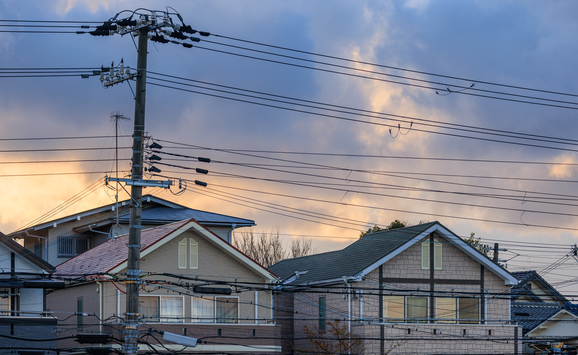
Karen Palmer: As Margaret mentioned, we’re recording this in December, and last night, I went to a holiday party—one of those Washington insider energy and environment … Well, I don’t know about “insider,” but there were a lot of people there talking about various policy things and from the energy space. And you couldn’t walk two feet from the bar without hearing somebody talk about load growth and data centers. So, I’m going to talk about load growth and data centers.
According to tracking by Grid Strategies, which is a small consulting firm that does work on grid-related issues, forecasts for summer peak load growth that system operators turn over to the FERC [Federal Energy Regulatory Commission] each year have grown essentially sixfold. Between 2022—when they suggested over five years, load was going to grow 22 gigawatts—and in 2024, it’s 120 gigawatts. So, it’s grown quite a bit. And the contributors to this “growth in load growth” forecast—they vary by region across the country, but data centers are expected to contribute substantially to load growth in much of the country, including regions where there hasn’t been much addition of data centers previously.
Some estimates see data centers contributing roughly two thirds of the anticipated load increases in the coming years, which could bring data centers close to 10 percent of total electricity demand by 2029. But these forecasts of large loads are really uncertain, and they’re very hard to pin down for a number of reasons, particularly on the AI side of things.
There’s a lot of intense competition among companies to win the AI race. And that need for speed that they have means that they want to move toward the best AI offerings that they can. Meeting this demand for AI requires building massive amounts of new electricity generation. And utility planners and regulators are trying to find a way to get a better handle on that growth. A couple of ways that are being considered are creating special interconnection queues, so basically queues and processes by which large loads are going to enter the grid. Or requiring some sort of financial commitment: so, before we take your expression of need for new energy demand seriously, you have to put some money down to help cover some of the costs that are going to be associated with meeting that demand.
Now, the Trump administration is making several efforts to facilitate load growth by AI facilities, including streamlining permitting, identifying data-center sites on federal lands, and directing the Federal Energy Regulatory Commission to issue a rule on interconnecting large loads. With respect to that last item, in October, the Secretary of Energy, Chris Wright, sent a draft advance notice of proposed rulemaking (also known as an ANOPR, to add to your list of acronyms here) on the interconnection of large loads to the FERC commissioner. So he sent this ANOPR to the FERC commissioners, inviting FERC to assert its authority to oversee interconnecting of these large loads—not just data centers, but it could be a large load from a manufacturing facility, for example.
And the reasoning is that they require a lot of electricity. They hook up to the transmission grid. FERC has jurisdiction over the transmission grid. However, historically, interconnection of loads has been the purview of state regulators. So, this is really jostling a lot of tradition and getting a lot of attention from people. And this new direction, it’s seen as important to the Trump administration’s strategy of promoting leadership in both AI and domestic manufacturing, but there’s going to be a lot of discussions out there. And some governors, including the governor of Florida, are resisting this type of addition of new loads. So, we’ll see what happens.
Daniel Raimi: Yes. I was reading about that, as some senators, as well, have been vocal in opposition. And we’re going to come back to what all of this means for electricity affordability in a few minutes.
Let’s go to Kevin, who’s going to talk about:
Everyone: The endangerment finding!
Kevin Rennert: That’s right. So, I think that many people that have paid attention to the climate policy conversation in DC at times may have forgotten that there was a time when EPA [the US Environmental Protection Agency] did not have the requirement to regulate greenhouse gas emissions under the Clean Air Act. And it turns out that that stems from a particular finding called the endangerment finding that the Obama administration made, many years ago at this point. And so from that fundamental finding flows the obligation of the agency to regulate greenhouse gas emissions as a pollutant under the Clean Air Act.
So, at the beginning of the Trump administration, there was a lot of discussion about whether or not the administration would simply look to rescind the regulations of greenhouse gas emissions and modify them in some way, or whether it would actually go after this fundamental finding that would then obviate all of those different regulations. And in general, what’s happening is it’s actually doing both.
And so the endangerment finding that is being reconsidered by EPA, EPA has proposed to interpret its own authority really narrowly under the Clean Air Act, which means that if it interprets it this narrowly, it would no longer have the requirement to regulate greenhouse gas emissions under the Clean Air Act.
So, the two different rationales that were put forward by EPA: One of them is very, very legalistic in nature, and it’s really about EPA’s overall authority to make the endangerment finding—the tie between vehicles and the harms from climate change and whether or not such regulations would actually even have an effect on the problem.
But then there’s this second piece, which is where I think many experts expected the administration to go, which is just talking about the interpretation of climate science. And this is relying on a recent DOE report that was done by five scientists, and really runs counter to the overwhelming consensus of the broader scientific community on the climate change impact, to say those effects have been overstated.
And just as a catchall, there was also a proposal to just rescind all the regulations of greenhouse gas emissions emitted by US vehicles, even if that finding were to be upheld. So, this is fundamentally important in that, if the administration is successful in winding back the endangerment finding, obviously EPA will no longer have the requirement to regulate these emissions. And this thing, that has been often held up as the foil to what Congress would or would not do, goes away. There’s also a conversation that if the Congress were not to act on climate change, EPA would step in and use its authority. Here, we’re seeing that that very much may not be the case. So, a lot to watch.
Daniel Raimi: And we’ll be watching it in the courts over the next months and years?
Kevin Rennert: We’ll see that there will be a finalization. So, public comments were finalized on September 15, and so then there needs to be a final action, and then we will see that play out in the courts. That’s exactly right.
Daniel Raimi: All right, we’re going to go back to Margaret with a really serious topic. We are trying to have a little bit of fun on today’s show, but this is a real serious one. But we’ll still give it our same energetic introduction, which is that Margaret will be talking about:
Everyone: Fires and floods!
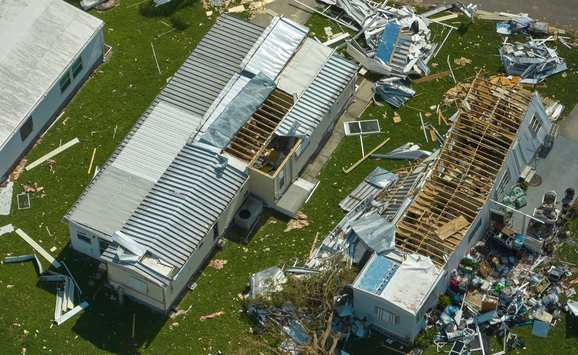
Margaret Walls: Thanks, Daniel. Yeah, as I said earlier, we had a comparatively quiet hurricane season (and wildfire season, actually), and that was lucky, given the turmoil at FEMA, but we did have a couple of big events.
So, let’s take everybody back almost a year, to January, when we had the wildfires in Los Angeles. That was really hugely devastating. That’s the worst fires we’ve had in US history, and those were the Palisades and Eaton Fires that destroyed about 16,000 structures, with 31 deaths. The big thing there is the fires went through developed areas, so they were very damaging.
And then the second thing was the Texas floods. I want to remind people that in July, the Guadalupe River overran its banks. There was a huge precipitation event and terrible floods. What made them particularly horrifying and disturbing was that many children were killed because the flooding went through some summer camps. This was in the Texas Hill Country—so, in the middle of Texas.
Obviously, these are two quite different events, but I want to bring some threads together about them, and that’s under the climate change umbrella. There are many factors that create a flood or wildfire, and it’s not all about climate change. There’s a lot of things that go into it, and we often talk about them. We talk about wildfires; we talk about how we’ve managed our forests in a certain way to have fuels build up, and that’s created a problem, and so forth.
But in the case of both of these events, I think, and the attribution (there’s a whole attribution science for climate change, and those haven’t been done, to my knowledge, exactly), both of these events have really strong markers for climate change.
In the case of the fires, conditions were very arid. They had been in a drought for many, many months in the region, and at the same time, there were huge windstorms that built up. These fires occurred in January, which is not what people would consider fire season, at all. In the case of the Palisades Fire, those lands that burned are chaparral shrublands, so they’re not pine forests, but it was massively dry, with huge Santa Ana winds blowing through that created these conditions that caused these fires. There really isn’t very much that can be done about this, except to make the conditions better in the first place.
In the case of the floods, we had something we’re increasingly seeing, which is massive amounts of precipitation over a short period of time. I looked this up recently, and I think that river rose—there was six and a half inches of rain in a three-hour period. That river rose 26 feet in 45 minutes. Now, part of that is the topography of the lands there; the river has a sort of rock bottom.
But these huge precipitation events that are occurring are occurring more often. This was a big problem with Hurricane Helene and why we had the flooding in Appalachia that we had. They had massive amounts of rain. The floods in Appalachia and Kentucky in 2022 was a huge rain event, and there’s more and more evidence suggesting that these rain events are due to climate change. In the Texas case, the Gulf was very warm, and that warm air sort of sat over the state and created the conditions, as I understand it, for this massive rain event. So, I just bring this up because these are what we face, and they’re really, really challenging problems to solve and to adapt, to figure out how to adapt.
Obviously, people don’t want those summer camps on that river, but they’re on the river because the river’s really nice, and they want to be there for that. And they had very little warning to get those kids and other people out of there. It wasn’t just the camps. So those two events were really big in the news for me this year.
Daniel Raimi: They were. Thank you, Margaret.
All right. Let’s go back to Karen on the electricity beat for one last item. Karen, you are next going to talk about:
Everyone: Affordability!
Karen Palmer: Thanks, Daniel. Affordability of electricity is something that a week doesn’t go by when there’s not a headline in a major news outlet. And I guess it was particularly prominent during the election campaigns for a couple of states; in the so-called off-year governor’s elections in both Virginia and New Jersey, there was a lot of discussion about electricity affordability. And both of the winning candidates made promises to do something about dealing with the high prices of electricity. But it’s attracted the attention of sitting governors in other states, as well, including Massachusetts, Connecticut, New York, and California—all places where the governors have called out their dissatisfaction with the high prices that folks are paying for electricity there.
When you look particularly at certain households, electricity costs are imposing a big burden. The latest estimate from the National Energy Assistance Directors Association report is that 17 million US households are behind on their energy bills, and a recent Census survey finds that 34 percent of households cut back on basic household necessities, such as medicine or food, to pay an energy bill.
So what, specifically, has been going on with electricity prices? Well, looking at data from 2024 and going back, what you see depends on your starting year, but starting from 2019, electricity prices on average across the nation have risen 27 percent. If you start in 2021, the increase has only been 21 percent. And then when you adjust for inflation (here, we’re using the consumer price index), the price increases over those two time periods have been roughly 4.5 percent and 4.9 percent. And this is particularly striking, because it comes after about 15 years where average electricity prices actually rose less than the rate of inflation. So, it’s a definite change from the recent past, but it’s also important to point out that, while average prices across the country are rising, there’s differential things going on in different regions.
And so I’m going to take some statistics here from my colleagues Jesse Buchsbaum and Jenya Kahn-Lang in their recent Resources magazine article, where they have some cool maps and graphs about this phenomenon. What they show is that only a few regions have really experienced price increases beyond inflation that were over 10 percent. And the largest ones between 2021 and 2024 occurred in Maine and California, where real prices rose over 20 percent during that three-year time period. There were also large price increases, slightly smaller than that, in other states in the Northeast and the Mid-Atlantic. However, other parts of the country, including many states in the central part of the country and the Southeast and the Mountain States had flat or decreasing electricity prices during these recent years.
So, why are we seeing these prices rise? Well, there’s a combination of factors here, but two important ones that I want to stress is, with respect to producing the electricity: increases in gas prices that happened after the start of the Ukraine War contributed to the higher costs of energy—the energy component of electricity bills in certain places.
But there’s also been longer-term trends associated with increases in the costs of the transmission and distribution grid. Some of this is related to just maintaining the grids, which are getting old. But specifically with California, for example, taking actions to mitigate wildfire risk posed by the transmission lines is one factor. And in Maine, there just were some really bad storms that knocked out a lot of lines. And so there was a lot of repair work that had to go on, and making things more resilient.
So, we definitely have a lot to learn here about what the causes are, because understanding those causes are going to be important to addressing them. And a little picture: we do have a strategic initiative here at RFF that’s exploring these causes.
In terms of what are policymakers doing now to respond: Well, there’s many different things going on, but I think there is increasingly a cautious eye toward policies that might increase these costs. Some states are scaling back on their energy-efficiency policies, and maybe even the pace with which they’re going to approach their clean energy goals. There’s a debate on whether or not that is price-decreasing or not. I think an important issue here is that some investments are going to be necessary in the short run to reduce costs in the long run, and particularly exposure to things like fossil fuel prices, for example.
So, there’s a lot to learn and a lot to tussle with here in terms of addressing these, I’d say.
Daniel Raimi: I know one of the big things people are thinking about with electricity prices is your previous topic, which is load growth, and data centers in particular. Going forward, are we going to be talking a lot about data centers and electricity prices, or do you think that topic’s going to fade, or is it too soon to know?
Karen Palmer: I don’t think it’s going to fade anytime soon. And I do think there are some things that are happening in some states to address this, and really try to protect existing customers and customers that aren’t the data center. So, really figure out a way to use creative approaches to rate design to get the cost-causality part right in that exercise.
Daniel Raimi: I think this will be a good topic for us to revisit regularly throughout the year, actually, as things develop. All right. Next, we’re going to go to Kevin. And actually, Karen sets you up very nicely, because Karen was just talking about:
Everyone: California!
Kevin Rennert: Such a good setup. So, if I look back in time to the last time we had a big transition in government, going from the Obama administration to the Trump administration, one of the big storylines was that, as the federal government sort of stepped back from addressing climate change, a lot of the states really stepped up in a big way to address climate change. And so, one question this time around has been, Are we going to see the same thing? And that’s one of the things that I’ve been paying attention to this year.
One of the big stories on that, really, from this year, is what California did, where it put through a package of more than six different proposals that would reaffirm its commitment to its cap-and-trade program and also made some really important changes that put it forward in the frame of affordability. So, I’m just going to talk through a few of these, and I’m definitely channeling our colleague Dallas Burtraw, who has done a lot of writing about this.
One big thing that California did was, with a bipartisan and supermajority vote, it extended the carbon market from 2030 all the way out to 2045. It was not ready to expire, but it actually was under a fair bit of pressure from a lot of places. And so California took the prescient step to step forward and move it all the way to 2045, before it needed to.
On the affordability front, it’s important to know that in California, a big chunk of electricity rates actually comes from utilities having to guard against wildfire and insure against wildfire, and make transmission upgrades that all go into the rate base. And so, one of the things that happened in this package of bills is that a portion of the carbon allowance value that’s given to utility customers was actually directed to transmission upgrades—so, it came out of the rate base and actually went in this fashion. And also the state stepped up and now assumes a portion of wildfire liability, which again reduces the amounts that utilities have to insure against, as well.
Some other interesting things that happened in that, it altered the vision for offsets, where just as before, an entity can use offsets for up to 6 percent of what they’re doing. And that’s important, because it actually preserves the incentive for people to look for the least-cost opportunities. But now those offsets actually come out from under the cap in future years. And so, it’s a nice hedge against those offsets not being fully fungible with existing mitigation reductions. And that also aligns it with what’s happening in Washington and New York.
And finally, it’s reversed an earlier decision that said that there are free allocations of these permits to energy-intensive trade-exposed businesses, which was done without regard for what their actual trade exposure was.
And now this says that CARB [the California Air Resources Board] can once again revisit that and make determinations on how many allowances these companies actually need to make them still competitive with out-of-state competitors. So, the money that gets potentially clawed back from that can then be used for other things, like helping people pay their bills and things like that.
There are a number of other things that happened within this package, including that now utilities have the ability to reach out to voluntary regional markets to expand your potential sources of electricity to be selling to your customers. And all of this is really geared at reducing the cost of this and preserving its capacity moving forward. So, a big deal.
Daniel Raimi: A big deal. And we’ll refer people also to our recent podcast episode with Kate Gordon, where we talked a lot about California policy developments over the past year.
Kevin Rennert: The fabulous Kate Gordon.
Daniel Raimi: Let’s go to Margaret last, with our ninth topic of the day. And that topic is:
Everyone: Public land sales!
Margaret Walls: Thank you, Daniel. I’m going to pivot on this one. In the budget reconciliation bill, when it first came out of Congress back in the spring, there was a provision to sell off some of our federal lands.
The federal government, so that people know, owns 640 million acres of land. That’s about 28 percent of the US land area, so it’s a lot of land. The biggest landholder is the Bureau of Land Management (BLM), followed by the Forest Service. And then of course we have the National Park Service, Fish and Wildlife Service, and so forth.
So, the proposal was: We’re going to sell some of those lands. And it was a little vague, but the argument put forward is that this is going to help with housing affordability, another affordability crisis in the country that people talk a lot about. And some of these towns in the West, near where a lot of these lands are, are seeing some very steep housing price increases in recent years.
But it was also, I felt like, a little bit of a bait and switch on that. I’m not sure it was really all about housing affordability, because some of the proponents of selling federal lands have been proposing that for many, many years, or proposing transferring lands to the states. So, this has been on the agenda for some representatives from Utah for a long time. What’s interesting about this is that ultimately the bill—the OBBBA, or whatever the acronym is—eventually, the bill did not include the land sales. And what was interesting, why it didn’t go through, was suddenly, there was a huge amount of bipartisan opposition. And RFF did some work on this. I like to think we had played some role. We did a briefing on the Hill. We did some analysis of the whole notion of land sales helping with housing affordability.
We compared, in 20 cities in the West, how much of this land is there in buffers around these cities, and how much is there relative to other undeveloped lands—privately owned, developable lands. And there’s a lot more of the latter in many of the most expensive places than there is of BLM land. Anyway, I think our analysis was pretty helpful, but also what really happened is the hunters and fishermen came out. Some of our senators and representatives in states like Montana were very opposed because their constituents were opposed. And so, in the end, there were various versions of these provisions that included, in some iterations, Forest Service and BLM land. So, there were various things on the table, and ultimately it was all taken away. But I bring it up, because the issue has not died. There was a prior bill introduced to do this.
There was a commission that was put together between the Department of Interior and HUD (the [US Department of] Housing and Urban Development) to look at this issue a little bit more. There’s still, as I understand it—the Western Governors’ Association has some interest in this. So, the issue’s not going away. I think it’ll come back up in another form. And at the same time, this sort of conservation and recreation values of our public lands are really bipartisan and growing, I think. So I find this really fascinating, how we look at this issue.
The last little plug I’ll put in is that there’s a lot of other things going on with public lands. So I’m limiting this to the land sales thing, but a lot of other stuff has happened with public lands. And we covered some of it in a webinar; the recording is on our website. We had a nice webinar in July, which included my colleagues Dave Ware and Brian Prest and myself. And we talked about some of the oil and gas leasing issues, forest timber sales, and various things like that. So I would encourage our listeners to go watch that.
Daniel Raimi: Excellent. And we’ll have a link to that in the show notes, as well.
Margaret Walls: Daniel, we’re only at nine, and we need a Top 10. Hey, you’ve got to have one of these! So, we want you to give us your topic, which is:
Everyone: Hydrocarbon diplomacy!
Daniel Raimi: Well, I thought we were talking mostly about domestic issues with our other nine topics, so I wanted to throw something international out there. And I just thought this was a fascinating development over the course of the past year. The Trump administration has been trying to achieve this goal of energy dominance through a variety of strategies. And one of the big ways that they’ve tried to do this is by increasing US fossil fuel exports, particularly oil and gas exports, which have been rising dramatically over the last 5 to 10 years. But the administration is trying to boost that even further.
And this is related to its efforts on tariffs, where the administration is using tariffs to try to achieve various diplomatic and economic objectives that they have for the United States. Interestingly, some of the US’s trading partners have combined those two issues—the desire for energy dominance and the desire to have some better treatment on tariffs. And to have a better bargaining chip at the table, what many of them have done, or at least some of them have started to do, is to support the purchasing of US oil and natural gas.
The specific examples that come to mind are the European Union, which agreed several months ago to buy $250 billion worth of US energy each year, primarily oil and natural gas. It’s not actually clear whether that’s achievable, but they have said that they will do that. Our colleagues Zach Whitlock and Milan Elkerbout recently wrote about this on the RFF blog.
But also, South Korea and Japan have vocally supported a big project in Alaska that has been on the drawing table for decades, which is to build a natural gas pipeline from the North Slope of Alaska, where most oil is produced in the state, down to the southern part of the state and export it as liquefied natural gas to East Asia, particularly Japan and South Korea. So, these countries have come out with public statements that they’re willing to invest tens of billions of dollars in this Alaska liquefied natural gas project. And I think that’s partly because they’re interested in the energy security, but I think it’s also partly because they’re trying to get on the good side of the administration and have a better position when it comes to negotiating tariffs.
So, I’ve been fascinated to watch those developments, and we’ll see how they evolve over the next year, two years, and three years.
This is usually the time when we do our Top of the Stack segment, but we are a little over time, and not all of us actually have prepared a Top of the Stack. So, me and Kevin are just going to do some quick ones.
I want to recommend the TV show Landman. I think I may have actually mentioned this last year, because the show was about to come out, but season 1 is out, and now season 2 is starting to roll out. I binged all of season 1; I’m looking forward to binging all of season 2. The show is completely ridiculous. It is not at all a realistic representation of what it’s like in the Permian Basin, but it’s a lot of fun.
Margaret Walls: I’ll second that.
Karen Palmer: Yeah, me too.
Kevin Rennert: Yeah!
Margaret Walls: It’s a soap opera.
Daniel Raimi: If you want to have good information about life-cycle greenhouse gas emissions, Landman is not the resource for you. You should consult the academic literature on that, but it’s a really fun show.
Kevin, what are you thinking about?
Kevin Rennert: This has nothing to do with energy, but a friend of mine recently gave me a book to read with my kids by Salman Rushdie, who you do not think of as a children’s novelist, but he did write one, and it’s called Haroun and the Sea of Stories, and it is absolutely delightful.
Daniel Raimi: Amazing. Margaret’s got a last-minute entry here.
Margaret Walls: I do, because I’m reading it right now: The Art Thief. I’m almost done with it. Anybody read that book? In light of the Louvre, the art theft that we had a few months ago, this is one about an amazing crazy guy that did a lot of art theft—the biggest art thief in history—and kept it all for himself. So anyway, I’ll mention that. It’s a good book.
Kevin Rennert: Amazing.
Margaret Walls: Short book, easy to read.
Daniel Raimi: Well, thank you, Margaret. Thank you, Kevin. Thank you, Karen. This has been a blast. Hope our listeners have enjoyed it, and happy new year, everybody.
You’ve been listening to Resources Radio, a podcast from Resources for the Future, or RFF. If you have a minute, we’d really appreciate you leaving us a rating or a comment on your podcast platform of choice. Also, feel free to send us your suggestions for future episodes. This podcast is made possible with the generous financial support of our listeners. You can help us continue producing these kinds of discussions on the topics that you care about by making a donation to Resources for the Future online at rff.org/donate.
RFF is an independent, nonprofit research institution in Washington, DC. Our mission is to improve environmental, energy, and natural resource decisions through impartial economic research and policy engagement. The views expressed on this podcast are solely those of the podcast guests and may differ from those of RFF experts, its officers, or its directors. RFF does not take positions on specific legislative proposals.
Resources Radio is produced by Elizabeth Wason, with music by me, Daniel Raimi. Join us next week for another episode.