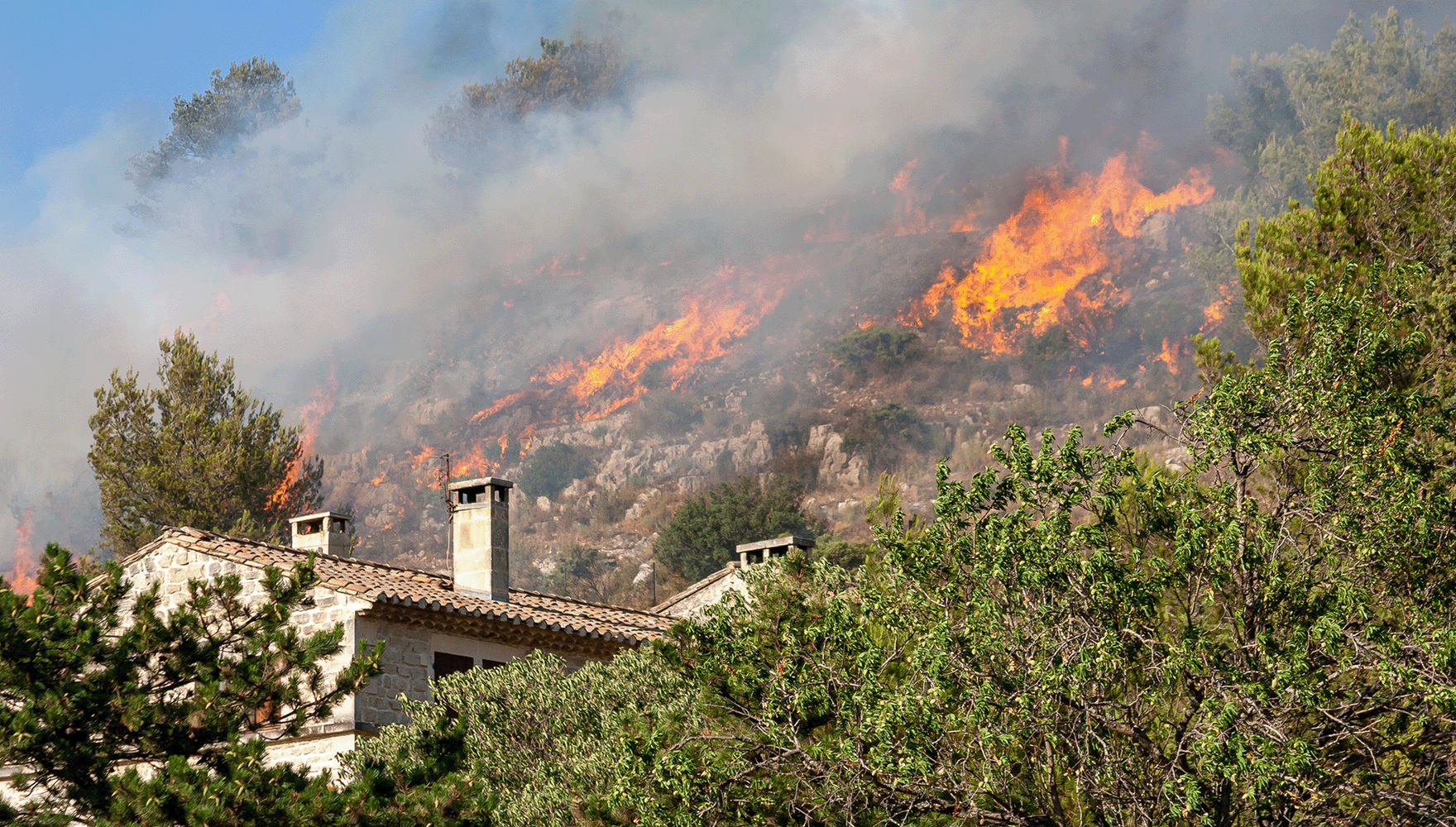


In this week’s episode, host Daniel Raimi brings in Margaret Walls and Yanjun (Penny) Liao to discuss why homeowners insurance prices and nonrenewals are increasing in the United States—and how insurers, homeowners, and state and federal governments are responding. Walls is a senior fellow at Resources for the Future (RFF), director of RFF’s Climate Risks and Resilience Program, and co-host of Resources Radio, while Liao is an RFF fellow. Together, they elaborate on data they shared in the most recent issue of Resources magazine that links areas with previous weather-related property loss to higher premiums and policy nonrenewal rates. As a result, while climate change increases the severity and frequency of extreme weather, many homeowners are left without insurance plans that provide adequate coverage, especially in vulnerable regions such as California and Florida. Walls and Liao analyze why solutions such as “insurance of last resort” plans in the residual market fail to keep up with heightened risk, and where policymakers and communities might look next to support households that are impacted by wildfires, floods, storms, and other disasters across the country.
Listen to the Podcast
Audio edited by Rosario Añon Suarez
Notable Quotes
- Prior destruction and rising construction costs create a perfect storm for insurance prices: “The evidence is pointing to a systematic connection between extreme-weather losses and insurers changing their underwriting behavior. It is also important to note that extreme-weather risk also compounds with many other factors, such as increasing construction costs, because if it’s more expensive to rebuild, then the premiums will also increase.” —Penny Liao (8:30)
- California is a hot spot for widespread, high-value property loss: “When we think about wildfires, California is ground zero … Partly that’s because the risks are very high there, and partly it’s because of this issue of a lot of assets in harm’s way. Of course, we can think about the Los Angeles wildfires from January 2025, which hit a highly populated area. So, risks have been rising. Really, this is rippling into their insurance markets.” —Margaret Walls (11:28)
- Enrollment in state-mandated safety nets is increasing, and someone has to pick up that cost: “In general, we want private markets to work. We don’t really want everybody on these [Fair Access to Insurance Requirements] Plans. They’re good to have as a safety net, but they have limited coverage. In California, they’re mainly just wildfire coverage (no liability), so you have to have a separate policy. They’re not cheap, generally speaking. At the end of the day, somebody’s on the hook.” —Margaret Walls (12:52)
- Existing policy fails to get to the root of the issue: “The fundamental problem in California is the risk. And so, the fundamental solution would be to address the risk.” —Penny Liao (19:39)
- Community networks may provide essential prevention services and fallback support: “We are also seeing more development in terms of coordination between local communities and insurers. We had some conversations with fire chiefs in California, and they are starting to implement more measures to help their communities put in mitigation actions, and they are in contact with insurance companies to try to increase the availability and affordability of insurance in their communities.” —Penny Liao (29:57)
Top of the Stack
- “Weather Extremes Disrupt Insurance Markets” by Margaret Walls, Yanjun (Penny) Liao, and Emily Joiner
- “From Risk to Reward: Insurance Discounts for Wildfire Mitigation” by Evan Ludington, Yanjun (Penny) Liao, and Margaret A. Walls
- “Property Insurance and Disaster Risk: New Evidence from Mortgage Escrow Data” by Benjamin J. Keys and Philip Mulder
- Insurance for Good
- Listers: A Glimpse Into Extreme Birdwatching documentary film
- eBird phone app
- American Emergency: The Movement to Kill FEMA podcast series from On the Media
The Full Transcript
Daniel Raimi: Hello, and welcome to Resources Radio, a weekly podcast from Resources for the Future (RFF). I’m your host, Daniel Raimi.
Today I talk with my RFF colleagues, Margaret Walls and Penny Liao, about insurance. As listeners may know, homeowners insurance policies in the United States have been getting more expensive for a variety of factors. In today’s conversation, we’ll try to understand what those factors are and how much things like climate change play a role in the conversation. We’ll also take a deep dive on two states where this issue is becoming increasingly prominent: California and Florida. We’ll talk about the approaches that policymakers are taking in those states to mitigate risk, as well as give a broader understanding of the insurance market and how it’s working today. Stay with us.
Margaret Walls and Penny Liao from Resources for the Future. My colleagues, welcome back to the show.
Margaret Walls: Hey, thanks for having us.
Penny Liao: Thank you.
Daniel Raimi: So, we’ve had you on the show before. We’re going to dive right in, and we’re going to talk about insurance today. As many of our listeners know, it’s been a rocky time for property insurance markets in the US in recent years, and it’s a complex issue. We’re going to try to break down some of those complexities for our audience today, but let’s start with the big picture. In general terms, how would you describe the state of US homeowners insurance markets?
Margaret Walls: Right. Well, you said rocky. So, let me say what rocky means in this context. I think Penny can add onto this, but I think there’s four main issues, Daniel.
One is premium increases. We’ve had about a 45 percent increase in average premiums over a five-year period between 2019 and 2024. That’s a lot for a five-year period. And in some places, those increases have been higher. So, premiums is one.
The second one is policy nonrenewals. So, what’s happening is you have a one-year contract for your homeowner’s insurance, and in some locations, people are getting dropped. Their companies are telling them they won’t renew them. And that’s a big challenge.
Related to that is the third thing, which is a growing enrollment in what are called “residual markets” or sometimes called “insurance of last resort.” These are often called a “FAIR” Plan. FAIR stands for Fair Access to Insurance Requirements. California has a FAIR Plan—we’ll talk about that in a minute—and there are other ones, but these are last-resort options, and we can say a little bit more about the characteristics that make them that. But those enrollments have been growing in many locations.
And then the last thing, the major thing, is that there have been coverage gaps. So, in some cases, especially in wildfire cases, people are not getting the payments for their claims that they thought they were going to get. And so that’s got some eyebrows raised.
Those are the main things, I think. I don’t know, Penny, if you want to add anything else to that or …
Penny Liao: I think from the consumer’s perspective, that’s the main thing. Some states have seen an increase of insurers going insolvent or just withdrawing from the state, which adds to the issue.
Margaret Walls: Yeah, right. Loss ratios, which we get numbers on, have been high in recent years for the industry.
Daniel Raimi: Yeah. One quick follow-up on the residuals market: These FAIR programs, are these always run by a state government, or are they sometimes run by the private sector?
Margaret Walls: They are not state-government run. They are pooled insurance plans. All the what are called “admitted insurers” on the market, which are the insurers that are regulated by the states … We should say that insurance regulation is at the state level. There’s no federal regulation of insurance. So, the insurers that operate in the state agree to operate this residual market. So, that is generally the way it works.
Daniel Raimi: Great, thank you. So, let’s talk about some of the reasons behind these challenges that you’ve just described. Many folks in our audience will, I think, naturally think about extreme weather. They’ll think about the connection with climate change, and those things are real. We’ll talk about those, but there’s more to the story than just extreme weather and climate. So, can you help us understand, again, what are these big factors that are behind the stresses in insurance markets that you’ve just described?
Margaret Walls: Yeah, I’ll just do a quick one. Then Penny can dive into a little more of the analytical work that’s out there.
Let me start with what the insurance industry tends to say, and that is that everything is about claims. So, especially with premium increases and loss ratios and so forth, claims have been going up. The cost of meeting claim payments has really been going up. And usually they say this is due to two primary factors.
One is inflation and the rising costs of construction. And the rising cost of construction is some inflation and some construction sector–specific issues such as supply-chain problems and so forth. So that’s a driver.
And the other is, often they point to increasing population growth and asset values in risky areas. So, they acknowledge that, indeed, extreme weather events are a big driver, catastrophes are a big driver, and other kinds of weather events, but that is primarily a function of just having more assets there that they have to pay claims on.
So, that tends to be how the story is framed. Not that they don’t acknowledge growing increases in events and that that could be due to climate change, but we often hear, both of us, that narrative. Wouldn’t you say?
Penny Liao: Yeah, I fully agree with that. And recently we have seen increasing research into the link between extreme-weather risk and insurance-market issues. For example, a recent study by Phil Mulder at the University of Wisconsin-Madison and Ben Keys at the University of Pennsylvania found consistent patterns where insurance premiums increase the fastest in high-risk areas. In addition, they also show that this connection between extreme-weather risk and insurance issues is driven by dependence on reinsurance. And so, as global reinsurance markets are taking into account the rising disaster costs, it’s driving insurance premiums.
Daniel Raimi: Just real quick, for listeners who don’t know what reinsurance is, can you briefly remind us what that is?
Penny Liao: Of course, yes. Reinsurance is basically insurance for insurers. So insurance, when they take on the risk from homeowners, they need a way to further transfer the risk. And so, they would buy insurance from the global reinsurance market. And because it’s a global market, it helps to pool the risk at a global scale. So, it allows for more efficient risk sharing and risk pooling.
Daniel Raimi: That’s great. Thank you.
Penny Liao: And so, consistent with Phil Mulder and Ben Keys’s research, Margaret and I have recently written a blog post on the connection between extreme weather events and the insurance premiums and availability in the US. And we looked at ZIP code–level data on insurance-market performance and specifically how insurers respond to previous years’ storm-driven damages when they set premiums. We find a direct, measurable feedback loop where, if a ZIP code experienced a large loss in the previous years, their premium will go up faster, and then nonrenewals will also increase faster.
In addition, I’m also working on a paper with Xuesong You at Insurance for Good where we look at insurer-specific data. So, if the insurer suffered from a particularly large loss during the 2017 and 2018 wildfire seasons in California— which is one of the heaviest-loss wildfire seasons in California history—we find that larger losses led them to nonrenewal policies to curtail their insurance supply in high-risk areas in California.
So overall, the evidence is pointing to a systematic connection between extreme-weather losses and insurers changing their underwriting behavior. It is also important to note that extreme weather risk also compounds with many of the factors that Margaret mentioned, such as increasing construction costs, because if it’s more expensive to rebuild, then the premiums will also increase. It could also interact with some of the litigation costs. It could interact with increasing development in risky areas, as well.
Daniel Raimi: Yeah. I can imagine some listeners really wanting to put numbers on these issues, right? This percentage is climate change, this percentage is construction costs, this percentage is people building in risky areas. It sounds like maybe it’s a little too early to put those clear, hard numbers on these factors. Is that right?
Margaret Walls: I think maybe so, or maybe we just didn’t come prepared to give you some numbers. I don’t know. Did you, Penny? What do you think?
Penny Liao: I think it’s a little heterogeneous across different regions. I saw a range of numbers in different places. Some say that, “Oh, the construction costs account for 30 percent, 35 percent of the premium increase,” but you have to know that the issue is much more complicated, because they compound each other. So, how do you tease apart which factor is driving what?
Margaret Walls: There’s a good Swiss Re report that disentangles some things—it’s a little hard to understand their methods of disentangling, but they do do those.
When Penny was talking about the work that she and Song have done, and that she and I did, that’s a regression framework where we can control for many other factors. We’re looking specifically at if events in one year affect insurance outcomes in the following year, or subsequent years, and we find a one-year effect.
I think what’s interesting about that dynamic effect is insurance is a one-year contract. They can do this. If they want to drop you, they can drop you. And we find they do that. We do see an average effect that can happen just in response to an extreme event. It’s the same with the Mulder and Keys papers; the methods are there for us all to see, and the data. So, it is a little complicated.
Daniel Raimi: That’s great. Thank you. Let’s talk about a couple examples now, and you’ve already mentioned California. Let’s talk about California.
So, things are really coming to a head there, in part because of these wildfires that you’ve already mentioned. So, big picture, what’s going on in California when it comes to the homeowners insurance market?
Margaret Walls: I’ll talk about a few trends, and then I think Penny can talk about some of the policy things that are going on there.
Well, first of all, when we think about wildfires, I mean, California is ground zero. Really, the West in general and the US, but specifically California. If you look at all the major damaging events, most of them are in California. Partly that’s because the risks are very high there, and partly it’s because of this issue of a lot of assets in harm’s way. Of course, we can think about the Los Angeles (LA) wildfires from January 2025, which hit in a very highly populated area.
So, risks have been rising. Really, this is rippling into their insurance markets. They’ve had growing nonrenewals. I think that problem has been especially acute in California. Their premiums have gone up, but that’s not the biggest problem in California. It’s really the nonrenewals. People are getting dropped and not being able to renew their policies.
And their FAIR Plan, which is their insurance of last resort, has grown by leaps and bounds. The most recent number is it has $750 billion of exposure. That’s the value of the assets. If a fire wiped out every property that’s insured, it’s $750 billion. That’s a lot of money. There’s been an 8 percent increase in that number over the last six months, and there’s been a 6 percent increase in the number of policies. So, more and more people are getting in the FAIR Plan, despite what Penny’s going to tell you about what the state is doing to try to not have that happen.
In general, we want private markets to work. We don’t really want everybody on these FAIR Plans. They’re good to have as a safety net, but first of all, they have limited coverage. In California, they’re mainly just wildfire coverage (no liability), so you have to have a separate policy. They’re not cheap, generally speaking. At the end of the day, somebody’s on the hook. So, we don’t want too many people on those policies, is the way we think about those.
So, that’s what’s been going on there. A lot of issues in the market, and these nonrenewals and residual market things loom large.
Daniel Raimi: So, correct me if I’m wrong, but it sounds to me like these FAIR Plans provide fewer benefits to homeowners when they get them. That’s the only way they could exist, right? They have to be less generous than the more robust plans, because otherwise the insurers would be losing their shirts offering these plans. Is that right?
Margaret Walls: Yeah, that’s fair. That’s the way most of them operate. And again, we say most of them, Daniel. In coastal states, there and in other states, there are wind plans and what are sometimes called “beach plans.” So, in coastal areas, you might not get wind coverage in your regular policy, and you have to go buy one of these other plans. Those cases, I don’t think they’re super expensive, but there is limited coverage for what they provide.
I will point out that the Florida Citizens [Property Insurance Corporation] plan, which is their residual market, is a full, what they call “HO-3” policy, which is a full insurance policy. We’ll talk about Florida in a minute.
Daniel Raimi: Okay, great. Penny, let’s turn to you to go a little bit deeper in California. California lawmakers are well aware of this issue. They’ve been making efforts to try to address it. What are some of the approaches they’ve been taking so far?
Penny Liao: Yeah, there are multiple dimensions to the problem that the policymakers are trying to address.
One thing to understand about the California market in particular is that, as Margaret emphasizes, nonrenewals and FAIR Plan growth are a major issue, and that is because there is an inherent tension between insurance availability and insurance affordability. If pricing of the insurance is suppressed in some way, insurers will be unwilling to offer policy, and that is what we are seeing a little bit in California.
California insurance regulation is known for having really strict rate-setting restrictions. And so, some of the recent policy changes that we have seen are targeted at the rate-setting practices. They came out with a strategy called the “sustainable insurance” strategy. This is a basket of reforms, some of the most significant insurance reforms in the past three decades, and it was launched in 2023 to 2024 trying to aim at making the rate-setting process a little more relaxed from what they historically have done.
For example, it allows insurers to use catastrophe modeling in their rate setting. Catastrophe modeling is a form of statistical modeling where they use a probabilistic approach to simulate disaster events and look at the whole distribution of possible disaster losses on a property. So, it’s more forward-looking, and it takes into account extreme events much better than simply relying on historical data.
In the past, California insurance regulation did not allow insurers to use catastrophe modeling to justify rate increase. And so, this regulation reform now allows insurers to use catastrophe modeling. So, that would bring in the rate-setting practice to be more in line with modern actuarial practices.
Daniel Raimi: Right. Is the distinction there that previously, they could only use historical data to model expected losses? And obviously, in a changing climate and changing building patterns and changing construction costs, the historical data may not be appropriate for the future?
Penny Liao: That is exactly right. So, in the past, they were only allowed to use historical losses to justify rate increase. So, you needed to show, “Oh, I have suffered this amount of losses, and therefore I want to increase my premium by this amount.” Part of the reason it’s inadequate is that some of the extreme weather events are low probability but really high impact, and it’s really hard to capture in 20 years of data. And we’re seeing more and more unprecedented events in California and other places. And so, it is important to capture improbable events from the past.
In exchange for allowing for catastrophe modeling, the policy requires that insurers will need to write 85 percent of their statewide market share in what they call “wildfire-distressed areas,” which are higher-risk areas that have insurance-market distress. So, that is interesting if you’re an insurer and you write, let’s say, 10 percent of the statewide market share in the high-risk areas, you need to hold at least 8.5 percent in those ZIP codes and counties that they listed as wildfire-distressed areas.
The reform also contains a number of other key elements. Things like, they now recognize that reinsurance costs need to be incorporated into rate increases. In the past, this was not allowed. They tried to make the rate filing–approval time frame shorter, so that insurers can adjust their pricing in a more timely manner. They are trying to develop a public catastrophe model and things like that to allow more transparency into the modeling process. So that’s that.
And then, the policymakers in California are also trying to address FAIR Plan issues. They’re trying to make FAIR Plans financially more robust and reliable, and this is prompted in part by the LA wildfire last year.
Another very important set of actions that they are taking is when it comes to risk mitigation. All the things that they’re doing, targeting rate filing and FAIR Plans, are just trying to make the market operate a little smoother. But the fundamental problem in California is the risk. And so, the fundamental solution would be to address the risk. California has come out with a strategy called Safer from Wildfires, and it is to mandate that insurers need to give discounts to homeowners for 12 structure-level and community-level actions that can mitigate wildfire risk. This could include replacing their roof with fireproof material, replacing other kinds of building materials. This could include creating defensible space around the property, and then community participation in Firewise programs.
Some insurers give discounts as well to homes that satisfy the IBHS (Insurance Institute for Business and Home Safety). This is an organization that comes out with standards for what a fireproof home is. If households satisfy their Wildfire Prepared Home standard, some insurers will give discounts for that. So, Margaret and I, we also have another paper that looks at how insurers are giving these discounts. If you’re interested, you can check it out. So far, the discounts are pretty low, but we’re hoping that the program would grow a little bit over time.
Margaret Walls: This connection between risk mitigation and insurance is a really hot topic, and something we’re doing more work on. We’re trying to talk to a number of communities that have active hazard-mitigation programs and work with households, and they are increasingly talking to insurers and trying to make sure insurers will cover homes that are in these communities where they’re doing a lot.
And it’s a very interesting thing. Are insurers willing to give you a benefit in terms of a reduced rate? Or maybe just give you coverage, which you’re not going to get, otherwise?
We’d like that to be the case, but there’s some fundamental challenges in the market to doing that. You might have one insurance company, I have another one. We live right next door to each other. You’ve done work on your house to make it tip-top, and I haven’t. And so, I’m benefiting from you because the embers … whatever. There are a lot of connections, so it’s a challenge, but it’s a topic that a lot of people are looking at right now.
Daniel Raimi: Yeah. Sounds like a good topic for a future podcast episode. The place where my mind went was actually an environmental justice frame, where I was just wondering which communities have the capacity to do all this stuff, to organize, to work with insurance companies, and which ones don’t. I’m sure that’s part of the story.
Margaret Walls: For sure.
Daniel Raimi: All right. Let’s go to another state that I imagine people are thinking about, which is Florida. Florida is clearly exposed to a lot of these issues, as well. So, let’s start again with the big picture. What’s the state of the market in Florida?
Margaret Walls: Yeah, Florida has had problems for a longer period of time than many other states and also has developed solutions. So, we’ll talk about that, too.
It’s a high-risk area, obviously, long coastline exposed to hurricane risks. When they got hit by Hurricane Andrew in 1992, they made a bunch of changes to both insurance and other things in the state. So, some of these general issues we’re talking about, they loom large in Florida, but also they’ve had some additional problems there. Florida is a place that’s had a lot of lawsuits against insurance companies by consumers, and that’s created a bunch of challenges there, and they’ve addressed those. And they’ve had more insurer solvency problems, which we mentioned. They’re a market that has a lot of small insurance companies, for whatever reason. There are some papers out there that talk about the rating agencies that have given certain companies a high rating that maybe they shouldn’t get. The state has started to address that, as well. The state always seems to be … Regulators are always playing a little bit of catch-up in Florida.
So, some of the same problems. Rates in Florida are some of the highest in the nation. They’ve had a lot of enrollment in their insurance of last resort, which is Florida Citizens. And, as I mentioned earlier, Florida Citizens is actually a full homeowners policy. So, it isn’t just wind/hurricane coverage, it’s full coverage. They got concerned that that got too big. I think it was up above 20 percent of the market at one point.
So, they’ve done a few things in the state. They’re always doing stuff in Florida to address their issues. But some of the things I’ll just touch on real quickly.
They’ve had a lot of litigation reform to get at these lawsuits. I won’t go through all of the different things they did, but they’re really touting this as, “This is going to reduce the number of lawsuits.” I’m not sure if it has, yet. One of the things they did is they have something called “assignment of benefits,” where a roofer will come to you, Daniel, and say, “Sign your benefits over to me, and I’ll do the lawsuit.” So, they’ve cracked down on that. There’s been some other things, as well. They shortened the claims-filing windows and so forth.
One of the interesting things they did is they made a move to, what they call, “depopulate” Citizens. That includes a lot of things, but basically they’re trying to get people—if you have the option, if a private insurer will insure you—you’re supposed to go with that insurer and not use Citizens. The other thing they did is they actually paid insurers to take people off of Citizens.
And so, they have reduced the number of people that are on Citizens. That has had some effect. I’m not sure it’s been really big.
Another interesting thing in Florida I’ll just mention, I don’t know if Penny wants to add anything else, but they have a public catastrophe fund. They’ve had this since Hurricane Andrew. So, essentially, the way it works is if you’re a private insurer in Florida, you get reinsurance through the private market, which you already talked about, and you also get it through this Cat Fund [Florida Hurricane Catastrophe Fund]—this public catastrophe fund that the state has set up. This is also funded through the industry. Basically, homeowners are paying for these things through surcharges on their premiums. But this is an interesting thing. If there’s a giant event that hits Florida, and a bunch of people are filing claims, an insurer will pay from their premiums, and then I think they access the Cat Fund next to cover, and then they go to any reinsurance they might have.
So, this is an interesting setup, and people have talked about this mostly in a positive light, that Florida took this stance. There is a proposal some people have made to have a federal thing like this, but I don’t think that … That’s just some academics suggesting that.
So, there’s a lot of action in Florida. We can’t do it justice here, but some of the same issues, and the state is doing a lot. Yeah.
Daniel Raimi: Really interesting. All right.
We’re almost near the end of our time, but I want to ask you one last and extremely complicated question that I’ll ask you to summarize briefly, which is, where’s this all going? Is this going to get worse before it gets better? Are policymakers starting to get a handle on things? As climate changes, other trends evolve, what do you see in the coming years?
Margaret Walls: I’ll just say, that’s too hard of a question, number one.
Daniel Raimi: Sorry.
Margaret Walls: But, I’ve given a few talks here and there where I talk about insurance and other things, and one of the things I always say is that states cannot ignore insurance anymore. I think insurance was an under-the-radar issue. I don’t think homeowners can ignore insurance anymore.
You have to pay attention to your homeowners insurance. This issue we didn’t talk a lot about with the coverage gaps is, people don’t really realize what they’re getting for what they’re paying. And, I think states … The biggest losses in the last few years have been from severe convective storms and hail, not from hurricanes. And so, states where you’re getting big thunderstorms and stuff, those are some big claims being filed there. So, they need to be looking at their insurance markets, making sure their insurance markets are stable. So, that’s one thing I would say: Everybody’s going to be paying more attention to insurance. They need to.
Where it all goes … Let me just make one point, and I don’t think this is where we’re going, but private insurance has not covered flood losses for decades—for a hundred years, practically. And we have a national flood insurance program that’s operated by the federal government. There has been discussion of having an “all perils” program. I don’t think that’s going to happen anytime soon, but I think those discussions are probably on the table.
What do you want to add, Penny?
Daniel Raimi: Real quick before Penny jumps in, you said “all perils.” Perils, as in bad things that can happen?
Margaret Walls: Yes, exactly.
Daniel Raimi: Okay. Thank you. Yeah, Penny.
Penny Liao: Just adding on to the all-perils program point, some other countries have these kinds of programs, where it’s pulling across a bunch of perils, but only taking the extreme tail of the risk. There are innovative ideas such as public-private risk-sharing partnerships that we’ve seen in countries like France and Spain. Or in Denmark and the United Kingdom, we have government-enabled and -regulated insurance pools that specifically deal with the tail of the loss.
I think that there are also opportunities for development in terms of scientific understanding of and modeling of these hazards and the losses associated with them. There could be improved understanding of welfare science, in particular, that would help inform some of the catastrophe modeling that we just discussed, and building science. What could be most effective in guarding assets against hazards?
And then, we are also seeing more development in terms of coordination between local communities and insurers. We had some conversations with fire chiefs in California, and they are starting to implement more measures to help their communities to put in mitigation actions, and they are in contact with insurance companies to try to increase the availability and affordability of insurance in their communities.
Daniel Raimi: This is all so interesting, and I know we’re only scratching the surface of these topics, as we often do, but just want to say thank you so much for sharing all of this with our audience.
I feel like if you take nothing away from this conversation, you should take away: Go back and look at your homeowner’s insurance plan and see what’s covered, so you don’t get screwed.
Margaret Walls: Exactly.
Daniel Raimi: So, let me ask you both the last question we ask all of our guests, which is to recommend something that you think our audience would enjoy. It could be related to insurance, or it could be a much happier subject—totally up to you.
So Penny, why don’t you start us off?
Penny Liao: I’ll start with a happier subject. This is actually a documentary that I’m about to see tonight. It’s called Listers: A Glimpse Into Extreme Birdwatching. This was actually recommended by my colleague Matt Wibbenmeyer, and it is a documentary about two brothers. They just decided to go on a year of birdwatching, just traversing across the United States, and try to identify as many bird species as possible. And then, they have a lot of interactions with the birding community and mention eBird app, the app that birders use to record what they see, which generates data sets that we like to use. So, I’m super intrigued by this.
Daniel Raimi: That sounds awesome. Margaret, how about you?
Margaret Walls: Well, I’m going to stay in the insurance world and a little bit of the disaster world. So, speaking of our colleagues, Karen Palmer sent me a link to an On the Media podcast. I’m not sure if you all ever listen to that. I’m not a huge podcast listener, but they have a four-part series, and only part one is out as we’re recording this, but I think by the time this episode airs, more will be out. It’s called “American Emergency: The Movement to Kill FEMA,” the Federal Emergency Management Agency that runs the National Flood Insurance Program, but also handles disasters. So, the first episode has some fascinating and bizarre history on the agency, things I did not know about its origins. So, I just think it’s a fun listen, and I’m looking forward to the other episodes.
And I want to give a shout-out in the insurance space to Insurance for Good, the new organization that our friend and colleague Carolyn Kousky set up and that Song You works for—Penny mentioned Song. If you want to know more about insurance in general, there’s a lot of industry stuff, but this is good for a broader set of things with a more societal look at insurance in their blog. Just read the blog. The most recent blog post is about the California FAIR Plan, and it’s just so readable and accessible.
Daniel Raimi: Sounds great. Excellent resources.
Well, one more time, Margaret and Penny, thank you so much for coming onto the show. It’s been great to talk to you.
Penny Liao: Thank you for having us.
Margaret Walls: Yeah, thank you, Daniel.
Daniel Raimi: You’ve been listening to Resources Radio, a podcast from Resources for the Future, or RFF. If you have a minute, we’d really appreciate you leaving us a rating or a comment on your podcast platform of choice. Also, feel free to send us your suggestions for future episodes.
This podcast is made possible with the generous financial support of our listeners. You can help us continue producing these kinds of discussions on the topics that you care about by making a donation to Resources for the Future online at rff.org/donate.
RFF is an independent, nonprofit research institution in Washington, DC. Our mission is to improve environmental, energy, and natural resource decisions through impartial economic research and policy engagement.
The views expressed on this podcast are solely those of the podcast guests and may differ from those of RFF experts, its officers, or its directors. RFF does not take positions on specific legislative proposals.
Resources Radio is produced by Elizabeth Wason, with music by me, Daniel Raimi. Join us next week for another episode.