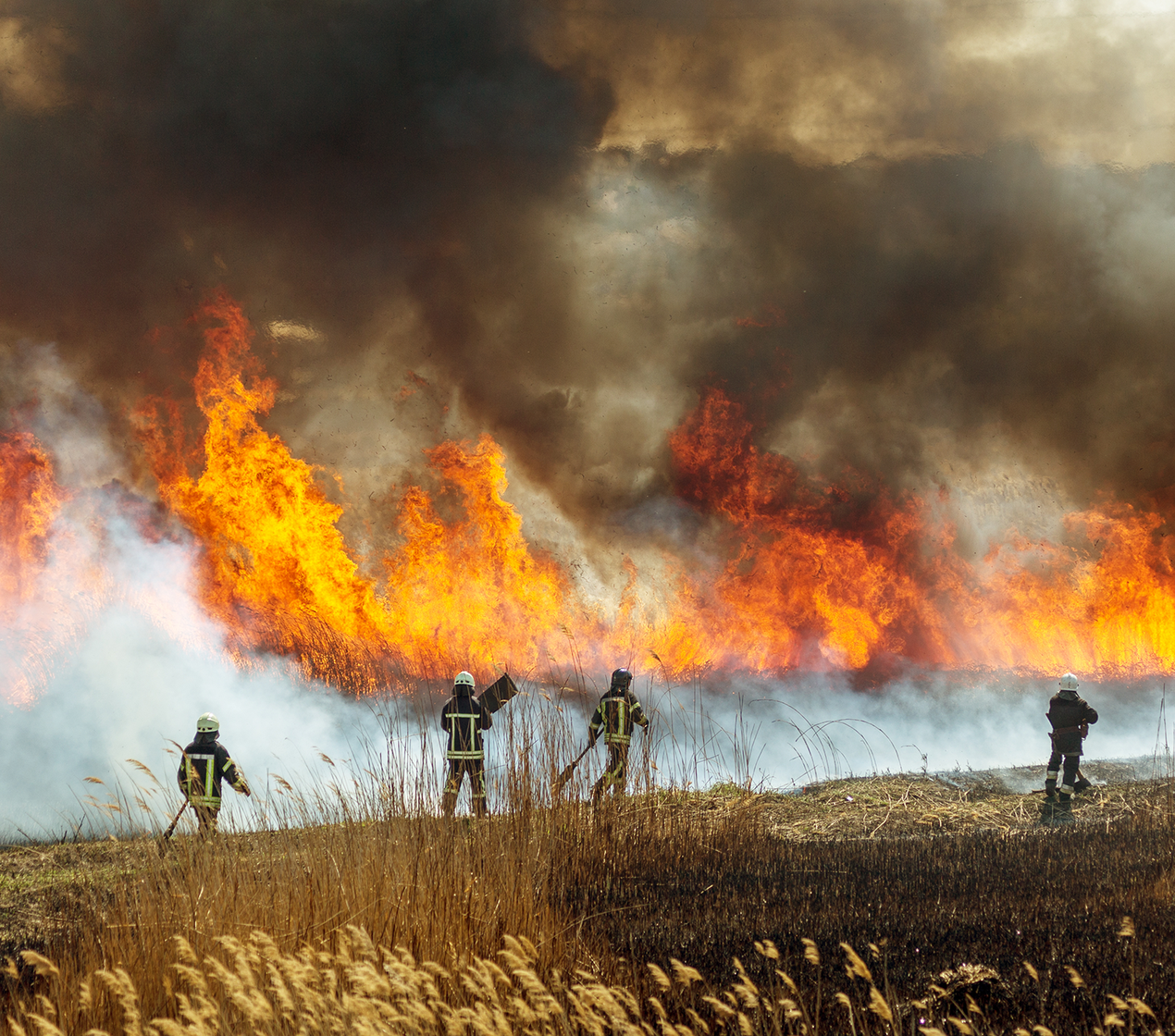
A proposed bill could encourage the use of prescribed fire in the Western United States—but could degrade air quality elsewhere in the country.
In addition to devastating local effects, wildfires produce vast amounts of particulates and other air pollutants that can seriously harm human health, sometimes hundreds or thousands of miles away from the fire itself. One of the best tools for mitigating wildfire spread and reducing wildfire intensity is prescribed burning—the use of controlled fire to consume fuel that otherwise could feed an uncontrolled fire. But how clean air laws should deal with prescribed burns turns out to be a tough problem—one that the US Congress is attempting to address with the Wildfire Emissions Prevention Act (WEPA), which passed the Senate unanimously in September and may be considered by the House of Representatives in the post-midterm lame duck session.
WEPA aims to reduce barriers to prescribed burns in the Western United States, where catastrophic wildfires have become frequent and prescribed fire remains underused. If WEPA passes without further revision, then the policy could encourage increased use of prescribed fire in the West—and ultimately reduce associated air pollution—but it could have unintended consequences for air quality elsewhere, especially in the Southeast and Great Plains.
Differentiating Pollution from Prescribed Burns and Wildfire
To air-quality sensors and under the Clean Air Act, wildfires are just another source of air pollution. If levels of particulate matter or other pollutants in an area exceed specified levels deemed by the US Environmental Protection Agency (EPA) to threaten health via the National Ambient Air Quality Standards, that area is designated as a “nonattainment area,” and states are required to impose often costly restrictions on local emissions.
The Clean Air Act has a safety valve of sorts—states can ask EPA to designate wildfires or other natural events as “exceptional events,” effectively removing the emissions attributable to those natural events from the record that determines compliance with EPA regulations. EPA has generally accepted that wildfires qualify as exceptional events, without asking whether the fires could have been prevented, although states must still demonstrate that contested exceedances in pollutant levels are driven by fires. We suggested in a 2025 paper that EPA exercise more scrutiny and require states to implement fire-management policies (including prescribed burns) before allowing states to claim exceptional-event status for wildfires.
If the Wildfire Emissions Prevention Act passes without further revision, then the policy could encourage increased use of prescribed fire in the West—and ultimately reduce associated air pollution—but it could have unintended consequences for air quality elsewhere, especially in the Southeast and Great Plains.
But prescribed burns themselves generate air pollution. Moreover, as human-caused events, prescribed burns appear to fall outside the statutory definition of exceptional events. But for some time, EPA has engaged in legal contortions to allow prescribed fires to be treated as exceptional events. This process carries legal risk, and some Western policymakers have argued that EPA approval processes are sufficiently onerous to discourage prescribed burns. In short, the Clean Air Act as implemented may be discouraging a valuable tool to prevent wildfires, while treating even preventable fires as if they had no emissions impact.
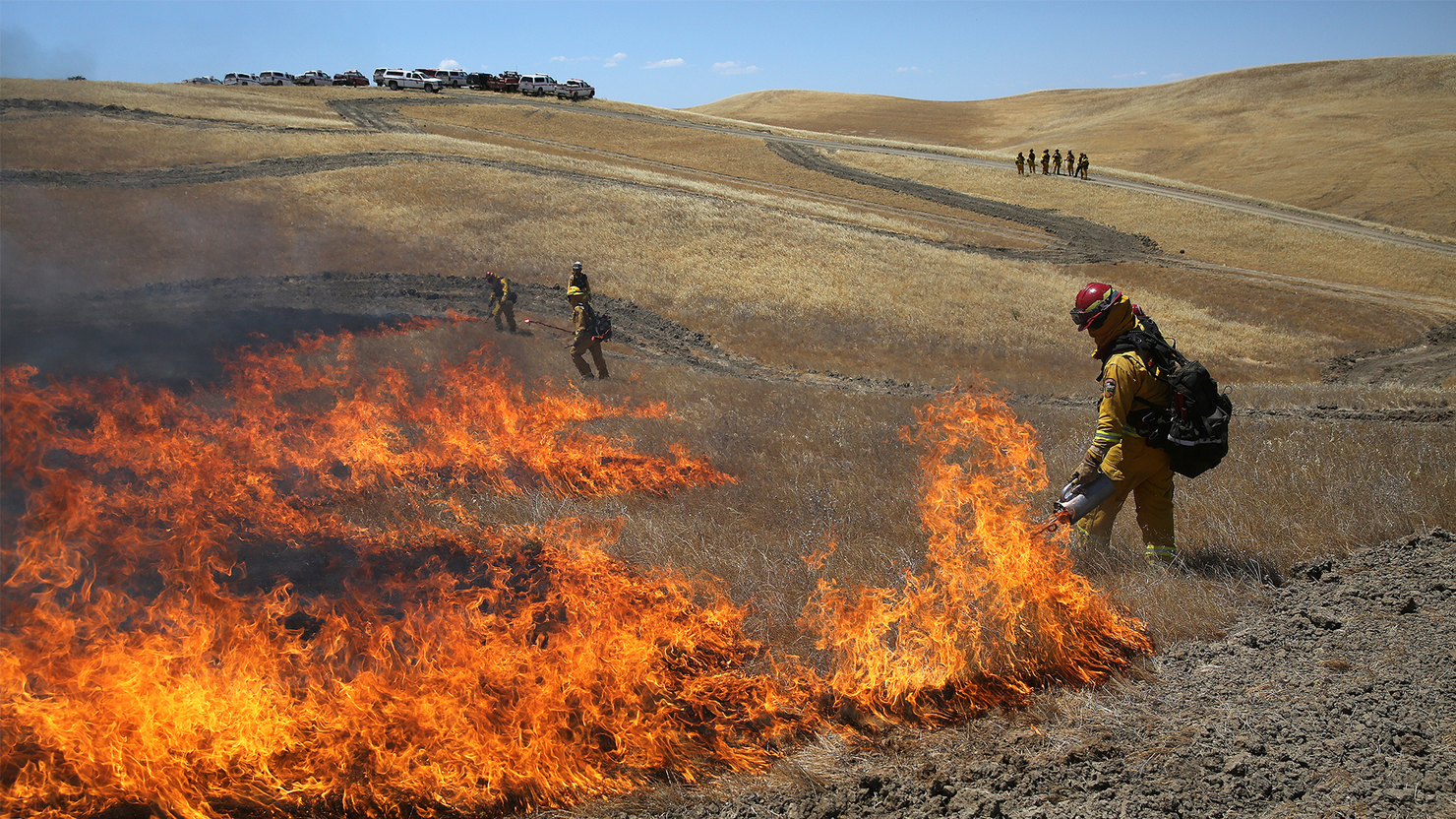
WEPA, if it passes, would partially address this inconsistency by defining prescribed burns as exceptional events and, therefore, excluded from air-pollution regulation. In other words, the bill makes explicit that prescribed burns qualify as exceptional events, even though they are human caused. States would still have to apply to EPA to exempt individual air-quality days due to prescribed burns, but the path to exemption is smoothed in three ways: the standard of proof for attributing low air quality to prescribed burns is relaxed, applications are automatically approved after a year if EPA fails to act, and EPA is required to write new regulations that will (presumably) lead to a more streamlined application process. The bill also allows the agency to make grants for wildfire prevention and wildfire smoke-mitigation programs, though it does not provide any new funding to do so.
Credit: Alex A Menendez / Shutterstock
At a high level, WEPA would address a small but important flaw in current clean-air law as it relates to wildfires and should make it easier for local authorities and forest managers to use prescribed burns. In principle, the bill could reduce the risk of large wildfires and, ultimately, associated air pollution. Nevertheless, we have some questions and reservations about the bill that we hope Congress will address before passing a final version.
Where We See Room for Improvement
One issue with the bill as currently written is that WEPA does only a small part of the larger job we recommended in our 2025 paper to make clean-air law a meaningful tool for reducing wildfire pollution. Removing barriers to prescribed burns is good, but even better would be to encourage burns and other wildfire-prevention strategies by requiring states to use those strategies to get exceptional-events designations for wildfires. This bill offers a carrot, but it should wave a stick, too.
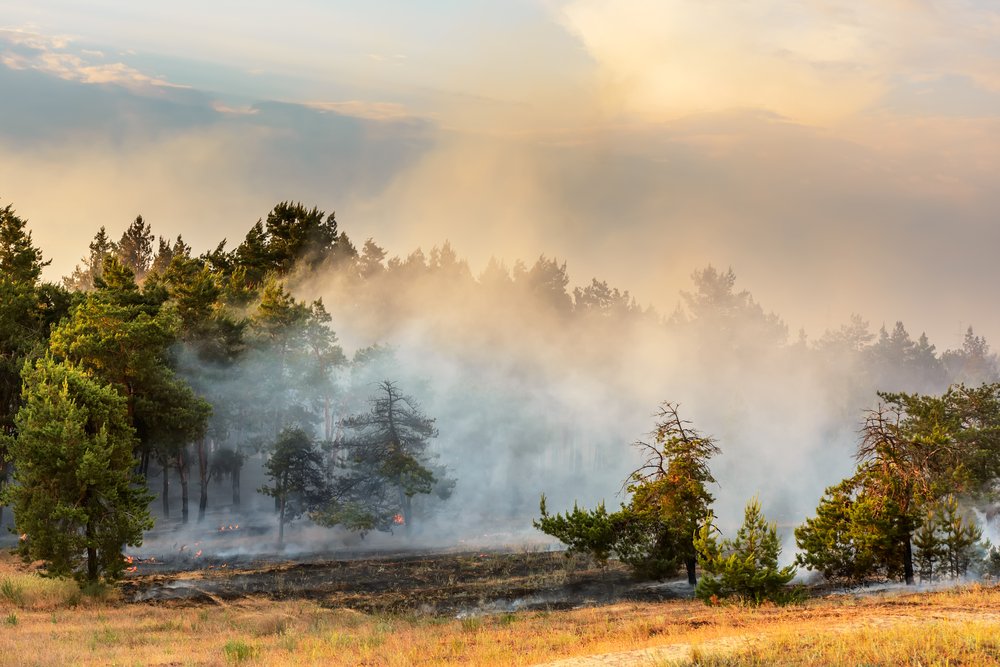
Second, we think more consideration should be given to the implications of the bill for forest practices in different areas of the country. Prescribed burns are underutilized in the West; however, the practice is common in the South, where for a variety of reasons related to culture, topography, and land ownership, prescribed fire is widely used in forest management. According to the National Association of State Foresters’ most recent report on prescribed-fire use, 63 percent of acres burned in prescribed fires in the United States in 2020 were in the Southeast. In that region, approximately 20 percent of exposure to particulate pollution results from prescribed fires, and in some areas, smoke from prescribed fire raises PM2.5 (particulate matter smaller than 2.5 micrometers in diameter) by more than 3.5 micrograms per cubic meter—10 percent of EPA’s daily allowable amount—on upward of 50 days per year. Prescribed fires are also common in the Great Plains, where they are frequently used for range management, not for wildfire risk reduction; in the National Association of State Foresters’ survey, Kansas ranked among the top states in terms of acres burned using prescribed fire, with more than 1 million acres burned in both 2018 and 2019.
Emerging empirical research indicates that prescribed fires reduce expected net emissions exposure by reducing the risk of larger fires. However, the research to date mainly centers on California. It is hard to know the extent to which this research, which supports greater permissiveness toward smoke from prescribed burns in the West, is also applicable to the South or the Great Plains.
Meanwhile, the existing prevalence of prescribed-fire use in the South, combined with the proposed relaxation of the standard of causation and the one-year default to approving exceptional events, raises concerns about consequences for air quality in the region.
WEPA would relax the burden of proof for excluding poor-air-quality days due to prescribed burns from the regulatory record; the state would have only to show that a causal relationship is “reasonably expected to exist” between air pollution and burns, whereas for wildfires, a clear causal relationship must exist for a bad-air-quality day to be excluded from the record.
This change may be intended to address the fact that prescribed burns are small and attributing pollution to them is difficult, or that prescribed burns are planned and permitted in advance, before any clear causal relationship can be established. Either way, given the widespread use of prescribed fire in the South, changing the burden of proof might enable states to use prescribed fire to strike a large number of days from the record, including days on which the air quality is poor mainly for reasons unrelated to prescribed fire. This problem could be avoided—while still maintaining the bill’s goal of reducing barriers to burns—by allowing air-quality data on days affected by prescribed fire to be adjusted based on a simplified state or regional adjustment rule, but not dropped altogether.
Credit: yelantsevv / Shutterstock
As for one-year automatic approval, while we appreciate the desire to not let administrative bottlenecks slow down the pace of prescribed burns, such a default could end up granting approvals that wouldn’t have passed muster if review had occurred. A better approach would be to create conditions that enable timely review, even for the potentially large number of exceptional-event demonstrations that might be submitted for prescribed burns. The bill’s lower standard of causation already is a step in this direction. Combined with other measures, like an expedited review process for prescribed burns and an increase in EPA review capacity, timely review could be achievable without automatic approval. And if air-quality data on days affected by smoke from prescribed fire were adjusted rather than dropped, an expedited review process would carry relatively few risks, since no approval could strike a poor-air-quality day from the record entirely.
In the case of prescribed burns for range management, though, it is not clear that exceptional-event status should be granted at all. WEPA’s premise is that prescribed burns, though human caused and avoidable, should nevertheless be allowed to be treated as exceptional events due to their potential to reduce wildfire hazard and, ultimately, smoke. But WEPA’s definition of prescribed fires appears to include range-management fires, despite the fact that these intentional fires are not primarily intended to reduce wildfire hazard and may provide no net air-quality benefits. WEPA could avoid giving these activities undue protection from air-quality regulation by more carefully defining which prescribed fires are eligible for exceptional event status.
Finally, clarity is needed on § 319(b)(4), which requires EPA to “lead” exceptional-event demonstrations when states, local authorities, or Tribes request it. Some have argued that the strain placed on state resources by linking poor air quality to exceptional events could be reduced by allowing states to cooperate and apply for regional exceptional-event status. EPA-led demonstrations could ease the burden on states, but this provision could give EPA a degree of control over the exceptional-events process that many states may not want, and that both environmental and forestry groups might oppose depending on who is in charge of the agency.
Seeing the Forest for the Trees
Prescribed fire is a key tool for mitigating wildfire risk, and the Western United States needs far more of it. In addressing a real flaw in current federal air-quality policy, WEPA would reduce one barrier to implementing prescribed burns and could potentially expand the use of this fire-prevention strategy in the West. But the bill’s effects would extend well outside the West. Prescribed fires are already widely used in the South and Great Plains, sometimes for reasons that have nothing to do with wildfire-hazard mitigation.
The bill’s broad definition of prescribed fire—and the generous standard for causation the bill permits—could allow significant air pollution in those regions to escape air-quality regulation. Also, the bill provision directing EPA to lead exceptional-event demonstrations would benefit from clarification.
As the House takes up WEPA, closer attention to how the bill’s proposed changes would play out beyond the Western United States can help ensure that greater use of prescribed fire in the West does not come at the cost of worse air quality elsewhere.

For more timely insights about developments in environmental and energy policy, browse the If/Then series.