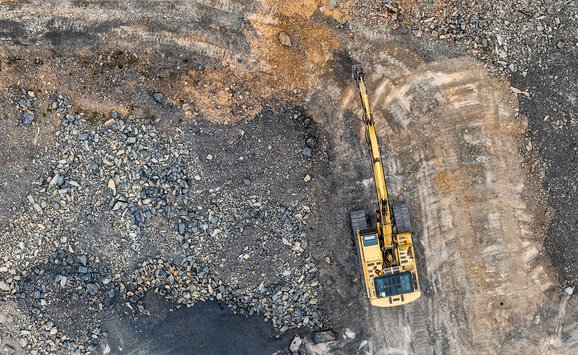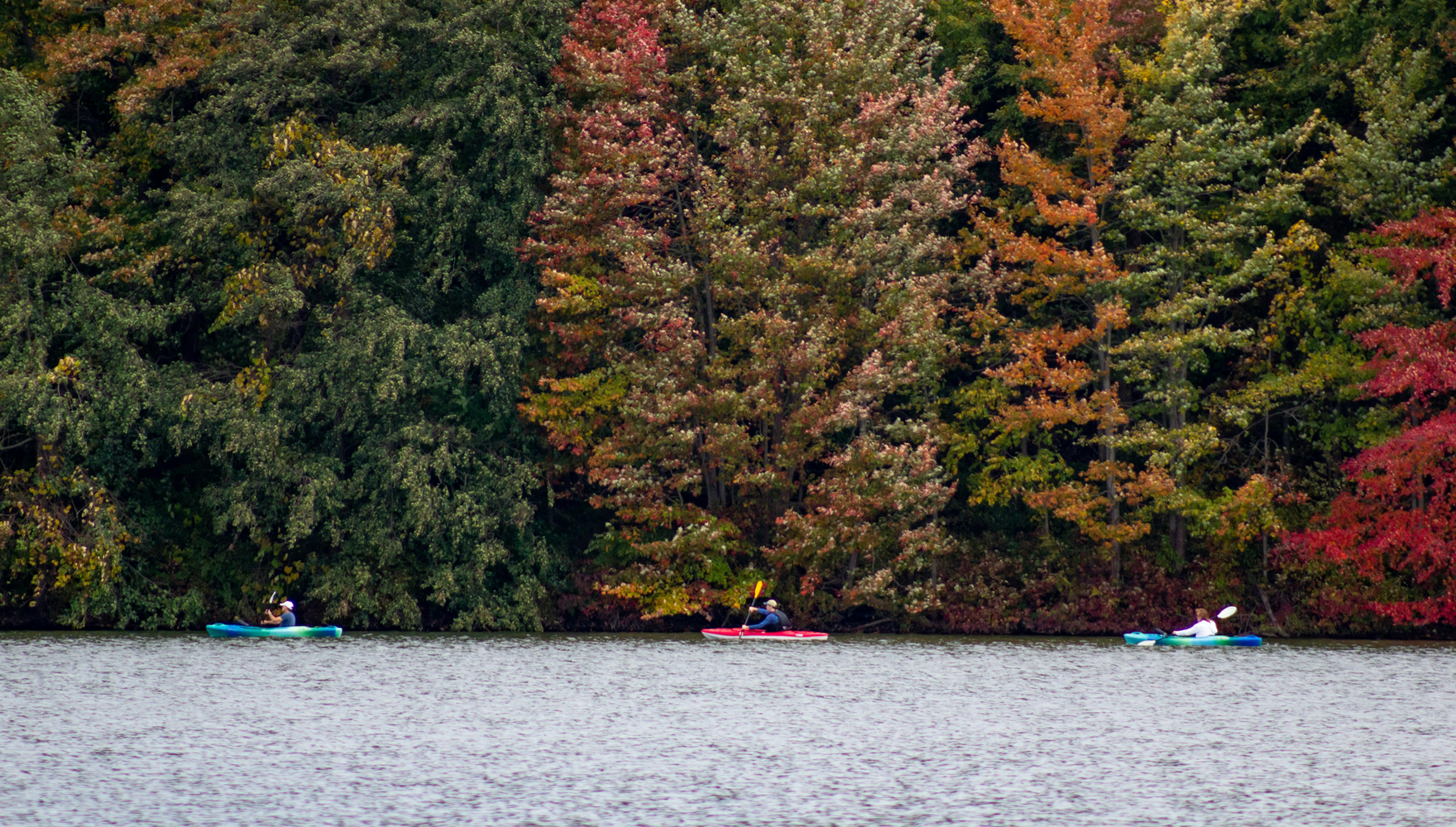

In this episode, host Daniel Raimi speaks to Max Harleman, an assistant professor at Villanova University, about research on the positive economic impacts of environmental remediation. Half a million mining operations have been abandoned throughout the United States, and the tailings and runoff from those mines compromise waterways—from the small scale of creeks nearby to regional impacts on watersheds. Water that drains from mines acidifies surrounding waterways, killing organisms in the ecosystem and making the waters unattractive for fishing, boating, and swimming. Harleman’s recent research with colleagues combines interviews with locals and careful comparisons of stream conditions and communities; their findings qualitatively and quantitatively illustrate the value of environmental remediation and restoration, yielding actionable advice for policymakers. Evidence shows that dollars spent on remediation efficiently produce positive outcomes for communities in terms of population growth, property values, and even profits on short-term rentals. Hear more details by listening in.
Listen to the Podcast
Audio edited by Rosario Añon Suarez
Notable Quotes
- Abandoned mines significantly affect water quality: “In Pennsylvania alone, the Department of Environmental Protection estimates that abandoned mine drainage is impairing more than 5,500 miles of streams and rivers, so it’s really a widespread water-quality problem in the state.” (6:15)
- Applying the broken windows theory: “The core finding of the qualitative study is that abandoned mine drainage is what we call a ‘signal of neglect.’ And that signal of neglect is influencing how people think about the waterway—but not only how they think about the polluted waterway, but also how they think and feel about their broader community … if we remediate that signal of neglect, we see a rising tide that essentially lifts all boats, and greater care for the community.” (15:09)
- Restoring the environment can restore a local economy: “The first recommendation is that policymakers that are trying to improve economic outcomes in distressed communities—communities that have experienced declines in manufacturing, or declines in resource extraction—might consider pursuing environmental remediation as an economic-development strategy in and of itself.” (22:39)
Top of the Stack
- “Waterway Restoration Helps Revitalize Mined Areas” by Jeremy G. Weber, Max Harleman, Aidan Semanco, Shawn McCoy, and Katie Jo Black
- “Reversing Signals of Neglect: Legacy Pollution, Adaptive Governance, and Resilience in Historic Coal Communities” by Max Harleman, Jeremy G. Weber, Aidan Semanco, Katie Jo Black, and Shawn J. McCoy
- “Environmental Hazards and Local Investment: A Half-Century of Evidence from Abandoned Oil and Gas Wells” by Max Harleman, Jeremy G. Weber, and Daniel Berkowitz
- Gravity by Jeremy Ledbetter Trio
- Yamaha by Fazer
- Fasten Up by Yellowjackets
- Music by Kermit Ruffins
- Music by the Rebirth Brass Band
- Music by Jon Batiste
The Full Transcript
Daniel Raimi: Hello, and welcome to Resources Radio, a weekly podcast from Resources for the Future. I’m your host, Daniel Raimi. Today, we talk with Dr. Max Harleman, Assistant Professor of Public Administration at Villanova University. Over the last several years, Max has been doing fascinating work on the economic impacts of environmental remediation. In today’s episode, I’ll ask Max to tell us about how cleaning up pollution from abandoned mines affects local economic outcomes in Pennsylvania. Spoiler alert: It helps a lot. We’ll talk about why that is, and how policymakers can direct resources to maximize the economic benefits of public dollars earmarked for remediation. Stay with us.
All right, Max Harleman from Villanova. Welcome to Resources Radio.
Max Harleman: Thanks, Daniel. It’s great to be here.
Daniel Raimi: We’re thrilled to have you. I’m really excited to talk about this recent work that you’ve done with Jeremy Weber and Katie Jo Black and others on abandoned mine drainage. But before we get into the substance, we always ask people how they got interested in working on energy and environmental topics. So what drew you into this line of work?
Max Harleman: Yeah, great. Two experiences really sparked my interest in energy and environmental policy. The first was that I went to high school in Palmerton, Pennsylvania, which is near the Eastern Anthracite Coal Fields. Palmerton was actually built around a zinc smelting plant, which located there in Palmerton because of easy access to cheap anthracite coal for the smelting process. And for decades, that plant emitted heavy metals over the Blue Mountain, which overlooks the town I went to high school in. It basically devastated the forest there. And in the early 1980s, that area was designated as a Superfund site by the federal Environmental Protection Agency, and a major cleanup effort followed. Growing up, I saw that remediation work firsthand. I remember touring the remediation site and watching crews work to restore the mountainside while I was at soccer practice in town. I also regularly hiked the section of the Appalachian Trail that runs above the remediation site. Seeing the damage from the legacy of industrial pollution there in Palmerton, and the efforts to repair it, really made environmental issues very tangible for me, even as a young kid.
And then the second experience that sparked my interest in energy and environmental policy was when I served in the United States Peace Corps in Grenada in the Eastern Caribbean. When I was there, I worked on microfinance projects to help farmers and fisherfolk rebuild their livelihoods after two fairly devastating hurricanes hit Grenada in 2004 and 2005. That experience really showed me how closely people’s economic well-being and livelihoods are tied to the environment and how vulnerable they can be to extreme weather, which sparked my interest in how communities can build economic resilience to a changing climate.
These questions drew me toward work at the intersection of environmental remediation, community economic development, and economic well-being. So, after I finished the Peace Corps, I pursued a Master of Public Administration and ultimately a PhD in public policy and public administration, but I always focused on energy and environmental issues.
Daniel Raimi: That is fascinating. I didn’t know either of those stories. That’s really great. So, as I mentioned, we’re going to talk about abandoned mine drainage today. Let’s start with some basics: How have mines, and coal mines in particular, contributed to issues of water pollution in Appalachia, and how extensive is this issue?
Max Harleman: Right. So, just some basics: The problem stems from a legacy of mines that were abandoned decades ago.
Prior to the passage of the federal Surface Mining [Control and Reclamation] Act, which passed in 1977, mining companies could usually abandon their mines with few repercussions, so they could just sort of walk away from them. As a result, researchers at Stanford have estimated that there are about half a million abandoned mines spread across 32 states in the United States. The worst consequence of these legacy abandoned mines is that highly acidic water often drains from them. What happens is, mining exposes sulfur-bearing minerals, especially pyrite, to the air and also to the water draining from the mines. This is going to produce sulfuric acid, which then dissolves metal from the surrounding rock.
The result is water that is highly acidic, and it contains elevated concentrations of metals like iron, aluminum, and manganese. This water can continue flowing into nearby streams, creeks, and rivers long after the mining has stopped, and the metals can directly harm fish and other aquatic life. What happens is, the metals form deposits that coat stream beds and that degrade habitats for macroinvertebrates, aquatic insects, and other small organisms. And this is what fish depend on for food, so it can entirely eliminate fish populations on some stretches of streams and rivers near mines. The discharges can also discolor water, making the water acidic and unattractive for human recreation like fishing, boating, or swimming.
The scale of the problem is really substantial. Any place with a history of mining (which happened in many states in the United States) probably has some issues with abandoned mine drainage. But the state of Pennsylvania has the largest inventory of mine-impaired waterways, and that’s why it’s the setting for the research that we’re going to discuss today. In Pennsylvania alone, the Department of Environmental Protection estimates that abandoned mine drainage is impairing more than 5,500 miles of streams and rivers, so it’s really a widespread water-quality problem in the state.
Daniel Raimi: Yeah. Really interesting. Let’s talk now briefly about policy. You mentioned the Surface Mining Control and Reclamation Act, which goes by my favorite acronym in environmental policy, which is SMCRA. What did SMCRA do, and what are the other types of efforts that are underway to address this problem?
Max Harleman: To answer that question, I’d like to start with what the money actually does, and then we can talk about where the money comes from.
Over 90 percent of the abandoned mine treatment systems in Pennsylvania are what are called passive treatment systems. These are a series of shallow ponds that are lined with limestone and other materials that help lower the acidity of water. And when the acidity of the water lowers, metals precipitate out of the solution and collect in the ponds before the water hits natural streams and rivers—so, the water that’s discharged in the streams and rivers should be clear. These systems are often very effective at reducing acidity in heavy metals. And in Pennsylvania, over a thousand miles of streams and rivers have been restored to a level that, again, supports fish and other wildlife and makes them very attractive for human recreation. Some waterways in Pennsylvania have been restored to the designation of Class A wild trout streams.
Now, these systems require a whole lot less operating costs than active systems, which are basically similar to water treatment plants or municipal water treatment plants, but they’re still fairly expensive. They require large up-front costs to build them as well as to operate them and maintain them over time. They do require periodic rehabilitation every 10 to 20 years. Some of my previous research on this issue estimates that construction costs to treat just one discharge from a mine with a passive system is still about half a million US dollars for the typical discharge.
Because of these high costs, this is where policy comes in. Public dollars are really needed to fund remediation efforts. And in practice, there are three sources of funding right now to treat abandoned mine drainage.
And the first is the one you mentioned—SMCRA, or the Surface Mining [Control and Reclamation Act]. The Office of Surface Mining Reclamation and Enforcement collects a tax on coal extraction. It’s then going to take that money, and it’s going to provide it to states’ Department of Environmental Protection or similar agencies. For example, it’s going to provide money to the Pennsylvania Department of Environmental Protection. And, at least in Pennsylvania, the Department of Environmental Protection is going to use this money on its own to design and contract for the construction of treatment systems and also monitor and maintain them over time. So, that’s the first source of money, federal dollars from the SMCRA.
The second source of funding is just funding from state taxpayer dollars. Some states use general fund revenues to provide grant money to watershed associations. Watershed associations are a really important part of this story. They are typically registered nonprofit organizations that are run by volunteers. They may have one or two staff members if they’re larger organizations, and they use the state funding to design and contract for the construction of treatment systems themselves. And they also play a big role in monitoring them over time because they’re usually right in their communities and maintaining them. I will say that the state often does provide significant technical support and support through the grant application process to assist these watershed associations.
Daniel Raimi: Great. Quick question on the federal funds under SMCRA. I was looking at this the other day, and my understanding is that the level of the tax or fee that’s applied to coal extraction has actually gone down over time, and in inflation-adjusted terms, it’s gone down a lot. So do you have any sense of whether the federal dollars are anywhere near sufficient to cover the costs of actually cleaning up these types of problems?
Max Harleman: Yeah. In our analysis of this, the federal dollars through SMCRA itself are much too low. The issue with abandoned mine drainage and abandoned mine land remediation, which the act also covers, is just on an annual basis; the allocations from the federal government are just much too low.
In part, the federal government acknowledged this, and that really gets me to the third source of funding—in 2021, when they passed the Infrastructure Investment and Jobs Act. Sort of acknowledging that annual allocations are too low, they allocated about $11 billion for states and Tribes to address abandoned mine problems, and that was allocated over a 15-year period. So, they recognize this as an issue, and this significant increase in funding essentially represents roughly a threefold annual increase in funding for cleaning up abandoned mine issues. It essentially implies, and will require, a substantial scaling up of remediation efforts across 32 states in the United States.
Daniel Raimi: Super interesting. Okay. Let’s talk now about the analysis that you did with collaborators in this paper that we’ll have a link to in the show notes. How did you measure the economic effects of what happens to communities when streams get cleaned up?
Max Harleman: Yeah, absolutely. First, just let me shout out some of my colleagues that I conducted this work with. Jeremy Weber at the University of Pittsburgh; Katie Jo Black at Kenyon College; and Shawn McCoy at the University of Nevada, Las Vegas, were all involved in this project, as well as Aidan Semanco, who’s now a planner with Cranberry Township in Western Pennsylvania. He helped tremendously with this work.
What we did is we took a mixed-method approach. What that means is that we collected both qualitative data on affected community members’ perspectives of abandoned mine drainage in their communities, and then quantitative, or numerical, data on local demographic outcomes in communities that had AMD [abandoned mine drainage] and also remediated AMD.
In the qualitative study, what we did is performed 39 semi-structured interviews. We actually went into the communities and spoke with individuals that work with watershed associations, [people working in] local county conservation districts, municipal planning officials, and even some private-sector environmental consultants that were involved in building some of these projects. We went out to 11 watersheds, some of which had restored streams, and others that still had unrestored waterways. This was across seven counties in Pennsylvania, which was our study area. In the interviews, we focused on asking our participants how they perceived the polluted waterways, and why some communities in our sample achieved remediation while others did not. And we asked them about their perceptions and residents’ perceptions about whether remediating the waterways was really creating meaningful and sustained economic benefits.
And then in the quantitative, or the numerical, approach, we studied population and demographic change over three decades at the Census tract level. We were able to do this because there’s significant geographic variation in waterway impairment by abandoned mine drainage in Pennsylvania.
About 20 percent of Pennsylvania’s Census tracts have at least one waterway impaired by abandonment drainage. There’s also significant geographic variation in how many miles of waterways were restored at the Census tract level. So it allowed us to examine how both initial impairment, and then subsequent remediation, affected demographic and population change over three decades or the period 1990 to 2020. So we were hypothesizing that impairment would negatively impact population growth, and remediation would improve it, if natural amenities like waterways affect the desirability of a place to live, to work, to build a future.
We think this question of demographic change is really important, because we know that rural areas in Pennsylvania (and across the nation) have experienced demographic decline, which really can stress local public finances and can just make those places harder to sustain as self-sufficient communities.
Daniel Raimi: Yeah. It’s a really interesting question, and I love the sort of combination of methods that you all did in this paper. So let’s jump to the findings. What did you find?
Max Harleman: I’m going to start with the qualitative study, which I think sheds a lot of light on what’s happening on the ground with this issue.
We learned so much from our 39 interviews that I couldn’t possibly summarize it all here, but the core finding of the qualitative study is that abandoned mine drainage is what we call a “signal of neglect.” And that signal of neglect is influencing how people think about the waterway—but not only how they think about the polluted waterway, but also how they think and feel about their broader community.
I think our findings can best be summed up by two quotes that I’d like to read to you. I think our participants tell the story better than I could. So, the first quote is this: our participant states, “In those areas,” (areas with abandoned mind drainage) “people have parties, and you see the fire pits and trash and broken beer bottles and beer cans lying around, and the four-wheeler trails just ripping everything up and driving through the streams. Because honestly, people probably go to those areas and are like, ‘Well, what does it matter? It’s not like it’s clean to start. The water is orange. Who cares?’” (The water is orange because the stream contains iron, which has the characteristic nature of turning the stream orange.)
So, what this participant is really telling us is that, if a place is already neglected and trashed, what’s the harm of further neglect? Residents are essentially avoiding these waterways for fishing and swimming, so they just subject them to further pollution.
What happens after remediation, however, is the nature of how the waterway is treated—it changes. Our second participant says, “There definitely seems to be more care now. If somebody is out fishing, and they see that somebody left trash lying around, or they are paddling and they find some, there’s been more efforts on stopping that and preventing that.”
What our participants were telling us is that, in communities with abandoned mine drainage–remediation projects (primarily passive treatment systems), there’s a more optimistic community identity, and there’s a reinvigorated care for the waterways and the surrounding environment.
And while these remediation efforts (the abandoned mine drainage treatment systems) are almost never intentionally coordinated with economic development initiatives, like Main Street revitalization projects or tax incentives to attract businesses, they told us that it still often coincides with growth in the tourism industry, growth in the outdoor-recreation industry. So, if the waterway is now looking nicer, maybe someone opens a kayak rental shop or a fishing bait and tackle shop, and then somebody can open a restaurant to serve individuals that are coming there to take advantage of Class A wild trout fishing. So if we remediate that signal of neglect, we see a rising tide that essentially lifts all boats, and greater care for the community.
Daniel Raimi: So interesting. So, those are your qualitative results. You also looked at the data to try to figure out, Could you actually see these effects in the numbers—the economic numbers or the population numbers in these different Census tracts where streams were remediated? What did you find on the quantitative side?
Max Harleman: Yeah, absolutely. So the qualitative study gave us an idea that we could really see real effects in a big-data approach.
What we find when we look at the data on population and Census tracts, we see that Census tracts with some impaired waterways from abandoned mine drainage in 1990 had eight percentage points less population growth than Census tracts that are in the same county but never had any impaired waterways. That basically means that instead of having a 6 percent population growth, if you have impairment, you’re actually seeing your population decline by about 2 percent. That’s the impairment effect.
We think what’s more interesting is the remediation effect. When we compare Census tracts that had some of their waterways restored to those that never had any restoration, we see a similarly sized effect, but in the opposite direction. So restoration is bumping Census tracts’ population growth back into the green—back into positive growth.
We also looked at these effects on different groups to see if we could understand the mechanisms behind the effects that we were looking at. And we find that restoration is most spurring growth in the college-educated populations, and it especially increases population for those that are 65 and older, with growth effects of up to 11 percentage points.
One interpretation here is that restoration encourages existing residents to retire in place, or it attracts retirees from maybe metro areas, who are looking for an affordable place but also a place that is rich in environmental quality and environmental amenities, where they can fish and hike and boat.
We also see that impairment and restoration might not only affect residents, but also visitors. We used data from AirDNA, which is a data provider that provides data on revenues and placements of Airbnbs and VRBOs and similar short-term rentals. We find that impairment is associated with 62 percent less availability of short-term rentals, and restoration is associated with 53 percent more revenues, for properties that highlight natural water amenities in the text of their listings.
One caveat is that we understand that communities with restoration might be unique, and that they would have better population growth even without restoration efforts. Maybe it could be the case that communities with restoration just have more social capital that allows them to organize to put in treatment systems. But we test for this, and that doesn’t seem to be the explanation in our data.
We know what places actually received treatment systems directly in their Census tract, so we can see if the systems by themselves affect population growth, apart from any positive effect on water quality. And it turns out that it’s the water quality improvements that matter—not just having treatment systems there, which we’re able to separate out because some treatment systems aren’t very effective over time. They sort of lose their efficacy. And also because some systems have effects far downstream from where they’re built. So, you could be a Census tract in a community that maybe didn’t have the social capital to get a system built, but you’re still benefiting from improved downstream water-quality improvements.
Daniel Raimi: Really interesting.
I’d love to go now to policy implications. When I read this analysis, I was like, “Oh wow, this seems like a really great investment of public dollars—and not just improving the environment, but really producing some positive local economic outcomes.” Do you and your coauthors think that these findings justify even more public money going toward remediation, or is it possible that the $11 billion or so under the Bipartisan Infrastructure Law, coupled with money from SMCRA—is that enough to deal with the problem? What do you think policymakers should take away?
Max Harleman: Absolutely. I’ll comment on that by providing three policy recommendations that I think will answer all parts of that question.
I’m going to start with the broadest recommendation, and you’re basically suggesting that this might be a very cost-effective investment—and we really do think it is. So, the first recommendation is that policymakers that are trying to improve economic outcomes in distressed communities—communities that have experienced declines in manufacturing, or declines in resource extraction—they might consider pursuing environmental remediation as an economic-development strategy in and of itself.
When we compared our results (which focused on an environmental-remediation effort) to results from more traditional place-based economic-development programs (things like investment tax credits and grants), we find that the effects on population are very similar in magnitude. They both have small positive increases on population counts. But environmental remediation can achieve these improvements in a much more cost-effective manner.
The remediation work that we studied cost about $240 per resident in the typical Census tract that we studied. But by comparison, estimates of the federal empowerment zone program, which is a traditional place-based economic-development program that offers tax credits and grants to businesses to essentially set up shop in distressed communities, they have very similar effects on population, but they cost about $1,500 per resident. So: $240 for environmental remediation versus $1,500 per resident. Our analysis essentially confirms the point that you’re making, that this could be a very cost-effective way to improve outcomes in distressed communities.
When we think about funding, I don’t really think that the question is the magnitude of funding. I think the $11 billion that has been allocated through the Infrastructure Act will be a great start. What we should really be focusing on right now is the best way to expend that money. A lot of that money is still unobligated, and we need to be smart about how we spend it over the next roughly 13, 14 years.
So, our second policy implication starts thinking about how we should spend that money. Or when we do spend that money, how we can improve outcomes. And we really do think that states should continue to lean on watershed associations.
In separate research that Jeremy and I did, we compare outcomes of treatment systems built by state agencies directly, versus those where essentially the general contractor was a watershed association. We find that watershed associations do just as good of a job at building these systems and treating water over time—essentially raising the pH of water to reduce its acidity, to filter out those heavy metals. They do a really great job. And as we scale up this effort, we should continue relying on the hundreds of watershed associations that we have across the United States. But to do that, we really need to reduce bureaucratic hurdles that these organizations face.
Federal programs and state programs that provide grants to watershed associations are great, but grassroots organizations that receive them rely heavily on volunteers. And what we learned in our research is that these volunteers are required to navigate really long, complicated grant-application projects, which are preventing worthwhile remediation projects.
In our qualitative research, participants were telling us that they face multiple rounds of watershed studies, plan development, grant applications—and some of these projects took up to 20 years to build. Over time, many volunteers just completely lose interest or even age out of the process. So, our recommendation is that both federal and state policymakers rely on these watershed associations, but also do a big-picture audit of the timeline and the discrete steps that it takes for local groups and organizations to navigate these processes, and then identify opportunities to streamline them.
The other way we can think about spending this money wisely is to invest in capacity building, and that’s our third policy recommendation.
Our participants were telling us that the mine drainage–treatment projects tended to occur in communities where strong local efforts support them. And this is primarily in communities where the projects are championed usually by one, maybe two community members, and they usually have very strong capacity. They have leadership skills and sometimes even specialized skills in environmental science, law, grant writing, as project managers. I talked to several retired lawyers and retired project managers that really championed these projects. Communities that didn’t receive remediation just happened to not have folks that could drive these projects home.
Federal and state programs that fund this work oftentimes don’t fund direct capacity building, so we think that they should expand their guidelines to invest in local capacity in communities that have less of it. One really interesting way I think this could be done in the future is even authorizing state agencies to use federal program funds for outreach and environmental-leadership programs in high schools and in colleges to foster a new generation of watershed managers, a new generation of community leaders in the watershed-management space. Right now, most watershed organizations are primarily run and managed by older adults, and that really threatens the future of watershed management. I think we want to be forward-looking with this money in terms of how this work will get done in the coming generations.
Daniel Raimi: Yeah, really interesting stuff. Let me ask you, Max, one last question before we go to Top of the Stack. If you could try to keep it quick, that would be great, because we’re just about out of time.
I know you’ve done work on the economic impacts of other types of environmental remediation. Like you mentioned in your introduction, you’ve done work on orphaned oil and gas wells (as have I), and we’ve talked about that a lot over the years. How does your analysis of this abandoned mine drainage issue compare with other types of remediation, like with orphaned wells?
Max Harleman: Yeah, I’m really happy you asked this question. The difference largely centers around the nature and the extent of the local economic concern.
We’ve both looked into the global environmental concern of abandoned oil and gas wells, because they can leak a lot of greenhouse gases—especially methane. But when we think about the local effects of abandoned wells, I studied this, and I found that there’s two acres around an unremediated (or unplugged) well, and those two acres receive roughly half as much square footage of real estate investment as wells that are properly plugged. This is essentially the extent of the local environmental and economic effect of an abandoned well. This is a highly local effect and reflects private decisions of property owners that live near wells.
But streams and rivers that are impaired by abandoned coal mines, they affect an entire community. They can even affect an entire region or watershed. And navigable waters, at least in Pennsylvania, are public property, so these waterways serve as de facto public parks that people can fish in, and boat in, and enjoy freely. So the highly visible pollution from streets, from businesses, from hiking trails and public access points to the waterways are essentially affecting the entire atmosphere of a place—not just two acres around the water, which can have effects of broadly depressing economic activity and deterring population growth in a given community. So, the more salient pollution is to the broader community, the more it’s going to serve as this signal of neglect that we document.
Daniel Raimi: Right, yeah. A lot of times, people don’t even know they have orphaned wells on their property. They can be hidden, or buried, or something like that. Obviously, there’s not going to be a big economic effect if no one even knows that thing is there.
Max Harleman: That’s exactly right.
Daniel Raimi: So, Max, this has been great. I’ve really enjoyed learning more about this work, and I’m sure our audience has, too.
I’d love to ask you, now, the same question we ask all of our guests at the end of each episode, which is to recommend something that you think is great, that you think our audience would enjoy. So what’s at the top of your literal or your metaphorical reading stack?
Max Harleman: Well, Daniel, I know that you’re a big jazz fan, and so am I. So, I thought I would recommend three contemporary jazz albums that I’ve really been enjoying lately. Some of them I was probably even listening to while I was working on this research.
The first is Gravity by the Jeremy Ledbetter Trio. It’s a high-energy jazz fusion album. It’s going to bring a lot of energy to your day.
The second is Yamaha by the German group Fazer. It has a more sort of understated minimal sound and blends some psychedelic rock elements.
And then finally, I’d recommend Fasten Up, which is the most recent studio album by Yellowjackets, which is my all-time favorite jazz group.
Daniel Raimi: Yes, Yellowjackets—they are classic.
I’ve recently been listening to some New Orleans jazz, so my most recent jazz album was Kermit Ruffins and the Rebirth Brass Band.
I’ve also been listening to some Jon Batiste. He’s been doing these interesting solo piano albums where he sort of reinterprets classical music like Beethoven and jazz like Thelonious Monk.
So, lots of jazz recommendations today. Excellent.
Thank you so much, Max. It’s been great having you on the show. Thank you so much for coming on and sharing this fantastic work.
Max Harleman: Thanks, Daniel. It was a pleasure. I really appreciate it.
Daniel Raimi: You’ve been listening to Resources Radio, a podcast from Resources for the Future, or RFF. If you have a minute, we’d really appreciate you leaving us a rating or a comment on your podcast platform of choice. Also, feel free to send us your suggestions for future episodes.
This podcast is made possible with the generous financial support of our listeners. You can help us continue producing these kinds of discussions on the topics that you care about by making a donation to Resources for the Future online at rff.org/donate.
RFF is an independent, nonprofit research institution in Washington, DC. Our mission is to improve environmental, energy, and natural resource decisions through impartial economic research and policy engagement. The views expressed on this podcast are solely those of the podcast guests and may differ from those of RFF experts, its officers, or its directors. RFF does not take positions on specific legislative proposals.
Resources Radio is produced by Elizabeth Wason, with music by me, Daniel Raimi. Join us next week for another episode.