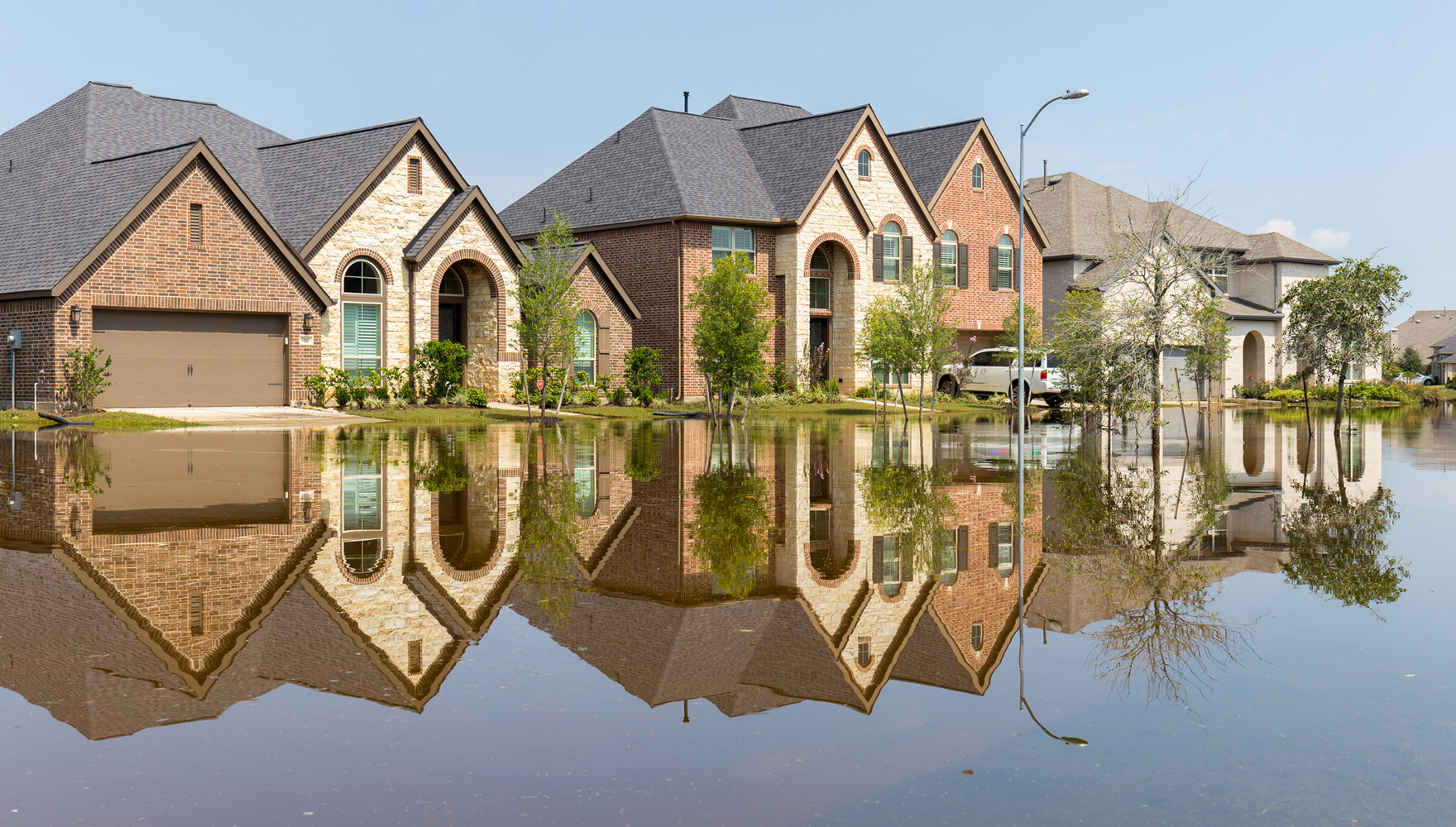

In this episode, host Margaret Walls speaks to Melissa Kenney, a fellow and the Director of Research and Knowledge Initiatives at the University of Minnesota’s Institute on the Environment; Kenney also has been included in the TIME100 Climate 2026 list of leaders on climate action. Kenney discusses a recent pause on producing the National Climate Assessment by the Trump administration; until now and since the Global Change Research Act of 1990, these quadrennial assessments had been published to fulfill a federal mandate to research the consequences of climate change. Kenney is a lead author on a recent major report that aims to keep the effort alive by making a “research road map” of climate-related risks, damages, and study opportunities. The new paper makes recommendations for future climate assessments, which typically compile and synthesize the current knowledge about climate change, level of confidence in that information, and solutions available to address the global problem. With their new report, Kenney and more than 150 coauthors explore a wide range of sectors, US regions, environmental impacts, interventions, and possible research directions to build a research road map around the physical, ecological, social, and economic impacts of climate change.
Listen to the Podcast
Audio edited by Rosario Añon Suarez
Notable Quotes
- Evidence links climate change to the environmental effects that people actually experience: “Attributing an individual event, or a particular characteristic of an event, to climate change is a much more specific scientific question, and it’s a lot harder. But it’s an area where the science has advanced considerably.” (13:33)
- Climate change poses risks to physical and financial systems: “We can connect those climate projections with economic and health information at geographic scales that might be more relevant to decisions. That’s an important area of opportunity to think about how we can provide information to local governments that might be deciding where to invest in infrastructure, or communities considering different adaptation strategies—places where more fine-scale economic information can help people make important decisions better, given where their community wants to grow.” (21:09)
- Long-term evaluation of nature-based solutions: “There’s a lot that has evolved in our understanding and thinking about nature-based solutions. As we think about this, we’re trying to think about not just what communities could do, but evaluate what they are doing. Learning from those experiences is very consistent with a synthesis-based approach.” (26:28)
Top of the Stack
- US Climate Collection, from the American Geophysical Union and the American Meteorological Society
- “Research Priorities for Robust Climate Assessments in the United States” from the American Geophysical Union
- “Research Priorities for Robust Climate Assessments in the United States” from the American Meteorological Society
- National Climate Assessment
- Goodthink: The New Science of Collective Intelligence by Damon Centola
The Full Transcript
Margaret Walls: Hello, and welcome to Resources Radio, a weekly podcast from Resources for the Future. I’m your host, Margaret Walls. My guest today is Dr. Melissa Kenney. Melissa is a fellow and Director of Research and Knowledge Initiatives at the University of Minnesota’s Institute on the Environment. She’s a coauthor of a recent study, titled Research Priorities for Robust Climate Assessments in the United States, which was published in September in the journal Earth’s Future. The paper has north of about 150 coauthors. All these coauthors have contributed over the years to the National Climate Assessment, an effort I’m going to ask Melissa to tell us about, and which has been put on hold by the Trump administration.
The paper takes stock of how climate assessments maybe need to change to keep pace with a fast-moving problem and a fast-growing body of research. The authors make a number of specific suggestions for how we can do things better and where the greatest needs are. We’re going to cover a lot of that today. Lots to learn, so stay with us.
Melissa Kenney, my longtime friend. Welcome to Resources Radio. Thanks for coming on the show.
Melissa Kenney: Thanks so much, Margaret. It’s wonderful to be here.
Margaret Walls: Yeah, it’s great to have you. Melissa, we start with a kind of get-to-know-you question: Can you tell us a little bit about yourself? How did you come to do what you do? Your educational background—I know it’s in decision sciences, you’re an expert in that area, and also water quality modeling, I believe. So tell us how you came to this path.
Melissa Kenney: Yeah. Well, I grew up in the rural Shenandoah Valley of Virginia. I think when you grow up in a place like that, the natural environment is just all around you. So, I love spending time in rivers and streams, walking through the forest, and every night, I would listen to the frogs and insects outside my window, unless it was wintertime.
In many ways, and throughout my entire life, I’ve always wanted to work in the field of the environment, but I really discovered decision analysis when I was in college, and that helped to shape the direction of my career, because I think one thing that became clear to me is that the environment is profoundly affected by the choices that we make. I wanted to understand how we could develop better methods that could help organizations to make difficult decisions that affect the environment. So, that’s what I’ve spent my career doing.
I got my bachelor’s degree in environmental science from the University of Virginia and my PhD in water quality and decision analysis from Duke University. Throughout my career, I’ve moved between academic research and some science-policy fellowships in the federal government.
That’s what’s brought me here to the University of Minnesota’s Institute on the Environment, where I lead research and work on environmental decision-support science. Much of my research focuses on, How do we take complex scientific information and make it more useful for the decisions that people and organizations are making? What are the processes of engagement between scientists and experts from a wide range of different areas? How can we design information to be more readily used through indicators and forecasts and models? I think that’s where climate assessments come in.
There’s an opportunity to bring in an enormous body of scientific research to help society understand what’s changing, what we know, the degree of confidence that we know that, and what choices we can make. Why does that information matter?
Margaret Walls: Right. I was just going to say, we’re going to get into some of that with some of these things we’re going to talk about. So give us some background, Melissa, on the National Climate Assessment. Some of our listeners are very familiar with it, probably, but many probably are not. Give us some background on that, if you could.
Melissa Kenney: Yeah. The National Climate Assessment is really one of the most important scientific synthesis efforts that we have in the United States. And this is a congressionally mandated report.
The 1990 Global Change Research Act requires that scientific assessments be submitted to the president and Congress at least every four years. And in that law, it indicates the kind of information that we need to provide in that report. It indicates we need to bring together, evaluate, and interpret the findings of the US Global Change Research Program, including scientific uncertainties. It says we need to examine how global change affects how things matter to people’s lives and livelihoods. They talk about a range of sectors, like agriculture, energy, transportation, human health, and the natural environment. And the report must include not just assessing current trends, but also projecting major changes over the next 25 to 100 years.
So, this is a really important scientific responsibility that we hold—to periodically come together and think about what we know is happening and changing, and what that might mean for the United States.
We’ve had five National Climate Assessments thus far. The last National Climate Assessment was published in 2023. It involved, I think, over 500 authors and a couple hundred additional technical contributors. It synthesized thousands of studies and reports and brought in local knowledge and other information. Importantly, these assessments have been subject to extensive expert and public review. They are reviewed through a public comment period. They undergo scientific review processes, including review by the National Academies of Sciences, Engineering, and Medicine. And that’s because it’s required to meet the Information Quality Act standards. It is a highly influential scientific document, but also quite an accessible one.
It is something that ends up being a foundational assessment at a moment in time that helps us to understand what we know, how certain we are in the scientific information at this moment in time, what we might need to learn as we’re looking ahead, as well as why that might matter for the American public.
Margaret Walls: Yeah, that’s a great synthesis. I find myself opening up and looking at it a lot, to be honest. It’s very useful.
Melissa, how did the idea for this paper come about, now that you’ve given us that background? I think it’s the scientists who were invited to write the Sixth Assessment who decided to write the paper. Tell me if I’m wrong about that, but what was the process? How did it come about? Also, how did you get everybody on this paper to contribute and agree on this broad set of priorities you have?
Melissa Kenney: Well, that’s a great question, because … I personally have been involved in a number of national climate assessment efforts, including being invited to be an author—actually a chapter lead—of the Sixth National Climate Assessment. And that was work that had started in 2024 and was continuing up until I think April of 2025. At that point, the authors were told that this current administration was taking a different direction and that our services were no longer needed. In May of 2025, we decided to bring together a number of volunteer scientists who were outside of government affiliations, to simply ask the question, What has changed since the last National Climate Assessment in 2023? Where has the science advanced? What’s the important research that needs to be synthesized, and where are there still gaps that the scientific community needs to address?
I think one thing to emphasize is that the paper that we pulled together is not a Climate Assessment. It’s a research road map, and it’s the first paper that’s part of a unique effort that’s jointly sponsored by the American Geophysical Union (AGU) and the American Meteorological Society (AMS) called the US Climate Collection.
The US Climate Collection is seeking to bring together papers that are focused on climate assessment that addresses topics, regions, and information that are relevant at this moment in time. It’s not to replace any of the important efforts of the US National Climate Assessment, but it is really to think more expansively about the kind of information that we need that’s synthesized to be able to support climate decisions that are happening in all sectors and locations across the US. This effort is co-led by two of my colleagues, Bob Kopp at Rutgers University and Costa Samaras at Carnegie Mellon University. The three of us organized the effort.
We brought together teams of scientists with really different expertise, and we organized it based off a range of different topics where we had enough momentum that we could develop a section. I think that led to over 20 different topics and sections and regions that we covered. It’s by no means comprehensive, but it covers a lot.
We asked each team to do something that sounds relatively simple, but it’s actually quite complex. We asked them to provide some background information and context for the topic that they were covering, and then identify a few important research priorities in about 500 to 750 words, which, if you know scientists, we’re not usually short with our words. That led to a number of important research priorities being identified both across and within these topics, but also across the topics.
I know we’ll get into it in our conversation, but just for those that haven’t seen the paper yet, we did organize the paper around four major systems: physical, ecological, social, and economic systems.
We also looked at a wide range of environmental sectors and impacts, such as energy and agriculture. We looked at a wide range of regions in the United States, including looking at things globally, and we also included research directions related to climate responses, mitigation, adaptation, and climate interventions. I think that this paper is really to catalyze work. The research really doesn’t stop between Assessments, and the need to synthesize that research doesn’t stop, either.
Margaret Walls: I’m glad you laid out how you organized it; that’s really helpful. I had to pick and choose some things that we could talk about, so I’m going to do that now and dive into a couple specific things.
So, you have these research priority recommendations in the paper, and you have two around extreme weather events that I want to ask you about. One is around attribution science, and you’re going to tell us all about that. And the other is about a need around compound and cascading events.
Let’s start with the attribution science, Melissa. Tell us a little bit about that, and what are your recommendations?
Melissa Kenney: Attribution science is really understanding the contribution of climate change to the events that we’re experiencing. For example, when there’s an extreme heat wave or an unusually intense rainfall event, attribution scientists really want to understand how human-caused climate change might have influenced that event.
I think there’s some important distinctions as we think about this, that I think you see in the research priorities. One is that we already have very strong evidence that human activities are creating a warmer planet; that greenhouse gases are causing climate change; and that the likelihood, frequency, and intensity of many types of extreme weather events are attributed in part due to climate change. But attributing an individual event, or a particular characteristic of an event, to climate change is a much more specific scientific question, and it’s a lot harder. But it’s an area where the science has advanced considerably.
Our paper highlights that there’s a growing confidence in the attribution for events, including hurricanes, rainfall, certain types of drought—and there’s other instances where confidence remains lower, like for hurricanes, convective storms, or other types of drought. I think the recommendations that we laid out really are twofold, and I’m hoping that some teams of scientists will pick some of these up.
First is, we really need to synthesize what we’ve learned, because the field of attribution science has advanced so much. I think second, there’s a real opportunity to improve our methods for understanding events that are particularly difficult to study.
I think one example that we might have mentioned in our paper was the 2021 heat wave in the Pacific Northwest, which broke temperature records across the US and Canada. Events like that can challenge some of our traditional approaches, because they’re so far outside of what we previously observed. So, there’s real opportunity for thinking about how we can understand those unprecedented extremes, including advances in climate modeling, model ensembles, combinations of models, and new analytic techniques. I’m really excited to see where that field will continue to go.
I think one important piece of information is that attribution science is important because it helps us to understand the magnitude of climate change on some of the events that we’re experiencing. But just because an event is or isn’t attributed to climate change, or the amount of attribution to climate change, doesn’t influence whether a community experiences that event. It does not influence the risks that they face.
I think being able to put that within the context of understanding the impact of these events helps us to better predict them in the future—while also holding at the same time that, when these extreme events are happening, we understand that they are happening in our communities, and that part of the work that we were also advocating for in this paper is understanding those events and how to respond in the face of those events.
Margaret Walls: Yeah. The second thing I mentioned when it comes to extreme weather events is this increased focus—and I do read about this a lot myself these days—on compound and cascading events. In fact, this comes up a few times in the paper, I think, this recommendation. Tell us what these are, actually, and what you think is needed in this area, Melissa.
Melissa Kenney: Yeah, this is a topic that we actually highlighted as one of our cross-cutting research themes, Margaret, because it did come up in a number of topics.
I think one of the things that we’ve observed is that, historically, we’ve studied climate hazards more individually. We study flooding, we study drought, we study extreme events like heat, we study wildfire. But in the real world, we’ve seen (especially more recently) that these events don’t necessarily happen one at a time. They can occur together, they can happen in sequence. One event can make the consequences of another one worse.
Here in Minnesota this past summer, we had wildfires up in the northern part of Minnesota. It was happening right in the middle of summer; wildfire smoke came down into the Twin Cities, and it was happening at the same time as an extreme heat event was occurring. When we experience both extreme heat and significant wildfire smoke at the same time, there’s an opportunity to improve our understanding of what responses we need to take in the face of these kinds of events.
If you just think about something like public health guidance—if you have electricity and air-conditioning, the guidance is relatively straightforward. You stay inside, you close your windows, you use your air-conditioning, and you keep your home cool while limiting your exposure to smoke.
But what if you don’t have air-conditioning? A lot of us in the north don’t have air-conditioning. What if you have asthma? You’re facing a much more difficult decision. Opening your windows might help you cool your home, but it also exposes you to unhealthy levels of wildfire smoke, and it can increase your risk of an asthma attack. Keeping your windows closed might reduce your exposure to smoke, but it could leave you in a dangerously hot indoor condition. So, what should someone do?
I think that being able to provide evidence-based guidance to public health agencies and communities to support people facing these risks is something that we should be able to do.
And I think there’s an opportunity to understand at this moment in time how these hazards interact, how they affect different populations, and what actions can actually reduce risk when multiple hazards occur together.
Margaret Walls: Yeah, I definitely see a need for that.
Okay, Melissa, I’m an economist—you know that. So, I’ve got to ask you about the recommendations around economic systems, which is one of your categories that you looked at in the paper. One of the calls that you make is for improved resolution—sectoral and regional estimates of direct economic damages. Say more about this one, if you could.
Melissa Kenney: Okay, Margaret, don’t grill me on my economics. I didn’t get the best of grades, but—
Margaret Walls: I’ll be gentle!
Melissa Kenney: I think economics is a really interesting area, because the science has advanced considerably, but there’s still really some important gaps in what we can estimate.
One of the challenges is that climate change affects the economy in many different ways. Some of the impacts are relatively direct. We can examine how changes in temperature or other climate conditions impact particular economic activities, but other impacts are much more difficult to measure. They might involve disruptions to trade, migration, financial systems, or effects that spread across different regions or sectors.
Our paper really highlighted where we’re getting better at estimating direct economic damages, including finer geographic scales. But I think there’s many estimates that still focus primarily on temperature-based impacts, or damages that are relatively straightforward to quantify. And that can mean that we are missing important parts of the picture. And since economics is such an important driver for so many decisions, I think there’s an opportunity to really think about this more comprehensively.
For example, the paper identifies a need to better account for the impacts associated with biodiversity, oceans, air pollution, and wildfire smoke. And I think we can connect those climate projections with economic and health information at geographic scales that might be more relevant to decisions. And I think that’s an important area of opportunity to really think about how we can provide information to local governments that might be deciding where to invest in infrastructure or communities considering different adaptation strategies, places where more fine-scale economic information really can help people to better make important decisions, given where their community wants to grow.
Margaret Walls: Yeah. Okay, that’s good.
The other economic sector that you talk about is financial concerns. Now, maybe this is because I work in this area, but this is getting an increasing amount of attention. You say we need a better understanding of climate risk to housing markets, insurance markets, public budgets, and municipal credit. So tell us a little bit more about your thinking here—what’s needed?
Melissa Kenney: I think one of the most important things about these particular topics is that climate risks don’t stop just with the physical impacts of an event. They can move through these economic and financial systems in ways that can affect entire communities. And you know this better than most, Margaret.
Maybe as an example, we can think about flooding. With flooding, there’s an immediate physical damage to buildings and infrastructure, but there’s also a question of what can happen to property values, insurance availability, mortgage markets—and local government revenues could be at risk just because of changes that might happen in the community. Our paper highlights research that shows what we’re seeing is that some property markets may not fully reflect their exposure to climate risks, and those risks may be reflected in things like property values. If that’s happening, there could be consequences for homeowners, lenders, and local governments.
As we think about a need to understand what we know at this moment in time, this paper really provides some recommendations that encourage us to synthesize the growing research on these financial risks and understand how the effects might be distributed across different communities.
Margaret Walls: I will say there’s an increasing amount of really good research going on in this area, especially around insurance, I think. I agree with you on that.
Melissa, you mentioned that you organized things into various systems, and sectors, and regions, and so forth. I’m going to pick one of these to talk about, and that’s the coastal setting. There were several recommendations that you mentioned around coastal hazards, but the one that really caught my attention I’d like to hear you talk about is more evaluation of place-based coastal adaptations. In fact, there was more about adaptation in general in the report, so maybe you could talk about that a little bit. What do you think the needs are?
Melissa Kenney: One of the things that we’re seeing is that there’s a real desire to have information about climate responses, including adaptation and the wide range of different types of decisions that are being made.
What we’ve seen is that coastal communities are already dealing with a wide range of hazards, including sea level rise, coastal flooding, and changing storm patterns. And communities are responding in really different ways. We almost have a natural experiment that’s happening across the United States: Some communities are investing in infrastructure to reduce flood risks. Others are pursuing nature-based approaches, including living shorelines and ecosystem restoration. Other communities are considering relocation and property buyout programs.
I think there’s a really important question that you just mentioned: How effective are these approaches over time? Who is affected? Are they effective for which groups of people? So our paper really calls for more systemic evaluation of place-based coastal adaptation. That means really looking, not in an academic sense—but really looking closely at what communities are actually implementing, what benefits are seen, what costs are rising, what trade-offs they’re making, and whether there’s unintended consequences.
For example, the paper highlights the need for longer-term evaluation of nature-based approaches. These are approaches where, instead of installing things like seawalls, we’re putting in longer sand dunes, or putting in approaches where the environment is reducing the risks that are being faced by different coastal communities. And because these strategies are more common, we really need to understand their effectiveness and long-term benefits. These are things that have been quite popular over the past 10 years, and there’s a lot that has evolved in our understanding and thinking about nature-based solutions.
As we think about this, we’re trying to think about not just what communities could do, but really evaluating what they are doing. Learning from those experiences is very consistent with a synthesis-based approach.
Margaret Walls: Yeah, for sure. Well, Melissa, I want to squeeze in one more substantive question here, and that is about some broad recommendations for how we do these kinds of assessments going forward. One thing—and you’ve used this word many times—you call for more “synthesis” research. That’s a hard word to say, actually.
Melissa Kenney: Yeah, it’s a little bit of a tongue twister!
Margaret Walls: … which brings together different strands and disciplinary approaches. You also call for broader engagement, input, and evaluation. So talk about those two things a little bit, if you would.
Melissa Kenney: Yeah, I think these are two of the most important recommendations of the paper, and I think they’re closely connected.
First, with synthesis research, we have an enormous amount of scientific research on climate change, and the research continues to advance. There’s more individual studies that are produced, but when we think about synthesis research, it’s really trying to pull together that bigger picture. A single study provides one line of evidence, one piece of the puzzle, but being able to pull all these papers together helps us to be able to see the bigger picture. It helps us to examine those findings, how they relate to one another, where there’s areas of strong agreement, and where important uncertainties remain. We increasingly need to do that across the scientific disciplines.
I’ve been studying flooding a lot, so I’m thinking about that a bunch. I think a lot about the consequences of flooding. When we’re pulling teams together to think about flooding impacts, that requires people who are working on physical climate science, hydrology, economics, public health, infrastructure, decision-support science, and a wide range of various sociology or other social science fields. And each of those fields contribute something important. In addition, you are bringing in expertise from beyond just the scientific disciplines. When we’re doing synthesis research, we’re thinking about that broader engagement, because decisions that communities face don’t necessarily fit neatly within disciplinary boundaries. Synthesis research helps us to bring that knowledge together, and that’s in part because it links to that second recommendation about engagement.
When we are doing this work, we recognize that scientific experts and expertise alone cannot answer all of the questions an Assessment should answer. It also can’t frame some of the important areas that need assessment, because that depends on some of the decision context and what the American public cares about most at this moment in time. So, we really need to work with communities, businesses, institutions, Indigenous peoples, and other decisionmakers who will actually use the information. That involves a collaborative process of involving people and identifying priorities, understanding their decisions, and evaluating whether the information we’re producing is useful. And that’s because Climate Assessments are not just the product—they are not just a paper or a report. They are also a process. They are a process of collaboratively understanding what matters at a moment in time. And that’s why we’re seeing a shift in the opportunities to develop Climate Assessments. There’s been a lot of focus on the US National Climate Assessment right now, and I think rightly so.
But I mean, what we’ve seen over the past decade is that Climate Assessments are happening, not just at national scales—they are happening at regional, state, and local scales. They are happening in particular sectors and businesses. And being able to think about that larger network of Climate Assessments is critical.
That’s what an effort like the US Climate Collection is attempting to support. It is intending to help efforts like the US National Climate Assessment, but it is very much focused on being able to provide information at this moment in time and to direct the scientific community to answering those questions, so that we are able to collectively work toward the knowledge that is needed to help people make decisions.
Margaret Walls: Yeah. Thank you, Melissa. We’re going to have to close the podcast now, and we have a regular feature you probably know about that we call Top of the Stack, where we ask our guests to recommend something that’s been on the top of their stack, if you will. Melissa, is there something you’ve enjoyed lately, reading or listening to or something? What would you like to recommend?
Melissa Kenney: As you know, Margaret, I have a stack of books that’s always with me. And right now at the top of my book stack is a new book that came out, called Goodthink: A New Science of Collective Intelligence, by Damon Centola. This book really appealed to me because I spend a lot of time thinking about how groups of people work together and how we can accomplish things collectively that would be difficult or potentially even impossible to do individually.
One of the ideas in the book is that social influence doesn’t necessarily lead to conformity. Instead, the structure of our social networks can actually determine whether groups can become smarter together. And I find that fascinating.
That’s really what’s at the top of my stack right now. I’m still in the middle of it. So, stay tuned about what insights come out of really trying to tackle the insights from a book like that. But I’m really hoping that I’ll get some really good ideas for how we can build stronger teams that can create opportunities to do this type of synthesis work better together.
Margaret Walls: Yeah. All right. Thank you for that. I’ll have to look into it.
Well, Melissa, it’s been a pleasure having you on Resources Radio, talking about Climate Assessments and your important new paper on research priorities for climate assessments in the United States. I encourage everyone to read the paper—and for our researcher listeners, use the recommendations to tee up your next project.
Thank you so much, Melissa, for coming on the show.
Melissa Kenney: Thank you, Margaret.
Margaret Walls: You’ve been listening to Resources Radio, a podcast from Resources for the Future (RFF). If you have a minute, we’d really appreciate you leaving us a rating or comment on your podcast platform of choice. Also, feel free to send us your suggestions for future episodes. This podcast is made possible with the generous financial support of our listeners. You can help us continue producing these kinds of discussions on the topics that you care about by making a donation to Resources for the Future online at rff.org/donate.
RFF is an independent, nonprofit research institution in Washington, DC. Our mission is to improve environmental, energy, and natural resource decisions through impartial economic research and policy engagement. The views expressed on this podcast are solely those of the podcast guests and may differ from those of RFF experts, its officers, or its directors. RFF does not take positions on specific legislative proposals.
Resources Radio is produced by Elizabeth Wason, with music by Daniel Raimi. Join us next week for another episode.