
In this episode, host Daniel Raimi talks with Deborah Gordon, a senior principal at the Rocky Mountain Institute and senior fellow at the Watson School of International and Public Affairs at Brown University. Together, they discuss the hit television show Landman, which exposes an up-close view of working and living in the oil and gas industry. Landman portrays some of the major risks and complications that arise when working for an oil company in the Permian Basin of Texas: injuries, accidents, contaminants, reckoning with automation and climate change, and more. Gordon pulls from her expertise to separate the “frack” from the fiction of working in oil and gas. She also expands on the future-facing questions of the fossil fuel industry and its role in shaping society and addressing climate change. With a third season on the way, Gordon and Raimi riff on some ideas for what the next plotline in Landman could be, and the off-screen realities for the oil and gas industry.
Listen to the Podcast
Audio edited by Rosario Añon Suarez
Notable Quotes:
- A TV show with a Permian premise: “This is a show about a mid-sized oil company in West Texas, in the Permian [Basin] … the largest producing region in, probably, the world. It is a relatively small company, and the landman, Billy Bob Thornton, is taking care of business.” (1:24)
- A heavy industry with heavy risks: “In West Texas, one of the biggest risks for people that work in this space is accidents on the road. People are rushing, and they’re distracted, and there are big trucks going around, and there’s a lot of unpaved roads. And so, even traffic accidents are a big risk in this industry … They’re just on the road a lot to do their job … And when the job has to get done, it doesn’t matter what the weather is. You might have the luxury to stay home if it’s a really bad day and icy outside—but if something is happening on the field, and they need to get there, they’re going to get there.” (5:18)
- Effecting major changes in the energy sector: “If you want to change the world, you need to know what undoing what you’ve been doing involves. And so, the whole refining sector works in such an integrated way that, if we’re going to electrify vehicles and not use gasoline, we need to think of actually changing the way that we refine oil and what else we make out of that barrel of oil.” (20:00)
Top of the Stack
- Landman television show
- There Will Be Blood film
- Argo film
- Dallas television show
- Private Empire by Steve Coll
- Lessons of Darkness documentary film
The Full Transcript
Daniel Raimi: Hello, and welcome to Resources Radio, a weekly podcast from Resources for the Future (RFF). I’m your host, Daniel Raimi.
Today we’ll talk with Dr. Debbie Gordon, a senior principal in Rocky Mountain Institute’s (RMI) Climate Intelligence Program and a senior fellow at the Watson School of International and Public Affairs at Brown University. Debbie is best known for her work on the emissions intensity of global oil and gas, but today we’re going to talk about our mutual obsession: Landman. The hit TV show starring Billy Bob Thornton has gotten lots of attention in the world of energy, and Debbie and I have been watching closely. In this episode, we’ll talk about what’s true, what’s false, and what’s somewhere in between in how Landman depicts life in the oil field. Stay with us.
Debbie Gordon from RMI and Brown University, welcome back to Resources Radio.
Deborah Gordon: So good to be here, Daniel.
Daniel Raimi: So, instead of asking you our usual get-to-know-you question, let’s dive right in. We’re going to talk about Landman, the hit show that is on Paramount+, and I guess maybe you can watch it on a regular TV station, too. I’m not quite sure. But for folks who haven’t seen Landman, give us a thumbnail sketch. What’s it all about?
Deborah Gordon: Yeah, so this is a show about a mid-sized oil company in West Texas, in the Permian [Basin], which people have heard about—the largest producing region in, probably, the world. It is a relatively small company, and the landman, Billy Bob Thornton, is taking care of business.
Daniel Raimi: He is taking care of business. We’re going to talk about the kinds of business that he takes care of.
You mentioned just a moment ago that the show is called Landman, but the term “landman” in the oil and gas industry—it actually has a pretty specific meaning. So, I’m wondering: is Billy Bob Thornton’s character, whose name is Tommy, actually a landman in terms of oil and gas industry parlance?
Deborah Gordon: It’s interesting, because a landman does exist in the … And there are landwomen, as well, but landmen exist in this business, but their job is right-sized to the type of company.
So, he is more what a landman would be for this small/medium oil company. If you’re an international oil company, one of the big-name oil companies, you’re probably a lawyer. You’re not operating quite this way doing everything, but this small-, medium-sized company needs a point person to fix everything. So, he’s a fix-it man for this mid-sized oil and gas company.
Daniel Raimi: Right. He fixes all kinds of problems—like when an airplane runs into a truck on a highway and the airplane is full of drugs, you call Tommy.
Deborah Gordon: Exactly.
Daniel Raimi: I had always thought that the term “landman” was referring to the people who go from house to house and acquire leases from landowners. There’s actually a movie about this starring Matt Damon, called Promised Land. I don’t know if you saw that one. It’s Matt Damon going around rural Pennsylvania, basically talking to homeowners and trying to encourage them to sign leases with the oil and gas company so the oil and gas company can drill on their land. That’s always how I thought a landman was defined, but do you see it more broadly?
Deborah Gordon: I’ve seen it in real time as not just the lawyers that negotiate leases, but they also help get the permits to actually build and operate. So, it extends beyond that first interaction to acquire the land, and it moves into actually getting things done on the land.
Daniel Raimi: That makes sense. Very cool.
All right. Let’s dive into some of the things that happen in the show. And spoiler alert, coming up: We’re going to be talking about things that happen in the show, some of which are dramatic. So, if you haven’t seen it, and you don’t want to know the very exciting things that happen in Landman, close your ears, but encourage all your friends to listen.
One of the things that we know is that the oil and gas industry can be a dangerous place to work. There’s one scene early on in the show where Tommy says that, “Getting oil out of the ground is the most dangerous job in the world.” So, can you give us a basic sense of how folks might be hurt on the job and then tell us how this ends up getting represented in the show?
Deborah Gordon: Yeah. If you think about it, and you’ll see it, if you watch the show—and again, the show is a very fast-paced, dramatized view—but I will say that having watched both seasons, everything that has happened that’s hurt people on the show does and can happen in real life.
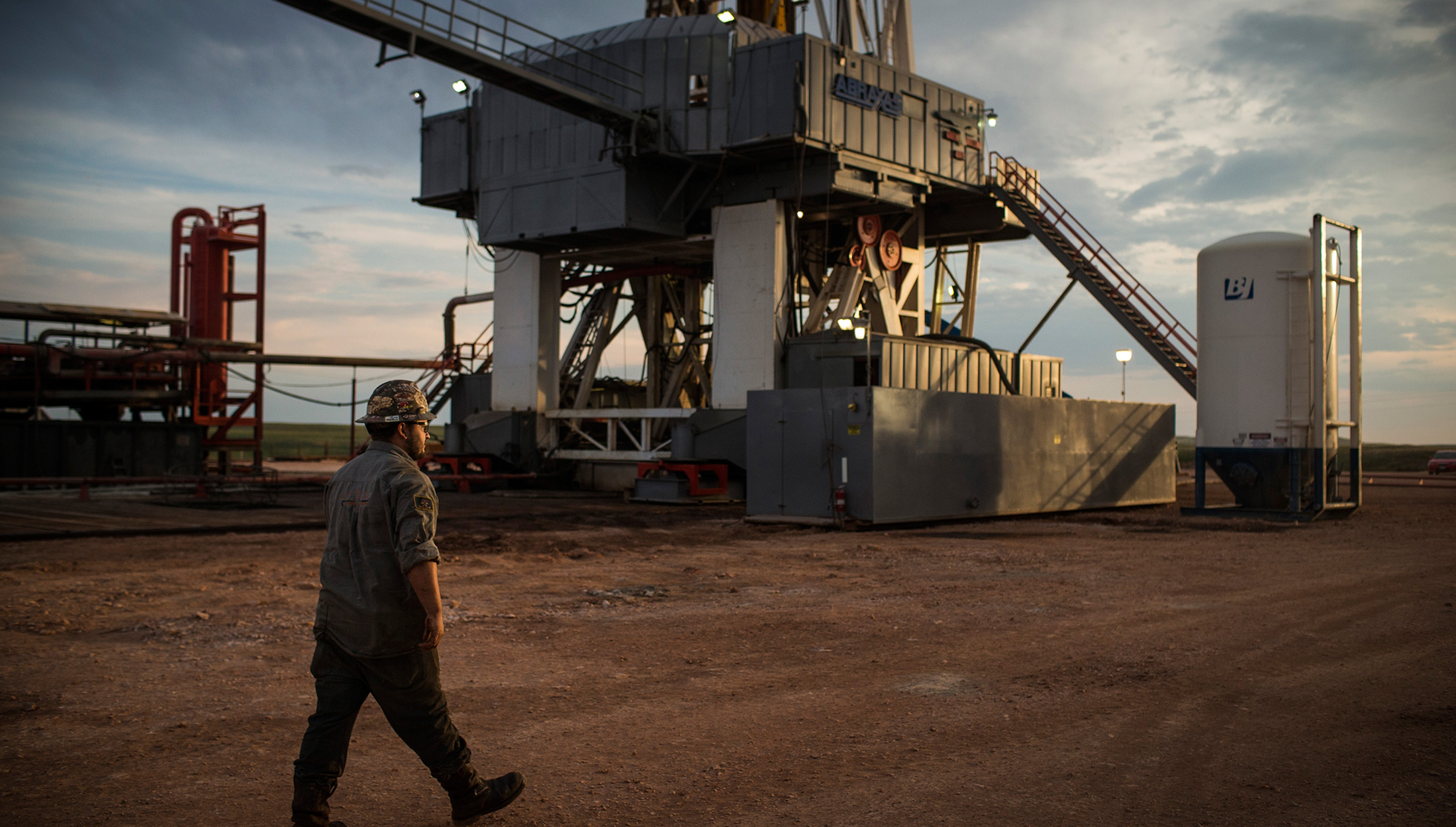
So, you have big equipment, and it’s under a lot of pressure, and a lot of moving parts, and a lot of sparks, and a lot of gas that can explode, and wells that can blow out, and fires that can happen, and accidents. This is very much a West Texas thing, depending on where you are in the world doing oil and gas, but it turns out that in West Texas, one of the biggest risks for people that work in this space is accidents on the road. People are rushing, and they’re distracted, and there are big trucks going around, and there’s a lot of unpaved roads. And so, even traffic accidents are a big risk in this industry.
Daniel Raimi: They are. My colleagues at RFF have actually done some work on that, documenting how traffic accidents increased in Pennsylvania during the early days of the shale boom.
I actually remember being in North Dakota during the early days of the Bakken boom. I was driving on a rural state road up to meet a government official, I think in Williston, and I got there, and the person asked me what road I’d taken, and I told him the name of the road, and he said, “Oh, I went to two funerals from that road last year.” That really brought it home for me.
Deborah Gordon: Yeah. I mean, and they’re doing … Well, especially in West Texas or North Dakota, even in Western Pennsylvania, these are really spread-out facilities. You’re just driving. If you think of your normal life driving to get milk or to get your kids to school, you’re doing a few miles. But there are vast distances here, which means people are—just their exposure—they’re just on the road a lot to do their job.
Daniel Raimi: They are. And the trucks are very large trucks, and they’re filled with liquids. And if you don’t fill a truck correctly with liquids, then you can imagine the liquids sloshing around in the back of the truck, and upsetting the vehicle, and leading to all sorts of accidents that can get really ugly.
Deborah Gordon: Totally. And also, when the job has to get done, it doesn’t matter what the weather is. You might have the luxury to stay home if it’s a really bad day, icy outside, say, but if something is happening on the field, and you need to get there, you’re going to get there. And this is even true beyond … I know, having worked offshore (this doesn’t take place offshore in Landman), but a lot of oil and gas is in the world’s sea and ocean. So, you’re taking helicopters places, you’re on a very small footprint, you’ve got big equipment operating literally right next to your head. There’s just a lot of exposure to risk.
Daniel Raimi: Yeah. I mean, the one thing that I have often thought when I’m watching Landman and someone loses an arm, or someone dies because of an explosion, is that, just like you said, all of the things that happen in the show are real, but the frequency with which they happen, I think, is not really accurate. To me, it seems like every time Tommy—Billy Bob Thornton’s character—like, every time Tommy goes to a well site, somebody either dies or loses a leg. And that’s not actually how it is out there in the oil fields.
Deborah Gordon: Yeah. I mean, this show is more of a soap opera in that regard, certainly on the personal side of things, too. You’re looking like going from accident to accident, but there really is a sense of risk. I think this is not untrue in other heavy industries, as well. If you’re working in a steel mill, you’re going to feel real risk, as well, or in a foundry. But this is something that is in such large volumes, and so there’s this churn—it’s cranking and cranking. Yeah, it is … I do think this doesn’t show refineries at all.
It’s really a show … If folks that are listening know the oil industry, there are different parts of the oil industry, and the upstream side of the oil industry is where the oil and gas is extracted, and that’s where Landman takes place. But then it goes through pipelines, and it goes to refineries and to gas plants, and to these liquefied natural gas (LNG) terminals, that the danger follows it. It goes from danger that we’re seeing in the show … I’ve always found, personally, refineries to be one of the scariest places to be. Just the smells and the sounds, and the heat and the noise, and everything going on in a refinery feels like one major risk that’s wrapped around you.
Daniel Raimi: I couldn’t agree more, having toured a number of refineries and been kind of awed by the scale of the activity. Maybe just one quick data point before we move on about this injury and fatality stuff.
I pulled out some data from 2024 from the US Bureau of Labor Statistics, and the mining and oil and gas–extraction sector, it actually has a relatively low rate of nonfatal work injuries compared to other industries. It’s less dangerous in that sense than, actually, wholesale trade or retail trade, which I thought was pretty surprising. But where it really does show up is in the fatality risk category. So, it’s one of the most dangerous industries where people might actually die on the job.
Deborah Gordon: No, that makes a lot of sense. And to be fair, I mean, this industry has put health and safety front and center for a very long time, because they need the workers to be safe in order to get the job done. It’s very hard to just walk away from the equipment and just idle it for a minute while someone else … If you’re going to get injured in a service job, you can walk away and get treated, and someone else will take your place, and it will keep going, and the line will keep moving. It’s much harder in this industry to pause.
Daniel Raimi: Yeah, totally. So, there’s a scene in Season 2—and again, I don’t think this one is a real spoiler, because this happens right at the beginning of Season 2.
So, there’s an incident in Season 2 where there’s a group of people, they’re out hunting, and they’re chasing wild boars somewhere in West Texas. And they get out of their truck to go finish up hunting the wild boars, and then all of a sudden they drop dead. And then, you see that there’s an oil well nearby. So, what’s going on with people just walking next to an oil well and dropping dead?
Deborah Gordon: Yeah. So, one of the very common impurities in oil and gas is hydrogen sulfide, H2S. It’s a very, very deadly contaminant in oil and gas. And you will see this if you ever have heard the word sour—like this is a “sour oil” or a “sour gas”—which means it has this sulfur in it. Hydrogen sulfide is especially, not only deadly, but what happens in the first few seconds of a very high leak is that it anesthetizes your nose. So, you no longer know that you’re going to die. Basically, it kind of puts you out of commission and then kills you very, very quickly.
And so, these hunters have come upon a leak—a gas leak that has hydrogen sulfide in it—and the animals have already died, and then they die, and then the Landman crew comes onto the scene and they’re wearing monitors. The hunters are not, but it’s a known risk. So, the people on the crew are wearing monitors, and they start to buzz and alert them, but they can’t get out of there quickly enough. And so, most of the people are fine, but one person is actually pretty catastrophically injured on the crew.
So, this is a known risk and it is something that … It’s usually why there are ring fences around these facilities, so you can’t get that close to them. It will waft in the air. It will float away, eventually. You just don’t want to be exposed to high concentrations of H2S.
Daniel Raimi: Yeah, it’s super dangerous. And if you’re ever out driving around an oil field, sometimes you see these signs that say, “Danger: poison gas.” And they’re pretty big, pretty noticeable. And basically, what that’s telling you is that this is a well that produces oil and gas that includes H2S.
Deborah Gordon: And interestingly, that sulfur in the oil and gas is what makes a lot of the world’s chemicals. So, it’s not thrown away—it’s converted. It’s collected, and converted, and it’s solidified. The sulfur is removed. They’re the yellow piles you’ll sometimes see off the side of a road. And that’s turned into sulfuric acid, the number one acid used in all chemicals.
But the other thing I was going to say is that it’s not the only contaminant. Besides hydrogen sulfide, you get things like benzene, and toluene, and xylene. There are a lot of these impurities in oil and gas, and many of them are known or suspected carcinogens. So, in general, not good.
Daniel Raimi: And these are the types of chemicals that people worry about when they think about the health impacts of the industry, not just for workers, but for people who live close by. If there’s a breeze blowing benzene toward someone’s house, or a school, or something like that, there have been a number of studies that document statistically significant higher risks of a variety of diseases related to living really close to some of these facilities.
Deborah Gordon: Absolutely.
Daniel Raimi: Let’s talk about another infamous scene from the show. This is the one that people maybe might know the best. It’s definitely made the rounds in the energy community. So, in Season 1, there’s a scene where Tommy is driving around a lawyer from the big city, and the lawyer is really worried about climate change, and they drive by some wind turbines.
They drive right up to the wind turbines, and the lawyer from the big city is talking about how this is good, clean energy and stuff like that. And Tommy disagrees. Tommy makes the argument that all of the steel and the cement that is needed to construct a wind turbine means that the electricity generated from the wind turbine won’t actually offset the emissions associated with building the structure itself. What did you make of that argument?
Deborah Gordon: Plastics are made of oil and gas. There is a lot of oil and gas, both on the material-input side and the energy side of all material, like from your toothpaste, to your tires on your car, to the road you drive on. Oil and gas is embedded in most of our modern society—in everything. But a lot of that—the turbines, for example, or our roads, for example—they have to be amortized. If something is going to be built, but installed and operating for decades, it is a lot of oil and gas input, but it’s durable. It’s there; it’s locked in; it’s not an emission—it’s actually infrastructure. And if you amortize those inputs over the life of the infrastructure, it turns out not to be that big.
Daniel Raimi: There’s definitely emissions embedded in the cement and steel in a wind turbine, or in a solar farm, or in a nuclear power plant, or whatever. But there’s an entire field of study called life-cycle analysis where scientists study the life-cycle emissions of different technologies, and they do the amortization process that you’re talking about. And it’s not close, right? A wind turbine—the emissions embedded in a wind turbine are orders of magnitude smaller than the emissions associated with a natural gas–fired power plant that might operate for 20 or 30 years.
Deborah Gordon: And to be fair, it’s the same argument against the oil and gas company, because they’re using all of these materials and infrastructure to extract, and put in pipelines, and then refine this oil and gas. So, they have equipment, too. They’re embedding their own resources in their own operation.
Daniel Raimi: Totally. I remember thinking as he was making that speech, “What do you think a natural gas–fired power plant is made of?”
Deborah Gordon: Exactly.
Daniel Raimi: It’s made of steel and cement. It’s not made of fairy dust or something.
Deborah Gordon: Exactly.
Daniel Raimi: So, in that same sequence where Tommy is setting the big-city lawyer right in his way, he makes the point that you just made, which is that oil and gas, in the form of petrochemicals, are embedded in everything around us: It’s in your cell phone; it’s in your car tire; it’s in your lipstick; it’s in medicines. It’s in almost anything that’s not made of paper, or steel, or cement, or wood—it has oil and gas in it somewhere.
So, he makes this argument, and the basic point that I think he’s trying to drive home is that these products are so ubiquitous that society will never be able to move away from those things. That we are at risk of running out of them before we move away from them for any climate-motivated reasoning. So, I’m curious what you thought of that line of argument.
Deborah Gordon: I think I live somewhere in the middle of that argument. On the one hand, changing everything that’s life as we know it is very difficult, so there’s no easy off ramp here. At the same time, at the prices we’re seeing now—over $100 a barrel for oil and very expensive liquefied natural gas prices in Asia, Europe, et cetera—alternatives become way more competitive.
So, I don’t see a world with no oil and gas. I don’t know if I see a world of only oil and gas. It has been pretty stable. Historically, I don’t know if it’s 80 percent, but we just keep on sticking with it. And there’s a lot of uncertainty right now in the world of what that means with what’s going on in the Middle East. So, I want people to realize how much oil and gas we all use every single day and depend on, but I also want people to understand that we should always strive for new ways of thinking and doing things.
Daniel Raimi: Yeah, for sure. There are two statistics that I actually cite to my students to help them understand the scale of the oil and gas industry. And this is just the industry in the United States, let alone the world.
So, if you took the amount of oil that the United States consumes every day, which is about 20 million barrels per day, and you put those on tanker trucks—the sorts of tanker trucks you would see hauling gasoline on a highway—and you line them up from end to end, they would stretch from Ann Arbor, Michigan, where I live, to Key West, in Florida.
Deborah Gordon: Wow.
Daniel Raimi: And that’s just the oil we use every day. And then for natural gas, I like to tell them that there’s about a little more than three million miles of natural gas pipeline in the United States. Most of that is distribution lines that get gas around cities and stuff. If you took all of those natural gas pipelines, you could go to the moon and back like six or seven times.
Deborah Gordon: Crazy.
Daniel Raimi: So, the scale of these things are really remarkable, and I don’t think it’s really well-appreciated by most people.
Deborah Gordon: No. And with 100 million barrels a day coming out, the volumes are so massive.
I don’t know if anyone is listening that would want to tackle this, but I wish someone would. I really think we need to be prepared and understand what it means to reverse engineer things. If you want to change the world, you need to know what undoing what you’ve been doing involves. And so, the whole refining sector works in such an integrated way that, if we’re going to electrify vehicles and not use gasoline, we need to think of a way of actually changing the way that we refine oil and what else we make out of that barrel of oil. And so, we’ve been doing for 100-plus years what we’ve been doing with oil and gas, and if we want a different future, we’re going to have to reverse engineer things.
Daniel Raimi: Yeah, that’s a great point. I feel like my friend and colleague, Emily Grubert, makes this point often: that to really have an energy transition, you’re going to need not to just switch fuels, but to kind of rejigger the way that the existing energy system works, which is a huge feat in and of itself.
Deborah Gordon: Yep, exactly.
Daniel Raimi: Let’s talk a little bit more about the show. In one scene … I think it’s in Season 1, or I can’t remember—it might be Season 2.
There’s a scene where several workers from the company (not Tommy, but the lower-level workers—the guys that work on the rigs), they’re hanging out at some kind of oil and gas industry trade show. They’re walking around, looking at the equipment. And they look in one direction and they see this robot, and the robot is picking up a steel pipe, and its connecting pipe, and it’s doing a lot of the work that these workers do every day on an oil rig. They look at this, and they’re like, “Oh, no! My job is going to go away.”
So, that’s representing something that’s very real in the industry. Can you tell us a little bit about how automation has affected the oil and gas industry over the last decade or so, and how that might evolve in the years to come?
Deborah Gordon: Yeah. I mean, I do wonder—a lot of computerization and much better detection and understanding of the seismicity and drilling and where to drill—a lot of that has been automated with big data.
On the worker side, they use equipment; obviously they can’t just lift a lot of this heavy equipment themselves. There’s a lot of machinery on-site, but it’s such a nuanced operation with a lot of danger if anything should go wrong, like turning just the wrong way, or hitting something the wrong way. And we see that with a spark, with a stuck valve in the first season and a huge fireball explosion, which sets off this whole show.
I don’t know that you can really safely do this with robots. And I had a job as a roustabout in the oil industry early when I was in college, where you’re basically walking pipelines, and painting things, and maintaining things, and looking for rust. And yeah, you can automate some of it. They use drones for a lot of surveys now, but I see this as being not the first industry you would fully automate.
I think we’re going to be already checking out at an airport, and there’s no one there, and I’m buying my chips, and I’m doing it all myself with a computer. There are things ahead of that. I think this is going to be … It’ll be automated wherever it benefits the industry, but I don’t see workers going away.
Daniel Raimi: Yeah, that’s interesting. I mean, one thing that I’ve found pretty remarkable is that over the last 10, 15 years, US oil and gas production has grown at this enormous rate where we’re now producing much more oil and gas than we ever have, but the number of workers in the industry has actually gone down quite a bit.
I actually was just looking at some data. Compared to January of 2016, employment in the oil and gas industry is 70,000 workers lower today than it was 10 years ago. So, 10 years ago, it was about 190,000 workers; now it’s about 115,000 workers in the sector. And so, to me, that just tells you that there had been all these process-efficiency improvements.
And one example that comes to mind is the walking rig. I don’t know if you know about the walking rig. There are these oil and gas rigs where they drill a well and then they pick themselves up. They have these little legs and then they slowly crawl themselves like 10, 20 meters in one direction or another, and they plop themselves down, and they drill another well. It used to be that you needed workers to deconstruct that well, but now the well does the job itself, or the rig does the job itself. Those types of innovations have been proliferating through the industry for quite a while.
Deborah Gordon: Yeah. And a lot will depend on these prices. Again, if the prices stay really high for oil and gas, they’re going to be experimenting more to find more oil in different ways. So, the innovations happen in waves in this industry. And of course, fracking was the last wave that we’ve gone through, but it’s hard to know what the next series of innovations will be.
One of the innovations I think that the industry is very well-primed for is merging its expertise with geothermal, because it’s very similar. If you’re under the earth looking for liquids or gas, you’re also in a very hot environment. There’s a lot of heat. And so, the idea of actually producing both hydrocarbons and electricity from geothermal could be a whole new thing. And I guess it’s a way of saying—depending on the innovations they come upon to keep growing—if that’s how they go, then they’re going to need different processes to automate. So, it’s not just one series of repeat, repeat.
Daniel Raimi: Right. Totally. That reminds me. I mean, one of the biggest geothermal companies that’s out there, maybe the biggest, is called Fervo Energy. And one of the biggest investors in Fervo is Devon Energy, which is an oil and gas company based in Oklahoma.
So, all right, let’s sort of look forward. So, I’m curious what you’re thinking about for Season 3 of Landman. We’ve talked about the dangers, we’ve talked about hydrogen sulfide, we’ve talked about the trucks, and we’ve talked about the life-cycle analysis. What would you love to see in the next season of Landman, or what are you worried that they might take on?
Deborah Gordon: Yeah, it’s funny. We actually approached Taylor Sheridan. We’ll see if he ever picks up an idea, because this would be my idea. So, a really big part of this industry is to operate better in terms of its environmental perspective and, especially, leak less gas. Because gas is mostly methane, and methane is a very potent greenhouse gas. And so, the idea here of actually having this company, that now Tommy is part of, to have it be certified as a low-leakage company. So, differentiating itself from the “M-Tex” company he has been part of, which has had all of these accidents and problems, and not being the safest, and the best, and the most responsible operator, and showing how this industry is really diverse.
And if you want to be best in class as an operator, you actually can make money and do things much more safely and better, especially for the environment and for the community.
Daniel Raimi: Yeah, that’s a great idea. As folks who follow RFF’s work and who follow your work will know, there are markets out there for differentiated gas. You can command a premium by selling gas that has low life-cycle emissions. And Europe is implementing standards that will require the use of these lower-emissions oil and gas sources. So, that sounds like a great plot point.
One idea that I heard about on another podcast, the Odd Lots podcast from Bloomberg, they were interviewing Daniel Yergin and they were asking him about Landman. And the hosts of this podcast suggested that Daniel Yergin should have a cameo in the next season of Landman. And so, I thought that was a great idea.
Deborah Gordon: Maybe the next show, the next expo they’ll go to will be CERAWeek or something. It will be on the show.
Daniel Raimi: Exactly. That was their idea. Daniel Yergin interviewing Billy Bob Thornton on stage at CERAWeek would be pretty perfect.
Deborah Gordon: I’ve been so curious to know what Billy Bob Thornton really thinks about this industry. Of course, he plays this role, but I have a feeling he’s a very different person in real life, and it’s always interesting to understand the person from the role they play.
Daniel Raimi: Yeah, totally. We should get him on the show and ask him. See if he can come on.
Okay, Debbie, this has been super fun. I want to ask you a variation on the last question we always ask folks, which is to recommend something that’s at the top of their literal or metaphorical reading stack. I’m curious: what are some other oil and gas–deemed TV shows, or movies, or other media that you’d recommend to people?
Deborah Gordon: I was thinking back on this, and I have to rewatch it, but there was the Daniel Day-Lewis movie, There Will Be Blood, from many, many ages ago, that I remember being so hard to watch and so powerful. It was the turn of the last century. It was a very, very early stage in this industry, but very much—if people like Landman—worth a watch of what it takes to get this industry up and operating. I thought that was interesting.
The other one that came to mind that’s not really related specifically to Landman, but I think it tells a lot of interesting stories about where we are in the world right now, was Argo, which was a story of the Iranian Revolution and going back in time to what happens in places that are dominated by oil and gas. I think that that’s really interesting. And then the third one that I had to laugh and think about a little bit was way back, watching Dallas.
Daniel Raimi: Yeah.
Deborah Gordon: Yeah, like a real soap opera 1980s—what it’s like to be a big-bucket-hat-land person or oil person.
Daniel Raimi: Yeah. I think they did a remake of Dallas too, maybe like 10 years ago or something. I think it was only one season, because it didn’t do very well. My recollection is that the remake of Dallas had the oilman or the gasman really focused on methane hydrates, which is this very obscure type of natural gas that you can find under the ocean floor, I think. And it’s completely uneconomical, but for some reason, in the new version of Dallas, they were going after methane hydrates, which I thought was—
Deborah Gordon: That’s so funny. There is one book that’s really good. I don’t know if you’ve read Steve Coll’s Private Empire.
Daniel Raimi: Yeah, I love that book.
Deborah Gordon: Yeah, that is worth a read just to understand the triangulation of risk in this industry and how decisions are made. It really focuses on the different eras of ExxonMobil, but it really is an interesting look at what it takes to be in this business.
Daniel Raimi: Totally. I can’t help but make one more recommendation, which is one of the most powerful movies I’ve ever seen. It’s a documentary by the German filmmaker, Werner Herzog, called Lessons of Darkness. It’s a documentary of the aftermath of the Gulf War in 1990, when Saddam Hussein’s army invaded Kuwait, and then when they retreated, they set all of their oil wells on fire. And so, somehow Werner Herzog got access to this oil field, and he’s driving around and flying helicopters around, filming these fires and these lakes of oil. And it’s like you’re on another planet, and it’s like a dystopian world. And it’s all set to German opera, so it’s extremely intense, but it’s a really gobsmacking film.
Deborah Gordon: Yes, it does. When things go wrong in this industry, they go wrong really, really badly.
Daniel Raimi: Yeah. And if we learn nothing else from Landman, we learned that.
Deborah Gordon: Yes, exactly.
Daniel Raimi: So, Debbie Gordon—one more time—from RMI and Brown University, thanks so much for coming on the show. This has been really fun.
Deborah Gordon: It was a pleasure. I can’t wait for Season 3.
Daniel Raimi: Me too.
Deborah Gordon: We’ll talk again.
Daniel Raimi: You’ve been listening to Resources Radio, a podcast from Resources for the Future, or RFF. If you have a minute, we’d really appreciate you leaving us a rating or a comment on your podcast platform of choice. Also, feel free to send us your suggestions for future episodes.
This podcast is made possible with the generous financial support of our listeners. You can help us continue producing these kinds of discussions on the topics that you care about by making a donation to Resources for the Future online at rff.org/donate.
RFF is an independent, nonprofit research institution in Washington, DC. Our mission is to improve environmental, energy, and natural resource decisions through impartial economic research and policy engagement.
The views expressed on this podcast are solely those of the podcast guests and may differ from those of RFF experts, its officers, or its directors. RFF does not take positions on specific legislative proposals.
Resources Radio is produced by Elizabeth Wason, with music by me, Daniel Raimi. Join us next week for another episode.