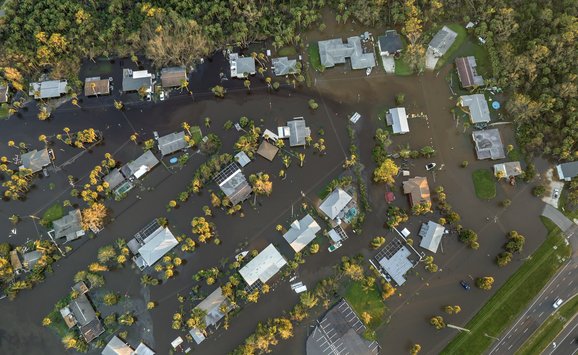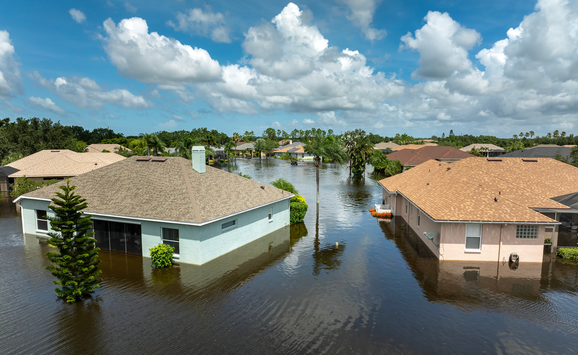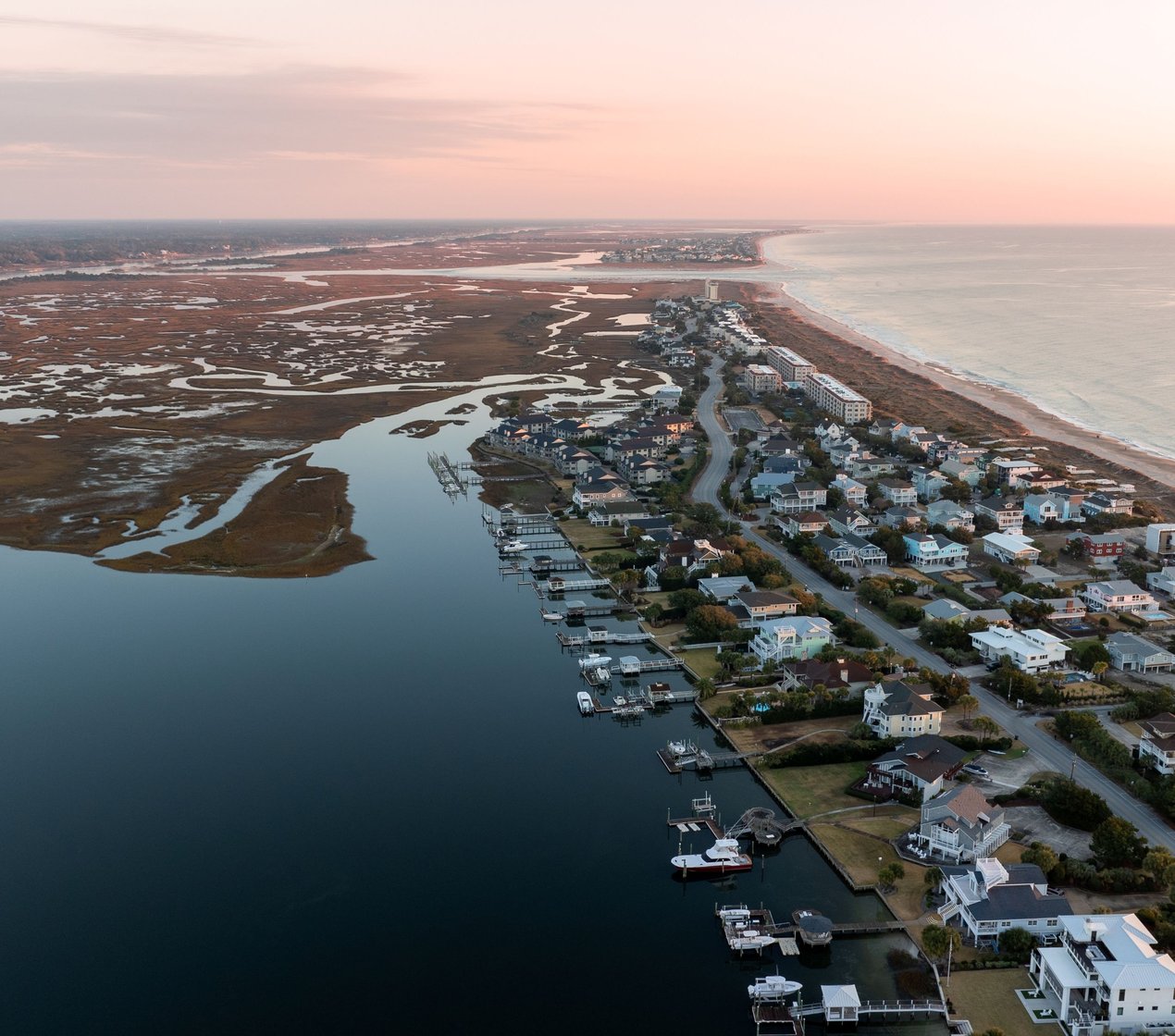
Federal efforts to fund and promote climate resilience measures have declined in recent years. However, the federal government could take several actions to keep communities safe from fires, floods, and other natural disasters.
September marks the heart of the US wildfire and hurricane seasons. The Atlantic hurricane season has been quiet in 2026 so far, as it was in 2025. This summer, Hurricane Lala, Hurricane Lowell, and Tropical Storm Moke struck Hawaii—an unusual location for tropical storms—but no major storm has made landfall in the continental United States. The 2026 wildfire season, on the other hand, has been a bad one. Hot, dry conditions have fueled an all-time record for acreage burned in Oregon and led to severe property damage from fires in Washington State. Utah and Colorado have also been hit hard.
The federal government has responded to these events with firefighting resources; assistance grants for fire management; and, in the case of Hawaii and Washington, emergency declarations to trigger release of disaster aid.
For state and local governments dealing with the devastating effects of disasters, it is reassuring that the federal government is stepping up, especially after a year filled with serious talk of abolishing the Federal Emergency Management Agency (FEMA) and shifting the bulk of disaster recovery responsibility to states.
The federal government has stepped back in a big way in another aspect of the problem, however: it is doing a lot less to build adaptation and resilience before disasters occur. Agencies like FEMA are divesting from resilience grants, canceling programs, and removing public access to data and tools used for climate adaptation. While state and local governments are increasingly stepping up to address their resilience needs, these federal retractions have left a funding and leadership vacuum.
Federal Resilience Funding, Programs, and Activities
The White House, federal agencies, and the US Congress gave resilience increasing attention in the years leading up to the second Trump administration. The 2021 Infrastructure Investment and Jobs Act (IIJA) authorized over $50 billion in spending on new resilience programs and many more billions for added resilience requirements in existing programs at federal agencies. The Inflation Reduction Act (IRA) of 2022 also included new resilience funding—approximately $20 billion, according to most accounts. The Biden administration released a National Climate Resilience Framework in 2023, and more than 20 federal agencies followed with climate adaptation plans in 2024. FEMA completed a yearslong internal reorganization that created an Office of Resilience Strategy in January 2025. In a last outgoing effort, the White House released a National Resilience Strategy in January 2025.
Today, most of these efforts have slowed or halted. Even programs funded by the IIJA and IRA have quietly gone dormant; had disbursement of funds to awardees held up as agencies conduct additional reviews; or had unobligated funds rescinded in the FY2026 budget, the One Big Beautiful Bill Act. Table 1 summarizes the status of the main resilience programs and activities at FEMA, the US Forest Service, the National Oceanic and Atmospheric Administration (NOAA), and the US Department of Housing and Urban Development as of September 2026.
Table 1. Status of Major Federal Resilience Efforts
Effort | Status |
Government-wide | |
White House National Resilience Strategy | President Biden’s January 2025 strategy was superseded in June 2026 by President Trump's “America First” National Resilience Strategy, which reframes resilience around federalism and national security rather than climate risk. |
Federal Emergency Management Agency | |
Office of Resilience Strategy | Effectively eliminated by early 2026. The FEMA Review Council established by President Trump recommended in its final report that FEMA continue to shrink its staff and focus on emergency response rather than long-term recovery and resilience. |
National Risk Index (NRI) | The NRI, which provides information about communities most subject to risk from 18 natural hazards, remains available and was updated in December 2025. However, FEMA removed the Future Risk Index, a supplement to the NRI which incorporated climate change into projected economic losses. |
National Resilience Guidance and Resilience Resources Gateway | Guidance removed from FEMA website. Argonne National Laboratory still maintains the Resilience Resources Gateway, which it developed with FEMA. |
Community Disaster Resilience Zones (CDRZs) | Tools created by FEMA to prioritize agency resilience funding in high-risk, at-need communities as required by the Community Disaster Resilience Zone Act of 2022. The initiative is now dormant, and public access to the CDRZ mapper tool and methodology ceased in February 2025. |
Building Resilient Infrastructure and Communities (BRIC) grant program | The Trump administration announced the end of this program in April 2025 and retracted $3 billion for approved projects; 20 states sued, and a federal judge ordered the program to be restored. A Notice of Funding Opportunity (NOFO) was issued in March 2026 for $1 billion. IIJA included $1 billion for BRIC. |
BRIC—Direct Technical Assistance | Eliminated in March 2026, this nonfinancial program provided technical assistance by FEMA to underserved communities. Participation in this program was often viewed as a first step toward a BRIC grant for communities that needed extra help. |
Flood Mitigation Assistance (FMA) grant program | The Trump administration retracted $600 million in funding and announced no new funding for FY24, FY25, or FY26. In a partial reversal in April 2026, FEMA issued $235 million in awards and announced $600 million in FY26 FMA Swift Current funding. IIJA included $3.5 billion for FMA. |
Safeguarding Tomorrow Revolving Loan Fund (STRLF) program | IIJA appropriated $500 million over 5 years for FEMA to issue capitalization grants to states, which in turn would make low-interest loans to local governments. FEMA issued a NOFO for FY25 in January 2025, but it remains unclear whether state awards have been obligated. No NOFO was issued for FY26. |
US Forest Service | |
Community Wildfire Defense Grants | IIJA appropriated $1 billion over 5 years for grants to communities for wildfire mitigation. The Forest Service announced the latest grant award winners in September 2025 but communities have reported delays in receiving funds as the agency reviews new terms and conditions related to diversity, equity, and inclusion; climate change; and other issues. |
State, Private, and Tribal Forestry Program | This program provides financial and technical assistance to states and local fire departments for wildland fire mitigation and suppression. The Trump administration proposed eliminating it in FY26 and again in FY27. Congress restored FY26 funding. |
National Oceanic and Atmospheric Administration | |
Office of Oceanic and Atmospheric Research | The Trump administration’s FY26 and FY27 budgets proposed eliminating the office, which is the primary climate research arm of NOAA. Congress retained funding for it in FY26. |
Office of Oceanic and Atmospheric Research—Climate Program Office (CPO) | CPO historically issued climate adaptation and resilience research grants. A May 2026 NOFO for cooperative agreements for Regional Integrated Sciences and Assessments regions was the first NOFO issued since the beginning of the second Trump administration (awards pending). |
Climate-Ready Coasts and Communities initiatives | Created with $2.6 billion in funding through the IRA, this initiative included five separate subprograms, e.g., the Climate Resilience Regional Challenge and Climate-Ready Workforce. The program is dormant, and the FY26 budget rescinded unobligated funds. |
US Department of Housing and Urban Development | |
Green and Resilient Retrofit Program | Created with $1 billion in IRA funding, this program funds direct loans and grants for multifamily retrofits for greenhouse gas reductions and weather resilience. The program was dormant until a March 2026 relaunch that changed some provisions (e.g., dropping greenhouse gas reduction requirements). |
Office of Disaster Management and Resiliency | Created in the 21st Century ROAD to Housing Act in July 2026, this office will help state and local governments develop, coordinate, and maintain capacity for disaster resilience and recovery, including pre-disaster recovery and hazard-mitigation plans. (The act also made significant changes to the Community Development Block Grant Disaster Recovery program via the US Department of Housing and Urban Development.) |
Figure 2 shows total funding made available by NOFOs for major FEMA resilience grant programs in BRIC; FMA; STRLF; the Pre-Disaster Mitigation Grant Program, which is funded by Congressional mitigation earmarks; and other (smaller) programs from FY22 to FY26. These totals represent the amount of funding made available for grant applicants, but the money has not necessarily been obligated or spent on resilience activities as of September 2026. The sharp drop in funding in FY25 and FY26 is obvious from the graph. FEMA awarded $3.3 billion in grants in FY22, with 68 percent of those funds distributed via the BRIC program. By FY25, grant funds had dropped to only $726 million, made up mostly of retroactive BRIC funding. Three grant programs haven’t had a NOFO released since FY24.
Figure 2. Resilience Grants Funded Through the US Federal Emergency Management Agency, FY2020 to FY2026
Five Roles for the Federal Government
With many programs and activities in limbo or abolished altogether, state and local governments are on their own, not only paying the resilience tab but also navigating a path forward in a world with growing climate-related weather risks.
States and localities are likely to have vastly different resilience needs depending on the problems they face. Additionally, these levels of government are closest to the problems, understand the issues best, and may be best positioned to devise solutions. For these reasons, assigning some responsibilities to states is appropriate.
In our view, however, five functions should be taken on primarily by the federal government.
Data, maps, tools, and information provision. Good data underpins sound decisionmaking. Because data is a public good—that is, use by one entity does not take away the resource from others—it makes sense for a central authority to provide it. Federal agencies produce several data products, maps, and tools related to weather extremes, disaster risks, and projected future climate impacts. A few examples include NOAA’s Storm Events Database, a database of every significant weather event across the United States since 1950; wildfire statistics and incident reports maintained by the National Interagency Fire Center; and NOAA’s Digital Coast suite of data products and tools, including lidar and elevation data and a sea level calculator.
While we can debate the merits and quality of various data sets, these information products are unlikely to be consistently provided by an entity other than the federal government. Proposed funding cuts are putting many of these products at risk.
Investments in research and development. Like the provision of data, production of knowledge is a public good, generating benefits for all Americans. Because state and local governments act in the interests of their own citizens, they tend to underinvest in research and development (as does the private market, a long-established finding in economics). Investment in knowledge production is a role best filled by the federal government. Federal agencies sometimes directly conduct research into climate risks and resilience, producing products and information that are useful for decisionmaking; one example is the wildfire hazard potential map created by Forest Service researchers. Much of the work of NOAA’s Office of Oceanic and Atmospheric Research, which we mentioned above is a target for elimination, falls into this category of federally produced knowledge. Often, the government funds research by academics and other researchers, issuing awards through competitive processes, such as those run by NOAA’s Climate Program Office, programs in the US National Science Foundation, and the US Department of Homeland Security’s Science and Technology Directorate. Many of these efforts have slowed or halted under the Trump administration.
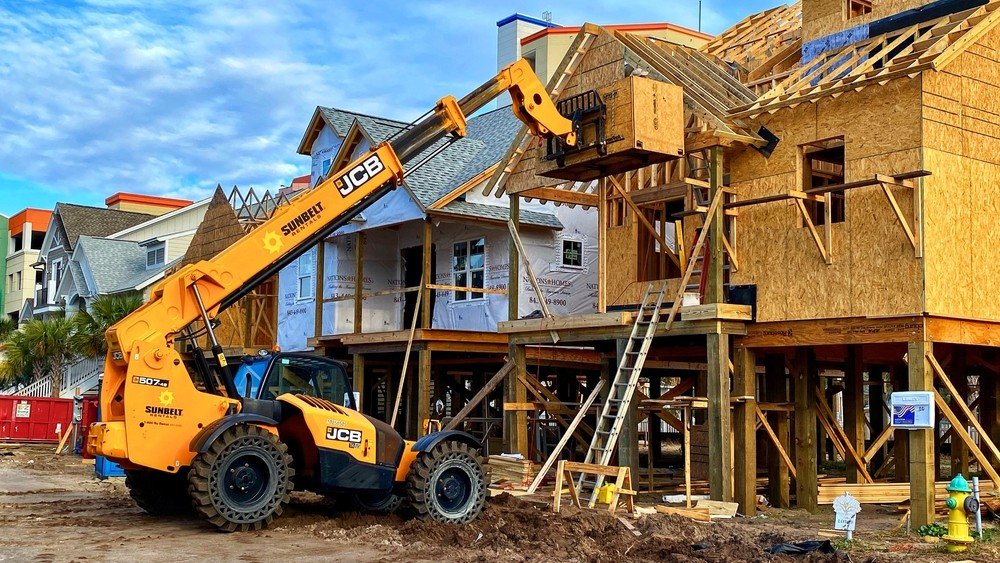
Technical assistance. Understanding the complexities of weather extremes and climate change and the options available to build resilience are typically beyond the expertise of most local governments, especially in small towns and rural areas. Addressing these inequities in capacity through federal intervention can create national benefits by reducing disaster costs for the federal government, including the costs of disaster-relief payments and payouts from the National Flood Insurance Program, improving the function of homeowners insurance markets, and reducing disaster-recovery burdens for local governments. While states should be able to take on some responsibility for technical assistance, not all states have the capacity. With the cancellation of programs such as BRIC Direct Technical Assistance and Thriving Communities Technical Assistance Centers established in the IRA, technical assistance from the federal government is waning under the Trump administration.
Credit: PQK / Shutterstock
Regulatory requirements and standards. Using various statutory and regulatory requirements, the federal government can motivate state and local governments to invest in resilience. Some examples include a provision in the Stafford Act (the federal law that governs disaster and mitigation assistance) that state and local governments must adopt hazard-mitigation plans to be eligible for certain kinds of assistance (like BRIC and FMA grants). Another example is a provision in the National Flood Insurance Act that requires communities to adopt local floodplain management ordinances before they are allowed to participate in the National Flood Insurance Program. Having all communities meet similar minimum standards reduces the costs of these federal programs.
Direct investments in adaptation infrastructure. When spillover benefits go beyond the state or region where the infrastructure is located, there is rationale for federal investment. Adaptation investments in and around Norfolk, Virginia, a city where sea level rise is well above the national average, provide benefits nationally through protection of critical defense infrastructure such as Naval Station Norfolk, the largest naval installation in the world. The US Army Corps of Engineers has built over 12,000 miles of levees along US rivers, which provide flood protection and facilitate navigation across multiple states.
Federal Leadership Matters
Beyond these individual functions, the most important thing the federal government can do is lead. This does not mean the government should identify and pay for adaptation and resilience solutions for each community. Instead, it means that the federal government needs to develop and disseminate information and guidance that helps communities make decisions, provide mechanisms for coordination and information sharing across states and localities, facilitate the creation of innovative solutions, and cofinance the investments necessary to implement those solutions.
Most importantly, the federal government needs to make sure that resilience is a policy priority. The 2026 hurricane season has been quiet so far, but damages from extreme weather events have been on a general upward trend for the past three decades. If the federal government continues its quiet retreat from resilience, it leaves communities to fend for themselves and ultimately bear the costs of increasing climate risks.